Results by title
64 books match the query 'Self in literature' and 3 start with c

Canonical States, Canonical Stages
Oedipus, Othering, and Seventeenth-Century DramaMitchell Greenberg
University of Minnesota Press, 1994
Canonical States, Canonical Stages was first published in 1994. Minnesota Archive Editions uses digital technology to make long-unavailable books once again accessible, and are published unaltered from the original University of Minnesota Press editions.
In the crucible of seventeenth-century Europe, a new kind of subjectivity formed, private and interior. Perversely, the new private subject made its most spectacular appearance on the public stage-an appearance that, as Mitchell Greenberg amply demonstrates, also marked the emergence of absolutism in Europe. What these two phenomena had to do with one another, and how they were elaborated in the theater of the seventeenth century, is the subject of Greenberg's book, a masterful critical work that relates the dramatic construction of modern subjectivity and absolutist culture to the formation of the Western literary canon.
In particular, Canonical States, Canonical Stages shows how the Oedipus myth, reinterpreted on various stages at the end of the Renaissance, served the purposes of the emerging culture by replaying the founding moment of absolute rule. Working with models of genealogical criticism, psychoanalysis, and a certain Continental feminism, Greenberg reads plays by Shakespeare, Lope de Vega, Calderón, Corneille, and Racine to show how, as symptomatic texts staged within the confines of familial scenarios, they combine a dynamics of politics with a conflicting "private" desire shown to be inimical to the dominant ideology. This analysis reveals how scenarios of sacrifice and transcendence are brought into play to normalize and naturalize inchoate and threatening forces of social change by appealing to preexisting cultural models such as the myth of Oedipus. A fascinating integration of texts from political theory, psychoanalysis, history, and literature, Canonical States, Canonical Stages offers a powerful interpretation of the interrelated representation of subjectivity and absolutism on the seventeenth-century stage.Winner of the 1995 MLA Aldo and Jeanne Scaglione Prize for Comparative Literary Studies
Mitchell Greenberg is chair of the Department of French and Italian at Miami University in Ohio. He is the author of, among other books, Subjectivity and Subjugation in Seventeenth-Century Drama and Prose: The Family Romance of French Classicism (1992).
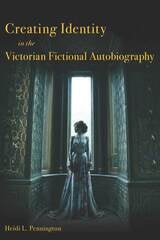
Creating Identity in the Victorian Fictional Autobiography
Heidi L. Pennington
University of Missouri Press, 2018
Despite the subgenre’s radical implications regarding the nature of personal identity, fictional autobiographies were popular in their own time and continue to inspire devotion in readers. This study sheds new light on what makes this subgenre so compelling, up to and including in the present historical moment of precipitous social and technological change. As we continue to grapple with the existential question of what determines “who we really are,” this book explores the risks and rewards of embracing conscious acts of fictional self-production in an unstable world.
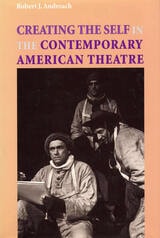
Creating the Self in the Contemporary American Theatre
Robert J. Andreach
Southern Illinois University Press, 1998
Combining his skills as both a professional reviewer of theatre and a literary critic, Robert J. Andreach finds himself in a unique position to provide coherence to what most observers perceive as an unrelated welter of contemporary theatrical experiences. Exploring the theatre from the 1960s to the present, he shows the various ways in which the contemporary American theatre creates a personal, theatrical, and national self.
Andreach argues that the contemporary American theatre creates multiple selves that reflect and give voice to the many communities within our multicultural society. These selves are fragmented and enclaved, however, which makes necessary a counter movement that seeks, through interaction among the various parts, to heal the divisions within, between, and among them.
In his examination of the contemporary theatre, Andreach demonstrates that the plays and the performance art of the feminist, African-American, Hispanic-American, Asian-American, and Native American theatres are equal to the works created within the dominant Eurocentric culture.
He then turns to comparable works created within the culture of what performance artist Karen Finley calls the "one male god," works that reflect the breakup of an old order. He discusses the experimental theatre, which turns to the imagination to reveal the nature of the self, and concludes with an examination of recent American works, pointing out in each either the presence or absence of resolution within the divisions of self.