Results by title
135 books match the query 'Self-help' and 10 start with c
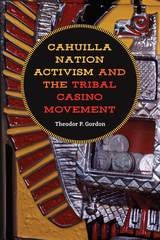
Cahuilla Nation Activism and the Tribal Casino Movement
Theodor P. Gordon
University of Nevada Press, 2018
Cahuilla Nation Activism and the Tribal Casino Movement tells the bigger story of how the Cahuilla nations—including the Cabazon—have used self-reliance and determination to maintain their culture and independence against threats past and present. From California’s first governor’s “war of extermination” against native peoples through today’s legal and political challenges, Gordon shows that successful responses have depended on the Cahuilla’s ability to challenge non-natives’ assumptions and misconceptions.
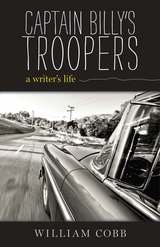
Captain Billy's Troopers
A Writer's LifeWilliam Cobb
University of Alabama Press, 2015
Captain Billy’s Troopers is a frank, literary memoir about William Cobb’s life as a southern writer—his struggles with addiction and illness, his career as a teacher and novelist, and his hard‑won return to creative life.
In this audacious memoir, William Cobb reveals the tumultuous creative life of a distinguished practitioner of southern and Alabama storytelling. As poignant and inspiring as his own fiction, Captain Billy’s Troopers traces Cobb’s early life, education, and struggles with alcohol and the debilitating condition normal pressure hydrocephalus (NPH).
Like a curving river, the broad sweep of Cobb’s turbulent life includes both startling cataracts and desultory eddies, leading sometimes into shadows or opening into unexpected sunlight. With unsentimental clarity, Cobb recounts coming of age in his native Demopolis in the churning middle years of the twentieth century. It’s there he has his first tantalizing tastes of alcohol and begins to drink habitually. Readers then travel with Cobb to Livingston University (now the University of West Alabama) and then on to Vanderbilt University. Along the way, readers relish his first experiences of love and success as a writer, leading to a career as a professor of writing at Alabama College (now the University of Montevallo) in 1963.
From there Cobb’s struggles with alcohol and depression lead to elongated years of tumbling creative output and the collapse of his marriage. The summer of 1984 found Cobb in rehab, the first step in his path to recovery. His unflinching memoir narrates both the milestones and telling details of his intense therapy and years in Alcoholics Anonymous (AA). In the sober thirty years since, Cobb has published a string of critically praised novels and a prize-winning collection of short stories. The capstone of his comeback was winning the Harper Lee Award in 2007 for distinguished fiction writing.
In 2000, shortly after retiring, Cobb developed NPH, which upset his sense of balance and triggered dementia symptoms and other maladies. Nine years later in 2009, brain surgery brought Cobb a dramatic recovery, which began the third act in his writing career. Vital, honest, and entertaining, Captain Billy’s Troopers captures the life of an Alabama original.
Casino Accounting and Financial Management
Second EditionE. Malcolm Greenlees
University of Nevada Press, 2008
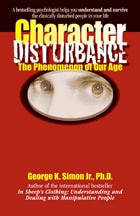
Character Disturbance
the phenomenon of our ageGeorge K. Simon
Parkhurst Brothers, Inc., 2011
Modern permissiveness and the new culture of entitlement allows disturbed people to reach adulthood without proper socialization. In a book meant both for the general public and for professionals, bestselling author and psychologist George Simon explains in plain English:
•How most disturbed characters think.•The habitual behaviors the disturbed use to avoid responsibility and to manipulate, deceive, and exploit others.
•Why victims in relationships with disturbed characters do not get help they need from traditional therapies.
•A straightforward guide to recognizing and understanding all relevant personality types, especially those most likely to undermine relationships.
•A new framework for making sense of the crazy world many find themselves in when there's a disturbed character in their lives.
•Concrete principles that promote responsibility and positive change when engaging disturbed characters.
•Tactics (for both lay persons and therapists) to lessen the chances for victimization and empower those who would otherwise be victims in their relationships with many types of disturbed characters.

Children of Alcoholics
A Critical Appraisal of Theory and ResearchKenneth J. Sher
University of Chicago Press, 1991
Codependent Forevermore
The Invention of Self in a Twelve Step GroupLeslie Irvine
University of Chicago Press, 1999
Codependent Forevermore is thus an insider's look at the world of people "in recovery" and the society that produced them. Through extensive interviews with CoDA members, case studies, and the meetings she attended regularly, Irvine develops a galvanizing perspective on contemporary Americans' sense of self. She explores the idea that selfhood is a narrative accomplishment, achieved by people telling stories to themselves and about themselves. She shows how Alex, Paul, Liz, and many others create a sense of self by combining elements of autobiography, culture, and social structure all within the adopted language of psycho-spirituality.
By following the progress and tribulations of CoDA members, Irvine gets to the heart of widespread American conceptions of relationships, selfhood, and community. Amidst the increasingly shrill criticism of the Twelve Step ethos, her reasoned and considered analysis of these groups reveals the sources of both their power and their popularity.
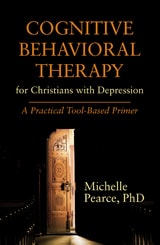
Cognitive Behavioral Therapy for Christians with Depression
A Practical Tool-Based PrimerMichelle Pearce
Templeton Press, 2016
For anyone in the helping profession, whether as mental health professional or religious leader, this question is bound to arise. Many mental health professionals feel uncomfortable discussing religion. In contrast, many religious leaders feel uncomfortable referring their congregants to professionals who do not know their faith or intent to engage with it.
And yet Michelle Pearce, PhD, assistant professor and clinical psychologist at the Center for Integrative Medicine at the University of Maryland, argues that if religion is essential to a client, religion will be a part of psychotherapy, whether it is discussed or not. Clients cannot check their values at the door more than the professionals who treat them.
To Pearce, the question isn’t really, “does religion belong?” but rather, “how can mental health professionals help their religious clients engage with and use their faith as a healing resource in psychotherapy?”
Cognitive Behavioral Therapy for Christian Clientswith Depression is the answer to that question, as the book’s purpose is to educate mental health professionals and pastoral counselors about religion’s role in therapy, as well as equip them to discuss religious issues and use evidence-based, religiously-integrated tools with Christian clients experiencing depression.
In this book, readers will find the following resources in an easy-to-use format:
- An overview of the scientific benefits of integrating clients’ religious beliefs and practices in psychotherapy
- An organizing therapeutic approach for doing Christian CBT
- Seven tools specific to Christian CBT to treat depression
- Suggested dialogue for therapists to introduce concepts and tools
- Skill-building activity worksheets for clients
- Clinical examples of Christian CBT and the seven tools in action
Cognitive Behavioral Therapy for Christian Clients with Depression is a practical guide for mental health professionals and pastoral counselors who want to learn how to use Christian-specific CBT tools to treat depression in their Christian clients.
Coping with Blindness
Personal Tales of Blindness RehabilitationAlvin Roberts
Southern Illinois University Press, 1998
Currently, 1.7 million Americans are either blind or are in the process of losing their vision. Sightless himself and a veteran of four decades of helping people cope with blindness as well as with the possibility of blindness, Alvin Roberts decided that telling stories drawn from the community of the blind and from his fellow rehabilitation workers was the best way to reassure others—especially the elderly, who are most at risk of becoming visually impaired—that "blindness need not be the end of active life, but rather the beginning of a life in which [people] will depend on their residual senses to continue full, active living."
Through good stories well told, then, Roberts offers reassurance that competent help exists for the visually impaired. He chooses stories that demonstrate to those facing blindness that they, too, can learn to cope because others have done so. Yet that is only part of his message. Seeing humor as a great facilitator for successfully reentering mainstream society, Roberts also dispels the commonly held belief that blind people are a somber lot and that those who help them encounter little humor. Many of these stories are frankly funny, and blind people and those in the rehabilitation field certainly are not above practical jokes.
Roberts’s personal experiences and conversations with colleagues have provided a wealth of incidents on which to base stories of rehabilitation workers with the blind going about their daily tasks. He paints a positive picture of what it is like to be blind, replacing fear, dread, and myth with reality.
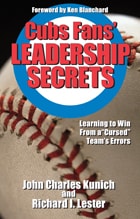
Cubs' Fans Leadership Secrets
Learning to Win From a Cursed Team's ErrorsJohn Charles Kunich and Richard I. Lester
Parkhurst Brothers, Inc., 2009
Cubs fans have often focused on one or two star performers, to the detriment of the team's overall performance.
Stars have often been selfish and devoted to their own success. Leaders have toleratged them, often at a price
to the whole team. Effective leadership recognizes the dangers in this situation. Here's their antidote--in a
highly-readable book that's hot off the press! Foreword by bestselling-author Ken Blanchard.
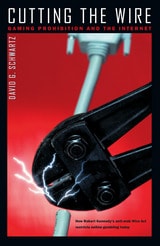
Cutting The Wire
Gaming Prohibition And The InternetDavid G. Schwartz
University of Nevada Press, 2005
The story of the Wire Act and how Robert Kennedy’s crusade against the Mob is creating a new generation of Internet gaming outlaws.
Gambling has been part of American life since long before the existence of the nation, but Americans have always been ambivalent about it. What David Schwartz calls the “pell-mell history of legal gaming in the United States” is a testament to our paradoxical desire both to gamble and to control gambling. It is in this context that Schwartz examines the history of the Wire Act, passed in 1961 as part of Attorney General Robert F. Kennedy’s crusade against organized crime and given new life in recent efforts to control Internet gambling. Cutting the Wire presents the story of how this law first developed, how it helped fight a war against organized crime, and how it is being used today. The Wire Act achieved new significance with the development of the Internet in the early 1990s and the growing popularity of online wagering through offshore facilities. The United States government has invoked the Wire Act in a vain effort to control gambling within its borders, at a time when online sports betting is soaring in popularity. By placing the Wire Act into the larger context of Americans’ continuing ambivalence about gambling, Schwartz has produced a provocative analysis of a national habit and the vexing predicaments that derive from it. In America today, 48 of 50 states currently permit some kind of legal gambling. Schwartz’s historical unraveling of the Wire Act exposes the illogic of an outdated law intended to stifle organized crime being used to set national policy on Internet gaming. Cutting the Wire carefully dissects two centuries of American attempts to balance public interest with the technology of gambling. Available in hardcover and paperback.