Results by title
96 books match the query 'Shadow' and 3 start with c
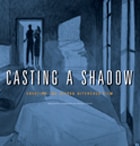
Casting a Shadow
Creating the Alfred Hitchcock FilmEdited by Will Schmenner and Corinne Granof
Northwestern University Press, 2007
Scott Curtis considers the four functions of Hitchcock’s sketches and storyboards and how they undermine the impression of Hitchcock as a lone artist. Tom Gunning examines the visual vocabulary and cultural weight of Hitchcock’s movies. Bill Krohn focuses sharply on the film I Confess, tracking its making over a very cooperative path.
Finally, Jan Olsson draws on the television series, Alfred Hitchcock Presents, to show the ways that collaboration contributes to the formation of his well known public persona. Anchored by editor Will Schmenner’s introduction, this book represents an important contribution to Hitchcock scholarship and a provocative glimpse at his unsung strength as a collaborative artist.
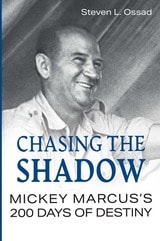
Chasing the Shadow
Mickey Marcus's 200 Days of DestinySteven L. Ossad
University of Missouri Press, 2024
The life of David “Mickey” Marcus has become the stuff of legends and myths (even fantasy), conspiracy, wild exaggeration, and untethered embellishment. The image of Marcus cast by the character portrayed by Kirk Douglas in the film version of his life still dominates most evocations of the man, for good or ill. And these days, reactions to the book or film rest mostly on the current headlines rather than the historical context of the struggle in which Marcus died, or the events that cast him as a real-life player in an event marked by destiny.
Chasing the Shadow: Mickey Marcus’s 200 Days of Destiny is the first comprehensive and balanced biography of David Daniel “Mickey” Marcus, a founder of American Civil Affairs and Military Government doctrine and practice and a seminal figure in early Israeli military history. Far from merely a tribute to Mickey Marcus's legacy, Ossad’s work serves as a critical tool for understanding the realities of mid-20th-century warfare in a Postwar colonial struggle and the dynamics of U.S.-Israeli military and political relations in 1948, the critical year for Israel’s struggle for independence. Indeed, Chasing the Shadow is a valuable read for those interested in Middle East history, Jewish military history, and a fascinating character whose story is told in an engaging, informative, and insightful narrative.
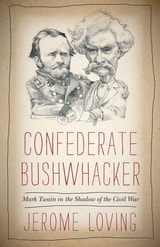
Confederate Bushwhacker
Mark Twain in the Shadow of the Civil WarJerome Loving
University Press of New England, 2013