Results by title
238 books match the query 'Social Classes & Economic Disparity' and 17 start with c

CANCELED - Notes from Home
Jonna McKone
Rutgers University Press, 2021
Through portraiture, oral history, writing, and family archives, the contributors explore childhood, geography, immigration, education, and family relationships, recovering misunderstood or overlooked moments. In the process of making this work, the group found old family photos, returned to sites of significance, and made new friendships, discovering the transformational potential of this kind of storytelling to reframe hardship, loss, and uncertainty. In the words of one contributor, “I felt like this process was a necessary step that allowed me to acknowledge and comprehend what I was experiencing at the time. It allowed me to create a more coherent understanding that I am who I am because of my past and because I was the one who had control of molding my own, better path.” Each chapter, encompassing one person’s story, is strikingly unique in its vision and approach.
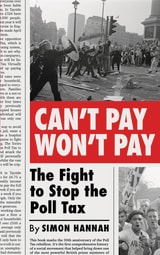
Can't Pay, Won't Pay
The Fight to Stop the Poll TaxSimon Hannah
Pluto Press, 2020
Starting in Scotland where the 'Community Charge' was first trialled, Can't Pay, Won't Pay immerses the reader in the gritty history of the rebellion. Amidst the drama of large scale protests and blockaded estates a number of key figures and groups emerge: Neil Kinnock and Tommy Sheridan; Militant, Class War and the Metropolitan Police.
Assessing this legacy today, Hannah demonstrates the centrality of the Poll Tax resistance as a key chapter in the history of British popular uprisings, Labour Party factionalism, the anti-socialist agenda and failed Tory ideology.
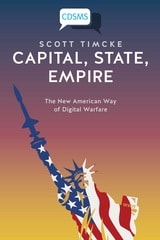
Capital, State, Empire
The New American Way of Digital WarfareScott Timcke
University of Westminster Press, 2017
The United States presents the greatest source of global geo-political violence and instability. Guided by the radical political economy tradition, this book offers an analysis of the USA’s historical impulse to weaponize communication technologies.
Scott Timcke explores the foundations of this impulse and how the militarization of digital society creates structural injustices and social inequalities. He analyses how new digital communication technologies support American paramountcy and conditions for worldwide capital accumulation. Identifying selected features of contemporary American society, Capital, State, Empire undertakes a materialist critique of this digital society and of the New American Way of War. At the same time it demonstrates how the American security state represses activists—such as Black Lives Matter—who resist this emerging security leviathan. The book also critiques the digital positivism behind the algorithmic regulation used to control labour and further diminish prospects for human flourishing for the ‘99%’.
Capital, State, Empire contributes to a broader understanding of the dynamics of global capitalism and political power in the early 21st century.
Categorically Unequal
The American Stratification SystemDouglas S. Massey
Russell Sage Foundation, 2007
Challenging Inequality
Variation across Postindustrial SocietiesEvelyne Huber and John D. Stephens
University of Chicago Press, 2024
A wide-ranging examination of how policies, parties, and labor strength affect inequality in post-industrial societies.
Not all countries are unequal in the same ways or to the same degree. In Challenging Inequality, Evelyne Huber and John D. Stephens analyze different patterns of increasing income inequality in post-industrial societies since the 1980s, assessing the policies and social structures best able to mitigate against the worst effects of market inequality. Combining statistical data analysis from twenty-two countries with a comparative historical analysis of Germany, Spain, Sweden, and the United States, Huber and Stephens identify the factors that drive increases in inequality and shape persistent, marked differences between countries. Their statistical analysis confirms generalizable patterns and in-depth country studies help to further elucidate the processes at work.
Challenging Inequality shows how the combination of globalization and skill-biased technological change has led to both labor market dualization and rising unemployment levels, which in turn have had important effects on inequality and poverty. Labor strength—at both the society level and the enterprise level—has helped to counter rising market income inequality, as has a history of strong human capital spending. The generosity of the welfare state remains the most important factor shaping redistribution, while the consistent power of left parties is the common denominator behind both welfare state generosity and human capital investment.
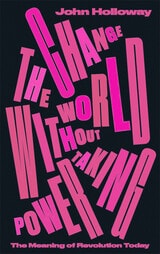
Change the World Without Taking Power
The Meaning of Revolution TodayJohn Holloway
Pluto Press, 2019
After a century of failed attempts by radical projects, the concept of revolution itself is in crisis. By asking the deepest questions about the nature of humanity, work, capitalism, organisation and resistance, John Holloway looks sharply at modern protest movements and provides tools for creating new strategies.
First published in 2002, this book marked a shift in the understanding of Autonomism, Anarchism and Marxism, addressing the doubts activists had in their own political history and work, and helped form the perspectives of a new generation who are today changing the world.
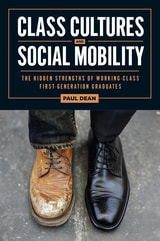
Class Cultures and Social Mobility
The Hidden Strengths of Working-Class First-Generation GraduatesPaul Dean
Rutgers University Press, 2026
When working-class first-generation students enter college or the professional workplace, they often find themselves immersed in entirely new worlds. They must learn the unwritten rules for how to speak, dress, behave, and interact with new peers and colleagues. While striving to fit in and do well, they risk feeling imposter syndrome, a loss of identity, or broken ties with friends and family.
Class Cultures and Social Mobility tells the stories of upwardly mobile first-gen graduates who flipped the script and turned their working-class roots into a strength. This accessible and highly engaging book reveals how first-gen graduates overcame hardship while leveraging unique skills—their working-class cultural capital—in college and their professional careers. It demonstrates there needn’t be a choice between economic success and maintaining authenticity to one’s roots—we can balance the competing demands of the two class worlds together. Whether you're an educator, student, working professional, or advocate, this book provides a powerful way to reimagine the transformations that accompany class mobility.
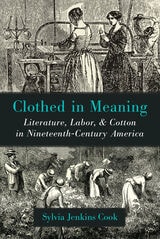
Clothed in Meaning
Literature, Labor, and Cotton in Nineteenth-Century AmericaSylvia Jenkins Cook
University of Michigan Press, 2020
Cloth and clothing provide potent tropes not only for physical but also for intellectual forms of self-expression. Drawing on sources ranging from fugitive slave narratives, newspapers, manifestos, and mill workers’ magazines to fiction, poetry, and autobiographies, Clothed in Meaning examines the significant part played by mill workers and formerly enslaved people, many of whom still worked picking cotton, in this revolution of literary self-expression. They created a new literature from their palpable daily intimacy with cotton, cloth, and clothing, as well as from their encounters with grimly innovative modes of work. In the materials of their labor they discovered vivid tropes for formulating their ideas and an exotic and expert language for articulating them. The harsh conditions of their work helped foster in their writing a trenchant irony toward the demeaning reduction of human beings to “hands” whose minds were unworthy of interest. Ultimately, Clothed in Meaning provides an essential examination of the intimate connections between oppression and luxury as recorded in the many different voices of nineteenth-century labor.
Clutch
An Education at WorkLinda Pawlenty
The Ohio State University Press, 2025
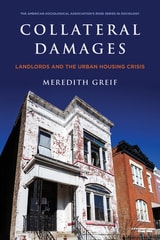
Collateral Damages
Landlords and the Urban Housing CrisisMeredith Greif
Russell Sage Foundation, 2022
For three years, Greif followed sixty private landlords serving low- and moderate-income residents in the Cleveland, Ohio, metropolitan area to better understand how local regulations, such as criminal activity nuisance ordinances (CANOs) and local water billing regulations, affect their landlording practices. CANOs are intended to protect communities by discouraging criminal activity on private properties. Property owners can face financial and criminal sanctions if they do not abate nuisance activities, which can include littering, noise, drug use, and calls for police assistance, including calls for domestic violence. Local water billing regulations hold landlords responsible for delinquent water bills, even in cases where the account is registered in the tenant’s name. Greif finds that such laws often increase landlords’ sense of “financial precarity” – the real or perceived uncertainty that their business is financially unsustainable – by holding them responsible for behavior they feel is out of their control. Feelings of financial uncertainty led some landlords to use illegitimate business practices against their tenants, including harassment, oversurveillance, poor property upkeep, and illegal evictions. And to avoid to financial penalties associated with CANOs and delinquent water bills, some landlords engage in discriminatory screening of vulnerable potential tenants who are unemployed or have histories of domestic violence or drug use. In this sense, by promoting a sense of financial insecurity among landlords, laws meant to protect renters ultimately had the opposite effect.
While some landlords, particularly those who rented a larger number of units, were able to operate their businesses both lawfully and profitably, the majority could not. Greif offers practical recommendations to address the concerns of small- and mid-sized landlords, such as regular meetings that bring landlords and local authorities together to engage in constructive dialogue about local housing policy, issues, and concerns. She also proposes policy recommendations to protect renters, such as establishing the right to counsel for lower-income tenants in eviction hearings and enacting a federal renter’s tax credit.
Collateral Damages is an enlightening investigation on how local laws and practices perpetuate disadvantage among marginalized populations and communities, in ways that are hidden and often unintended.
Collision Course
Economic Change, Criminal Justice Reform, and Work in AmericaKathleen Auerhahn
Rutgers University Press, 2022
Recently, a widespread consensus has emerged that the era of “mass incarceration” is at an end, reflected in a declining prison population. Criminal justice reforms such as diversion and problem-solving courts, a renewed focus on reentry, and drug policy reform have as their goal keeping more individuals with justice system involvement out of prisons, in the community and subsequently in the labor force, which lacks the capacity to accommodate these additional would-be workers. This poses significant problems for criminal justice practice, which relies heavily on employment as a signal of offenders’ intentions to live a law-abiding lifestyle. The diminished capacity of the economy to utilize the labor of all who have historically been expected to work presents significant challenges for American society. Work, in the American ethos is the marker of success, masculinity and how one “contributes to society.” What are the consequences of ignoring these converging structural trends? This book examines these potential consequences, the meaning of work in American society, and suggests alternative redistributive and policy solutions to avert the collision course of these economic and criminal justice policy trends.
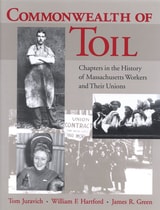
Commonwealth of Toil
Chapters in the History of Massachusetts Workers and Their UnionsThomas Juravich
University of Massachusetts Press, 1996
Over the past two centuries, Massachusetts workers have fought for many important advances that would later be enjoyed by other Americans. The right to organize, restrictions on work hours and child labor, and workers' compensation were all pioneered in the Commonwealth. From the 1825 strike of Boston carpenters for a ten-hour day to recent victories in hospitals and universities, Massachusetts workers and their unions have been in the forefront of the battle for dignity and justice.
This book tells their story. In eighteen chapters, beginning with the first industrial workers in the nation—the Lowell “mill girls”—the authors describe the struggles of working men and women to improve their lives. In the process, the book provides a valuable perspective on the development of the American labor movement.
Community-Engaged Research for Resilience and Health, Volume 4
Edited by Kelli E. Canada and Clark M. Peters
University of Minnesota Press, 2022
The fourth volume in the Interdisciplinary Community-Engaged Research for Health series departs from the traditional view of resilience driven by individuals and reconstructs it to hinge on the community of context. Editors Kelli E. Canada and Clark Peters identified six scholar-practitioner teams who worked to promote resilience in communities across the nation facing health crises and other structural barriers to health, such as low socioeconomic positions, structural racism, and discrimination. This research is part of a two-pronged approach to public health, intending to increase resilience and communities’ internal support while simultaneously reducing barriers to health care access.
The efforts featured in Community-Engaged Research for Resilience and Health highlight community-based solutions, points of strength, and sources of resilience to help communities that are struggling to survive and thrive in the face of adversity. Whether these communities are facing opioid addiction or other substance abuse issues, domestic violence, armed conflict, trauma, or cultural discrimination, the editors and contributors in this volume share examples of Community-Based Participatory Research (CBPR) practices where through a collaborative partnership, the community actively participates in every aspect of the alongside the interdisciplinary research team. What transpires demonstrates how researchers and communities come together to turn adversity into improved health through resilience-focused programs and interventions.
Credit Where It's Due
Rethinking Financial CitizenshipFrederick F. Wherry
Russell Sage Foundation, 2019
Wherry, Seefeldt, and Alvarez tell the story of the Mission Asset Fund, a San Francisco-based organization that assists mostly low- and moderate-income people of color with building credit. The Mission Asset Fund facilitates zero-interest lending circles, which have been practiced by generations of immigrants, but have gone largely unrecognized by mainstream financial institutions. Participants decide how the circles are run and how they will use their loans, and the organization reports their clients’ lending activity to credit bureaus. As the authors show, this system not only helps clients build credit, but also allows them to manage debt with dignity, have some say in the creation of financial products, and reaffirm their sense of social membership. The authors delve into the history of racial wealth inequality in the U.S. to show that for many black and Latino households, credit invisibility is not simply a matter of individual choices or inadequate financial education. Rather, financial marginalization is the result of historical policies that enabled predatory lending, discriminatory banking and housing practices, and the rollback of regulatory protections for first-time homeowners.
To rectify these inequalities, the authors propose common sense regulations to protect consumers from abuse alongside new initiatives that provide seed capital for every child, create affordable short-term loans, and ensure that financial institutions treat low- and moderate-income clients with equal respect. By situating the successes of the Mission Asset Fund in the larger history of credit and debt, Credit Where It’s Due shows how to prioritize financial citizenship for all.
Cross-Racial Class Protest in Antebellum American Literature
Timothy Helwig
University of Massachusetts Press, 2020
Timothy Helwig analyzes the shared strategies of class protest in popular and canonical texts from a range of antebellum white and black American authors, including George Lippard, Ned Buntline, Harry Hazel, Frederick Douglass, William Wells Brown, and Frank J. Webb. This pathbreaking study offers original perspectives on racial representations in antebellum American print culture and provides a new understanding of black and white authors' strivings for socioeconomic justice across racial lines in the years leading up to the Civil War.
Cycle of Segregation
Social Processes and Residential StratificationMaria Krysan
Russell Sage Foundation, 2017
Through original analyses of national-level surveys and in-depth interviews with residents of Chicago, Krysan and Crowder find that residential stratification is reinforced through the biases and blind spots that individuals exhibit in their searches for housing. People rely heavily on information from friends, family, and coworkers when choosing where to live. Because these social networks tend to be racially homogenous, people are likely to receive information primarily from members of their own racial group and move to neighborhoods that are also dominated by their group. Similarly, home-seekers who report wanting to stay close to family members can end up in segregated destinations because their relatives live in those neighborhoods. The authors suggest that even absent of family ties, people gravitate toward neighborhoods that are familiar to them through their past experiences, including where they have previously lived, and where they work, shop, and spend time. Because historical segregation has shaped so many of these experiences, even these seemingly race-neutral decisions help reinforce the cycle of residential stratification. As a result, segregation has declined much more slowly than many social scientists have expected.
To overcome this cycle, Krysan and Crowder advocate multi-level policy solutions that pair inclusionary zoning and affordable housing with education and public relations campaigns that emphasize neighborhood diversity and high-opportunity areas. They argue that together, such programs can expand the number of destinations available to low-income residents and help offset the negative images many people hold about certain neighborhoods or help introduce them to places they had never considered. Cycle of Segregation demonstrates why a nuanced understanding of everyday social processes is critical for interrupting entrenched patterns of residential segregation.
Cyclescapes of the Unequal City
Bicycle Infrastructure and Uneven DevelopmentJohn G. Stehlin
University of Minnesota Press, 2019
A critical look at the political economy of urban bicycle infrastructure in the United States
Not long ago, bicycling in the city was considered a radical statement or a last resort, and few cyclists braved the inhospitable streets of most American cities. Today, however, the urban cyclist represents progress and the urban “renaissance.” City leaders now undertake ambitious new bicycle infrastructure plans and bike share schemes to promote the environmental, social, and economic health of the city and its residents. Cyclescapes of the Unequal City contextualizes and critically examines this new wave of bicycling in American cities, exploring how bicycle infrastructure planning has become a key symbol of—and site of conflict over—uneven urban development.
John G. Stehlin traces bicycling’s rise in popularity as a key policy solution for American cities facing the environmental, economic, and social contradictions of the previous century of sprawl. Using in-depth case studies from San Francisco, Philadelphia, and Detroit, he argues that the mission of bicycle advocacy has converged with, and reshaped, the urban growth machine around a model of livable, environmentally friendly, and innovation-based urban capitalism. While advocates envision a more sustainable city for all, the deployment of bicycle infrastructure within the framework of the neoliberal city in many ways intensifies divisions along lines of race, class, and space.
Cyclescapes of the Unequal City speaks to a growing interest in bicycling as an urban economic and environmental strategy, its role in the politics of gentrification, and efforts to build more diverse coalitions of bicycle advocates. Grounding its analysis in both regional political economy and neighborhood-based ethnography, this book ultimately uses the bicycle as a lens to view major shifts in today’s American city.