Results by title
52 books match the query 'Social values' and 7 start with c

Center
Ideas and InstitutionsEdited by Liah Greenfeld and Michel Martin
University of Chicago Press, 1988
There are several concepts within the social sciences that refer to the fundamental realities on which the various disciplines focus their attention. The concept of the "center," as defined by Edward Shils, has such a status in sociology, for it deals with and attempts to provide an answer to the central question of the discipline—the question of the constitution of society.
"Center" is a commonly used term with a variety of meanings. According to editors Liah Greenfeld and Michel Martin, "center" carries a twofold meaning when used as a concept. In its first sense, it is a synonym for "central value system," referring to irreducible values and beliefs that establish the identity of individuals and bind them into a common universe. In its second sense, "center" refers to "central institutional system," the authoritative institutions and persons who often express or embody the central value system. Both meanings imply a corresponding idea of "periphery," referring both to the elements of society that need to be integrated and to institutions and persons who lack authority.
The original essays compiled in this volume examine and apply the concept of the center in different contexts. The contributors come from a broad range of disciplines—classics, religion, philosophy, history, literary criticism, anthropology, political science, and sociology—which serves to underscore the far-reaching significance of the Shilsean theory of society. The interrelated subsets of the "center-periphery" theme addressed here include: symbolic systems, intellectuals, the expansion of the center into the periphery, parallel concepts in the work of other scholars besides Shils, and the paths of research inspired by these concepts. The volume features an introspective essay by Shils himself, in which he reexamines his central ideas in the light of new experiences and the ideas of others, some of them contained in this volume.
By drawing together such diverse scholars around a unified idea, this collection achieves a cohesion that makes it an exciting contribution to the comparative analysis of social and cultural systems. A collective effort in social theory, Center: Ideas and Institutions is a testimony to the breadth and complexity of one of man's ideas.
[more]
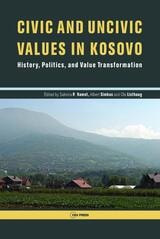
Civic and Uncivic Values in Kosovo
History, Politics, and Value TransformationSabrina P. Ramet
Central European University Press, 2015
This volume is driven by the conviction that the key to the establishment of stable liberal democracy anywhere in the world and, in this case, in Kosovo lies in the completion of three interrelated tasks: first, the creation of effective political institutions, based on the principle of the separation of powers (including the independence of the judiciary); second, the promotion of the rule of law; and, third, the promotion of civic values, including tolerance or ethnic/religious/sexual minorities, trust, and respect for the harm principle. In fact, there are problems across all three measures, including with judicial independence, with the rule of law, and with civic values. On the last of these, research findings show that the citizens of Kosovo rank extremely low on trust of other citizens, low on engagement in social organizations, and tolerance of gays, lesbians, and atheists, but high on trust in the political institutions of their country and in pride of their newly independent state.
[more]
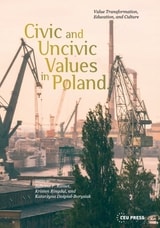
Civic and Uncivic Values in Poland
Value Transformation, Education, and CultureSabrina P. Ramet
Central European University Press, 2019
Poland, like many societies across the world, is becoming more polarized in diverse areas of life, as contending forces seek to advance incompatible agendas. The polarization over values in Polish politics was evident already before communism collapsed but became more obvious in the following years and reached a crescendo after the October 2015 parliamentary elections, which brought a right-wing party into power. This volume focuses on the years since 1989, looking at the clash between civic values (the rule of law, individual rights, tolerance, respect for the harm principle, equality, and neutrality of the state in matters of religion) and uncivic values (the rule of a dictator or dictatorial party, contempt for individual rights, bigotry, disrespect for the harm principle, unequal treatment of people whether through discrimination or through exploitation, and state favoritism of one religion over others). The authors address voting behavior, political parties, anti-Semitism, homophobia, the role of the Catholic Church, and reflections in history textbooks, fi lm, and even rock music. This volume makes clear that for the foreseeable future the conflict in Poland between traditional, conservative values and liberal, civic values is likely to continue, provoking tensions and protests.
[more]
Civic and Uncivic Values
Serbia in the Post-Miloševic EraOla Listhaug
Central European University Press, 2011
Discusses Serbia’s struggle for democratic values after the fall of the Miloševic regime provoked by the NATO war, and after the trauma caused by the secession of Kosovo. Are the value systems of the post-Miloševic era true stumbling blocks of a delayed transition of this country? Seventeen contributors from Norway, Serbia, Italy, Germany, Poland and some other European countries covered a broad range of topics in order to provide answers to this question. The subjects of their investigations were national myths and symbols, history textbooks, media, film, religion, inter-ethnic dialogue, transitional justice, political party agendas and other related themes. The authors of the essays represent different scholarly disciplines whose theoretical conceptions and frameworks are employed in order to analyze two alternative value systems in Serbia: liberal, cosmopolitan and civic on the one hand, and traditional, provincial, nationalist on the other.
[more]
Common Values
Sissela Bok
University of Missouri Press, 2002
In Common Values, now with a new preface,Bok writes eloquently and clearly while combining moral theory with practical ethics, demonstrating how moral values apply to all facets of life—personal, professional, domestic, and international. Drawing on a great deal of historical material, Bok also includes in her examination consideration of the 1993 United Nations World Conference on Human Rights; the World Parliament of Religions; the publication of Veritatis Splendor, Pope John Paul II's proclamation on morality; and the International Commission of Global Governance. Bok's defense of shared morality addresses a crucial topic for our time.
[more]

Controversies and Decisions
The Social Sciences and Public PolicyCharles Frankel
Russell Sage Foundation, 1976
Explores the various aspects of recent debates over the independence of the social sciences. The contributors are Kenneth E. Boulding, Harvey Brooks, Jonathan R. Cole, Stephen Cole, Lee J. Cronbach, Paul Doty, Yaron Ezrahi, Charles Frankel, H. Field Haviland, Hugh Hawkins, Harry G. Johnson, Robert Nisbet, Nicholas Rescher, Edward Shils, and Adam Yarmolinksy. The essays deal with such topics as the relation of "values" to "facts" in social science inquiry; the interplay of theoretical and practical considerations; the moral obligations of social science investigators in political contexts; and the ways and means of protecting and advancing the autonomy of the social sciences.
[more]
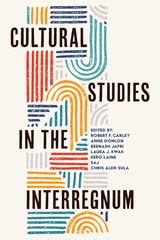
Cultural Studies in the Interregnum
Edited by Robert F. Carley, Anne Donlon, Beenash Jafri, Laura J. Kwak, Eero Laine, SAJ, and Chris Alen Sula
Temple University Press, 2025
The editors and contributors to Cultural Studies in the Interregnum mobilize transnational cultural studies as a tool for politically engaged intellectual critique. Alongside the work of emerging and established scholars and activists, they think through massive cultural shifts and explore the possibilities of the in-between.
Covering queer and feminist studies, critical disability studies, and critical race and ethnic studies, the essays in Cultural Studies in the Interregnum reflect on our shared political pasts and futures. Using examples ranging from media and literature to sex work, policing, and university systems, this exciting volume probes what cultural studies means in moments of social transformation.
Contributors include: Sean Johnson Andrews, C.M. Kaliko Baker, Mary Tuti Baker, James Bliss, Jorge E. Cuéllar, John R. Decker, Brian Dolber, Candace Fujikane, Evyn Lê Espiritu Gandhi, Chris Hall, Rachel Lim, Alexis Pauline Gumbs, Anna Karthika, Manu Karuka, Najwa Mayer, Kyle Mays, Andrew Ó Baoill, Yumi Pak, Therí A. Pickens, Sami Schalk, Leanne Betasamosake Simpson, Tia Trafford, and the editors
[more]