Results by title
86 books match the query 'Soul' and 10 start with c
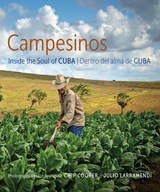
Campesinos
Inside the Soul of CubaChip Cooper and Julio Larramendi
University of Alabama Press, 2017
Into the center of this world traveled two photographers to document these extraordinary people. One, Julio Larramendi, was born in Cuba and has spent his whole life there. The other, Chip Cooper, came to visit for the first time from his native Alabama more than a decade ago. Together, Cooper and Larramendi have captured the light, sounds, and spirit of the campesino landscape and the humble and determined people who inhabit it, ways of living that have not changed, in many instances, for a century or more. From green tobacco fields and winding roads to the faces, both stern and smiling, of children and their close-knit families, Cooper and Larramendi have captured in this landmark volume the rhythms and traditions of contemporary rural Cuban life in ways never before documented.
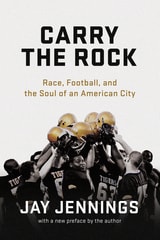
Carry the Rock
Race, Football, and the Soul of an American CityJay Jennings
University of Arkansas Press, 2023
Carry the Rock tells the story of the dramatic ups and downs of a high school football season and reveals a city struggling with its legacy of racial discrimination and the complex issues of contemporary segregation. In the season Jennings masterfully chronicles, Cox finds his ideas sorely tested in his attempts to unify the team, and the result is an account brimming with humor, compassion, frustration, and honesty. What Friday Night Lights did for small-town Texas, Carry the Rock does for the urban South and for any place like Little Rock where sports, race, and community intersect.
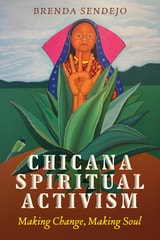
Chicana Spiritual Activism
Making Change, Making SoulBrenda Sendejo
University of Arizona Press, 2026
This book explores the profound impact of spiritual activism within the Chicana feminist movement in Texas. It illuminates how a cohort of Texas Chicanas embraced spiritual activism in pursuit of social change during the movement and into the present day.
The book draws on an array of qualitative methodologies—including interviews, autoethnography, testimonio, pláticas, and archival analysis—to develop what the author formulates as “methodologies of the spirit.” Focusing on the lived experiences, histories, and spiritual activism of sixteen Chicanas/Tejanas, Sendejo shows how these trailblazing women confronted the enduring impacts and repercussions of colonial legacies in Texas through their involvement in movement initiatives such as electoral politics through Mujeres Por La Raza, the cultural arts movement, developing Chicana feminist thought, and the establishment of bilingual education and Chicana/o studies programs.
The activists highlighted in the book include well-known figures such as Santa Barraza, Norma E. Cantú, Rosie Castro, Martha P. Cotera, Inés Hernández-Ávila, and others. Through their work, these activists emerged as architects of their own healing and transformation. Simultaneously, they opened avenues for others to embark on similar journeys reshaping religious practices and unearthing and disseminating spiritual, feminist, and ancestral knowledges.
Christianity and Philosophical Culture in the Fifth Century
The controversy about the Human Soul in the WestErnest Fortin
St. Augustine's Press, 2019
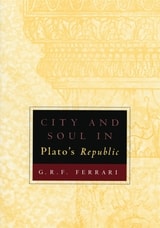
City and Soul in Plato's Republic
G. R. F. Ferrari
University of Chicago Press, 2005
In addition to acknowledging familiar themes in the interpretation of the Republic—the sincerity of its utopianism, the justice of the philosopher's return to the Cave—Ferrari provocatively engages secondary literature by Leo Strauss, Bernard Williams, and Jonathan Lear. With admirable clarity and insight, Ferrari conveys the relation between the city and the soul and the choice between tyranny and philosophy. City and Soul in Plato's Republic will be of value to students of classics, philosophy, and political theory alike.
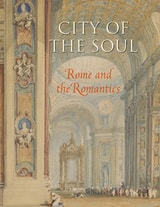
City of the Soul
Rome and the RomanticsJohn A. Pinto
University Press of New England, 2016
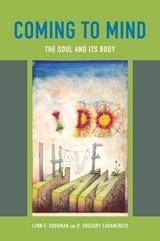
Coming to Mind
The Soul and Its BodyLenn E. Goodman and D. Gregory Caramenico
University of Chicago Press, 2013
Rooted in some of the richest philosophical and intellectual traditions of Western and Eastern philosophy, psychology, literature, and the arts and the latest findings of cognitive psychology and brain science—Coming to Mind is a subtle manifesto of a new humanism and an outstanding contribution to our understanding of the human person. Drawing on new and classical understandings of perception, consciousness, memory, agency, and creativity, Goodman and Caramenico frame a convincing argument for a dynamic and integrated self capable of language, thought, discovery, caring, and love.
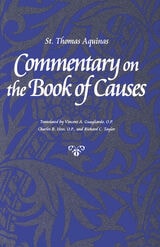
Commentary on the Book of Causes (Thomas Aquinas in Translation)
Saint Thomas Aquinas
Catholic University of America Press, 1996
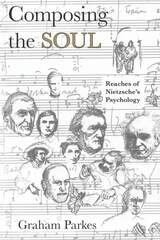
Composing the Soul
Reaches of Nietzsche's PsychologyGraham Parkes
University of Chicago Press, 1994
Composing the Soul is the first study to pay sustained attention to this pronouncement and to examine the contours of Nietzsche's psychology in the context of his life and psychological makeup. Beginning with essays from Nietzsche's youth, Graham Parkes shows the influence of such figures as Goethe, Byron, and Emerson on Nietzsche's formidable and multiple talents. Parkes goes on to chart the development of Nietzsche's psychological ideas in terms of the imagery, drawn from the dialogues of Plato as well as from Nietzsche's own quasi-mystical experiences of nature, in which he spoke of the soul. Finally, Parkes analyzes Nietzsche's most revolutionary idea—that the soul is composed of multiple "drives," or "persons," within the psyche. The task for Nietzsche's psychology, then, was to identify and order these multiple persons within the individual—to compose the soul.
Featuring all new translations of quotations from Nietzsche's writings, Composing the Soul reveals the profundity of Nietzsche's lifelong personal and intellectual struggles to come to grips with the soul. Extremely well-written, this landmark work makes Nietzsche's life and ideas accessible to any reader interested in this much misunderstood thinker.
Creating Beauty To Cure the Soul
Race and Psychology in the Shaping of Aesthetic SurgerySander L. Gilman
Duke University Press, 1998
In his exploration of the striking parallels between the development of cosmetic surgery and the field of psychiatry, Gilman entertains an array of philosophical and psychological questions that underlie the more practical decisions rountinely made by doctors and potential patients considering these types of surgery. While surveying and incorporating the relevant theories of Sigmund Freud, Alfred Adler, Karl Menninger, Paul Schilder, contemporary feminist critics, and others, Gilman considers the highly unstable nature of cultural notions of health, happiness, and beauty. He reveals how ideas of race and gender structured early understandings of aesthetic surgery in discussions of both the “abnormality” of the Jewish nose and the historical requirement that healthy and virtuous females look “normal,” thereby enabling them to achieve invisibility. Reflecting upon historically widespread prejudices, Gilman describes the persecutions, harrassment, attacks, and even murders that continue to result from bodily difference and he encourages readers to question the cultural assumptions that underlie the increasing acceptability of this surgical form of psychotherapy.
Synthesizing a vast body of related literature and containing a comprehensive bibliography, Creating Beauty to Cure the Soul will appeal to a broad audience, including those interested in the histories of medicine and psychiatry, and in philosophy, cultural studies, Jewish cultural studies, and race and ethnicity.