Results by title
501 books match the query 'South' and 29 start with c
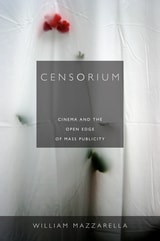
Censorium
Cinema and the Open Edge of Mass PublicityWilliam Mazzarella
Duke University Press, 2013
At the intersection of anthropology, media studies, and critical theory, Censorium is a pathbreaking analysis of Indian film censorship. The book encompasses two moments of moral panic: the consolidation of the cinema in the 1910s and 1920s, and the global avalanche of images unleashed by liberalization since the early 1990s. Exploring breaks and continuities in film censorship across colonial and postcolonial moments, William Mazzarella argues that the censors' obsessive focus on the unacceptable content of certain images and the unruly behavior of particular audiences displaces a problem that they constantly confront yet cannot directly acknowledge: the volatile relation between mass affect and collective meaning. Grounded in a close analysis of cinema regulation in the world's largest democracy, Censorium ultimately brings light to the elusive foundations of political and cultural sovereignty in mass-mediated societies.
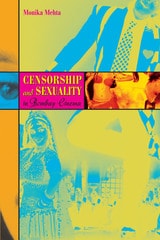
Censorship and Sexuality in Bombay Cinema
By Monika Mehta
University of Texas Press, 2011
India produces an impressive number of films each year in a variety of languages. Here, Monika Mehta breaks new ground by analyzing Hindi films and exploring the censorship of gender and heterosexuality in Bombay cinema. She studies how film censorship on various levels makes the female body and female sexuality pivotal in constructing national identity, not just through the films themselves but also through the heated debates that occur in newspapers and other periodicals. The standard claim is that the state dictates censorship and various prohibitions, but Mehta explores how relationships among the state, the film industry, and the public illuminate censorship's role in identity formation, while also examining how desire, profits, and corruption are generated through the act of censoring.
Committed to extending a feminist critique of mass culture in the global south, Mehta situates the story of censorship in a broad social context and traces the intriguing ways in which the heated debates on sexuality in Bombay cinema actually produce the very forms of sexuality they claim to regulate. She imagines afresh the theoretical field of censorship by combining textual analysis, archival research, and qualitative fieldwork. Her analysis reveals how central concepts of film studies, such as stardom, spectacle, genre, and sound, are employed and (re)configured within the ambit of state censorship, thereby expanding the scope of their application and impact.
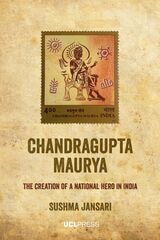
Chandragupta Maurya
The Creation of a National Hero in IndiaSushma Jansari
University College London, 2023
The writing and reception of history fundamentally influence how we engage with the past, and nowhere is that more clear than in the rise from obscurity of Chandragupta Maurya (350–295 BCE), the first emperor of the Mauryan Empire. The key moment in the transformation of Chandragupta into a contemporary national icon was a peace-making meeting between Chandragupta and Seleucus, founder of the Seleucid empire and one of Alexander the Great’s generals. But no reliable account exists in early sources, and it is not even clear which ruler was victorious in battle. That uncertainty enabled British and Indian historians of the nineteenth and twentieth centuries to interpret the sources in radically different ways. With Chandragupta representing India and Seleucus standing in for Britain, British scholars argued that Seleucus defeated Chandragupta, while Indian academics contended the opposite. In India, the image of Chandragupta as an idealized hero who vanquished the foreign invader has prevailed and found expression in contemporary popular culture. In plays, films, television series, comic books, and historical novels, Chandragupta is the powerful and virtuous Hindu ruler par excellence. Sushma Jansari shows how that transformation came about and points out the lessons we can learn from it for understanding other historical figures.
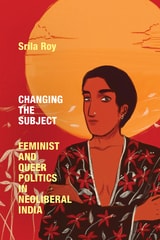
Changing the Subject
Feminist and Queer Politics in Neoliberal IndiaSrila Roy
Duke University Press, 2022
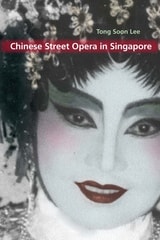
Chinese Street Opera in Singapore
Tong Soon Lee
University of Illinois Press, 2009
Since Singapore declared independence from Malaysia in 1965, Chinese street opera has played a significant role in defining Singaporean identity. Carefully tracing the history of amateur and professional performances in Singapore, Tong Soon Lee reflects on the role of street performance in fostering cultural nationalism and entrepreneurship. He explains that the government welcomes Chinese street opera performances because they combine tradition and modernism and promote a national culture that brings together Singapore's four main ethnic groups--Eurasian, Malay, Chinese, and South Asian.
Chinese Street Opera in Singapore documents the ways in which this politically motivated art form continues to be influenced and transformed by Singaporean politics, ideology, and context in the twenty-first century. By performing Chinese street opera, amateur troupes preserve their rich heritage, underscoring the Confucian mind-set that a learned person engages in the arts for moral and unselfish purposes. Educated performers also control behavior, emotions, and values. They are creative and innovative, and their use of new technologies indicates a modern, entrepreneurial spirit. Their performances bring together diverse ethnic groups to watch and perform, Lee argues, while also encouraging a national attitude focused on both remembering the past and preparing for the future in Singapore.
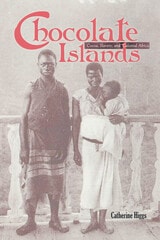
Chocolate Islands
Cocoa, Slavery, and Colonial AfricaCatherine Higgs
Ohio University Press, 2012
In Chocolate Islands: Cocoa, Slavery, and Colonial Africa, Catherine Higgs traces the early-twentieth-century journey of the Englishman Joseph Burtt to the Portuguese colony of São Tomé and Príncipe—the chocolate islands—through Angola and Mozambique, and finally to British Southern Africa. Burtt had been hired by the chocolate firm Cadbury Brothers Limited to determine if the cocoa it was buying from the islands had been harvested by slave laborers forcibly recruited from Angola, an allegation that became one of the grand scandals of the early colonial era. Burtt spent six months on São Tomé and Príncipe and a year in Angola. His five-month march across Angola in 1906 took him from innocence and credulity to outrage and activism and ultimately helped change labor recruiting practices in colonial Africa.
This beautifully written and engaging travel narrative draws on collections in Portugal, the United Kingdom, and Africa to explore British and Portuguese attitudes toward work, slavery, race, and imperialism. In a story still familiar a century after Burtt’s sojourn, Chocolate Islands reveals the idealism, naivety, and racism that shaped attitudes toward Africa, even among those who sought to improve the conditions of its workers.

Chocolate Islands
Cocoa, Slavery, and Colonial AfricaCatherine Higgs
Ohio University Press, 0
This beautifully written and engaging travel narrative draws on collections in Portugal, the United Kingdom, and Africa to explore British and Portuguese attitudes toward work, slavery, race, and imperialism. In a story still familiar a century after Burtt’s sojourn, Chocolate Islands reveals the idealism, naivety, and racism that shaped attitudes toward Africa, even among those who sought to improve the conditions of its workers.
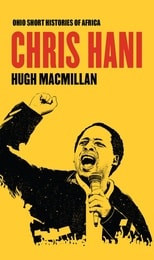
Chris Hani
Hugh Macmillan
Ohio University Press, 2021
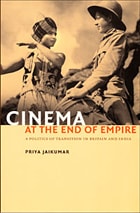
Cinema at the End of Empire
A Politics of Transition in Britain and IndiaPriya Jaikumar
Duke University Press, 2006
In addition to close readings of British and Indian films of the late colonial era, Jaikumar draws on a wealth of historical and archival material, including parliamentary proceedings, state-sponsored investigations into colonial filmmaking, trade journals, and intra- and intergovernmental memos regarding cinema. Her wide-ranging interpretations of British film policies, British initiatives in colonial film markets, and genres such as the Indian mythological film and the British empire melodrama reveal how popular film styles and controversial film regulations in these politically linked territories reconfigured imperial relations. With its innovative examination of the colonial film archive, this richly illustrated book presents a new way to track historical change through cinema.
City of Broken Dreams
Myth-Making, Nationalism and the University in an African Motor CityLeslie J. Bank
Michigan State University Press, 2019
City of Extremes
The Spatial Politics of JohannesburgMartin J. Murray
Duke University Press, 2011
Combining insights from urban studies, cultural geography, and urban sociology with extensive research in South Africa, Murray reflects on the implications of Johannesburg’s dual character as a city of fortified enclaves that proudly displays the ostentatious symbols of global integration and the celebrated “enterprise culture” of neoliberal design, and as the “miasmal city” composed of residual, peripheral, and stigmatized zones characterized by signs of a new kind of marginality. He suggests that the “global cities” paradigm is inadequate to understanding the historical specificity of cities in the Global South, including the colonial mining town turned postcolonial megacity of Johannesburg.
Classical Nashville
Athens of the SouthChristine M. Kreyling
Vanderbilt University Press, 1996
Nashville has been many things: frontier town, Civil War battleground, New South mecca, and Music City, U.S.A. It is headquarters for several religious denominations, and also the home of some of the largest insurance, healthcare, and publishing concerns in the country. Located culturally as well as geographically between North and South, East and West, Nashville is centered in a web of often-competing contradictions.
One binding image of civic identity, however, has been consistent through all of Nashville's history: the classical Greek and Roman ideals of education, art, and community participation that early on led to the city's sobriquet, "Athens of the West," and eventually, with the settling of the territory beyond the Mississippi River, the "Athens of the South."
Illustrated with nearly a hundred archival and contemporary photographs, Classical Nashville shows how Nashville earned that appellation through its adoption of classical metaphors in several areas: its educational and literary history, from the first academies through the establishment of the Fugitive movement at Vanderbilt; the classicism of the city's public architecture, including its Capitol and legislative buildings; the evolution of neoclassicism in homes and private buildings; and the history and current state of the Parthenon, the ultimate symbol of classical Nashville, replete with the awe-inspiring 42-foot statue of Athena by sculptor Alan LeQuire.
Perhaps Nashville author John Egerton best captures the essence of this modern city with its solid roots in the past. He places Nashville "somewhere between the 'Athens of the West' and 'Music City, U.S.A.,' between the grime of a railroad town and the glitz of Opryland, between Robert Penn Warren and Robert Altman." Nashville's classical identifications have always been forward-looking, rather than antiquarian: ambitious, democratic, entrepreneurial, and culturally substantive. Classical Nashville celebrates the continuation of classical ideals in present-day Nashville, ideals that serve not as monuments to a lost past, but as sources of energy, creativity, and imagination for the future of a city.
Clicko
The Wild Dancing BushmanNeil Parsons
University of Chicago Press, 2010
During the 1920s and ’30s, Franz Taibosh—whose stage name was Clicko—performed in front of millions as one of the stars of the Ringling Brothers and Barnum & Bailey Circus. Prior to his fame in the United States, Taibosh toured the world as the “Wild Dancing Bushman,” showing off his frenzied dance moves in freak shows, sideshows, and music halls from Australia to Cuba. When he died in 1940, the New York Times called him “the only African bushman ever exhibited in this country.” In Clicko, Neil Parsons unearths the untold story of Taibosh’s journey from boyhood on a small farm in South Africa to top billing as one of the travelling World’s Fair Freaks.
Through Taibosh’s tale, Parsons brings to life the bizarre golden age of entertainment as well as the role that the dubious new science of race played in it. Beginning with Taibosh’s early life, Clicko untangles the real story of his ancestry from the web of myths spun around him on his rise to international stardom. Parsons then chronicles the unhappy middle period of Taibosh’s career, when he suffered under the heel of a vicious manager. Left to freeze and nearly starve in an unheated apartment, Taibosh was rescued by Frank Cook, Barnum & Bailey’s lawyer. The Cooks adopted Taibosh as a member of their family of circus managers and performers, and his happy—if far from average—years with them make up the final chapter of this remarkable story.
Equal parts entertaining and disturbing, Clicko vividly evokes a forgotten era when vaudeville drew massive crowds and circus freaks were featured in Billboard and Variety. Parsons introduces us to colorful characters such as George Auger the giant and the original Zip the Pinhead, but above all, he gives us an unforgettable portrait of Franz Taibosh, rescued at last from the racists and the romantics and revealed here as an ordinary man with an extraordinary life.

Codes of Misconduct
Regulating Prostitution in Late Colonial BombayAshwini Tambe
University of Minnesota Press, 2009
Against the backdrop of the industrial growth of Bombay, Codes of Misconduct examines the relationship between lawmaking, law enforcement, and sexual commerce. Ashwini Tambe challenges linear readings of how laws create effects and demonstrates that the regulation and criminalization of prostitution were not contrasting approaches to prostitution but different modes of state coercion. By analyzing legal prohibitions as productive forces, she also probes the pornographic imagination of the colonial state, showing how regulations made sexual commerce more visible but rendered the prostitute silent.
Codes of Misconduct engages with debates on state control of sex work and traces how a colonial legacy influences contemporary efforts to contain the spread of HIV and decriminalize sex workers in India today. In doing so, Tambe’s work not only adds to our understanding of empire, sexuality, and the law, it also sheds new light on the long history of Bombay’s transnational links and the social worlds of its underclasses.
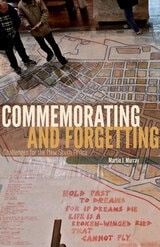
Commemorating and Forgetting
Challenges for the New South AfricaMartin J. Murray
University of Minnesota Press, 2013
When the past is painful, as riddled with violence and injustice as it is in postapartheid South Africa, remembrance presents a problem at once practical and ethical: how much of the past to preserve and recollect and how much to erase and forget if the new nation is to ever unify and move forward? The new South Africa’s confrontation of this dilemma is Martin J. Murray’s subject in Commemorating and Forgetting. More broadly, this book explores how collective memory works—how framing events, persons, and places worthy of recognition and honor entails a selective appropriation of the past, not a mastery of history.
How is the historical past made to appear in the present? In addressing these questions, Murray reveals how collective memory is stored and disseminated in architecture, statuary, monuments and memorials, literature, and art—“landscapes of remembrance” that selectively recall and even fabricate history in the service of nation-building. He examines such vehicles of memory in postapartheid South Africa and parses the stories they tell—stories by turn sanitized, distorted, embellished, and compressed. In this analysis, Commemorating and Forgetting marks a critical move toward recognizing how the legacies and impositions of white minority rule, far from being truly past, remain embedded in, intertwined with, and imprinted on the new nation’s here and now.
Composing Violence
The Limits of Exposure and the Making of MinoritiesMoyukh Chatterjee
Duke University Press, 2023
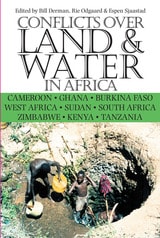
Conflicts Over Land & Water in Africa
Cameroon, Ghana, Burkina Faso, West Africa, Sudan, South Africa, Zimbabwe, Kenya, TanzaniaBill Derman
Michigan State University Press, 2007
This is an examination of the broader context for the re-emergence of land reform and resource conflicts in Africa. Efforts to change the race based systems of land ownership and land tenure in Namibia, South Africa, and Zimbabwe have pushed land issues to the forefront of social and economic discourses in Africa. This collection examines the broader context for the re-emergence of land reform and resource conflicts.
The case studies examine the links between identity maintenance, tenurial changes, state intervention, and forms and modes of conflict. The authors emphasize the need for a deeper understanding of local histories, cultures, and motivations if efforts to attain a more just distribution of resources are to succeed. The book contributes to a field that has been developing rapidly in the decade since the publication of Melissa Leach and Robin Mearns' collection The Lie of the Land and Mahmood Mamdani's Citizen and Subject. Those two books started a wide ranging discussion of the political reasons for failed development in Africa, as well as the environmental and natural resource dimensions of that failure.
Confronting Leviathan
Mozambique Since IndependenceMargaret Hall
Ohio University Press, 1997
Confronting Leviathan describes Mozambique’s attempt to construct a socialist society in one African country on the back of an anti-colonial struggle for national independence. In explaining the failure of this effort the authors suggest reasons why the socialist vision of the ruling party, Frelimo, lacked resonance with Mozambican society. They also document in detail South Africa’s attempts to destabilize the country, even to the extent of sponsoring the Renamo insurgents. The dynamics of that insurgency and its roots in Mozambican society are examined as well as the process of negotiation that brought it to a close. Finally the authors analyze the more recent attempt to construct a liberal capitalist society in Mozambique. From their findings it appears that this may prove no easier than the construction of socialism.
Conjugations
Marriage and Form in New Bollywood CinemaSangita Gopal
University of Chicago Press, 2011
Bollywood movies have been long known for their colorful song-and-dance numbers and knack for combining drama, comedy, action-adventure, and music. But when India entered the global marketplace in the early 1990s, its film industry transformed radically. Production and distribution of films became regulated, advertising and marketing created a largely middle-class audience, and films began to fit into genres like science fiction and horror. In this bold study of what she names New Bollywood, Sangita Gopal contends that the key to understanding these changes is to analyze films’ evolving treatment of romantic relationships.
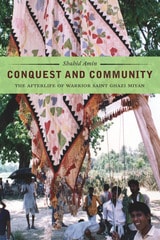
Conquest and Community
The Afterlife of Warrior Saint Ghazi MiyanShahid Amin
University of Chicago Press, 2016
Conquest and Community is Shahid Amin's answer. Covering more than eight hundred years of history, the book centers on the enduringly popular saint Ghazi Miyan, a youthful soldier of Islam whose shrines are found all over India. Amin details the warrior saint’s legendary exploits, then tracks the many ways he has been commemorated in the centuries since. The intriguing stories, ballads, and proverbs that grew up around Ghazi Miyan were, Amin shows, a way of domesticating the conquest—recognizing past conflicts and differences but nevertheless bringing diverse groups together into a community of devotees. What seems at first glance to be the story of one mythical figure becomes an allegory for the history of Hindu-Muslim relations over an astonishingly long period of time, and a timely contribution to current political and historical debates.
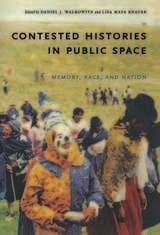
Contested Histories in Public Space
Memory, Race, and NationDaniel J. Walkowitz and Lisa Maya Knauer, eds.
Duke University Press, 2009
Several contributors examine how the experiences of indigenous groups and the imperial past are incorporated into public histories in British Commonwealth nations: in Te Papa, New Zealand’s national museum; in the First Peoples’ Hall at the Canadian Museum of Civilization; and, more broadly, in late-twentieth-century Australian culture. Still others focus on the role of governments in mediating contested racialized histories: for example, the post-apartheid history of South Africa’s Voortrekker Monument, originally designed as a tribute to the Voortrekkers who colonized the country’s interior. Among several essays describing how national narratives have been challenged are pieces on a dispute over how to represent Nepali history and identity, on representations of Afrocuban religions in contemporary Cuba, and on the installation in the French Pantheon in Paris of a plaque honoring Louis Delgrès, a leader of Guadeloupean resistance to French colonialism.
Contributors. Paul Amar, Paul Ashton, O. Hugo Benavides, Laurent Dubois, Richard Flores, Durba Ghosh, Albert Grundlingh, Paula Hamilton, Lisa Maya Knauer, Charlotte Macdonald, Mark Salber Phillips, Ruth B. Phillips, Deborah Poole, Anne M. Rademacher, Daniel J. Walkowitz
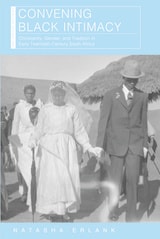
Convening Black Intimacy
Christianity, Gender, and Tradition in Early Twentieth-Century South AfricaNatasha Erlank
Ohio University Press, 2022
An unprecedented study of how Christianity reshaped Black South Africans’ ideas about gender, sexuality, marriage, and family during the first half of the twentieth century.
This book demonstrates that the primary affective force in the construction of modern Black intimate life in early twentieth-century South Africa was not the commonly cited influx of migrant workers but rather the spread of Christianity. During the late nineteenth and early twentieth centuries, African converts developed a new conception of intimate life, one that shaped ideas about sexuality, gender roles, and morality.
Although the reshaping of Black intimacy occurred first among educated Africans who aspired to middle-class status, by the 1950s it included all Black Christians—60 percent of the Black South African population. In turn, certain Black traditions and customs were central to the acceptance of sexual modernity, which gained traction because it included practices such as lobola, in which a bridegroom demonstrates his gratitude by transferring property to his bride’s family. While the ways of understanding intimacy that Christianity informed enjoyed broad appeal because they partially aligned with traditional ways, other individuals were drawn to how the new ideas broke with tradition. In either case, Natasha Erlank argues that what Black South Africans regard today as tradition has been unequivocally altered by Christianity.
In asserting the paramount influence of Christianity on unfolding ideas about family, gender, and marriage in Black South Africa, Erlank challenges social historians who have attributed the key factor to be the migrant labor system. Erlank draws from a wide range of sources, including popular Black literature and the Black press, African church and mission archives, and records of the South African law courts, which she argues have been underutilized in histories of South Africa. The book is sure to attract historians and other scholars interested in the history of African Christianity, African families, sexuality, and the social history of law, especially colonial law.
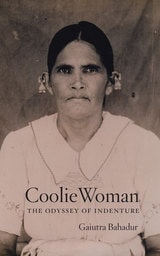
Coolie Woman
The Odyssey of IndentureGaiutra Bahadur
University of Chicago Press, 2013
Shunned by society, and sometimes in mortal danger, many coolie women were either runaways, widows, or outcasts. Many of them left husbands and families behind to migrate alone in epic sea voyages—traumatic “middle passages”—only to face a life of hard labor, dismal living conditions, and, especially, sexual exploitation. As Bahadur explains, however, it is precisely their sexuality that makes coolie women stand out as figures in history. Greatly outnumbered by men, they were able to use sex with their overseers to gain various advantages, an act that often incited fatal retaliations from coolie men and sometimes larger uprisings of laborers against their overlords. Complex and unpredictable, sex was nevertheless a powerful tool.
Examining this and many other facets of these remarkable women’s lives, Coolie Woman is a meditation on survival, a gripping story of a double diaspora—from India to the West Indies in one century, Guyana to the United States in the next—that is at once a search for one’s roots and an exploration of gender and power, peril and opportunity.
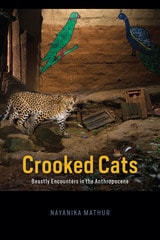
Crooked Cats
Beastly Encounters in the AnthropoceneNayanika Mathur
University of Chicago Press, 2021
There are many theories on why and how a big cat comes to prey on humans, with the ecological collapse emerging as a central explanatory factor. Yet, uncertainty over the precise cause of crookedness persists. Crooked Cats explores in vivid detail the many lived complexities that arise from this absence of certain knowledge to offer startling new insights into both the governance of nonhuman animals and their intimate entanglements with humans. Through creative ethnographic storytelling, Crooked Cats illuminates the Anthropocene in three critical ways: as method, as a way of reframing human-nonhuman relations on the planet, and as a political tool indicating the urgency of academic engagement. Weaving together “beastly tales” spun from encounters with big cats, Mathur deepens our understanding of the causes, consequences, and conceptualization of the climate crisis.
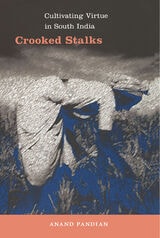
Crooked Stalks
Cultivating Virtue in South IndiaAnand Pandian
Duke University Press, 2009
In vivid, inventive, and engaging prose, Pandian weaves together ethnographic encounters, archival investigations, and elements drawn from Tamil poetry, prose, and popular cinema. Tacking deftly between ploughed soils and plundered orchards, schoolroom lessons and stationhouse registers, household hearths and riverine dams, he reveals moral life in the postcolonial present as a palimpsest of traces inherited from multiple pasts. Pursuing these legacies through the fragmentary play of desire, dream, slander, and counsel, Pandian calls attention not only to the moral potential of ordinary existence, but also to the inescapable force of accident, chance, and failure in the making of ethical lives. Rarely are the moral coordinates of modern power sketched with such intimacy and delicacy.
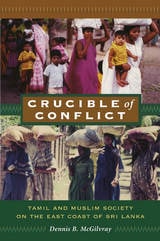
Crucible of Conflict
Tamil and Muslim Society on the East Coast of Sri LankaDennis B. McGilvray
Duke University Press, 2008
McGilvray explores the densely populated farming and fishing settlements in this coastal zone, focusing on the Tamil and Muslim inhabitants of an agricultural town in the Ampara District. Drawing on fieldwork conducted over more than thirty years as well as on Tamil and Dutch historical sources, he describes the regional dominance of a non-Brahmin matrilineal caste of thirteenth-century Kerala origin. The Muslims, who acquired dowry lands and matrilineal family patterns through local intermarriages, have in the twentieth century emerged from Hindu caste domination and are now the Tamil Hindus’ political and economic equals. Crucible of Conflict offers a uniquely detailed account of Muslim kinship and community organization in eastern Sri Lanka, as well as a comparison of Tamil and Muslim practices and institutions. McGilvray concludes with an analysis of the interethnic tensions and communal violence that have intensified in recent years.
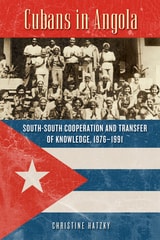
Cubans in Angola
South-South Cooperation and Transfer of Knowledge, 1976–1991Christine Hatzky
University of Wisconsin Press, 2015
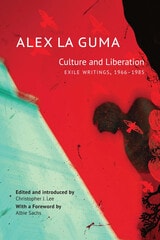
Culture and Liberation
Exile Writings, 1966–1985Alex La Guma
Seagull Books, 2020
This volume spans La Guma’s political and literary life in exile through accounts of his travels to Algeria, Lebanon, Vietnam, Soviet Central Asia, and elsewhere, along with his critical assessments of Paul Robeson, Nadine Gordimer, Maxim Gorky, Alexander Solzhenitsyn, and Pablo Neruda, among other writers. The first dedicated collection of La Guma’s exile writing, Culture and Liberation restores an overlooked dimension of his life and work, while opening a window on a wider world of cultural and political struggles in Africa, Asia, and Latin America during the second half of the twentieth century.
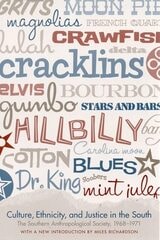
Culture, Ethnicity, and Justice in the South
The Southern Anthropological Society, 1968-1971Southern Anthropological Southern Anthropological Society
University of Alabama Press, 2004
An important anthology putting the leading topics in Southern anthropology in the context of the 1960s
Proceedings of the Southern Anthropological Society:
No. 1, Essays on Medical Anthropology (1968), edited by Thomas Weaver, with contributions by Frank J. Essene, Thomas Weaver, Charles Hudson, Helen Phillips, Hazel Hitson Weidman, Dorothea C. Leighton, Nora F. Cline, Peter Goethals, Berton H. Kaplan, Alice H. Murphree, John G. Peck, and Gianna Hochstein
No. 2, Urban Anthropology: Research Perspectives and Strategies (1968, edited by Elizabeth M. Eddy, with contributions by Charles Hudson, Elizabeth M. Eddy, Conrad M. Arensberg, Charles H. Fairbanks, H. W. Hutchinson, Anthony Leeds, Hans C. Buechler, Brian M. de Toit, Emilio Willems, Michael D. Olien, and John Gulick
No. 3, Concepts and Assumptions in Contemporary Anthropology (1969), edited by Stephen A. Tyler, with contributions by Charles Hudson, Stephen A. Tyler, Eric R. Wolf, Ann Fischer, E. Pendleton Banks, Munro S. Edmonson, Francis E. Johnston, William G. Haag, Arden R. King, and Jan Brukman
No. 4, The Not So Solid South: Anthropological Studies in a Regional Subculture (1971), edited by J. Kenneth Morland, with contributions by Charles Hudson, J. Kenneth Morland, Helen Phillips Keber, Jared Harper, Edward E. Knipe, Helen M. Lewis, Milton B. Newton Jr., Ronald J. Duncan, John Gordon, H. Eugene Hodges, William L. Partridge, Max E. Stanton, Robert Sayers, James L. Peacock, and Christopher Crocker
No. 5, Red, White, and Black: Symposium on Indians in the Old South (1971), edited by Charles M. Hudson, with contributions by Charles Hudson, Louis De Vorsey Jr., William S. Pollitzer, Mary R. Haas, David J. Hally, Charles H. Fairbanks, F. N. Boney, Joseph L. Brent III, William S. Willis Jr., John H. Peterson Jr., and Charles Crowe.
Originally distributed by the University of Georgia Press, are all combined herein with a historical overview in the new introduction by Miles Richardson and with a new index to the complete anthology.