Results by title
149 books match the query 'Spanish & Portuguese' and 9 start with c
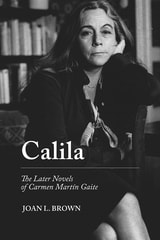
Calila
The Later Novels of Carmen Martín GaiteJoan L. Brown
Bucknell University Press, 2021
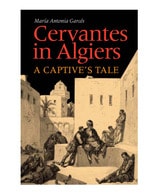
Cervantes in Algiers
A Captive's TaleMaria Antonia Garces
Vanderbilt University Press, 2005
No work has documented in such vivid and illuminating detail the socio-political world of sixteenth-century Algiers, Cervantes's life in the prison-house, his four escape attempts, and the conditions of his final ransom. Garces's portrait of a sophisticated multi-ethnic culture in Algiers, moreover, is likely to open up new discussions about early modern encounters between Christians and Muslims. By bringing together evidence from many different sources, historical and literary, Garces reconstructs the relations between Christians, Muslims, and renegades in a number of Cervantes's writings.
The idea that survivors of captivity need to repeat their story in order to survive (an insight invoked from Coleridge to Primo Levi to Dori Laub) explains not only Cervantes's storytelling but also the book that theorizes it so compellingly. As a former captive herself (a hostage of Colombian guerrillas), the author reads and listens to Cervantes with another ear.
Cervantine Futures
Reading Cervantes after the Critical TurnEdited by Nicholas R. Jones and Paul Michael Johnson
Vanderbilt University Press, 2026
Cervantine Futures places the writings of Miguel de Cervantes into conversation with some of the most pressing issues in cultural studies, critical theory, and sociopolitical discourse of the last decade. Assembling a diverse range of prominent and emerging scholars in the field, this volume stakes a claim for Hispanism’s place in the growing scholarly movement to vindicate pre- and early modernity for its incisive and often singular perspective on race, gender, ability, the body, affect, materialism, and other axes of timely debate.
To date, the writings of Miguel de Cervantes have been oddly sidelined from larger, ongoing scholarly projects to link premodern literature with the most recent analytics of critical theory and cultural studies. Cervantine Futures addresses this conspicuous gap by highlighting creative, forward-looking, and rigorous approaches that situate Cervantes in recent theoretical developments in critical cultural studies. Conceived under the rubric of “futures”—collective and capacious, yet also subjunctive and transtemporal—this book tasks the fields of early modern Iberian and Cervantine studies with adopting a more global approach to the early modern period that surveys the current and historical landscapes while charting new horizons. Crucially, Cervantine Futures reflects upon how early modern texts, cultural modes of expression, and visual ideations from Cervantes’s life and legacy resonate with contemporary debates on gender, race, ability, and other issues. The volume thus includes scholarly provocations that deploy feminist, queer, critical race, disability studies, and new materialist approaches to Cervantes’s oeuvre—tendentiously positioned as “canonical”—with the purpose not only of scrutinizing its sociopolitical meanings, but also of creating new archives that productively reframe and rethink early modernity.
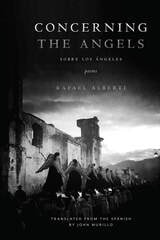
Concerning the Angels
Rafael Alberti
Four Way Books, 2025
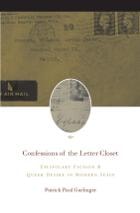
Confessions of the Letter Closet
Epistolary Fiction and Queer Desire in Modern SpainPatrick Paul Garlinger
University of Minnesota Press, 2005
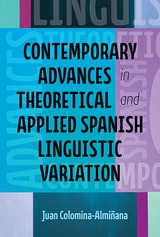
Contemporary Advances in Theoretical and Applied Spanish Linguistic Variation
Juan J. Colomina-Almiñana
The Ohio State University Press, 2017
This volume makes three major contributions to Hispanic sociolinguistics. First, it covers variation in less commonly studied varieties, which are new areas of interest in a broader world where certain minorities and their languages are crucial. Second, it offers recent and innovative approaches to variation coming from formal theories in order to spark a debate about methodology that is more comprehensive of the diverse approaches to variation currently practiced in the field. Finally, it includes chapters that combine quantitative and qualitative analysis of different linguistic variables.
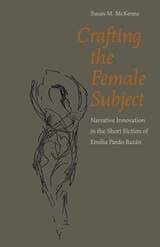
Crafting the Female Subject
Narrative Innovation in the Short Fiction of Emilia Pardo BazánSusan M. McKenna
Catholic University of America Press, 2009

Critical Practices in Post-Franco Spain
Silvia L. Lopez, Jenaro Talens, and Dario Villanueva, Editors
University of Minnesota Press, 1994
Critical Practices in Post-Franco Spain was first published in 1994. Minnesota Archive Editions uses digital technology to make long-unavailable books once again accessible, and are published unaltered from the original University of Minnesota Press editions.
This volume offers a sample of Spanish critical work in literary theory and cultural studies. Like all critical histories, Spain's is political: Philology dominated the critical scene during the Franco years, and after Franco, this hegemony has been contested by semiotics, poststructuralism, psychoanalysis, and feminisms. Without trying to represent all the theoretical projects presently underway in Spanish criticism, this book opens a window on the vast field of new critical practices in Spain and provides a general picture of influential theoretical currents.
The essays collected here range widely in topic and style, and they reflect a new generation's preoccupation with critical problems that go beyond the field of literary studies. The authors focus on new discourse in various print and electronic media, on the discursive construction of the museum space, and on literary theory as it confronts issues of translation, subjectivity, writing, and narratology.Silvia López is assistant professor of Spanish at Carlton Collegea doctoral candidate in the departments of cultural studies and comparative literature at the University of Minnesota. Jenaro Talens is professor of Hispanic literature and comparative literature at the University of Geneva. He is the author of The Branded Eye: Buñuel's Un Chien Andalou, (Minnesota 1993). Darío Villanueva is professor of theory of literature at the University of Santiago de Compostela, Spain.
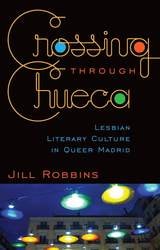
Crossing through Chueca
Lesbian Literary Culture in Queer MadridJill Robbins
University of Minnesota Press, 2010
Jill Robbins traverses the various literary spaces of the city associated with queer culture, in particular the gay barrio of Chueca, revealing how it is a product of interrelations—a site crisscrossed by a multiplicity of subjects who constitute it as a queer space through the negotiation of their sexual, racial, gender, and class identities. Robbins recognizes Chueca as a political space as well, a refuge from homophobia. She also shows how the spatial and literary practices of Chueca relate to economic issues.
In examining how women’s sexual identities have become visible in and through the Chueca phenomenon, this work is a revealing example of transnational queer studies within the broader Western discussion on gender and sexuality.