Results by title
57 books match the query 'State, The' and 9 start with c
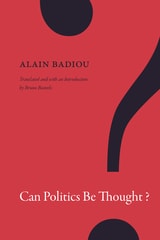
Can Politics Be Thought?
Alain Badiou
Duke University Press, 2018
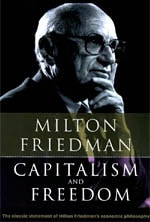
Capitalism and Freedom
Milton Friedman
University of Chicago Press, 1963
"Milton Friedman is one of the nation's outstanding economists, distinguished for remarkable analytical powers and technical virtuosity. He is unfailingly enlightening, independent, courageous, penetrating, and above all, stimulating."-Henry Hazlitt, Newsweek
"It is a rare professor who greatly alters the thinking of his professional colleagues. It's an even rarer one who helps transform the world. Friedman has done both."-Stephen Chapman, Chicago Tribune
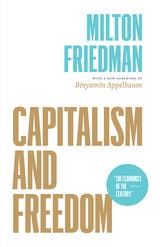
Capitalism and Freedom
Milton Friedman
University of Chicago Press, 2020
One of Times Literary Supplement’s 100 Most Influential Books Since the War
One of National Review’s 100 Best Nonfiction Books of the Century
One of the Intercollegiate Studies Institute’s 50 Best Books of the 20th Century
How can we benefit from the promise of government while avoiding the threat it poses to individual freedom? In this classic book, Milton Friedman provides the definitive statement of an immensely influential economic philosophy—one in which competitive capitalism serves as both a device for achieving economic freedom and a necessary condition for political freedom.
First published in 1962, Friedman’s Capitalism and Freedom is one of the most significant works of economic theory ever written. Enduring in its eminence and esteem, it has sold nearly a million copies in English, has been translated into eighteen languages, and continues to inform economic thinking and policymaking around the world. This new edition includes prefaces written by Friedman for both the 1982 and 2002 reissues of the book, as well as a new foreword by Binyamin Appelbaum, lead economics writer for the New York Times editorial board.
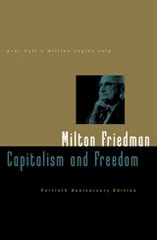
Capitalism and Freedom
Fortieth Anniversary EditionMilton Friedman
University of Chicago Press, 2002
How can we benefit from the promise of government while avoiding the threat it poses to individual freedom? In this classic book, Milton Friedman provides the definitive statement of his immensely influential economic philosophy—one in which competitive capitalism serves as both a device for achieving economic freedom and a necessary condition for political freedom. The result is an accessible text that has sold well over half a million copies in English, has been translated into eighteen languages, and shows every sign of becoming more and more influential as time goes on.
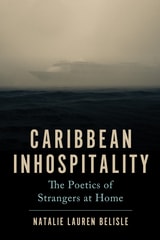
Caribbean Inhospitality
The Poetics of Strangers at HomeNatalie Lauren Belisle
Rutgers University Press, 2025
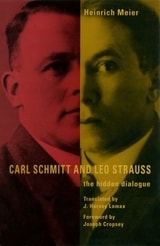
Carl Schmitt and Leo Strauss
The Hidden DialogueHeinrich Meier
University of Chicago Press, 1995
Meier contends that their exchange only ostensibly revolves around liberalism. At its heart, their “hidden dialogue” explores the fundamental conflict between political theology and political philosophy, between revelation and reasonand ultimately, the vital question of how human beings ought to live their lives.
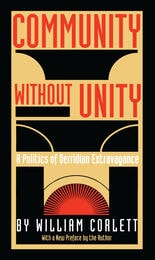
Community Without Unity
A Politics of Derridian ExtravaganceWilliam Corlett
Duke University Press, 1989
Now available in paperback with a new preface by the author, this award-winning book breaks new ground by challenging traditional concepts of community in political theory. William Corlett brings the diverse (and sometimes contradictory) work of Foucault and Derrida to bear on the thought of Pocock, Burke, Lincoln, and McIntyre, among others, to move beyond the conventional dichotomy of "individual vs. community," arguing instead that community is best advanced within a politics of difference.
Constitutionalism, Identity, Difference, and Legitimacy
Theoretical PerspectivesMichel Rosenfeld
Duke University Press, 1994
Sharing a common focus on the interplay between constitutional identity and individual or group diversity, these essays offer challenging new insights on subjects ranging from universal constitutional norms and whether constitutional norms can be successfully transplanted between cultures to a consideration of whether constitutionalism affords the means to reconcile a diverse society’s quest for identity with its need to properly account for its differences; from the relation between constitution-making and revolution to that between collective interests and constitutional liberty and equality.
This collection’s broad scope and nontechnical style will engage scholars from the fields of political theory, social theory, international studies, and law.
Contributors. Andrew Arato, Aharon Barak, Jon Elster, George P. Fletcher, Louis Henkin, Arthur J. Jacobson, Carlos Santiago Nino, Ulrich K. Preuss, David A. J. Richards, Michel Rosenfeld, Dominique Rousseau, András Sajó, Frederick Schauer, Bernhard Schlink, M. M. Slaughter, Cass R. Sunstein, Ruti G. Teitel, Robin West
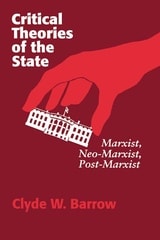
Critical Theories of the State
Marxist, Neomarxist, PostmarxistClyde W. Barrow
University of Wisconsin Press, 1993
Critical Theories of the State is a clear and accessible survey of radical perspectives on the modern state. By focusing on Marxist theory and its variations, particularly as applied to advanced industrial societies and contemporary welfare states, Clyde W. Barrow provides a more extensive and thorough treatment than is available in any other work.
Barrow divides the methodological assumptions and key hypotheses of Marxist, Neo-Marxist, and Post-Marxist theories into five distinct approaches: instrumentalist, structuralist, derivationist, systems-analytic, and organizational realist. He categorizes the many theorists discussed in the book, including such thinkers as Elmer Altvater, G. William Domhoff, Fred Block, Claus Offe, and Theda Skocpol according to their concepts of the state’s relationship to capital and their methodological approach to the state. Based on this survey, Barrow elaborates a compelling typology of radical state theories that identifies with remarkable clarity crucial points of overlap and divergence among the various theories.
Scholars conducting research within the rubric of state theory, political development, and policy history will find Critical Theories of the State an immensely valuable review of the literature. Moreover, Barrow’s work will make an excellent textbook for undergraduate and graduate courses in political science and sociology, and can also be used by those teaching theory courses in international relations, history, and political economy.