Results by title
191 books match the query 'Studies' and 11 start with c

Chaos to Cosmos
Studies in Biblical Patterns of CreationSusan Niditch
SBL Press, 2000
Now Available from Duke University Press
A fresh look at Genesis 1:11 from the perspectives of comparative literature and cultural anthropology. Susan Niditch reveals how Hebrew narratives of chaos, creation, and cosmos structure a mythic-literary world and create an order for human existence. Both the scholar and the student will find Niditch’s imaginative interpretation illuminating.
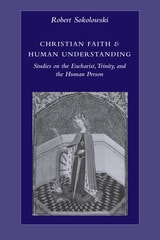
Christian faith & human understanding
studies on the Eucharist, Trinity, and the human personRobert Sokolowski
Catholic University of America Press, 2006
Compadre Colonialism
Studies in the Philippines under American RuleNorman G. Owen, Editor
University of Michigan Press, 1971
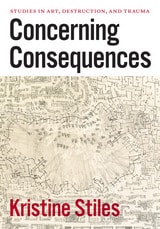
Concerning Consequences
Studies in Art, Destruction, and TraumaKristine Stiles
University of Chicago Press, 2016
The essays in this book focus primarily on performance art and photography. From war and environmental pollution to racism and sexual assault, Stiles analyzes the consequences of trauma as seen in the works of artists like Marina Abramovic, Pope.L, and Chris Burden. Assembling rich intellectual explorations on everything from Paleolithic paintings to the Bible’s patriarchal legacies to documentary images of nuclear explosions, Concerning Consequences explores how art can provide a distinctive means of understanding trauma and promote individual and collective healing.

Conflict, Security, Foreign Policy, and International Political Economy
Past Paths and Future Directions in International StudiesMichael Brecher and Frank P. Harvey, editors
University of Michigan Press, 2009
No study of international relations is complete without consideration of foreign policy processes and an understanding of state security, conflict in global politics, and the relationship between the world economy and international behavior. Conflict, Security, Foreign Policy, and International Political Economy: Past Paths and Future Directions in International Studies consists of twelve original essays that point out the strengths and weaknesses of current approaches in these research areas as well as suggest agendas for future research.
See table of contents and excerpts.
Frank P. Harvey is Professor of Political Science and Director of the Centre for Foreign Policy Studies at Dalhousie University.
Michael Brecher is the R.B. Angus Professor of Political Science at McGill University and past president of the International Studies Association.
Millennial Reflections on International StudiesThis volume is part of the Millennial Reflections on International Studies project in which forty-five prominent scholars engage in self-critical, state-of-the-art reflection on international studies to stimulate debates about successes and failures and to address the larger questions of progress in the discipline.
Other paperbacks from this project:
Realism and Institutionalism in International Studies
Evaluating Methodology
Critical Perspectives in International Studies
The full collection of essays is available in the handbook Millennial Reflections on International Studies.

Contemporary Arab Thought
Studies in Post-1967 Arab Intellectual HistoryIbrahim M. Abu-Rabi'
Pluto Press, 2003
Contemporary Arab Thought is a complex term, encompassing a constellation of social, political, religious and ideological ideas that have evolved over the past two hundred years — ideas that represent the leading positions of the social classes in modern and contemporary Arab societies.
Distinguished Islamic scholar Ibrahim Abu-Rabi‘ addresses such questions as the Shari‘ah, human rights, civil society, secularism and globalization. This is complimented by a focused discussion on the writings of key Arab thinkers who represent established trends of thought in the Arab world, including Muhammad ‘Abid al-Jabiri, Adallah Laroui, Muhammad al-Ghazali, Rashid al-Ghannoushi, Qutatnine Zurayk, Mahdi ‘Amil and many others.
Before 1967, some Arab countries launched hopeful programmes of modernisation. After the 1967 defeat with Israel, many of these hopes were dashed. This book retraces the Arab world’s aborted modernity of recent decades. Abu-Rabi‘ explores the development of contemporary Arab thought against the historical background of the rise of modern Islamism, and the impact of the West on the modern Arab world.
Cosmopolitanism and Solidarity
Studies in Ethnoracial, Religious, and Professional Affiliation in the United StatesDavid A. Hollinger
University of Wisconsin Press, 2006
Building on many of the topics in his highly acclaimed earlier work, these essays treat a number of contentious issues, many of them deeply embedded in America's past and present political polarization. Essays include "Amalgamation and Hypodescent," "Enough Already: Universities Do Not Need More Christianity," "Cultural Relativism," "Why Are Jews Preeminent in Science and Scholarship: The Veblen Thesis Reconsidered," and "The One Drop Rule and the One Hate Rule." Hollinger is at his best in his judicious approach to America's controversial history of race, ethnicity, and religion, and he offers his own thoughtful prescriptions as Americans and others throughout the world struggle with the pressing questions of identity and solidarity.
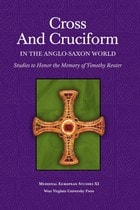
Cross and Cruciform in the Anglo-Saxon World
Studies to Honor the Memory of Timothy ReuterSARAH LARRATT KEEFER
West Virginia University Press, 2010
Cross and Cruciform in the Anglo-Saxon World: Studies to Honor the Memory of Timothy Reuter is edited by Sarah Larratt Keefer, Karen Louise Jolly, and Catherine E. Karkov and is the third and final volume of an ambitious research initiative begun in 1999 concerned with the image of the cross, showing how its very material form cuts across both the culture of a society and the boundaries of academic disciplines—history, archaeology, art history, literature, philosophy, and religion—providing vital insights into how symbols function within society. The flexibility, portability, and adaptability of the Anglo-Saxon understanding of the cross suggest that, in pre-Conquest England, at least, the linking of word, image, and performance joined the physical and spiritual, the temporal and eternal, and the earthly and heavenly in the Anglo-Saxon imaginative landscape.
This volume is divided into three sections. The first section of the collection focuses on representations of “The Cross: Image and Emblem,” with contributions by Michelle P. Brown, David A. E. Pelteret, and Catherine E. Karkov. The second section, “The Cross: Meaning and Word,” deals in semantics and semeology with essays by Éamonn Ó Carragáin, Helen Damico, Rolf Bremmer, and Ursula Lenker. The third section of the book, “The Cross: Gesture and Structure,” employs methodologies drawn from archaeology, new media, and theories of rulership to develop new insights into subjects as varied as cereal production, the little-known Nunburnholme Cross, and early medieval concepts of political power.
Cross and Cruciform in the Anglo-Saxon World: Studies to Honor the Memory of Timothy Reuter is a major collection of new research, completing the publication series of the Sancta Crux/Halig Rod project. Cross and Culture in Anglo-Saxon England: Studies in Honor of George Hardin Brown, Volume 2 in this series, remains available from West Virginia University Press.
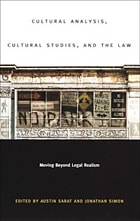
Cultural Analysis, Cultural Studies, and the Law
Moving Beyond Legal RealismAustin Sarat and Jonathan Simon, eds.
Duke University Press, 2003
Drawing on legal scholarship, literary criticism, psychoanalytic theory, and anthropology, the essays collected here exemplify the contributions cultural analysis and cultural studies make to interdisciplinary legal study. Some of these broad-ranging pieces describe particular approaches to the cultural study of the law, while others look at specific moments where the law and culture intersect. Contributors confront the deep connections between law, social science, and post-World War II American liberalism; examine the traffic between legal and late-nineteenth- and early-twentieth-century scientific discourses; and investigate, through a focus on recovered memory, the ways psychotherapy is absorbed into the law. The essayists also explore specific moments where the law is forced to comprehend the world beyond its boundaries, illuminating its dependence on a series of unacknowledged aesthetic, psychological, and cultural assumptions—as in Aldolph Eichmann’s 1957 trial, hiv-related cases, and the U.S. Supreme Court’s recent efforts to define the role of race in the construction of constitutionally adequate voting districts.
Contributors. Paul Berman, Peter Brooks, Wai Chee Dimock, Anthony Farley, Shoshanna Felman, Carol Greenhouse, Paul Kahn, Naomi Mezey, Tobey Miller, Austin Sarat, Jonathan Simon, Alison Young

Cultural Conservatism, Political Liberalism
From Criticism to Cultural StudiesJames Seaton
University of Michigan Press, 1996
Chapters on Lionel Trilling, H. L. Mencken and Irving Babbitt, Ralph Ellison, Dwight Macdonald, Diana Trilling, and Edmund Wilson affirm the continuing pertinence of their work to today's concerns. Seaton then turns to the careers of Leslie Fiedler and Susan Sontag to explore the impact of the cultural radicalism of the sixties on literary criticism. Subsequent chapters analyze the successes and failures of contemporary cultural studies through the writings of Richard Rorty, Edward Said, Stanley Fish and Fredric Jameson.
Separately, these chapters provide provocative readings of the individual critics; together they make a case for the tradition exemplified by these critics as an alternative to contemporary cultural studies. The issues the book discusses extend beyond literary criticism and the academic world to the political-religious- cultural conflicts of today's culture wars.
"These lively, closely argued essays explain very clearly what the issues are, how they arose, and why they are important." --Christopher Lasch
"A forceful argument about the relationship between literary studies and politics that will add something important to the vigorous, and often fierce, discussion of the canon, the politics of literature, and educational reform."--William Cain, Wellesley College
James Seaton is Professor of English, Michigan State University. He is co-editor, with William K. Buckley, of Beyond Cheering and Bashing: New Perspectives on the Closing of the American Mind.

Cultural Marxism in Postwar Britain
History, the New Left, and the Origins of Cultural StudiesDennis Dworkin
Duke University Press, 1997
Limited to neither a single discipline nor a particular intellectual figure, this book comprehensively views British cultural Marxism in terms of the dialogue between historians and the originators of cultural studies and in its relationship to the new left and feminist movements. From the contributions of Eric Hobsbawm, Christopher Hill, Rodney Hilton, Sheila Rowbotham, Catherine Hall, and E. P. Thompson to those of Perry Anderson, Barbara Taylor, Raymond Williams, Dick Hebdige, and Stuart Hall, Dworkin examines the debates over issues of culture and society, structure and agency, experience and ideology, and theory and practice. The rise, demise, and reorganization of journals such as The Reasoner, The New Reasoner, Universities and Left Review, New Left Review, Past and Present, are also part of the history told in this volume. In every instance, the focus of Dworkin’s attention is the intellectual work seen in its political context. Cultural Marxism in Postwar Britain captures the excitement and commitment that more than one generation of historians, literary critics, art historians, philosophers, and cultural theorists have felt about an unorthodox and critical tradition of Marxist theory.