Results by title
94 books match the query 'Techniques' and 7 start with c
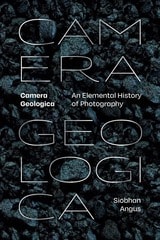
Camera Geologica
An Elemental History of PhotographySiobhan Angus
Duke University Press, 2024
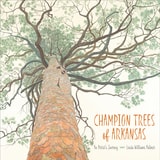
Champion Trees of Arkansas
An Artist's JourneyLinda Williams Palmer
University of Arkansas Press, 2016
In Champion Trees of Arkansas, Linda Williams Palmer explores the state’s largest trees of their species, registered with the Arkansas Forestry Commission as “champions.” Through her beautiful colored-pencil drawings, each magnificent tree is interpreted through the lens of season, location, history, and human connection.
Readers will get to know the cherrybark oak, rendered in fall colors, an avatar for the passing of seasons. The sugar maple, with its bare limbs and weather-beaten trunk, stands sentry over the headstones in a confederate cemetery. The 350-year-old white oak was once dubbed the Council Oak by Native Americans, and the post oak, cared for by generations of the same family, has its own story to tell.
Palmer travelled from Delta swamps to Ozark and Ouachita mountain ridges over a seven-year period to see and document the champions and to talk with property owners and others willing to share the stories of how these trees are beloved and protected by the community, and often entwined with its history. Champion Trees of Arkansas is sure to inspire art and nature lovers everywhere.
Cinematography
Keating, Patrick
Rutgers University Press, 2014
The essays in this volume introduce us to the visual conventions of the Hollywood style, explaining how these first arose and how they have subsequently been challenged by alternative aesthetics. In order to frame this fascinating history, the contributors employ a series of questions about technology (how did new technology shape cinematography?), authorship (can a cinematographer develop styles and themes over the course of a career?), and classicism (how should cinematographers use new technology in light of past practice?). Taking us from the hand-cranked cameras of the silent era to the digital devices used today, the collection of original essays explores how the art of cinematography has been influenced not only by technological advances, but also by trends in the movie industry, from the rise of big-budget blockbusters to the spread of indie films.
The book also reveals the people behind the camera, profiling numerous acclaimed cinematographers from James Wong Howe to Roger Deakins. Lavishly illustrated with over 50 indelible images from landmark films, Cinematography offers a provocative behind-the-scenes look at the profession and a stirring celebration of the art form. Anyone who reads this history will come away with a fresh eye for what appears on the screen because of what happens behind it.
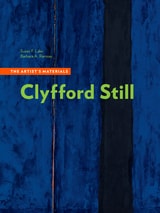
Clyfford Still
The Artist’s MaterialsSusan F. Lake
J. Paul Getty Trust, The, 2022
Among the most radical of the great American Abstract Expressionist painters, Clyfford Still has also long been among the least studied. Still severed ties with the commercial art world in the early 1950s, and his estate at the time of his death in 1980 comprised some 3,125 artworks—including more than 800 paintings—that were all but unknown to the art world. Susan F. Lake and Barbara A. Ramsay were granted access to this collection by the estate and by the Clyfford Still Museum in Denver, which houses this immense corpus today.
This volume, based on the authors’ materials research and enriched by their unprecedented access to Still’s artworks, paints, correspondence, studio records, and personal library, provides the first detailed account of his materials, working methods, and techniques. Initial chapters provide an engaging and erudite overview of the artist's life. Subsequent chapters trace the development of his visionary style, offer in-depth materials analysis of selected works from each decade of his career, and suggest new approaches to the care and conservation of his paintings. There is also a series of technical appendices as well as a full bibliography.
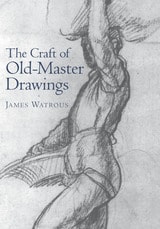
Craft of Old-Master Drawings
James Watrous
University of Wisconsin Press, 1967
A comprehensive study of the techniques of drawing, this is both a historical work, covering the period from the late Middle Ages to the present, and a useful manual for contemporary artists. It presents the old masters’ techniques by means of a thorough study of the historical and written evidence of the tools and materials used. The author also includes a series of workshop procedures he has developed with which the contemporary artist may produce the equivalents of the techniques of earlier draughtsmen. This book comprises a body of knowledge that is essential to students of art history, curators, collectors and artists, and is a significant addition to the literature on drawing.
In addition to his scholarly investigation of earlier practices, the author identifies materials and processes used by such important artists as Rembrandt, Van Gogh, Romney, Picasso, Michelangelo, Watteau, Holbein, Tiepolo, and Delacroix. For the artist interested in reproducing the effects achieved by these and many other acknowledged masters, there are full discussions and specific directions concerning the making of inks, styluses, reed and quill pens, fabricated chalks, and instructions for preparing grounds for metalpoint drawings. At every step, the discussion is supplemented with illustrations from laboratory experiments and from drawings by both old and contemporary artists. Of the more than sixty illustrations included, thirty-six are reproductions of master works, and among the others there are microphotographic enlargements of detail showing the differences in density and texture produced by various tools on different papers or grounds. Thus, as a collection of master drawings, the book is worthy of the art lover’s library; as a technical study, it is an indispensable aid to the art student and practicing artist.
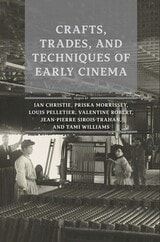
Crafts, Trades, and Techniques of Early Cinema
Ian Christie, Priska Morrissey, Louis Pelletier, Valentine Robert, Jean-Pierre Sirois-Trahan, and Tami Williams
Michigan Publishing Services, 2024
The intermedial approaches deployed in this collection bring into focus the influence of multiple professional worlds and cultural practices on the nascent film medium, as well as the necessary adaptations and transformations required by the latter. This circulatory dynamic concerns people and practices, studied in a non-diffusionist approach taking into account transcultural interactions. Chapters examine the mechanisms of professionalization and identity-building as they relate to professions such as filmmaker or colorist, as well as to more unexpected occupations such as accountant, censor, or chemical engineer.
The notion of technique is broadly defined. Several of the volume’s chapters deal with cameras or special effects, as well as with new historical investigation into mysterious technical devices such as shutters, cue systems or working samples. Going beyond this preoccupation with materiality, the collected studies also approach technique as a human and cultural activity, and thus as a set of gestures, crafts, and expertise. The book more specifically opens up a reflection on the skills of screen performers and on the training that brought the institutionalization of body techniques and film acting. The book further illustrates to an unprecedented extent that the first film workers were frequently women.
Several chapters are dedicated to the unconventional careers of specific film workers, with particular attention being given to the diversity and complexity of professional trajectories. Indeed, this book demonstrates that the invention of cinema was deeply enmeshed with the rise of international networks, which resulted in the standardization of technical practices within corporate and national contexts being ultimately shaped by globalization.
Crossing the Borders
New Methods and Techniques in the Study of Archaeological Materials from the CaribbeanEdited by Corinne L. Hofman, Menno Hoogland, and Annelou L. van Gijn
University of Alabama Press, 2008