Results by title
270 books match the query 'Technology' and 17 start with c

Calling All Cars
Radio Dragnets and the Technology of PolicingKathleen Battles
University of Minnesota Press, 2010

Capital, Class & Technology in Contemporary American Culture
Projecting Post-FordismNick Heffernan
Pluto Press, 2000
He turns to the stories we generate and tell ourselves - via fiction, film journalism, theory - to see how change is registered. By investigating a variety of texts, he observes how structural change affects the way people organise their lives economically, socially and culturally. Case studies include Ridley Scott's Blade Runner, William Gibson's cyberspace trilogy, Thomas Pynchon's The Crying of Lot 49, and Wim Wenders's Until the End of the World.
Using the links between narrative cultural forms and the process of historical understanding, he brings together debates that have so far been conducted largely within the separate domains of political economy, social theory and cultural criticism to provide a compelling analysis of contemporary cultural change. By relocating postmodernism in the context of changing modes of capitalism, Heffernan puts the question of class and class agency back at the centre of the critical agenda.
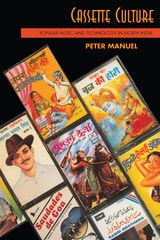
Cassette Culture
Popular Music and Technology in North IndiaPeter Manuel
University of Chicago Press, 1993
Manuel shows that the cassette revolution, however, has brought new contradictions and problems to Indian culture. While inexpensive cassettes revitalized local subcultures and community values throughout the subcontinent, they were also a vehicle for regional and political factionalism, new forms of commercial vulgarity, and, disturbingly, the most provocative sorts of hate-mongering and religious chauvinism.
Cassette Culture is the first scholarly account of Indian popular music and the first case study of a technological revolution now occurring throughout the world. It will be an essential resource for anyone interested in modern India, communications theory, world popular music, or contemporary global culture.
Changing Sex
Transsexualism, Technology, and the Idea of GenderBernice L. Hausman
Duke University Press, 1994
Hausman’s inquiry into the development of endocrinology and plastic surgery shows how advances in medical knowledge were central to the establishment of the material and discursive conditions necessary to produce the demand for sex change—that is, to both "make" and "think" the transsexual. She also retraces the hidden history of the concept of gender, demonstrating that the semantic distinction between "natural" sex and "social" gender has its roots in the development of medical treatment practices for intersexuality—the condition of having physical characteristics of both sexes— in the 1950s. Her research reveals the medical institution’s desire to make heterosexual subjects out of intersexuals and indicates how gender operates semiotically to maintain heterosexuality as the norm of the human body. In critically examining medical discourses, popularizations of medical theories, and transsexual autobiographies, Hausman details the elaboration of "gender narratives" that not only support the emergence of transsexualism, but also regulate the lives of all contemporary Western subjects. Changing Sex will change the ways we think about the relation between sex and gender, the body and sexual identity, and medical technology and the idea of the human.

Charles A. Lindbergh and the American Dilemma
The Conflict of Technology and Human ValuesSusan M. Gray
University of Wisconsin Press, 1988

Children of Ezekiel
Aliens, UFOs, the Crisis of Race, and the Advent of End TimeMichael Lieb
Duke University Press, 1998
Beginning with the merkabah chariot literature of Hebrew and Gnostic mysticism, Lieb shows how religiously inspired people concerned with annihilating their heretical enemies seized on Ezekiel’s vision as revealing the technologically superior instrument of God’s righteous anger. He describes how many who seek to know the unknowable that is the power of God conceive it in technological terms—and how that power is associated with political aims and a heralding of the end of time. For Milton, Ezekiel’s chariot becomes the vehicle in which the Son of God does battle with the rebellious angels. In the modern age, it may take the form of a locomotive, tank, airplane, missile, or UFO. Technology itself is seen as a divine gift and an embodiment of God in the temporal world. As Lieb demonstrates, the impetus to produce modern technology arises not merely from the desire for profit or military might but also from religious-spiritual motives.
Including discussions of conservative evangelical Christian movements, Reagan’s ballistic shooting gallery in the sky, and the Nation of Islam’s vision of the “mother plane” as the vehicle of retribution in the war against racial oppression, Children of Ezekiel will enthrall readers who have been captivated, either through religious belief or intellectual interests, by a common thread uniting millennial religious beliefs, racial conflict, and political and militaristic aspirations.
Citizen Science in the Digital Age
Rhetoric, Science, and Public EngagementJames Wynn
University of Alabama Press, 2016
James Wynn’s timely investigation highlights scientific studies grounded in publicly gathered data and probes the rhetoric these studies employ. Many of these endeavors, such as the widely used SETI@home project, simply draw on the processing power of participants’ home computers; others, like the protein-folding game FoldIt, ask users to take a more active role in solving scientific problems. In Citizen Science in the Digital Age: Rhetoric, Science, and Public Engagement, Wynn analyzes the discourse that enables these scientific ventures, as well as the difficulties that arise in communication between scientists and lay people and the potential for misuse of publicly gathered data.
Wynn puzzles out the intricacies of these exciting new research developments by focusing on various case studies. He explores the Safecast project, which originated from crowd-sourced mapping for Fukushima radiation dispersal, arguing that evolving technologies enable public volunteers to make concrete, sound, science-based arguments. Additionally, he considers the potential use of citizen science as a method of increasing the public’s identification with the scientific community, and contemplates how more collaborative rhetoric might deepen these opportunities for interaction and alignment. Furthermore, he examines ways in which the lived experience of volunteers may be integrated with expert scientific knowledge, and also how this same personal involvement can be used to further policy agendas.
Precious few texts explore the intersection of rhetoric, science, and the Internet. Citizen Science in the Digital Age fills this gap, offering a clear, intelligent overview of the topic intended for rhetoric and communication scholars as well as practitioners and administrators in a number of science-based disciplines. With the expanded availability of once inaccessible technologies and computing power to laypeople, the practice of citizen science will only continue to grow. This study offers insight into how—given prudent application and the clear articulation of common goals—citizen science might strengthen the relationships between scientists and laypeople.

Claiming the Bicycle
Women, Rhetoric, and Technology in Nineteenth-Century AmericaSarah Hallenbeck
Southern Illinois University Press, 2016
Hallenbeck describes the masculine culture of the “Ordinary” bicycle of the 1880s and the ways women helped bring about changes in this culture; asserts that women contributed to bicycle design, helping to produce the more gender-neutral “Safety” bicycle in response to discourse about their needs; and analyzes women writers’ uses of the new venue of popular magazines to shape a “bicycle girl” ethos that prompted new identities for women. The author considers not only how technical documents written by women bicyclists encouraged new riders to understand their activity as transforming gender definitions but also how women used bicycling as a rhetorical resource to influence medical discourse about their bodies.
Making a significant contribution to studies of feminist rhetorical historiography, rhetorical agency, and technical communication, Claiming the Bicycle asserts the utility of a distributed model of rhetorical agency and accounts for the efforts of widely dispersed actors to harness technology in promoting social change.
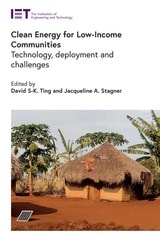
Clean Energy for Low-Income Communities
Technology, deployment and challengesDavid S-K. Ting
The Institution of Engineering and Technology, 2024
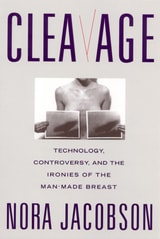
Cleavage
Technology, Controversy, and the Ironies of the Man-Made BreastJacobson, Nora
Rutgers University Press, 1999
Organized both chronologically and thematically, this book examines the history of breast implant technology from 1895 to 1990, including the controversies that erupted in the early 1990s over the safety of the devices and the Food and Drug Administration's regulation of their use. Jacobson examines such topics as politics and bias in medical practice and the role of bureaucracies, corporations, and governments in establishing policy and regulating implant technology.

Concrete Futures
Technology and Decolonization in Modern MoroccoDaniel Williford
University of Chicago Press, 2026
Struggles over critical urban technologies during and after Morocco’s French Protectorate reveal a fundamental conflict over the nature of decolonization in the country.
Concrete Futures is a history of concrete that complicates our view of the building material, revealing it as a site of contestation over resources and authority in twentieth-century Morocco. Beginning with the French protectorate period between 1912 and 1956 and continuing into the post-independence era, Daniel Williford uses debates surrounding concrete building technologies as a conduit through which to explore struggles over colonization, modernization, and decolonization. The half-finished cinder block buildings found in cities all over Morocco, he shows, are a product of the system that colonial engineers and officials developed to deal with labor disputes, contests over knowledge, and anticolonial unrest.
By exploring concrete and its uses, Williford discloses how conflicts between experts, workers, and residents over construction and urban renewal—from the introduction of reinforced concrete to strategies of slum clearance—shaped the meaning and the trajectory of decolonization in Morocco.
Consumers And Citizens
Globalization and Multicultural ConflictsNestor Garcia Canclini
University of Minnesota Press, 2001
An essential analysis of the ways consumerism and globalization intersect with political power.
In Consumers and Citizens, Néstor García Canclini, the best-known and most innovative cultural studies scholar in Latin America, maps the critical effects of urban sprawl and global media and commodity markets on citizens-and shows at the same time that the complex results mean not only a shrinkage of certain traditional rights (particularly those of the welfare or client state) but also new openings for expanding citizenship.
García Canclini focuses on the diverse ways in which democratic societies recognize markets of citizen opinions, however heterogeneous and dissonant, as in the fashion and entertainment industries. He shows how identity issues, brought to the fore by the aligning of citizenship and consumption, can no longer be understood strictly within the purview of territory or nation. Rather, the postmodern citizen-consumer inhabits a transterritorial and multilingual space, structured more along the lines of markets than states. Defining this space, García Canclini seeks to formulate a participatory and critical approach to consumption in which national culture, far from being extinguished, is reconstituted in transnational, cultural interactions.

Controversies in Science and Technology
From Maize to MenopauseEdited by Daniel Lee Kleinman, Abby J. Kinchy, and Jo Handelsman
University of Wisconsin Press, 2005
* Antibiotics and Resistance: the science, the policy debates, and perspectives from a microbiologist, a veterinarian, and an M.D.
* Genetically Modified Maize and Gene Flow: the science of genetic modification, protecting genetic diversity, agricultural biotech vesus the environment, corporate patents versus farmers' rights
* Hormone Replacement Theory and Menopause: overview of the Women's Health Initiative, history of hormone replacement therapy, the medicalization of menopause, hormone replacement therapy and clinical trials
* Smallpox: historical and medical overview of smallpox, government policies for public health, the Emergency Health Powers Act, public resistance vs. cooperation.
Counter-History of the Present
Untimely Interrogations into Globalization, Technology, DemocracyGabriel Rockhill
Duke University Press, 2017

Crash Cultures
Modernity, Mediation and the MaterialEdited by Jane Arthurs and Iain Grant
Intellect Books, 1995
In trying to give meaning to one celebrity crash, the more general significance of the car crash, its challenge to rational control or explanation, its disregard for the subject and its will, became the focus for attention. Coincidentally, the two most newsworthy films of 1997 were David Cronenberg's Crash and James Cameron's Titanic, both of which generated intense popular interest.
The principal purpose of this collection of essays is to subject texts, within which crashes figure, to well-defined cultural study. The themes that emerge from this collection, which is truly experimental in attempting to draw together the resources for a cultural study of events, are many and varied. Moreover, they vary in format, in order to bring as many modes of address as possible to bear on the crashes that catastrophically and fantastically punctuate the fabric of everyday life.
Critical Terms for Media Studies
Edited by W. J. T. Mitchell and Mark B. N. Hansen
University of Chicago Press, 2010
Communications, philosophy, film and video, digital culture: media studies straddles an astounding array of fields and disciplines and produces a vocabulary that is in equal parts rigorous and intuitive. Critical Terms for Media Studies defines, and at times, redefines, what this new and hybrid area aims to do, illuminating the key concepts behind its liveliest debates and most dynamic topics.
Part of a larger conversation that engages culture, technology, and politics, this exciting collection of essays explores our most critical language for dealing with the qualities and modes of contemporary media. Edited by two outstanding scholars in the field, W. J. T. Mitchell and Mark B. N. Hansen, the volume features works by a team of distinguished contributors. These essays, commissioned expressly for this volume, are organized into three interrelated groups: “Aesthetics” engages with terms that describe sensory experiences and judgments, “Technology” offers entry into a broad array of technological concepts, and “Society” opens up language describing the systems that allow a medium to function.
A compelling reference work for our media landscape, Critical Terms for Media Studies will engage and deepen any reader’s knowledge of one of our most important new fields.
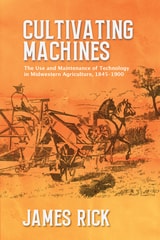
Cultivating Machines
The Use and Maintenance of Technology in Midwestern Agriculture, 1845–1900James Rick
Ohio University Press, 0
How farmers shaped the development of agricultural machinery
Throughout the second half of the nineteenth century, farmers in the midwestern United States and in Ontario began adopting new agricultural machines: threshers, reapers, and drills for more efficient production of grains, as well as sewing and washing machines for more efficient production within the farm household. By using, maintaining, and altering these machines within the natural and social contexts of their farms, rural people produced new technological systems of industrial agriculture. They also struggled with machine manufacturers and their agents for control of those systems—both individually and through farmers’ organizations. Cultivating Machines contributes to historiographies of capitalism, technology, and agriculture as it demonstrates the importance of everyday know-how and informed tinkering to the mechanization of grain agriculture.
In this study, James Rick moves from the middle decades of the nineteenth century, and the introduction of horse-powered machines, to the end of the century, when mechanized technologies became indispensable and central parts of farms themselves. Ultimately, large-scale wheat production, the increased complexity of machines, the need for replacement parts, and the efforts of manufacturers and their agents to assert themselves as authorities over industrial agriculture diminished the technological independence of farming people.