Results by title
51 books match the query 'Television programs' and 3 start with c
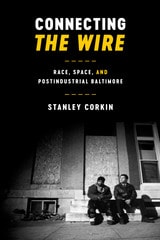
Connecting The Wire
Race, Space, and Postindustrial BaltimoreBy Stanley Corkin
University of Texas Press, 2017
Critically acclaimed as one of the best television shows ever produced, the HBO series The Wire (2002–2008) is a landmark event in television history, offering a raw and dramatically compelling vision of the teeming drug trade and the vitality of life in the abandoned spaces of the postindustrial United States. With a sprawling narrative that dramatizes the intersections of race, urban history, and the neoliberal moment, The Wire offers an intricate critique of a society riven by racism and inequality.
In Connecting The Wire, Stanley Corkin presents the first comprehensive, season-by-season analysis of the entire series. Focusing on the show’s depictions of the built environment of the city of Baltimore and the geographic dimensions of race and class, he analyzes how The Wire’s creator and showrunner, David Simon, uses the show to develop a social vision of its historical moment, as well as a device for critiquing many social “givens.” In The Wire’s gritty portrayals of drug dealers, cops, longshoremen, school officials and students, and members of the judicial system, Corkin maps a web of relationships and forces that define urban social life, and the lives of the urban underclass in particular, in the early twenty-first century. He makes a compelling case that, with its embedded history of race and race relations in the United States, The Wire is perhaps the most sustained and articulate exploration of urban life in contemporary popular culture.
Creating the Viewer
Market Research and the Evolving Media EcosystemJustin Wyatt
University of Texas Press, 2024
A study of the largely hidden world of primary media market research and the different methods used to understand how the viewer is pictured in the industry.
The first book on the intersection between market research and media, Creating the Viewer takes a critical look at media companies’ studies of television viewers, the assumptions behind these studies, and the images of the viewer that are constructed through them. Justin Wyatt examines various types of market research, including talent testing, pilot testing, series maintenance, brand studies, and new show “ideation,” providing examples from a range of programming including news, sitcoms, reality shows, and dramas. He looks at brand studies for networks such as E!, and examines how the brands of individuals such as showrunner Ryan Murphy can be tested. Both an analytical and practical work, the book includes sample questionnaires and paths for study moderators and research analysts to follow. Drawn from over fifteen years of experience in research departments at various media companies, Creating the Viewer looks toward the future of media viewership, discussing how the concept of the viewer has changed in the age of streaming, how services such as Netflix view market research, and how viewers themselves can shift the industry through their media choices, behaviors, and activities.
Cult Television
Sara Gwenllian-Jones
University of Minnesota Press, 2004
Exploring the definition and appeal of cult TV from Emma Peel to Buffy
A television series is tagged with the label “cult” by the media, advertisers, and network executives when it is considered edgy or offbeat, when it appeals to nostalgia, or when it is considered emblematic of a particular subculture. By these criteria, almost any series could be described as cult. Yet certain programs exert an uncanny power over their fans, encouraging them to immerse themselves within a fictional world.
In Cult Television leading scholars examine such shows as The X-Files; The Avengers; Doctor Who, Babylon Five; Star Trek; Xena, Warrior Princess; and Buffy the Vampire Slayer to determine the defining characteristics of cult television and map the contours of this phenomenon within the larger scope of popular culture. Contributors: Karen Backstein; David A. Black, Seton Hall U; Mary Hammond, Open U; Nathan Hunt, U of Nottingham; Mark Jancovich; Petra Kuppers, Bryant College; Philippe Le Guern, U of Angers, France; Alan McKee; Toby Miller, New York U; Jeffrey Sconce, Northwestern U; Eva Vieth.