Results by title
177 books match the query 'Themes, motives' and 13 start with c
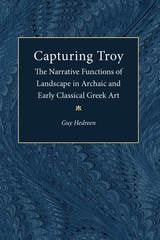
Capturing Troy
The Narrative Functions of Landscape in Archaic and Early Classical Greek ArtGuy Hedreen
University of Michigan Press, 2002
Guy Michael Hedreen is Professor of Art, Williams College.
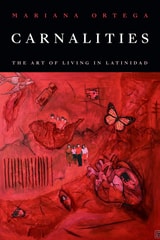
Carnalities
The Art of Living in LatinidadMariana Ortega
Duke University Press, 2025
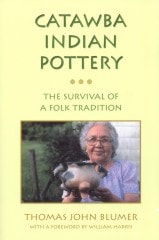
Catawba Indian Pottery
The Survival of a Folk TraditionThomas John Blumer, with a foreword by William L. Harris
University of Alabama Press, 2004
Traces the craft of pottery making among the Catawba Indians of North Carolina from the late 18th century to the present
When Europeans encountered them, the Catawba Indians were living along the river and throughout the valley that carries their name near the present North Carolina-South Carolina border. Archaeologists later collected and identified categories of pottery types belonging to the historic Catawba and extrapolated an association with their protohistoric and prehistoric predecessors.
In this volume, Thomas Blumer traces the construction techniques of those documented ceramics to the lineage of their probable present-day master potters or, in other words, he traces the Catawba pottery traditions. By mining data from archives and the oral traditions of contemporary potters, Blumer reconstructs sales circuits regularly traveled by Catawba peddlers and thereby illuminates unresolved questions regarding trade routes in the protohistoric period. In addition, the author details particular techniques of the representative potters—factors such as clay selection, tool use, decoration, and firing techniques—which influence their styles.
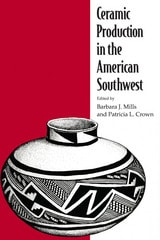
Ceramic Production in the American Southwest
Edited by Barbara J. Mills and Patricia L. Crown
University of Arizona Press, 1995
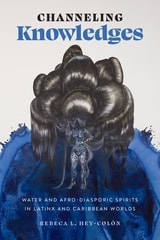
Channeling Knowledges
Water and Afro-Diasporic Spirits in Latinx and Caribbean WorldsRebeca L. Hey-Colón
University of Texas Press, 2023
2024 Honorable Mention, Isis Duarte Book Prize, Haiti/ Dominican Republic section, Latin American Studies Association
How water enables Caribbean and Latinx writers to reconnect to their pasts, presents, and futures.
Water is often tasked with upholding division through the imposition of geopolitical borders. We see this in the construction of the Rio Grande/Río Bravo on the US-Mexico border, as well as in how the Caribbean Sea and the Pacific Ocean are used to delineate the limits of US territory. In stark contrast to this divisive view, Afro-diasporic religions conceive of water as a place of connection; it is where spiritual entities and ancestors reside, and where knowledge awaits.
Departing from the premise that water encourages confluence through the sustainment of contradiction, Channeling Knowledges fathoms water’s depth and breadth in the work of Latinx and Caribbean creators such as Mayra Santos-Febres, Rita Indiana, Gloria Evangelina Anzaldúa, and the Border of Lights collective. Combining methodologies from literary studies, anthropology, history, and religious studies, Rebeca L. Hey-Colón’s interdisciplinary study traces how Latinx and Caribbean cultural production draws on systems of Afro-diasporic worship—Haitian Vodou, La 21 División (Dominican Vodou), and Santería/Regla de Ocha—to channel the power of water, both salty and sweet, in sustaining connections between past, present, and not-yet-imagined futures.
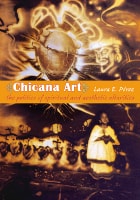
Chicana Art
The Politics of Spiritual and Aesthetic AltaritiesLaura E. Pérez
Duke University Press, 2007
Creating an invaluable archive, Laura E. Pérez examines the work of more than forty Chicana artists across a variety of media including painting, printmaking, sculpture, performance, photography, film and video, comics, sound recording, interactive CD-ROM, altars and other installation forms, and fiction, poetry, and plays. While key works from the 1960s and 1970s are discussed, most of the pieces considered were produced between 1985 and 2001. Providing a rich interpretive framework, Pérez describes how Chicana artists invoke a culturally hybrid spirituality to challenge racism, bigotry, patriarchy, and homophobia. They make use of, and often radically rework, pre-Columbian Mesoamerican and other non-Western notions of art and art-making, and they struggle to create liberating versions of familiar iconography such as the Virgin of Guadalupe and the Sacred Heart. Filled with representations of spirituality and allusions to non-Western visual and cultural traditions, the work of these Chicana artists is a vital contribution to a more inclusive canon of American arts.
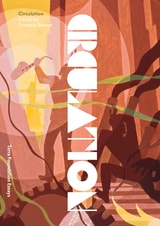
Circulation
Edited by François Brunet
Terra Foundation for American Art, 2017
The third volume in the Terra Foundation Essays series, Circulation brings together an international and interdisciplinary team of scholars, including Thierry Gervais, Tom Gunning, J. M. Mancini, Frank Mehring, and Hélène Valance, who map the multiple planes where artistic meaning has been produced by the circulation of art from the eighteenth century to the present. The book looks at both broad historical trends and the successes and failures of particular works of art from a wide variety of artists and styles. Together, the contributions significantly expand the conceptual and methodological terrain of scholarship on American art.
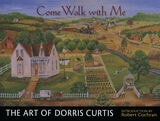
Come Walk with Me
The Art of Dorris CurtisDorris Curtis
University of Arkansas Press, 2004
Complex Identities
Jewish Consciousness and Modern ArtBaigell, Matthew
Rutgers University Press, 2001
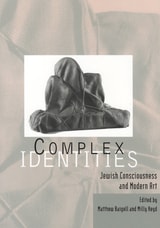
Complex Identities is a joint effort by American and Israeli scholars who ask challenging questions about art as formed by society and ethnicity. Focusing on nineteenth– and twentieth–century European, American, and Israeli artists, the contributors delve into the many ways in which Jewish artists have responded to their Jewishness and to the societies in which they lived, and how these factors have influenced their art, their choice of subject matter, and presentation of their work.
The contributions reflect a broad range of contemporary art criticism drawn from the history of art, culture, and literature. By analyzing how Jewish experiences have depicted and shaped art, the collection begins to answer how art, in its turn, depicts and shapes Jewish experience. An introduction by the volume editors unifies the essays and gives a historical overview.
Concrete Encoded
Poetry, Design, and the Cybernetic Imaginary in BrazilNathaniel Wolfson
University of Texas Press, 2025
A study of concrete art and poetry, its implications, and influence in Brazil.
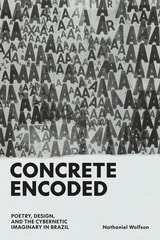
Concrete art and poetry burst onto Brazil’s cultural stage in the 1950s, while the country was embarking on a dizzying period of modernization. Bringing together key poets and visual artists alongside less recognized figures, Nathaniel Wolfson shows that concretism was hardly socially inert, as pundits have suggested. Rather, it presciently grappled with an emerging information age that would soon reorganize human relations globally.
Concrete Encoded describes a nascent cybernetic imaginary. Concretism has long been considered Brazil’s most global aesthetic movement. Wolfson traces new circles of international theorists and practitioners involved in critical technological thought. Wolfson argues that concrete poetry is the quintessential literary genre of the early information age. He shows that Brazilian poets, artists, and designers contested the military dictatorship’s technological authoritarianism and information-gathering operations. Vigorous experimentalists, their attention to form and semantics unveiled both the creative and nefarious possibilities of algorithmic writing. A highly original work, Concrete Encoded reckons with aesthetic responses from Brazil to an advancing capitalist and digital era.
Cosmopolitanism in Mexican Visual Culture
By María Fernández
University of Texas Press, 2014
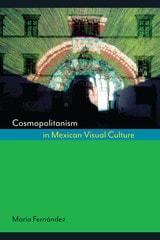
Since the colonial era, Mexican art has emerged from an ongoing process of negotiation between the local and the global, which frequently involves invention, synthesis, and transformation of diverse discursive and artistic traditions. In this pathfinding book, María Fernández uses the concept of cosmopolitanism to explore this important aspect of Mexican art, in which visual culture and power relations unite the local and the global, the national and the international, the universal and the particular. She argues that in Mexico, as in other colonized regions, colonization constructed power dynamics and forms of violence that persisted in the independent nation-state. Accordingly, Fernández presents not only the visual qualities of objects, but also the discourses, ideas, desires, and practices that are fundamental to the very existence of visual objects.
Fernández organizes episodes in the history of Mexican art and architecture, ranging from the seventeenth century to the end of the twentieth century, around the consistent but unacknowledged historical theme of cosmopolitanism, allowing readers to discern relationships among various historical periods and works that are new and yet simultaneously dependent on their predecessors. She uses case studies of art and architecture produced in response to government commissions to demonstrate that established visual forms and meanings in Mexican art reflect and inform desires, expectations, memories, and ways of being in the world—in short, that visual culture and cosmopolitanism are fundamental to processes of subjectification and identity.
Crossing Waters
Undocumented Migration in Hispanophone Caribbean and Latinx Literature & ArtMarisel C. Moreno
University of Texas Press, 2022
2023 Honorable Mention, Isis Duarte Book Prize, Haiti/ Dominican Republic section (LASA)
2023 Winner, Gordon K. and Sybil Lewis Book Award, Caribbean Studies Association
An innovative study of the artistic representations of undocumented migration within the Hispanophone Caribbean
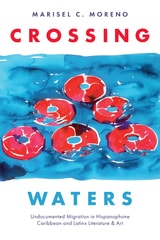
Debates over the undocumented migration of Latin Americans invariably focus on the southern US border, but most migrants never cross that arbitrary line. Instead, many travel, via water, among the Caribbean islands. The first study to examine literary and artistic representations of undocumented migration within the Hispanophone Caribbean, Crossing Waters relates a journey that remains silenced and largely unknown.
Analyzing works by novelists, short-story writers, poets, and visual artists replete with references to drowning and echoes of the Middle Passage, Marisel Moreno shines a spotlight on the plight that these migrants face. In some cases, Puerto Rico takes on a new role as a stepping-stone to the continental United States and the society migrants will join there. Meanwhile the land border between Haiti and the Dominican Republic, the only terrestrial border in the Hispanophone Caribbean, emerges as a complex space within this cartography of borders. And while the Border Patrol occupies US headlines, the Coast Guard occupies the nightmares of refugees.
An untold story filled with beauty, possibility, and sorrow, Crossing Waters encourages us to rethink the geography and experience of undocumented migration and the role that the Caribbean archipelago plays as a border zone.
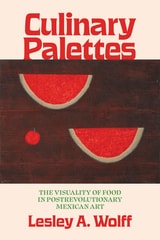
Culinary Palettes
The Visuality of Food in Postrevolutionary Mexican ArtLesley A. Wolff
University of Texas Press, 2025
2026 Mejor libro Humanidades, Mexico Section of the Latin American Studies Association
2026 Honorable Mention, First Book Prize, Cultural Studies Association
2025 Excellence in Scholarly Research and Publication Award, SECAC (formerly the Southeastern College Art Conference)
How the visual culture of food, cookery, and consumption played a central role in the making of postrevolutionary Mexico.
Postrevolutionary Mexico City was a site of anxious nation-building, as rampant modernization converged and clashed with the nation’s growing nostalgia for its pre-Columbian heritage. During this volatile period, food became a meaningful symbol for a Mexican citizenry seeking new modes of national participation.
Culinary Palettes explores how the artistic invocation of food cultures became an arena in which to negotiate the political entanglements of postrevolutionary Mexico. Lesley Wolff casts a nuanced eye on the work of visual artists such as Tina Modotti, Carlos González, and Rufino Tamayo, who nurtured the symbolic and performative power of iconic foods such as pulque, mole poblano, and watermelon. Through analysis of a wide array of visual evidence, including paintings, architecture, vintage postcards, menus, and cookbooks, Culinary Palettes demonstrates how these artists positioned their work within a broad visual landscape that relied upon the power of Mexican foodways in the urban and national imagination. In the studios of modernists, Wolff argues, artistic production, foodways, and Indigeneity proved to be mutually constitutive—and at times weaponized—agents in articulating competing claims to a new nationhood.