Results by title
303 books match the query 'Time' and 9 start with c
Capital Times
Tales from the Conquest of TimeEric Alliez
University of Minnesota Press, 1996
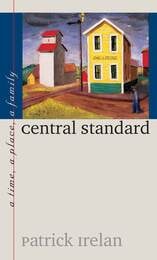
Central Standard
A Time, a Place, a FamilyPatrick Irelan
University of Iowa Press, 2002
Not so long ago, the Rock Island Railroad was a household name, the Great Depression was a recent memory, and family farms dotted the landscape. Today, the great railroads have nearly disappeared, the Depression is a chapter in history books, and family farms are hard to come by. Yet this time is not forgotten.
In Central Standard: A Time, a Place, a Family, Patrick Irelan vividly recaptures a remarkable era in midwestern history in twenty-four beautifully crafted and often witty essays. Beginning with his parents’ marriage in 1932 and continuing into the present, Irelan relates the many wonderful stories and experiences of his Davis County, Iowa, family. In “Country Living,” he describes his parents’ disheartening life as farmers during the worst years of the Depression. “The CB&Q” then relates the happiest years of his family’s life when his parents lived and worked in the Burlington Railroad depots of rural Nebraska.
Irelan’s tales of hard times and harder work, family meals and talkative relatives, depots and farmsteads paint a brilliant yet deceptively simple portrait of one rural, working-class family. At its heart, Central Standard carries a greater message: it reminds us of the enduring strength of the American family.
Choice Over Time
George Loewenstein
Russell Sage Foundation, 1992
Constructions of Time and History in the Pre-Columbian Andes
Edward Swenson
University Press of Colorado, 2018
Constructions of Time and History in the Pre-Columbian Andes explores archaeological approaches to temporalities, social memory, and constructions of history in the pre-Columbian Andes. The authors examine a range of indigenous temporal experiences and ideologies, including astronomical, cyclical, generational, eschatological, and mythical time.
This nuanced, interdisciplinary volume challenges outmoded anthropological theories while building on an emic perspective to gain greater understanding of pre-Columbian Andean cultures. Contributors to the volume rethink the dichotomy of past and present by understanding history as indigenous Andeans perceived it—recognizing the past as a palpable and living presence. We live in history, not apart from it. Within this framework time can be understood as a current rather than as distinct points, moments, periods, or horizons.
The Andes offer a rich context by which to evaluate recent philosophical explorations of space and time. Using the varied materializations and ritual emplacements of time in a diverse sampling of landscapes, Constructions of Time and History in the Pre-Columbian Andes serves as a critique of archaeology’s continued and exclusive dependence on linear chronologies that obscure historically specific temporal practices and beliefs.
Contributors: Tamara L. Bray, Zachary J. Chase, María José Culquichicón-Venegas, Terence D’Altroy, Giles Spence Morrow, Matthew Sayre, Francisco Seoane, Darryl Wilkinson
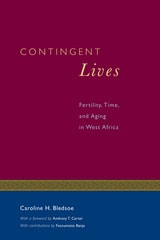
Contingent Lives
Fertility, Time, and Aging in West AfricaCaroline H. Bledsoe
University of Chicago Press, 2002
Using ethnographic and demographic data from a three-year study in rural Gambia, Contingent Lives explains this seemingly counterintuitive fact by juxtaposing two very different understandings of the life course: one is a linear, Western model that equates aging and the ability to reproduce with the passage of time, the other a Gambian model that views aging as contingent on the cumulative physical, social, and spiritual hardships of personal history, especially obstetric trauma. Viewing each of these two models from the perspective of the other, Caroline Bledsoe produces fresh understandings of the classical anthropological subjects of reproduction, time, and aging as culturally shaped within women's conjugal lives. Her insights will be welcomed by scholars of anthropology and demography as well as by those working in public health, development studies, gerontology, and the history of medicine.
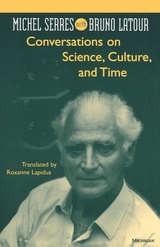
Conversations on Science, Culture, and Time
Michel Serres with Bruno LatourMichel Serres
University of Michigan Press, 1995
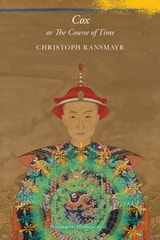
Cox
or, The Course of TimeChristoph Ransmayr
Seagull Books, 2020
The world’s most powerful man, Qiánlóng, emperor of China, invites the famous eighteenth-century clockmaker Alister Cox to his court in Beijing. There, in the heart of the Forbidden City, the Englishman and his assistants are to build machines that mark the passing of time as a child or a condemned man might experience it and that capture the many shades of happiness, suffering, love, and loss that come with that passing.
Mystified by the rituals of a rigidly hierarchical society dominated by an unimaginably wealthy, god-like ruler, Cox musters all his expertise and ingenuity to satisfy the emperor’s desires. Finally, Qiánlóng, also known by the moniker Lord of Time, requests the construction of a clock capable of measuring eternity—a perpetuum mobile. Seizing this chance to realize a long-held dream and honor the memory of his late beloved daughter, yet conscious of the impossibility of his task, Cox sets to work. As the court is suspended in a never-ending summer, festering with evil gossip about the monster these foreigners are creating, the Englishmen wonder if they will ever escape from their gilded cage. More than a meeting of two men, one isolated by power, the other by grief, this is an exploration of mortality and a virtuoso demonstration that storytelling alone can truly conquer time.
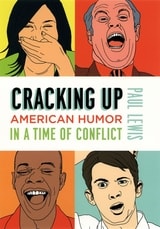
Cracking Up
American Humor in a Time of ConflictPaul Lewis
University of Chicago Press, 2006
What do Jon Stewart, Freddy Krueger, Patch Adams, and George W. Bush have in common? As Paul Lewis shows in Cracking Up, they are all among the ranks of joke tellers who aim to do much more than simply amuse. Exploring topics that range from the sadistic mockery of Abu Ghraib prison guards to New Age platitudes about the healing power of laughter, from jokes used to ridicule the possibility of global climate change to the heartwarming performances of hospital clowns, Lewis demonstrates that over the past thirty years American humor has become increasingly purposeful and embattled.
Navigating this contentious world of controversial, manipulative, and disturbing laughter, Cracking Up argues that the good news about American humor in our time—that it is delightful, relaxing, and distracting—is also the bad news. In a culture that both enjoys and quarrels about jokes, humor expresses our most nurturing and hurtful impulses, informs and misinforms us, and exposes as well as covers up the shortcomings of our leaders. Wondering what’s so funny about a culture determined to laugh at problems it prefers not to face, Lewis reveals connections between such seemingly unrelated jokers as Norman Cousins, Hannibal Lecter, Rush Limbaugh, Garry Trudeau, Jay Leno, Ronald Reagan, Beavis and Butt-Head, and Bill Clinton. The result is a surprising, alarming, and at times hilarious argument that will appeal to anyone interested in the ways humor is changing our cultural and political landscapes.
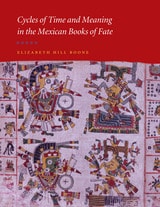
Cycles of Time and Meaning in the Mexican Books of Fate
By Elizabeth Hill Boone
University of Texas Press, 2007
In communities throughout precontact Mesoamerica, calendar priests and diviners relied on pictographic almanacs to predict the fate of newborns, to guide people in choosing marriage partners and auspicious wedding dates, to know when to plant and harvest crops, and to be successful in many of life's activities. As the Spanish colonized Mesoamerica in the sixteenth century, they made a determined effort to destroy these books, in which the Aztec and neighboring peoples recorded their understanding of the invisible world of the sacred calendar and the cosmic forces and supernaturals that adhered to time. Today, only a few of these divinatory codices survive. Visually complex, esoteric, and strikingly beautiful, painted books such as the famous Codex Borgia and Codex Borbonicus still serve as portals into the ancient Mexican calendrical systems and the cycles of time and meaning they encode.
In this comprehensive study, Elizabeth Hill Boone analyzes the entire extant corpus of Mexican divinatory codices and offers a masterful explanation of the genre as a whole. She introduces the sacred, divinatory calendar and the calendar priests and diviners who owned and used the books. Boone then explains the graphic vocabulary of the calendar and its prophetic forces and describes the organizing principles that structure the codices. She shows how they form almanacs that either offer general purpose guidance or focus topically on specific aspects of life, such as birth, marriage, agriculture and rain, travel, and the forces of the planet Venus. Boone also tackles two major areas of controversy—the great narrative passage in the Codex Borgia, which she freshly interprets as a cosmic narrative of creation, and the disputed origins of the codices, which, she argues, grew out of a single religious and divinatory system.