Results by title
104 books match the query 'Times' and 5 start with c

Capitalism's New Clothes
Enterprise, Ethics and Enjoyment in Times of CrisisColin Cremin
Pluto Press, 2011
From broadsheet newspapers to television shows and Hollywood films, capitalism is increasingly recognised as a system detrimental to human existence. Colin Cremin investigates why, despite this de-robing, capitalism remains a powerful and seductive force.
Using materialist, psychoanalytic and linguistic approaches, Cremin shows how capitalism, anxiety and desire enter into a mutually supporting relationship. He identifies three ways in which we are tied in to capitalism – through a social imperative for enterprise and competition; through enjoyment and consumption; and through the depoliticisation of ethical debate by government and business.
Capitalism's New Clothes is ideal for students of sociology and for anyone worried about the ethics of capitalism or embarrassed by the enjoyments the system has afforded them.
[more]
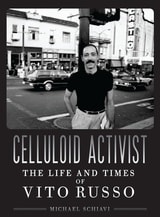
Celluloid Activist
The Life and Times of Vito RussoMichael Schiavi
University of Wisconsin Press, 2011
Celluloid Activist is the biography of gay-rights giant Vito Russo, the man who wrote The Celluloid Closet: Homosexuality in the Movies, commonly regarded as the foundational text of gay and lesbian film studies and one of the first to be widely read.
But Russo was much more than a pioneering journalist and author. A founding member of the Gay and Lesbian Alliance Against Defamation (GLAAD) and cofounder of the AIDS Coalition to Unleash Power (ACT UP), Russo lived at the center of the most important gay cultural turning points in the 1960s, 1970s, and 1980s. His life as a cultural Zelig intersects a crucial period of social change, and in some ways his story becomes the story of a developing gay revolution in America. A frequent participant at “zaps” and an organizer of Gay Activists Alliance (GAA) cabarets and dances—which gave the New York gay and lesbian community its first social alternative to Mafia-owned bars—Russo made his most enduring contribution to the GAA with his marshaling of “Movie Nights,” the forerunners to his worldwide Celluloid Closet lecture tours that gave gay audiences their first community forum for the dissection of gay imagery in mainstream film. Biographer Michael Schiavi unravels Vito Russo’s fascinating life story, from his childhood in East Harlem to his own heartbreaking experiences with HIV/AIDS. Drawing on archival materials, unpublished letters and journals, and more than two hundred interviews, including conversations with a range of Russo’s friends and family from brother Charlie Russo to comedian Lily Tomlin to pioneering activist and playwright Larry Kramer, Celluloid Activistprovides an unprecedented portrait of a man who defined gay-rights and AIDS activism.
“Schiavi tells a compelling story in this biography—from his re-creation of life on the streets of East Harlem and in Greenwich Village of the 1960s and 1970s to the way he conveys Russo’s excitement about his film research and popular education to his account of the AIDS years in New York City.”—John D’Emilio, Italian American Review
“In [Schiavi’s] hands Russo’s life is both fascinating in its own right and a window into a larger milieu of activism during two critical decades.”—Italian American Review
Best Books for General Audiences, selected by the Public Library Reviewers
Finalist, Gay Memoir/Biography, Lambda Literary Awards
Finalist, Over the Rainbow Selection, American Library Association
[more]
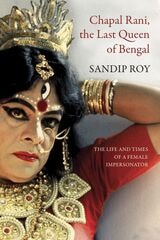
Chapal Rani, the Last Queen of Bengal
The Life and Times of a Female ImpersonatorSandip Roy
Seagull Books, 2025
Blending biography with evocative vignettes, Chapal Rani traces the career of Bengali stage actor Chapal Bhaduri and his struggle for artistic identity in a changing world.
As the last great female impersonator of Bengali theater, Chapal Bhaduri—known as Chapal Rani—once held audiences spellbound in the jatra tradition, where men became goddesses and heroines. But when women finally took their place on stage, Chapal found himself exiled from the world he had ruled. In this groundbreaking biography, Sandip Roy captures the rise and fall of a performer whose art was inseparable from his identity.
Told in Chapal’s own voice and interwoven with evocative fictional vignettes, Chapal Rani, the Last Queen of Bengal brings to life Kolkata’s golden age of theater and the resilience of a man who refused to disappear. Through decades of research and deeply personal interviews, Roy crafts a moving portrait of gender and belonging.
[more]

Chicago's War on Syphilis, 1937-40
The Times, the "Trib," and the Clap DoctorSuzanne Poirier
University of Illinois Press, 1995
"An eye for colorful vignettes and anecdotes. On target! She recognizes
the importance of her subject." -- Thomas N. Bonner, author of To
the Ends of the Earth: Women's Search for Education in Medicine
Those struggling to deal with the AIDS epidemic might learn valuable
lessons from the earlier struggle of the U.S. to deal with syphilis. Here,
Suzanne Poirier tells the story of the Chicago Syphilis Control Program
launched in 1937 by the Chicago Board of Health and the U.S. Public Health
Service and severely limited from the start because of the refusal of
government, the press, and the public to confront directly the issues
underlying the problem.
Poirier's narrative is memorable for its vivid scenes, colorful characters
that include Chicago's "clap doctor," Dr. Ben Reitman, and its
account of the heated debate that surrounded the effort. In an epilogue,
the author discusses similarities between current efforts against AIDS
and the handling and politics of the syphilis problem in the late 1930s.
[more]
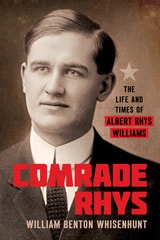
Comrade Rhys
The Life and Times of Albert Rhys WilliamsWilliam Benton Whisenhunt
University of Illinois Press, 2026
Albert Rhys Williams used his cover as a journalist to, as one observer put it, go “through the Bolshevik Revolution in a dress suit.” Inspired by brief friendships with Lenin and John Reed, Williams spent the next forty-five years defending socialism and the Soviet Union.
William Benton Whisenhunt draws on the largely untapped archive of Williams’s papers to provide a first-ever biography of the dedicated radical writer. Williams spent nearly ten years living and traveling in the USSR, where he observed the Soviet system and reported on it with unusual nuance in numerous books, articles, and speeches. Whisenhunt follows Williams from his early life as a lumberyard worker and preacher through his participation in the Revolution and his long career as a radical writer. Able to see socialism as flawed, Williams’s nonetheless defended it as an alternative to capitalism with such vigor that correspondents often addressed him as Comrade Rhys.
Astute and richly detailed, Comrade Rhys reveals the life and work of an overlooked radical thinker.
[more]