Results by title
94 books match the query 'Transnationalism' and 10 start with c
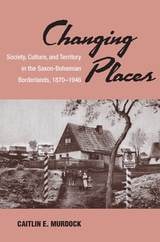
Changing Places
Society, Culture, and Territory in the Saxon-Bohemian Borderlands, 1870-1946Caitlin E. Murdock
University of Michigan Press, 2010
"Changing Places is an interesting meditation on the varying identities and rights claimed by residents of borderlands, the limits placed on the capacities of nation-states to police their borders and enforce national identities, and the persistence of such contact zones in the past and present. It is an extremely well-written and engaging study, and an absolute pleasure to read."
---Dennis Sweeney, University of Alberta
"Changing Places offers a brilliantly transnational approach to its subject, the kind that historians perennially demand of themselves but almost never accomplish in practice."
---Pieter M. Judson, Swarthmore College
Changing Places is a transnational history of the birth, life, and death of a modern borderland and of frontier peoples' changing relationships to nations, states, and territorial belonging. The cross-border region between Germany and Habsburg Austria---and after 1918 between Germany and Czechoslovakia---became an international showcase for modern state building, nationalist agitation, and local pragmatism after World War I, in the 1930s, and again after 1945.
Caitlin Murdock uses wide-ranging archival and published sources from Germany and the Czech Republic to tell a truly transnational story of how state, regional, and local historical actors created, and eventually destroyed, a cross-border region. Changing Places demonstrates the persistence of national fluidity, ambiguity, and ambivalence in Germany long after unification and even under fascism. It shows how the 1938 Nazi annexation of the Czechoslovak "Sudetenland" became imaginable to local actors and political leaders alike. At the same time, it illustrates that the Czech-German nationalist conflict and Hitler's Anschluss are only a small part of the larger, more complex borderland story that continues to shape local identities and international politics today.
Caitlin E. Murdock is Associate Professor of History at California State University, Long Beach.
Jacket Credit: Cover art courtesy of the author
Chasing the American Dream in China
Chinese Americans in the Ancestral HomelandLeslie Kim Wang
Rutgers University Press, 2021
China Inside Out
Contemporary Chinese Nationalism and TransnationalismJoana Breidenbach
Central European University Press, 2005
The authors of this text believe that “areas” as assemblages of social processes requiring distinct, culture-bound explanations cannot be replaced with global theories, but that the meaning of “the area” can be different depending on the question one studies. The study of China and Chinese, in particular, is a good arena to challenge the disciplinary and geographic boundaries of conventional area studies for several reasons. First, because of the wealth of simultaneous processes of rapid political, social, and discursive change in contemporary Chinese society; second, because of the problematic relationship between state, territory, nation, and ethnicity in China; third, because China studies, perhaps more than any other area studies at the moment, is a highly competitive political and academic industry whose internal working must be critically examined. In addition, the subject of China has become one of the primary loci of contesting the meanings of globalization and the universality versus relativity of “values” and modernity.
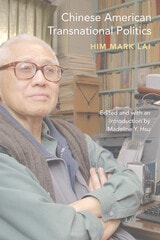
Chinese American Transnational Politics
Him Mark Lai, Edited and with an Introduction by Madeline Y. Hsu
University of Illinois Press, 2010
Born and raised in San Francisco, Lai was trained as an engineer but blazed a trail in the field of Asian American studies. Long before the field had any academic standing, he amassed an unparalleled body of source material on Chinese America and drew on his own transnational heritage and Chinese patriotism to explore the global Chinese experience.
In Chinese American Transnational Politics, Lai traces the shadowy history of Chinese leftism and the role of the Kuomintang of China in influencing affairs in America. With precision and insight, Lai penetrates the overly politicized portrayals of a history shaped by global alliances and enmities and the hard intolerance of the Cold War era. The result is a nuanced and singular account of how Chinese politics, migration to the United States, and Sino-U.S. relations were shaped by Chinese and Chinese American groups and organizations.
Lai revised and expanded his writings over more than thirty years as changing political climates allowed for greater acceptance of leftist activities and access to previously confidential documents. Drawing on Chinese- and English-language sources and echoing the strong loyalties and mobility of the activists and idealists he depicts, Lai delivers the most comprehensive treatment of Chinese transnational politics to date.
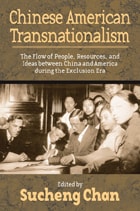
Chinese American Transnationalism
The Flow of People, ResourcesSucheng Chan
Temple University Press, 2005
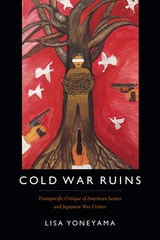
Cold War Ruins
Transpacific Critique of American Justice and Japanese War CrimesLisa Yoneyama
Duke University Press, 2016

Constructing Iron Europe
Transnationalism and Railways in the InterbellumIrene Anastasiadou
Amsterdam University Press, 2012
Continental Divides
Remapping the Cultures of North AmericaRachel Adams
University of Chicago Press, 2009
North America is more a political and an economic invention than a place people call home. Nonetheless, the region shared by the United States and its closest neighbors, North America, is an intriguing frame for comparative American studies. Continental Divides is the first book to study the patterns of contact, exchange, conflict, and disavowal among cultures that span the borders of Canada, the United States, and Mexico.
Rachel Adams considers a broad range of literary, filmic, and visual texts that exemplify cultural traffic across North American borders. She investigates how our understanding of key themes, genres, and periods within U.S. cultural study is deepened, and in some cases transformed, when Canada and Mexico enter the picture. How, for example, does the work of the iconic American writer Jack Kerouac read differently when his Franco-American origins and Mexican travels are taken into account? Or how would our conception of American modernism be altered if Mexico were positioned as a center of artistic and political activity? In this engaging analysis, Adams charts the lengthy and often unrecognized traditions of neighborly exchange, both hostile and amicable, that have left an imprint on North America’s varied cultures.
Crossing Empires
Taking U.S. History into Transimperial TerrainKristin L. Hoganson and Jay Sexton, editors
Duke University Press, 2020
Contributors. Ikuko Asaka, Oliver Charbonneau, Genevieve Clutario, Anne L. Foster, Julian Go, Michel Gobat, Julie Greene, Kristin L. Hoganson, Margaret D. Jacobs, Moon-Ho Jung, Marc-William Palen, Nicole M. Phelps, Jay Sexton, John Soluri, Stephen Tuffnell
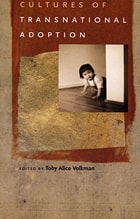
Cultures of Transnational Adoption
Toby Alice Volkman, ed.
Duke University Press, 2005
The cultural experiences considered in this volume raise important questions about race and nation; about kinship, biology, and belonging; and about the politics of the sending and receiving nations. Several essayists explore the images and narratives related to transnational adoption. Others examine the recent preoccupation with “roots” and “birth cultures.” They describe a trip during which a group of Chilean adoptees and their Swedish parents traveled “home” to Chile, the “culture camps” attended by thousands of young-adult Korean adoptees whom South Korea is now eager to reclaim as “overseas Koreans,” and adopted children from China and their North American parents grappling with the question of what “Chinese” or “Chinese American” identity might mean. Essays on Korean birth mothers, Chinese parents who adopt children within China, and the circulation of children in Brazilian families reveal the complexities surrounding adoption within the so-called sending countries. Together, the contributors trace the new geographies of kinship and belonging created by transnational adoption.
Contributors. Lisa Cartwright, Claudia Fonseca, Elizabeth Alice Honig, Kay Johnson, Laurel Kendall, Eleana Kim, Toby Alice Volkman, Barbara Yngvesson