Results by title
83 books match the query 'Treatment' and 5 start with c
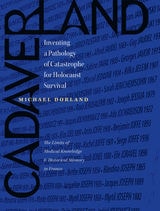
Cadaverland
Inventing a Pathology of Catastrophe for Holocaust Survival [The Limits of Medical Knowledge and Historical Memory in France]Michael Dorland
Brandeis University Press, 2009
In this extraordinary study, Michael Dorland explores sixty years of medical attempts by French doctors (mainly in the fields of neuropsychiatry and psychoanalysis) to describe the effects of concentration camp incarceration on Holocaust survivors. Dorland begins with a discussion of the liberation of concentration camp survivors, their stay in deportation camps, and eventual return to France, analyzing the circulation of mainly medical (neuropsychiatric) knowledge, its struggles to establish a symptomology of camp effects, and its broadening out into connected medical fields such as psychoanalysis. He then turns specifically to the French medical doctors who studied Holocaust survivors, and he investigates somatic, psychological, and holistic conceptions of survivors as patients and human beings. The final third of the book offers a comparative look at the “psy-science” approach to Holocaust survival beyond France, particularly in the United States and Israel. He illuminates the peculiar journey of a medical discourse that began in France but took on new forms elsewhere, eventually expanding into nonmedical fields to create the basis of the “traumato-culture” with which we are familiar today. Embedding his analysis of different medical discourses in the sociopolitical history of France in the twentieth century, he also looks at the French Jewish Question as it affected French medicine, the effects of five years of Nazi Occupation, France’s enthusiastic collaboration, and the problems this would pose for postwar collective memory.
[more]
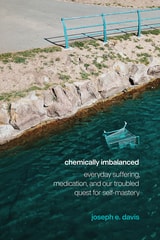
Chemically Imbalanced
Everyday Suffering, Medication, and Our Troubled Quest for Self-MasteryJoseph E. Davis
University of Chicago Press, 2020
Everyday suffering—those conditions or feelings brought on by trying circumstances that arise in everyone’s lives—is something that humans have grappled with for millennia. But the last decades have seen a drastic change in the way we approach it. In the past, a person going through a time of difficulty might keep a journal or see a therapist, but now the psychological has been replaced by the biological: instead of treating the heart, soul, and mind, we take a pill to treat the brain.
Chemically Imbalanced is a field report on how ordinary people dealing with common problems explain their suffering, how they’re increasingly turning to the thin and mechanistic language of the “body/brain,” and what these encounters might tell us. Drawing on interviews with people dealing with struggles such as underperformance in school or work, grief after the end of a relationship, or disappointment with how their life is unfolding, Joseph E. Davis reveals the profound revolution in consciousness that is underway. We now see suffering as an imbalance in the brain that needs to be fixed, usually through chemical means. This has rippled into our social and cultural conversations, and it has affected how we, as a society, imagine ourselves and envision what constitutes a good life. Davis warns that what we envision as a neurological revolution, in which suffering is a mechanistic problem, has troubling and entrapping consequences. And he makes the case that by turning away from an interpretive, meaning-making view of ourselves, we thwart our chances to enrich our souls and learn important truths about ourselves and the social conditions under which we live.
Chemically Imbalanced is a field report on how ordinary people dealing with common problems explain their suffering, how they’re increasingly turning to the thin and mechanistic language of the “body/brain,” and what these encounters might tell us. Drawing on interviews with people dealing with struggles such as underperformance in school or work, grief after the end of a relationship, or disappointment with how their life is unfolding, Joseph E. Davis reveals the profound revolution in consciousness that is underway. We now see suffering as an imbalance in the brain that needs to be fixed, usually through chemical means. This has rippled into our social and cultural conversations, and it has affected how we, as a society, imagine ourselves and envision what constitutes a good life. Davis warns that what we envision as a neurological revolution, in which suffering is a mechanistic problem, has troubling and entrapping consequences. And he makes the case that by turning away from an interpretive, meaning-making view of ourselves, we thwart our chances to enrich our souls and learn important truths about ourselves and the social conditions under which we live.
[more]

Clinical Trials in Ovarian Cancer
Walsh, Christine S
Rutgers University Press, 2017
When a patient is diagnosed with a gynecological malignancy, she and her doctors must make urgent, high-risk decisions about her course of treatment. In selecting an appropriate plan of care, physicians must weigh the patient’s individual needs, the tumor’s specific characteristics, and the treatment’s potential side effects. Because there is no one-size-fits-all treatment solution, a plethora of clinical trials have been performed on ovarian cancer patients, but clinicians may struggle to keep up with this ever-growing body of research.
Collecting and synthesizing research findings from a wide array of medical journal articles and book chapters, Clinical Trials in Ovarian Cancer provides physicians with an invaluable resource. Gynecologic oncologist Christine S. Walsh systematically outlines each of the seminal Phase III trials that have shaped the treatment of ovarian cancers, detailing the rationale for the trial, the patient population studied, treatment delivery methods, efficacy, toxicity, and trial conclusions. She provides a clear overview of established treatments, as well as still-controversial experimental approaches.
The first book to organize this cutting-edge research into an easy-to-use reference, Clinical Trials in Ovarian Cancer should help medical personnel at all levels provide their patients with the highest standard of care.
[more]
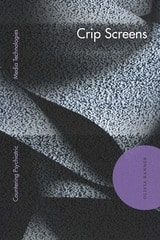
Crip Screens
Countering Psychiatric Media TechnologiesOlivia Banner
Duke University Press, 2025
In Crip Screens, Olivia Banner provides a wide-ranging and ongoing history of Black, feminist-of-color, and crip resistance to psychiatry’s incorporation of hegemonic media technologies into treatment and research. Banner shows how institutions use documentary films, data visualization, network graphs, therapy chatbots, virtual patient training programs, and pharmaceutical advertising to pathologize certain people as “deviant” and “mentally ill.” Those people so categorized have used media technologies toward alternative visions of care. Examining insurgent media and technology efforts in the 1960s and 1970s, Banner shows how women and communities of color worked to wrest away from psychiatry its hold over representing mental distress and pathological categorization. These efforts and innovations, she argues, were distinct from what is now accepted as the antipsychiatry movement. In so doing, Banner recovers a lost history of disability politics—what she calls crip screens—that refused psychiatry’s use of cultural productions toward its carceral and subjugating designs.
[more]

Cruel Attachments
The Ritual Rehab of Child Molesters in GermanyJohn Borneman
University of Chicago Press, 2015
There is no more seemingly incorrigible criminal type than the child sex offender. Said to suffer from a deeply rooted paraphilia, he is often considered as outside the moral limits of the human, profoundly resistant to change. Despite these assessments, in much of the West an increasing focus on rehabilitation through therapy provides hope that psychological transformation is possible. Examining the experiences of child sex offenders undergoing therapy in Germany—where such treatments are both a legal right and duty—John Borneman, in Cruel Attachments, offers a fine-grained account of rehabilitation for this reviled criminal type.
Carefully exploring different cases of the attempt to rehabilitate child sex offenders, Borneman details a secular ritual process aimed not only at preventing future acts of molestation but also at fundamentally transforming the offender, who is ultimately charged with creating an almost entirely new self. Acknowledging the powerful repulsion felt by a public that is often extremely skeptical about the success of rehabilitation, he challenges readers to confront the contemporary contexts and conundrums that lie at the heart of regulating intimacy between children and adults.
Carefully exploring different cases of the attempt to rehabilitate child sex offenders, Borneman details a secular ritual process aimed not only at preventing future acts of molestation but also at fundamentally transforming the offender, who is ultimately charged with creating an almost entirely new self. Acknowledging the powerful repulsion felt by a public that is often extremely skeptical about the success of rehabilitation, he challenges readers to confront the contemporary contexts and conundrums that lie at the heart of regulating intimacy between children and adults.
[more]