141 books match the query 'Turkey' and 6 start with c
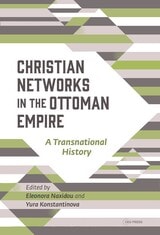
cover of Christian Networks in the Ottoman Empire: A Transnational History

Christian Networks in the Ottoman Empire

A Transnational History

Yura Konstantinova

Central European University Press, 2024

Observers and historians continue to marvel at the diversity and complexity of the Ottoman Empire. This book explores the significant and multifaceted role that Orthodox Christian networks played in the sultan’s realm from the 17th century until WWI. These multi-ethnic, multi-lingual, and multi-confessional formations contributed fundamentally to the political, economic, social, and cultural development of the Empire as well as to its gradual disintegration.

Bringing together scholars from most Balkan countries, Christian Networks in the Ottoman Empire describes the variety of Orthodox Christian networks under Ottoman rule. The examples examined include commercial relations, intellectual networks, educational systems, religious dynamics, consular activities, and revolutionary movements, and involve Muslims and Christians, Romanians and Serbs, Bulgarians and Greeks, Albanians and Turks. The contributions show that the Christian populations and their elites were an integral part of Ottoman society.

The geographical spread of the formal and informal networks enriches our understanding of the terms ‘center’ and ‘periphery.’ They were either centered within the official Ottoman borders and extended their activities to other states and empires, or vice versa, located elsewhere, but also active in the Ottoman Empire. A common feature of these formations is their constant fluctuation, which enables a dynamic understanding of Ottoman history.

[more]
cover of Cinemas of the Other: A Personal Journey with Film-Makers from Iran and Turkey

Cinemas of the Other

A Personal Journey with Film-Makers from Iran and Turkey

Gönül Dönmez-Colin

Intellect Books, 2012
Updated collections of recent interviews with filmmakers whose works represent trends in the film industries of Central Asia and the Middle East, these two new geospecific editions expand upon the earlier volume Cinemas of the Other: A Personal Journey with Film-Makers from the Middle East and Central Asia.
 
Following an introduction delineating the histories of the film industries of the countries that make up the Middle East and Central Asia—including Iran, Turkey, and the Central Asian republics of Kazakhstan, Kyrgyzstan, Tajikstan, Turkmenistan, and Uzbekistan—both books contain interviews stretching over a decade, which position the filmmakers and their creative concerns within the social or political context of their respective countries. The striking variety of approaches toward each interview creates a rich diversity of tone and opens the door to a better understanding of images of “otherness” in film. In addition to transcripts of the interviews, each chapter also includes stills from important films discussed, biographical information about the filmmakers, and filmographies of their works.
 
Gönül Dönmez-Colin offers in these expanded editions a carefully researched and richly detailed firsthand account of the developments and trends in these regional film industries that is sure to be appreciated by film scholars and researchers of the Middle East and Central Asia.
[more]
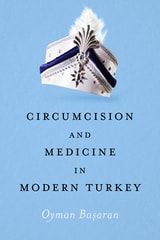
cover of Circumcision and Medicine in Modern Turkey

Circumcision and Medicine in Modern Turkey

Oyman Basaran

University of Texas Press, 2023

An investigation of how the expansion of modern medicine in Turkey transformed young boys’ experiences of circumcision.

In Turkey, circumcision is viewed as both a religious obligation and a rite of passage for young boys, as communities celebrate the ritual through gatherings, gifts, and special outfits. Yet the procedure is a potentially painful and traumatic ordeal. With the expansion of modern medicine, the social position of sünnetçi (male circumcisers) became subject to the institutional arrangements of Turkey’s evolving health care and welfare system. In the transition from traditional itinerant circumcisers to low-ranking health officers in the 1960s and hospital doctors in the 1990s, the medicalization of male circumcision has become entangled with state formation, market fetishism, and class inequalities.

Based on Oyman Başaran’s extensive ethnographic and historical research, Circumcision and Medicine in Modern Turkey is a close examination of the socioreligious practice of circumcision in twenty-five cities and their outlying towns and villages in Turkey. By analyzing the changing subjectivity of medical actors who seek to alleviate suffering in male circumcision, Başaran offers a psychoanalytically informed alternate approach to the standard sociological arguments surrounding medicalization and male circumcision.
[more]
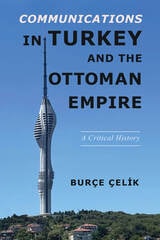
cover of Communications in Turkey and the Ottoman Empire: A Critical History

Communications in Turkey and the Ottoman Empire

A Critical History

Burçe Çelik

University of Illinois Press, 2023

De-Westernizing the communications history of Turkey and its imperial predecessor

The history of communications in the Ottoman Empire and Turkey contradicts the widespread belief that communications is a byproduct of modern capitalism and other Western forces. Burçe Çelik uses a decolonial perspective to analyze the historical commodification and militarization of communications and how it affected production and practice for oppressed populations like women, the working class, and ethnic and religious minorities. Moving from the mid-nineteenth century through today, Çelik places networks within the changing geopolitical landscape and the evolution of modern capitalism in relationship to struggles involving a range of social and political actors. Throughout, she challenges Anglo- and Eurocentric assumptions that see the non-West as an ahistorical imitation of, or aberration from, the development of Western communications.

Ambitious and comprehensive, Communications in Turkey and the Ottoman Empire merges political economy with social history to challenge Western-centered assumptions about the origins and development of modern communications.
[more]
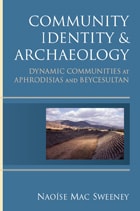
cover of Community Identity and Archaeology: Dynamic Communities at Aphrodisias and Beycesultan

Community Identity and Archaeology

Dynamic Communities at Aphrodisias and Beycesultan

Naoíse Mac Sweeney

University of Michigan Press, 2011
Community Identity and Archaeology explores the concept of community identity and its application in archaeology, using the modern Turkish sites of Aphrodisias and Beycesultan as case studies to illustrate the formation and dissolution of communities over time. The concept of the community is vital to the way we understand human societies both past and present, and the last decade has seen widespread interest in communities from both the popular and academic spheres. The concept is also central to archaeology, where the relationship between sites and communities remains controversial. Naoíse Mac Sweeney aims to take the debate one step further, setting out a comprehensive framework for the archaeological investigation of community identity, encompassing theoretical approaches for its conceptualization, practical methodologies for its investigation, and detailed case studies in Anatolia to test and illustrate its arguments. This book contributes to discussions in archaeological theory and material culture studies and is particularly relevant to archaeologists working on different types of cultural identity. Community Identity and Archaeology’s readership will include undergraduate and graduate students as well as academic specialists. In addition, the book contains material of direct historical interest for Classics and Near Eastern departments. It includes valuable new research relevant for those working on Aegean, Mycenaean, or Early Greek antiquity, as well as specialists in Anatolia including scholars working on the Hittite, Phrygian, and Lydian empires.
[more]
cover of Couched in Death: Klinai and Identity in Anatolia and Beyond

Couched in Death

Klinai and Identity in Anatolia and Beyond

Elizabeth P. Baughan

University of Wisconsin Press, 2013

In Couched in Death, Elizabeth P. Baughan offers the first comprehensive look at the earliest funeral couches in the ancient Mediterranean world. These sixth- and fifth-century BCE klinai from Asia Minor were inspired by specialty luxury furnishings developed in Archaic Greece for reclining at elite symposia. It was in Anatolia, however—in the dynastic cultures of Lydia and Phrygia and their neighbors—that klinai first gained prominence not as banquet furniture but as burial receptacles. For tombs, wooden couches were replaced by more permanent media cut from bedrock, carved from marble or limestone, or even cast in bronze. The rich archaeological findings of funerary klinai throughout Asia Minor raise intriguing questions about the social and symbolic meanings of this burial furniture. Why did Anatolian elites want to bury their dead on replicas of Greek furniture? Do the klinai found in Anatolian tombs represent Persian influence after the conquest of Anatolia, as previous scholarship has suggested?
            Bringing a diverse body of understudied and unpublished material together for the first time, Baughan investigates the origins and cultural significance of kline-burial and charts the stylistic development and distribution of funerary klinai throughout Anatolia. She contends that funeral couch burials and banqueter representations in funerary art helped construct hybridized Anatolian-Persian identities in Achaemenid Anatolia, and she reassesses the origins of the custom of the reclining banquet itself, a defining feature of ancient Mediterranean civilizations. Baughan explores the relationships of Anatolian funeral couches with similar traditions in Etruria and Macedonia as well as their "afterlife" in the modern era, and her study also includes a comprehensive survey of evidence for ancient klinai in general, based on analysis of more than three hundred klinai representations on Greek vases as well as archaeological and textual sources.
[more]