Results by title
57 books match the query 'Understanding' and 4 start with c
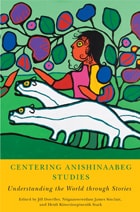
Centering Anishinaabeg Studies
Understanding the World through StoriesJill Doerfler
Michigan State University Press, 2013
For the Anishinaabeg people, who span a vast geographic region from the Great Lakes to the Plains and beyond, stories are vessels of knowledge. They are bagijiganan, offerings of the possibilities within Anishinaabeg life. Existing along a broad narrative spectrum, from aadizookaanag (traditional or sacred narratives) to dibaajimowinan (histories and news)—as well as everything in between—storytelling is one of the central practices and methods of individual and community existence. Stories create and understand, survive and endure, revitalize and persist. They honor the past, recognize the present, and provide visions of the future. In remembering, (re)making, and (re)writing stories, Anishinaabeg storytellers have forged a well-traveled path of agency, resistance, and resurgence. Respecting this tradition, this groundbreaking anthology features twenty-four contributors who utilize creative and critical approaches to propose that this people’s stories carry dynamic answers to questions posed within Anishinaabeg communities, nations, and the world at large. Examining a range of stories and storytellers across time and space, each contributor explores how narratives form a cultural, political, and historical foundation for Anishinaabeg Studies. Written by Anishinaabeg and non-Anishinaabeg scholars, storytellers, and activists, these essays draw upon the power of cultural expression to illustrate active and ongoing senses of Anishinaabeg life. They are new and dynamic bagijiganan, revealing a viable and sustainable center for Anishinaabeg Studies, what it has been, what it is, what it can be.
[more]

Centering Anishinaabeg Studies
Understanding the World through StoriesJill Doerfler
University of Manitoba Press, 2013
[more]
Cultural Divides
Understanding and Overcoming Group ConflictDeborah Prentice
Russell Sage Foundation, 1999
Thirty years of progress on civil rights and a new era of immigration to the United States have together created an unprecedented level of diversity in American schools, workplaces, and neighborhoods. But increased contact among individuals from different racial and ethnic groups has not put an end to misunderstanding and conflict. On the contrary, entrenched cultural differences raise vexing questions about the limits of American pluralism. Can a population of increasingly mixed origins learn to live and work together despite differing cultural backgrounds? Or, is social polarization by race and ethnicity inevitable? These are the dilemmas explored in Cultural Divides, a compendium of the latest research into the origins and nature of group conflict, undertaken by a distinguished group of social psychologists who have joined forces to examine the effects of culture on social life. Cultural Divides shows how new lines of investigation into intergroup conflict shape current thinking on such questions as: Why are people so strongly prone to attribute personal differences to group membership rather than to individual nature? Why are negative beliefs about other groups so resistent to change, even with increased contact? Is it possible to struggle toward equal status for all people and still maintain separate ethnic identities for culturally distinct groups? Cultural Divides offers new theories about how social identity comes to be rooted in groups: Some essays describe the value of group membership for enhancing individual self-esteem, while others focus on the belief in social hierarchies, or the perception that people of different skin colors and ethnic origins fall into immutably different categories. Among the phenomena explored are the varying degrees of commitment and identification felt by many black students toward their educational institutions, the reasons why social stigma affects the self-worth of some minority groups more than others, and the peculiar psychology of hate crime perpetrators. The way cultural boundaries can impair our ability to resolve disputes is a recurrent theme in the volume. An essay on American cultures of European, Asian, African, and Mexican origin examines core differences in how each traditionally views conflict and its proper methods of resolution. Another takes a hard look at the multiculturalist agenda and asks whether it can realistically succeed. Other contributors describe the effectiveness of social experiments aimed at increasing positive attitudes, cooperation, and conflict management skills in mixed group settings. Cultural Divides illuminates the beliefs and attitudes that people hold about themselves in relation to others, and how these social thought processes shape the formation of group identity and intergroup antagonism. In so doing, Cultural Divides points the way toward a new science of cultural contact and confronts issues of social change that increasingly affect all Americans.
[more]
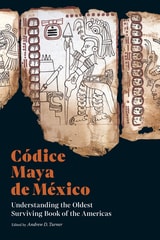
Códice Maya de México
Understanding the Oldest Surviving Book of the AmericasAndrew D. Turner
J. Paul Getty Trust, The, 2022
An in-depth exploration of the history, authentication, and modern relevance of Códice Maya de México, the oldest surviving book of the Americas.
Ancient Maya scribes recorded prophecies and astronomical observations on the pages of painted books. Although most were lost to decay or destruction, three pre-Hispanic Maya codices were known to have survived, when, in the 1960s, a fourth book that differed from the others appeared in Mexico under mysterious circumstances. After fifty years of debate over its authenticity, recent investigations using cutting-edge scientific and art historical analyses determined that Códice Maya de México (formerly known as Grolier Codex) is in fact the oldest surviving book of the Americas, predating all others by at least two hundred years.
This volume provides a multifaceted introduction to the creation, discovery, interpretation, and scientific authentication of Códice Maya de México. In addition, a full-color facsimile and a page-by-page guide to the iconography make the codex accessible to a wide audience. Additional topics include the uses and importance of sacred books in Mesoamerica, the role of astronomy in ancient Maya societies, and the codex's continued relevance to contemporary Maya communities.
This volume is published to accompany an exhibition on view at the J. Paul Getty Museum at the Getty Center from October 18, 2022, to January 15, 2023.
[more]