Results by title
147 books match the query 'Urban & Land Use Planning' and 14 start with c
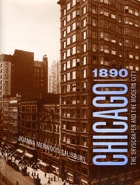
Chicago 1890
The Skyscraper and the Modern CityJoanna Merwood-Salisbury
University of Chicago Press, 2009
Chicago’s first skyscrapers are famous for projecting the city’s modernity around the world. But what did they mean at home, to the Chicagoans who designed and built them, worked inside their walls, and gazed up at their façades? Answering this multifaceted question, Chicago 1890 reveals that early skyscrapers offered hotly debated solutions to the city’s toughest problems and, in the process, fostered an urban culture that spread across the country.
An ambitious reinterpretation of the works of Louis Sullivan, Daniel Burnham, and John Wellborn Root, this volume uses their towering achievements as a lens through which to view late nineteenth-century urban history. Joanna Merwood-Salisbury sheds new light on many of Chicago’s defining events—including violent building trade strikes, the Haymarket bombing, the World’s Columbian Exposition, and Burnham’s Plan of Chicago—by situating the Masonic Temple, the Monadnock Building, and the Reliance Building at the center of the city’s cultural and political crosscurrents.
While architects and property owners saw these pioneering structures as manifestations of a robust American identity, immigrant laborers and social reformers viewed them as symbols of capitalism’s inequity. Illuminated by rich material from the period’s popular press and professional journals, Merwood-Salisbury’s chronicle of this contentious history reveals that the skyscraper’s vaunted status was never as inevitable as today’s skylines suggest.
Chicago's Urban Nature
A Guide to the City's Architecture + LandscapeSally A. Kitt Chappell
University of Chicago Press, 2007
At the heart of this new urban concept is the idea of connection, bringing buildings and landscapes, culture and nature, commerce and leisure into an energetic harmony. With Chicago’s Urban Nature in hand, you’ll see those connections woven through the fabric of the city. Chappell provides new insights into such historic Chicago sites as Jens Jensen’s Garfield Park Conservatory, Frederick Law Olmsted’s Jackson Park, and Alfred Caldwell’s Lily Pond, then takes us to the innovative contemporary green spaces they influenced, from City Hall’s rooftop garden to the North Lawndale Green Youth Farm to Chicago’s heralded new Millennium Park. These beautiful green spaces, with their unprecedented melding of art, architecture, and ecology, have become far more than places of escape for Chicagoans—they’re now fully integrated into the urban scene, an essential part of the cultural life of the modern city.
Packed with maps and recommended tours, and bursting with splendid photos, this is an essential guidebook for day-trippers, lifelong Chicago residents, and professionals in landscape architecture, urbanism, and design.
Cities Surround The Countryside
Urban Aesthetics in Postsocialist ChinaRobin Visser
Duke University Press, 2010
In the 1980s, writers, filmmakers, and artists began to probe the contradictions in China’s urbanization policies and rhetoric. Powerful neorealist fiction, cinema, documentaries, paintings, photographs, performances, and installations contrasted forms of glittering urban renewal with the government’s inattention to a livable urban infrastructure. Narratives and images depicting the melancholy urban subject came to illustrate ethical quandaries raised by urban life. Visser relates her analysis of this art to major transformations in urban planning under global neoliberalism, to the development of cultural studies in the Chinese academy, and to ways that specific cities, particularly Beijing and Shanghai, figure in the cultural imagination. Despite the environmental and cultural destruction caused by China’s neoliberal policies, Visser argues for the emergence of a new urban self-awareness, one that offers creative resolutions for the dilemmas of urbanism through new forms of intellectual engagement in society and nascent forms of civic governance.
Cities in the Urban Age
A DissentRobert A. Beauregard
University of Chicago Press, 2018
For Beauregard, the city is a cauldron for four haunting contradictions. First, cities are equally defined by both their wealth and their poverty. Second, cities are simultaneously environmentally destructive and yet promise sustainability. Third, cities encourage rule by political machines and oligarchies, even as they are essentially democratic and at least nominally open to all. And fourth, city life promotes tolerance among disparate groups, even as the friction among them often erupts into violence. Beauregard offers no simple solutions or proposed remedies for these contradictions; indeed, he doesn’t necessarily hold that they need to be resolved, since they are generative of city life. Without these four tensions, cities wouldn’t be cities. Rather, Beauregard argues that only by recognizing these ambiguities and contradictions can we even begin to understand our moral obligations, as well as the clearest paths toward equality, justice, and peace in urban settings.
Cleveland Architecture 1890–1930
Building the City BeautifulJeannine deNobel Love
Michigan State University Press, 2020
Close-Up
How to Read the American CityGrady Clay
University of Chicago Press, 1980
"The emphasis on the informal aspects of city-shaping—topographical, historical, economic and social—does much to counteract the formalist approach to American urban design. Close-Up...should be required reading for anyone wishing to understand Americans and their cities."—Roger Cunliffe, Architectural Review
"Close-Up is a provocative and stimulating book."—Thomas J. Schlereth, Winterthur Portfolio
"Within this coherent string of essays, the urban dweller or observer, as well as the student, will find refreshing strategies for viewing the environmental 'situations' interacting to form a landscape."—Dallas Morning News
"Clay's Close-Up, first published in 1973, is still a key book for looking at the real American city. Too many urban books and guidebooks concentrate on the good parts of the city....Clay looks at all parts of the city, the suburbs, and the places between cities, and develops new terms to describe parts of the built environment—fronts, strips, beats, stacks, sinks, and turf. No one who wants to understand American cities or to describe them, should fail to know this book. The illustrations are of special interest to the guidebook writer."—American Urban Guidenotes
Co-Curating the City
Universities and Urban Heritage Past and FutureEdited by Clare Melhuish, Henric Benesch, Dean Sully, and Ingrid Martins Holmberg
University College London, 2022
Co-Curating the City explores the role of universities in the construction and mobilization of heritage discourses in urban development and regeneration processes, with a focus on six case study sites ranging from Sweden to Brazil. The book expands the field of critical heritage studies in the urban domain, arguing that universities should position themselves as significant institutions in the development of urban heritage narratives and heavily influence urban development. The case studies investigate how universities, as mixed communities of interest dispersed across buildings and urban sites, utilize strategies of engagement with local people and neighborhoods and ask how this could contribute to a reshaping of ideas, narratives, and lived experience of urban heritage in which universities have a distinctive agency.
Co-designing Infrastructures
Community Collaboration for Liveable CitiesSarah Bell, Charlotte Johnson, Kat Austen, Gemma Moore, and Tse-Hui Teh
University College London, 2023
Co-designing Infrastructures tells the story of a research program designed to bring the power of engineering and technology into the hands of grassroots community groups in order to create bottom-up solutions to global crises. The authors examine in detail four projects in London in detail that exemplify collaboration with engineers, designers, and scientists to enact urban change. The projects at the heart of the book are grounded in specific settings that face challenges familiar to urban communities throughout the world. This place-based approach to infrastructure is of international relevance as a foundation for urban resilience and sustainability. The authors document the tools used to deliver this work, providing guidance for others who are working to deliver local technical solutions to complex social and environmental problems around the world.
Co-production of Knowledge in Action
Emancipatory Strategies for Urban EqualityEdited by Cassidy Johnson, Vanesa Castán Broto, Wilbard Kombe, Catalina Ortiz, Barbara Lipietz, Emmanuel Osuteye, and Caren Levy
University College London, 2025
In urban development, co-production refers to a strategy that prioritizes collaboration across multiple institutions and with citizens, aiming to enable conflict resolution and transformative change. However, critics contend that these theoretical ambitions often have limited practical impact. Co-production of Knowledge in Action examines how co-production is articulated and deployed in cities such as Lima, Freetown, Kampala, Dar es Salaam, and Delhi. It engages with ongoing experiences of co-production-inspired action, mapping the different aspirations that inform co-production practices and their impacts on urban communities. Critiquing co-production strategies for urban development in relation to practical experiences in these cities, this volume adopts a postcolonial approach to knowledge production as a means to transform urban planning practices.
Contested City
Art and Public History as Mediation at New York's Seward Park Urban Renewal AreaGabrielle Bendiner-Viani
University of Iowa Press, 2018
2020 Brendan Gill Prize finalist
For forty years, as New York’s Lower East Side went from disinvested to gentrified, residents lived with a wound at the heart of the neighborhood, a wasteland of vacant lots known as the Seward Park Urban Renewal Area (SPURA). Most of the buildings on the fourteen-square-block area were condemned in 1967, displacing thousands of low-income people of color with the promise that they would soon return to new housing—housing that never came.
Over decades, efforts to keep out affordable housing sparked deep-rooted enmity and stalled development, making SPURA a dramatic study of failed urban renewal, as well as a microcosm epitomizing the greatest challenges faced by American cities since World War II.
Artist and urban scholar Gabrielle Bendiner-Viani was invited to enter this tense community to support a new approach to planning, which she accepted using collaboration, community organizing, public history, and public art. Having engaged her students at The New School in a multi-year collaboration with community activists, the exhibitions and guided tours of her Layered SPURA project provided crucial new opportunities for dialogue about the past, present, and future of the neighborhood.
Simultaneously revealing the incredible stories of community and activism at SPURA, and shedding light on the importance of collaborative creative public projects, Contested City bridges art, design, community activism, and urban history. This is a book for artists, planners, scholars, teachers, cultural institutions, and all those who seek to collaborate in new ways with communities.
Creating the Hudson River Park
Environmental and Community Activism, Politics, and GreedTom Fox
Rutgers University Press, 2024
The 4-mile-long, 550-acre Hudson River Park is nearing completion and is the largest park built in Manhattan since Central Park opened more than 150 years ago. It has transformed a derelict waterfront, protected the Hudson River estuary, preserved commercial maritime activities, created new recreational opportunities for millions of New Yorkers, enhanced tourism, stimulated redevelopment in adjacent neighborhoods, and set a precedent for waterfront redevelopment. The Park attracts seventeen million visitors annually. Creating the Hudson River Park is a first-person story of how this park came to be. Working together over three decades, community groups, civic and environmental organizations, labor, the real estate and business community, government agencies, and elected officials won a historic victory for environmental preservation, the use and enjoyment of the Hudson River, and urban redevelopment. However, the park is also the embodiment of a troubling trend toward the commercialization of America’s public parks.
After the defeat of the $2.4 billion Westway plan to fill 234 acres of the Hudson in 1985, the stage was set for the revitalization of Manhattan’s West Side waterfront. Between 1986 and 1998 the process focused on the basics like designing an appropriate roadway, removing noncompliant municipal and commercial activities from the waterfront, implementing temporary improvements, developing the Park’s first revenue-producing commercial area at Chelsea Piers, completing the public planning and environmental review processes, and negotiating the 1998 Hudson River Park Act that officially created the Park. From 1999 to 2009 planning and construction were funded with public money and focused on creating active and passive recreation opportunities on the Tribeca, Greenwich Village, Chelsea, and Hell’s Kitchen waterfronts.
However, initial recommendations to secure long term financial support for the Park from the increase in adjacent real estate values that resulted from the Park’s creation were ignored. City and state politicians had other priorities and public funding for the Park dwindled. The recent phase of the project, from 2010 to 2021, focused on “development” both in and adjacent to the Park. Changes in leadership, and new challenges provide an opportunity to return to a transparent public planning process and complete the redevelopment of the waterfront for the remainder of the 21st-century. Fox’s first-person perspective helps to document the history of the Hudson River Park, recognizes those who made it happen and those who made it difficult, and provides lessons that may help private citizens and public servants expand and protect the public parks and natural systems that are so critical to urban well-being.

Cultivating the City
The Long Struggle to Put Land to UseNate Ela
University of Chicago Press, 2027
A story of law and social policy in a place you might not expect: community gardens and urban farms.
Though Chicago is a city of legendary skyscrapers and dense apartment blocks, it is also a city of wide-open tracts of land. This surprising juxtaposition can be viewed as an opportunity, in that available land can become a food source for urban dwellers, especially those experiencing poverty or limited access to grocery stores. But most empty land in Chicago remains empty — why? In Cultivating the City, sociologist and legal scholar Nate Ela examines the history of Chicago’s urban farms and gardens, their promotion as a tool to support the poor and unemployed, and their repeated failure to take root as a permanent part of Chicago’s landscape.
Ela’s fresh take on contemporary urban agriculture features a new perspective on social policy and urban governance. For hundreds of years, social reformers have worked to address poverty and unemployment by letting people use land to grow food. Reformers experimented with the possibilities of property use, including deals to match gardeners with public or private land, proposals to let growers use land without owners’ permission, and the transformation of private land into municipal gardens. By exposing the dynamics of this longstanding but long-overlooked form of social policy in Chicago, Ela offers a new strategy for cultivating cities that are productive, resilient, and just.

Cultural Quarters
Principles and PracticeEdited and Written by Simon Roodhouse
Intellect Books, 2010
The much-praised Cultural Quarters returns in a revised edition, offering new case studies and new chapters on the economics of cultural quarters and the importance of historical buildings. This definitive text provides a conceptual context for cultural quarters through a detailed discussion of urban design and planning. Drawing on several case studies (from Bolton, Birmingham, Ireland and Vienna), Cultural Quarters positions the emergence of specific cultural areas within a historical and social context and explores the economics of maintaining the respective districts. The book offers a concise illustration of how cultural practice is maintained and expanded within an urban environment.
Cultural Quarters
Principles and PracticeSimon Roodhouse
Intellect Books, 2006
Extending this investigation, the author provides an explicit analysis of Bolton Borough Council’s moves towards establishing a cultural sector in the town centre, with references to previous funding models employed by Birmingham City Council and the British Museum. The book offers a concise illustration of how cultural practice is maintained and expanded within an urban environment. This single volume, packed with detail, can be used in higher education courses to support the study of cultural policy, management and regeneration.