Results by title
246 books match the query 'Violence in Society' and 15 start with c
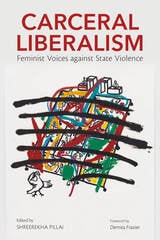
Carceral Liberalism
Feminist Voices against State ViolenceEdited by Shreerekha Pillai. Foreword by Demita Frazier
University of Illinois Press, 2023
One of Ms. Magazine's Most Anticipated Books of 2023
Carceral liberalism emerges from the confluence of neoliberalism, carcerality, and patriarchy to construct a powerful ruse disguised as freedom. It waves the feminist flag while keeping most women still at the margins. It speaks of a post-race society while one in three Black men remain incarcerated. It sings the praises of capital while the dispossessed remain mired in debt.
Shreerekha Pillai edits essays on carceral liberalism that continue the trajectory of the Combahee River Collective and the many people inspired by its vision of feminist solidarity and radical liberation. Academics, activists, writers, and a formerly incarcerated social worker look at feminist resurgence and resistance within, at the threshold of, and outside state violence; observe and record direct and indirect forms of carcerality sponsored by the state and shaped by state structures, traditions, and actors; and critique carcerality. Acclaimed poets like Honorée Fanonne Jeffers and Solmaz Sharif amplify the volume’s themes in works that bookend each section.
Cutting-edge yet historically grounded, Carceral Liberalism examines an American ideological creation that advances imperialism, anti-blackness, capitalism, and patriarchy.
Contributors: Maria F. Curtis, Joanna Eleftheriou, Autumn Elizabeth and Zarinah Agnew and D Coulombe, Jeremy Eugene, Demita Frazier, Honorée Fanonne Jeffers, Alka Kurian, Cassandra D. Little, Beth Matusoff Merfish, Francisco Argüelles Paz y Puente, Shreerekha Pillai, Marta Romero-Delgado, Ravi Shankar, Solmaz Sharif, Shailza Sharma, Tria Blu Wakpa and Jennifer Musial, Javier Zamora
Character Disturbance
the phenomenon of our ageGeorge K. Simon
Parkhurst Brothers, Inc., 2011
Modern permissiveness and the new culture of entitlement allows disturbed people to reach adulthood without proper socialization. In a book meant both for the general public and for professionals, bestselling author and psychologist George Simon explains in plain English:
•How most disturbed characters think.•The habitual behaviors the disturbed use to avoid responsibility and to manipulate, deceive, and exploit others.
•Why victims in relationships with disturbed characters do not get help they need from traditional therapies.
•A straightforward guide to recognizing and understanding all relevant personality types, especially those most likely to undermine relationships.
•A new framework for making sense of the crazy world many find themselves in when there's a disturbed character in their lives.
•Concrete principles that promote responsibility and positive change when engaging disturbed characters.
•Tactics (for both lay persons and therapists) to lessen the chances for victimization and empower those who would otherwise be victims in their relationships with many types of disturbed characters.
Child Abuse in the Deep South
Geographical Modifiers of Abuse CharacteristicsLee W. Badger
University of Alabama Press, 1988
A powerful, data-driven investigation into how race, geography, and community shape the reporting and response to child abuse in Alabama.
Child Abuse in the Deep South is a groundbreaking examination of how child maltreatment is reported, confirmed, and understood in Alabama—a state shaped by deep historical, racial, and geographic divides. Drawing on over 7,000 case reports, this study reveals how factors such as race, community size, and regional culture influence the identification and handling of abuse cases. With a focus on both rural and urban settings, the book uncovers patterns of systemic bias, underreporting, and institutional response that have long gone unaddressed.
Through rigorous data analysis and a compassionate lens, this work challenges assumptions about child welfare in the American South and offers critical insights for policymakers, social workers, legal professionals, and scholars. Child Abuse in the Deep South is both a call to action and a vital resource for understanding the intersection of social justice, public policy, and child protection in one of the nation’s most complex regions.
Child Abuse in the Deep South provides a quantitative benchmark that investigators and policy-makers will find invaluable on the path to defining at-risk populations, effective interventions, and treatments.
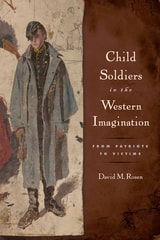
Child Soldiers in the Western Imagination
From Patriots to VictimsRosen, David M
Rutgers University Press, 2015
In this daring new study, anthropologist David M. Rosen investigates why our cultural perception of the child soldier has changed so radically over the past two centuries. Child Soldiers in the Western Imagination reveals how Western conceptions of childhood as a uniquely vulnerable and innocent state are a relatively recent invention. Furthermore, Rosen offers an illuminating history of how human rights organizations drew upon these sentiments to create the very term “child soldier,” which they presented as the embodiment of war’s human cost.
Filled with shocking historical accounts and facts—and revealing the reasons why one cannot spell “infantry” without “infant”—Child Soldiers in the Western Imagination seeks to shake us out of our pervasive historical amnesia. It challenges us to stop looking at child soldiers through a biased set of idealized assumptions about childhood, so that we can better address the realities of adolescents and pre-adolescents in combat. Presenting informative facts while examining fictional representations of the child soldier in popular culture, this book is both eye-opening and thought-provoking.
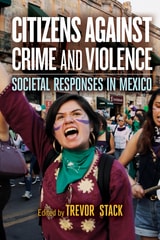
Citizens against Crime and Violence
Societal Responses in MexicoTrevor Stack
Rutgers University Press, 2022
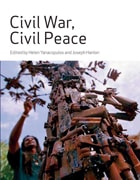
Civil War, Civil Peace
Helen Yanacopulos
Ohio University Press, 2006
When a cease-fire is arranged, aid workers, military personnel, diplomats, and others pour in from the United States, Europe, and international agencies. Outside help is essential after a war, but too often, well-intentioned interveners do more harm than good. A half of civil wars have resumed after failed peace agreements.
Each war is different, and there can be no intervention handbook or best practices guide. Aimed at practitioners and policy makers, and essential reading for students of war, humanitarian intervention, peace building, and development, Civil War, Civil Peace provides a comprehensive examination of how interventions can be improved through a better understanding of the roots of war and of the grievances and interests that fueled the war.
Civilization And Violence
Regimes of Representation in Nineteenth-Century ColombiaCristina Rojas
University of Minnesota Press, 2001
Civilization and violence are not necessarily the antagonists we presume-withcivilization taming violence, and violence unmaking civilization. Focusing on postindependence Colombia, this book brings to light the ways in which violenceand civilization actually intertwined and reinforced each other in the development of postcolonial capitalism.
The narratives of civilization and violence, Cristina Rojas contends, play key roles in the formation of racial, gender, and class identities; they also provide pivotal logic to both the formation of the nation and the processes of capitalist development. During the Liberal era of Colombian history (1849-1878), a dominant creole elite enforced a "will to civilization" that sought to create a new world in its own image. Rojas explores different arenas in which this pursuit meant the violent imposition of white, liberal, laissez-faire capitalism. Drawing on a wide range of social theory, Rojas develops a new way of understanding the relationship between violence and the formation of national identity-not just in the history of Colombia, but also in the broader narratives of civilization.
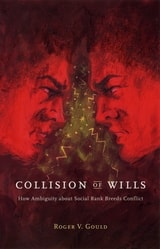
Collision of Wills
How Ambiguity about Social Rank Breeds ConflictRoger V. Gould
University of Chicago Press, 2003
This, he maintains, is because violence most often occurs when someone wants to achieve superiority or dominance over someone else, even if there is no substantive reason for doing so. In making the case for this original idea, Gould explores a diverse range of examples, including murders, blood feuds, vendettas, revolutions, and the everyday disagreements that compel people to act violently. The result is an intelligent and provocative work that restores the study of conflict to the center of social inquiry.
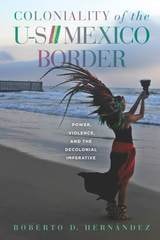
Coloniality of the US/Mexico Border
Power, Violence, and the Decolonial ImperativeRoberto D. Hernández
University of Arizona Press, 2018
In Coloniality of the U-S///Mexico Border, Hernández offers an exemplary case and lens for understanding what he terms the “epistemic and cartographic prison of modernity/coloniality.” He adopts “coloniality of power” as a central analytical category and framework to consider multiple forms of real and symbolic violence (territorial, corporeal, cultural, and epistemic) and analyzes the varied responses by diverse actors, including local residents, government officials, and cultural producers.
Based on more than twenty years of border activism in San Diego–Tijuana and El Paso–Ciudad Juárez, this book is an interdisciplinary examination that considers the 1984 McDonald’s massacre, Minutemen vigilantism, border urbanism, the ongoing murder of women in Ciudad Juárez, and anti-border music.
Hernández’s approach is at once historical, ethnographic, and theoretically driven, yet it is grounded in analyses and debates that cut across political theory, border studies, and cultural studies. The volume concludes with a theoretical discussion of the future of violence at—and because of—national territorial borders, offering a call for epistemic and cartographic disobedience.
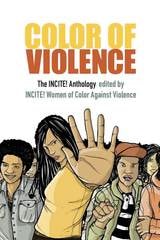
Color of Violence
The INCITE! AnthologyINCITE! Women of Color Against Violence, editor
Duke University Press, 2016

Comfort Women
Colonialism, War, and Sex, Volume 5Chungmoo Choi, ed.
Duke University Press, 0
Extending its interrogation to the Cold War power dynamics and contingent economic development that have contributed to the silencing of the colonial past in East Asia, these essays also examine “the Tokyo Trials” and the discourses of postwar compensation and apology. They not only reveal the capitalistic incentives behind the nominalism of compensation but also unmask the Janus face of humanism, which claims to be universal while excluding Asian women from the category of humanity.
This exceptional collection includes artwork by two Korean comfort women, Tok-kyong Kang and Sun-dok Kim, as well as pieces by Japanese artists and Korean American artists. Other features include a narrative composed of several interviews with comfort women and a conversation between the Nobel laureate Kenzaburo Oe of Japan and South Korean dissident poet Chi-ha Kim.
Contributors. Chungmoo Choi, Chin Sung Chung, Norma Field, Yuki Fujime, Tok-kyong Kang, Chi-ha Kim, Hyun Sook Kim, Daisil Kim-Gibson, Jin Kyung Lee, Sasha Y. Lee, Yong Soon Min, Kenzaburo Oe, Kerry Ross, Yoshiko Shimada, Youn Ok Song, Won Soon Park, Kyung sik Suh, Taeko Tomiyama, Melissa Wender, Hyanah Yang

Controlling Anger
The Anthropology of Gisu ViolenceSuzette Heald
Ohio University Press, 1997
Controlling Anger examines the dilemmas facing rural people who live within the broader context of political instability. Following Uganda’s independence from Britain in 1962, the Bagisu men of Southeastern Uganda developed a reputation for extreme violence.
Drawing on a wide range of historical sources including local court records, statistical survey analysis, and intensive fieldwork, Suzette Heald portrays and analyzes the civil violence that grew out of intense land shortage, the marginalization of the Gisu under British rule, and the construction of male gender identity among the Gisu. Now available in a paperback edition with a new preface by the author, Controlling Anger is an important contribution to rural sociology in Africa.
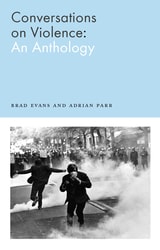
Conversations on Violence
An AnthologyBrad Evans
Pluto Press, 2021
Whether physical or metaphorical, institutional or interpersonal, violence is everywhere. A seemingly immutable fact of life, it is nonetheless rarely engaged with at the conceptual level. What does violence actually mean? And is it an inevitable part of the human condition?
Conversations on Violence brings together many of the world's leading critical scholars, artists, writers and cultural producers to provide a kaleidoscopic exploration of the concept of violence. Through in-depth interviews with thirty figures including Marina Abramovic, Kehinde Andrews and Simon Critchley, Brad Evans and Adrian Parr interrogate violence in all its manifestations, including its role in politics, art, gender discrimination and decolonisation.
Provocative, eye-opening and bracingly original, Conversations on Violence sheds light on a defining political and ethical concern of our age.
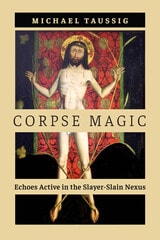
Corpse Magic
Echoes Active in the Slayer-Slain NexusMichael Taussig
University of Chicago Press, 2025
Corpse Magic is a response to the global ubiquity of violence. In this bracing new work, the influential anthropologist Michael Taussig puts killings in Colombia, by gangs and guerrillas, police and the military, and agents of agribusiness, in conversation with mass shootings and police killings, disproportionately of Black people, in the United States. In both contexts, he examines the effects of violent killing on its victims, its perpetrators, and those who witness and relive it through media footage.
Drawing from literature, religion, philosophy, and anthropology, Taussig traces the idea that the act of killing “infects” the killer and spreads outward, then connects this concept of contagion to beliefs in Colombia and elsewhere that the souls of the slain possess those of their slayers and that magic can be used to empower or thwart corpses as agents of vengeance. In this powerful and imaginative work, Taussig asks what kind of power the dead continue to have; what kinds of magic can manage that power; and what, if anything, can stop seemingly endless cycles of violence.
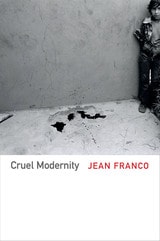
Cruel Modernity
Jean Franco
Duke University Press, 2013
Franco draws on human-rights documents, memoirs, testimonials, novels, and films, as well as photographs and art works, to explore not only cruel acts but the discriminatory thinking that made them possible, their long-term effects, the precariousness of memory, and the pathos of survival.