Results by title
186 books match the query 'Volume 2' and 9 start with c

Chemical Demonstrations, Volume 2
A Handbook for Teachers of ChemistryBassam Z. Shakhashiri
University of Wisconsin Press, 1985
The demonstrations capture interest, teach, inform, fascinate, amaze, and perhaps, most importantly, involve students in chemistry. Nowhere else will you find books that answer, "How come it happens? . . . Is it safe? . . . What do I do with all the stuff when the demo is over?"
Shakhashiri and his collaborators offer 282 chemical demonstrations arranged in 11 chapters. Each demonstration includes seven sections: a brief summary, a materials list, a step-by-step account of procedures to be used, an explanation of the hazards involved, information on how to store or dispose of the chemicals used, a discussion of the phenomena displayed and principles illustrated by the demonstration, and a list of references.

China in Crisis, Volume 2
China's Policies in Asia and America's AlternativesEdited by Tang Tsou and Ping-ti Ho
University of Chicago Press, 1968

Circuits of Desire, Volume 2
Yukiko Hanawa
Duke University Press, 0
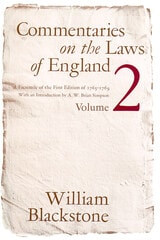
Commentaries on the Laws of England, Volume 2
A Facsimile of the First Edition of 1765-1769William Blackstone
University of Chicago Press, 1979
Previously available only in an expensive hardcover set, Commentaries on the Laws of England is published here in four separate volumes, each one affordably priced in a paperback edition. These works are facsimiles of the eighteenth-century first edition and are undistorted by later interpolations. Each volume deals with a particular field of law and carries with it an introduction by a leading contemporary scholar.
Introducing this second volume, Of the Rights of Things, A. W. Brian Simpson discusses the history of Blackstone's theory of various aspects of property rights—real property, feudalism, estates, titles, personal property, and contracts—and the work of his predecessors.
Commentary on the Twelve Prophets, Volume 2
Saint Cyril of Alexandria
Catholic University of America Press, 2007
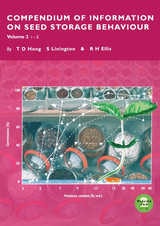
Compendium of Information on Seed Storage Behaviour, Volume 2 (I–Z)
T. D. Hong, S. Linington, and R. H. Ellis
Royal Botanic Gardens, Kew, 1998
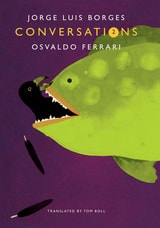
Conversations
Volume 2Jorge Luis Borges and Osvaldo Ferrari
Seagull Books, 2015
In Conversations: Volume 2, Borges and Ferrari engage in a dialogue that is both improvisational and frequently humorous as they touch on subjects as diverse as epic poetry, detective fiction, Buddhism, and the moon landing. With his signature wit, Borges offers insight into the philosophical basis of his stories and poems, his fascination with religious mysticism, and the idea of life as a dream. He also dwells on more personal themes, including the influence of his mother and father on his intellectual development, his friendships, and living with blindness. These recollections are alive to the passage of history, whether in the changing landscape of Buenos Aires or a succession of political conflicts, leading Borges to contemplate what he describes as his “South American destiny.”
The recurrent theme of these conversations, however, is a life lived through books. Borges draws on the resources of a mental library that embraces world literature—ancient and modern. He recalls the works that were a constant presence in his memory and maps his changing attitudes to a highly personal canon. In the prologue to the volume, Borges celebrates dialogue and the transmission of culture across time and place. These conversations are a testimony to the supple ways that Borges explored his own relation to numerous traditions.
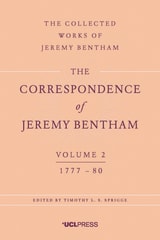
Correspondence of Jeremy Bentham, Volume 2
1777 to 1780Jeremy Bentham, edited by Timothy L. S. Sprigge, and series edited by J.H. Burns
University College London, 2017
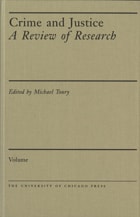
Crime and Justice, Volume 2
An Annual Review of ResearchEdited by Norval Morris and Michael Tonry
University of Chicago Press Journals, 1981