Results by title
368 books match the query 'West' and 21 start with c

CINCINNATI
QUEEN CITY OF THE WEST, 1819-1838DANIEL AARON
The Ohio State University Press, 1992
Canyoneering 2
Technical Loop Hikes in Southern UtahSteve Allen
University of Utah Press, 2002
Canyoneering 2: Technical Loop Hikes is a guide to seven, week-long backpack trips into some for the most unspoiled and least-visited areas in the Utah section of the Colorado Plateau. Every hike contains the four essentials of a great canyoneering route: spectacular canyons, intimate narrows, big views, and physical challenge. Although the routes are difficult, newcomers to the canyons will also find detailed information here that can be used to plan less demanding excursions. Hikes include Muddy Creek in the San Rafael Swell, Dirty Devil North, Dirty Devil South, Dark Canyon, White Canyon, Escalante East, and Escalante South. For experienced canyoneers.
Canyoneering 3
Loop Hikes in Utah’s EscalanteSteve Allen
University of Utah Press, 1997
Utah’s Escalante country: a vast jigsaw puzzle of desert canyons, draws, defiles, gorges, slots, and washes demarcating upland expanses of slickrock, benches, and ridges, above which stand towers, pinnacles, and peaks. Inhabited for centuries by the ancient Puebloans and now managed primarily by various federal agencies, it is a land of stark contrasts and unforgettable beauty.
This guide features 37 major hikes designed to satisfy any canyoneer from novice to expert, including 20 in the new Grand Staircase-Escalante National Monument. All hikes are designed as loops, eliminating the need to backtrack or car shuttle for those inclined to do the full routes. Dayhikers can choose routes from an hour to all day, backpackers will find multi-day hikes, and those who prefer charting their own course will also profit from the information here.
Aside from the detailed route descriptions, Canyoneering 3 describes 14 road sections plus side roads to ensure time will not be lost finding a trailhead in this often confusing country. Also included are sections on geology, history, equipment, and technical canyoneering. Thoroughly researched, this is now the most comprehensive guide to the wonderland of the Escalante.
Hikes include: Death Hollow; Sand Creek; Boulder Mail Trail; Big Flat Wash, the Escalante River, and the Bowington Road; Middle Boulder Creek; Upper Boulder Creek and Dry Hollow; Phipps Wash; Big Horn Canyon; The Escalante River and the Sand Slides; Red Breaks Canyon; Harris Wash; Egypt 3-The Slot; Lower Harris Wash; Fence Canyon, the Escalante River, and Twenty-five Mile Wash; Twenty-five Mile Wash, the Escalante River, and Scorpion Gulch; Spooky and Peek-a-Book Gulches-The Long Loop; Upper Brimstone Gulch-The Slot; Scorpion Gulch and the Scorpion Horse Trail; Peek-a-Boo and Spooky Gulches-The Standard Loop; Coyote Gulch; Stevens Canyon and the Waterpocket Fold; Stevens and Fold Canyons; The Pollywog Bench Area; Forty-mile Creek and Willow Gulch Everett Russ; Fifty-mile Creek; Sixty Point and Twilight Canyon; Llewellyn and Cottonwood Gulches; Davis Gulch; Clear Creek and the Cathedral in the Desert; Deer Creek; Steep Creek and Horse Canyon; The Gulch and Horse Canyon; Little Death Hollow and Wolverine Creek; Egg Canyon and Lamanite Arch; Silver Falls Creek and Choprock Canyon; Deer Point-An Ascent; Moody Creek Canyons
Canyoneering the Northern San Rafael Swell
Steve Allen
University of Utah Press, 2013
A second volume covering the southern portion of the San Rafael Swell is in preparation.
Canyonlands Country
Geology of Canyonlands and Arches National ParksDonald L. Baars
University of Utah Press, 1993
An easy-to-read geological history of the amazing red rock landscapes in southeastern Utah.
Towering red buttes, plunging canyon walls, domes, pinnacles, spires, ten thousand strangely carved forms—what visitor hasn’t marveled at the land of rock in southeastern Utah that is Canyonlands Country?
Canyonlands Country offers a unique geological history of this awesome landscape, in language understandable by the non-geologist. The story is as strange and fascinating as the land itself. Each exposed rock layer has a different geologic history: one is a stream deposit, another is an ancient field of dunes, another was deposited by shallow tropic seas. The Green and Colorado Rivers began carving canyons thirty million years ago, but to understand such relatively recent events Canyonlands Country takes us on a journey of two billion years.
Tours include Arches National Park, Island in the Sky, Needles District, The Maze and Elaterite Basin, Labyrinth and Stillwater Canyons, Meander Canyon, and Cataract Canyon.
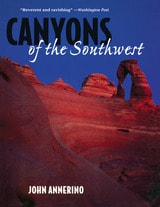
Canyons of the Southwest
A Tour of the Great Canyon Country from Colorado to Northern MexicoJohn Annerino
University of Arizona Press, 1993
The canyons of the southwestern United States and northern Mexico contain some of the most dramatic landscapes in the world. John Annerino's pictorial celebration of this visually rich region is a handsome memento for those who have heard the wind whistling in these haunting canyons, and a beckoning invitation for those who have not yet made the journey.
Annerino has spent much of his adult life exploring this territory—as wilderness runner, adventurer, and photojournalist—and combines his firsthand knowledge with his expertise as a nature photographer and author to create an intimate portrait of these timeless places. Accompanying the photographs are informative essays describing the region's geological and human history.
Carbon County, USA
Miners for Democracy in Utah and the WestChristian Wright
University of Utah Press, 2019
Drawing on a variety of primary sources, Wright provides evidence for organized labor’s continuing significance and value while effectively illuminating its mounting frustrations during a relatively recent chapter in the history of Utah and the United States.
Chasing Arizona
One Man’s Yearlong Obsession with the Grand Canyon StateKen Lamberton
University of Arizona Press, 2015
Lamberton chases the four corners of Arizona, attempts every county, every reservation, and every national monument and state park, from the smallest community to the largest city. He drives his Kia Rio through the longest tunnels and across the highest suspension bridges, hikes the hottest deserts, and climbs the tallest mountain, all while visiting the people, places, and treasures that make Arizona great.
In the vivid, lyrical, often humorous prose the author is known for, each destination weaves together stories of history, nature, and people, along with entertaining side adventures and excursions. Maps and forty-four of the author’s detailed pencil drawings illustrate the journey.
Chasing Arizona is unlike any book of its kind. It is an adventure story, a tale of Arizona, a road-warrior narrative. It is a quest to see and experience as much of Arizona as possible. Through intimate portrayals of people and place, readers deeply experience the Grand Canyon State and at the same time celebrate what makes Arizona a wonderful place to visit and live.
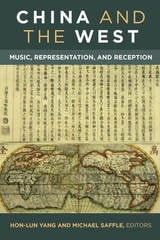
China and the West
Music, Representation, and ReceptionHon-Lun Yang and Michael Saffle, editors
University of Michigan Press, 2017
China and the West brings together essays on centuries of Sino-Western musical exchange by musicologists, ethnomusicologists, and music theorists from around the world. It opens with a look at theoretical approaches of prior studies of musical encounters and a comprehensive survey of the intercultural and cross-cultural theoretical frameworks—exoticism, orientalism, globalization, transculturation, and hybridization—that inform these essays. Part I focuses on the actual encounters between Chinese and European musicians, their instruments and institutions, and the compositions inspired by these encounters, while Part II examines theatricalized and mediated East-West cultural exchanges, which often drew on stereotypical tropes, resulting in performances more inventive than accurate. Part III looks at the musical language, sonority, and subject matters of “intercultural” compositions by Eastern and Western composers. Essays in Part IV address reception studies and consider the ways in which differences are articulated in musical discourse by actors serving different purposes, whether self-promotion, commercial marketing, or modes of nationalistic—even propagandistic—expression. The volume’s extensive bibliography of secondary sources will be invaluable to scholars of music, contemporary Chinese culture, and the globalization of culture.
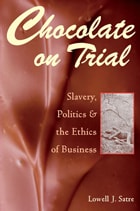
Chocolate on Trial
Slavery, Politics, and the Ethics of BusinessLowell J. Satre
Ohio University Press, 2005
Chocolate on Trial: Cadbury, Slavery and the Economics of Virtue in Imperial Britain gives a lively and highly readable account of the events surrounding the libel trial in which Cadbury Bros. Ltd. sued the London Standard, following the newspaper's accusation that the firm was hypocritical in its use of slave-grown cocoa. As compelling now as at the turn of the previous century, the issues probed by Lowell J. Satre give invaluable historical background to contemporary issues of business ethics, corporate social responsibility, and globalization. The story Satre tells illuminates what a stubbornly persistent institution slavery was and shows how Cadbury, a company with a well-regarded brand name and logo, endured ethical dilemmas and challenges to its record for social responsibility. Chocolate on Trial brings to life the age-old conflict between economic interests and the value of human life.
Satre illuminates the stubborn persistence of the institution of slavery and shows how Cadbury, a company with a well-regarded brand name from the nineteenth century, faced ethical dilemmas and challenges to its record for social responsibility. Chocolate on Trial brings to life the age-old conflict between economic interests and regard for the dignity of human life.
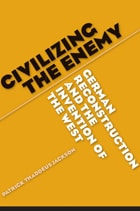
Civilizing the Enemy
German Reconstruction and the Invention of the WestPatrick Thaddeus Jackson
University of Michigan Press, 2006
By examining German reconstruction under the Marshall Plan, author Patrick Jackson shows how the rhetorical invention of a West that included Germany was critical to the emergence of the postwar world order. Civilizing the Enemy convincingly describes how concepts are strategically shaped and given weight in modern international relations, by expertly dissecting the history of "the West" and demonstrating its puzzling persistence in the face of contradictory realities.
"By revisiting the early Cold War by means of some carefully conducted intellectual history, Patrick Jackson expertly dissects the post-1945 meanings of "the West" for Europe's emergent political imaginary. West German reconstruction, the foundation of NATO, and the idealizing of 'Western civilization' all appear in fascinating new light."
--Geoff Eley, University of Michigan
"Western civilization is not given but politically made. In this theoretically sophisticated and politically nuanced book, Patrick Jackson argues that Germany's reintegration into a Western community of nations was greatly facilitated by civilizational discourse. It established a compelling political logic that guided the victorious Allies in their occupation policy. This book is very topical as it engages critically very different, and less successful, contemporary theoretical constructions and political deployments of civilizational discourse."
--Peter J. Katzenstein, Cornell University
"What sets Patrick Jackson's book apart is his attention, on the one hand, to philosophical issues behind the kinds of theoretical claims he makes and, on the other hand, to the methodological implications that follow from those claims. Few scholars are willing and able to do both, and even fewer are as successful as he is in carrying it off. Patrick Jackson is a systematic thinker in a field where theory is all the rage but systematic thinking is in short supply."
--Nicholas Onuf, Florida International University
Patrick Thaddeus Jackson is Assistant Professor of International Relations in American University's School of International Service.
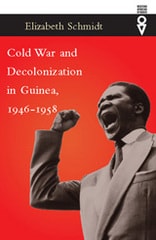
Cold War and Decolonization in Guinea, 1946–1958
Elizabeth Schmidt
Ohio University Press, 2007
In September 1958, Guinea claimed its independence, rejecting a constitution that would have relegated it to junior partnership in the French Community. In all the French empire, Guinea was the only territory to vote “No.” Orchestrating the “No” vote was the Guinean branch of the Rassemblement Démocratique Africain (RDA), an alliance of political parties with affiliates in French West and Equatorial Africa and the United Nations trusts of Togo and Cameroon. Although Guinea’s stance vis-à-vis the 1958 constitution has been recognized as unique, until now the historical roots of this phenomenon have not been adequately explained.
Clearly written and free of jargon, Cold War and Decolonization in Guinea argues that Guinea’s vote for independence was the culmination of a decade-long struggle between local militants and political leaders for control of the political agenda. Since 1950, when RDA representatives in the French parliament severed their ties to the French Communist Party, conservative elements had dominated the RDA. In Guinea, local cadres had opposed the break. Victimized by the administration and sidelined by their own leaders, they quietly rebuilt the party from the base. Leftist militants, their voices muted throughout most of the decade, gained preeminence in 1958, when trade unionists, students, the party’s women’s and youth wings, and other grassroots actors pushed the Guinean RDA to endorse a “No” vote. Thus, Guinea’s rejection of the proposed constitution in favor of immediate independence was not an isolated aberration. Rather, it was the outcome of years of political mobilization by activists who, despite Cold War repression, ultimately pushed the Guinean RDA to the left.
The significance of this highly original book, based on previously unexamined archival records and oral interviews with grassroots activists, extends far beyond its primary subject. In illuminating the Guinean case, Elizabeth Schmidt helps us understand the dynamics of decolonization and its legacy for postindependence nation-building in many parts of the developing world.
Examining Guinean history from the bottom up, Schmidt considers local politics within the larger context of the Cold War, making her book suitable for courses in African history and politics, diplomatic history, and Cold War history.
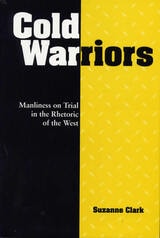
Cold Warriors
Manliness on Trial in the Rhetoric of the WestSuzanne Clark
Southern Illinois University Press, 2000
Cold Warriors: Manliness on Trial in the Rhetoric of the West returns to familiar cultural forces—the West, anticommunism, and manliness—to show how they combined to suppress dissent and dominate the unruliness of literature in the name of a national identity after World War II. Few realize how much the domination of a “white male” American literary canon was a product not of long history, but of the Cold War. Suzanne Clark describes here how the Cold War excluded women writers on several levels, together with others—African American, Native American, poor, men as well as women—who were ignored in the struggle over white male identity.
Clark first shows how defining national/individual/American identity in the Cold War involved a brand new configuration of cultural history. At the same time, it called upon the nostalgia for the old discourses of the West (the national manliness asserted by Theodore Roosevelt) to claim that there was and always had been only one real American identity.
By subverting the claims of a national identity, Clark finds, many male writers risked falling outside the boundaries not only of public rhetoric but also of the literary world: men as different from one another as the determinedly masculine Ernest Hemingway and the antiheroic storyteller of the everyday, Bernard Malamud. Equally vocal and contentious, Cold War women writers were unwilling to be silenced, as Clark demonstrates in her discussion of the work of Mari Sandoz and Ursula Le Guin.
The book concludes with a discussion of how the silencing of gender, race, and class in Cold War writing maintained its discipline until the eruptions of the sixties. By questioning the identity politics of manliness in the Cold War context of persecution and trial, Clark finds that the involvement of men in identity politics set the stage for our subsequent cultural history.
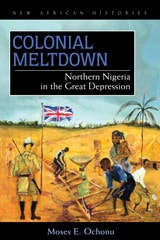
Colonial Meltdown
Northern Nigeria in the Great DepressionMoses E. Ochonu
Ohio University Press, 2009
Historians of colonial Africa have largely regarded the decade of the Great Depression as a period of intense exploitation and colonial inactivity. In Colonial Meltdown, Moses E. Ochonu challenges this conventional interpretation by mapping the determined, at times violent, yet instructive responses of Northern Nigeria’s chiefs, farmers, laborers, artisans, women, traders, and embryonic elites to the British colonial mismanagement of the Great Depression. Colonial Meltdown explores the unraveling of British colonial power at a moment of global economic crisis.
Ochonu shows that the economic downturn made colonial exploitation all but impossible and that this dearth of profits and surpluses frustrated the colonial administration which then authorized a brutal regime of grassroots exactions and invasive intrusions. The outcomes were as harsh for Northern Nigerians as those of colonial exploitation in boom years.
Northern Nigerians confronted colonial economic recovery measures and their agents with a variety of strategies. Colonial Meltdown analyzes how farmers, women, laborers, laid-off tin miners, and NorthernNigeria’s emergent elite challenged and rebelled against colonial economic recovery schemes with evasive trickery, defiance, strategic acts of revenge, and criminal self-help and, in the process, exposed the weak underbelly of the colonial system.
Combined with the economic and political paralysis of colonial bureaucrats in the face of crisis, these African responses underlined the fundamental weakness of the colonial state, the brittleness of its economicmission, and the limits of colonial coercion and violence. This atmosphere of colonial collapse emboldened critics of colonial policies who went on to craft the rhetorical terms on which the anticolonial struggle of the post–World War II period was fought out.
In the current climate of global economic anxieties, Ochonu’s analysis will enrich discussions on the transnational ramifications of economic downturns. It will also challenge the pervasive narrative of imperial economic success.
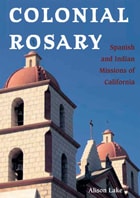
Colonial Rosary
The Spanish and Indian Missions of CaliforniaAlison Lake
Ohio University Press, 2006
California would be a different place today without the imprint of Spanish culture and the legacy of Indian civilization. The colonial Spanish missions that dot the coast and foothills between Sonoma and San Diego are relics of a past that transformed California’s landscape and its people.
In a spare and accessible style, Colonial Rosary looks at the complexity of California’s Indian civilization and the social effects of missionary control. While oppressive institutions lasted in California for almost eighty years under the tight reins of royal Spain, the Catholic Church, and the government of Mexico, letters and government documents reveal the missionaries’ genuine concern for the Indian communities they oversaw for their health, spiritual upbringing, and material needs.
With its balanced attention to the variety of sources on the mission period, Colonial Rosary illuminates ongoing debates over the role of the Franciscan missions in the settlement of California.
By sharing the missions’ stories of tragedy and triumph, author Alison Lake underlines the importance of preserving these vestiges of California’s prestatehood period. An illustrated tour of the missions as well as a sensitive record of their impact on California history and culture, Colonial Rosary brings the story of the Spanish missions of California alive.
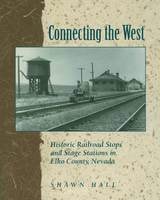
Connecting the West
Historic Railroad Stops and Stage Stations in Elko County, NevadaShawn Hall
University of Nevada Press, 2002
Shawn Hall's immensely popular guidebooks to Nevada ghost towns have become essential resources for backcountry explorers and scholars alike. Now Hall returns to Elko County to survey the county's railroad and stage stations, as well as other sites not included in his earlier survey of this colorful section of the state. As in his earlier volumes, Hall includes a history of each site he lists, along with period and contemporary photographs, directions for locating the sites, and an assessment of their present condition. His historical accounts, based on a wide range of primary and secondary sources, are both scholarly and engaging, rich in anecdotes and personalities, and in the fascinating minutia of history often ignored by more academic writers. Shawn Hall's dedication to documenting Nevada's thousands of historic sites has enriched our knowledge of the state's relatively brief but very eventful past. Connecting the West is a worthy addition to Hall's remarkable efforts to preserve the state's history.
Constantinople and the West
Essays on the Late Byzantine (Palaeologan) and Italian Renaissances and the Byzantine and Roman ChurchesDeno John Geanakoplos
University of Wisconsin Press, 1989
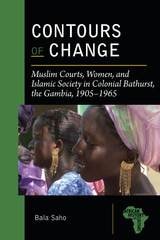
Contours of Change
Muslim Courts, Women, and Islamic Society in Colonial Bathurst, the Gambia, 1905-1965Bala Saho
Michigan State University Press, 2018

Corruption, Class, and Politics in Ghana
Ernest Harsch
Ohio University Press, 2024
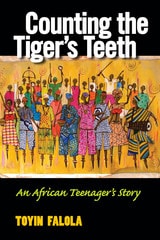
Counting the Tiger's Teeth
An African Teenager's StoryToyin Falola
University of Michigan Press, 2016
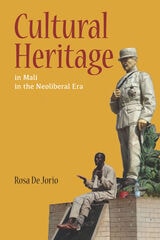
Cultural Heritage in Mali in the Neoliberal Era
Rosa De Jorio
University of Illinois Press, 2016