Results by title
53 books match the query 'Wildlife' and 4 start with c
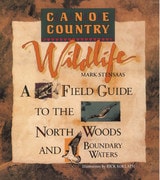
Canoe Country Wildlife
A Field Guide to the North Woods and Boundary WatersMark Stensaas
University of Minnesota Press, 2004
Warblers, wolves, and whirligig beetles—the creatures of the canoe countrywilderness come alive in Canoe Country Wildlife. In this read-aloud treasure, “Sparky” Stensaas, naturalist and storyteller, intrigues you with his tales of encounters with the forest inhabitants—from tiny toads to majestic moose.
Canoe Country Wildlife, a friendly field guide, introduces you to the wildlife you are most likely to see as you travel in the North Woods. It describes these creatures and their habits accurately so you’ll know where and when to look for them. Detailed line drawings illustrate each animal clearly so you’ll recognize what you’re seeing.
The book is filled with fascinating little-known facts: Did you know that wood frogs can freeze solid, only to live again? That loons can fly a hundred miles an hour? That chipmunks can carry seventy sunflower seeds in their cheeks?
Canoe Country Wildlife includes handy checklists to help you keep track of the critters you encounter, a calendar for you to record the natural events you witness, and activities—one for each animal—that will help both adults and children learn by discovery.
Carry Canoe Country Wildlife in your pack. Your trip will be more enjoyable and your memories will last forever. It’s a great gift for anyone who loves the outdoors.
Christianity, Wilderness, and Wildlife
Susan Bratton
University of Scranton Press, 2009
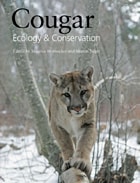
Cougar
Ecology and ConservationEdited by Maurice Hornocker and Sharon Negri
University of Chicago Press, 2009
The cougar is one of the most beautiful, enigmatic, and majestic animals in the Americas. Eliciting reverence for its grace and independent nature, it also triggers fear when it comes into contact with people, pets, and livestock or competes for hunters’ game. Mystery, myth, and misunderstanding surround this remarkable creature.
The cougar’s range once extended from northern Canada to the tip of South America, and from the Pacific to the Atlantic, making it the most widespread animal in the western hemisphere. But overhunting and loss of habitat vastly reduced cougar numbers by the early twentieth century across much of its historical range, and today the cougar faces numerous threats as burgeoning human development encroaches on its remaining habitat.
When Maurice Hornocker began the first long-term study of cougars in the Idaho wilderness in 1964, little was known about this large cat. Its secretive nature and rarity in the landscape made it difficult to study. But his groundbreaking research yielded major insights and was the prelude to further research on this controversial species.
The capstone to Hornocker’s long career studying big cats, Cougar is a powerful and practical resource for scientists, conservationists, and anyone with an interest in large carnivores. He and conservationist Sharon Negri bring together the diverse perspectives of twenty-two distinguished scientists to provide the fullest account of the cougar’s ecology, behavior, and genetics, its role as a top predator, and its conservation needs. This compilation of recent findings, stunning photographs, and firsthand accounts of field research unravels the mysteries of this magnificent animal and emphasizes its importance in healthy ecosystem processes and in our lives.
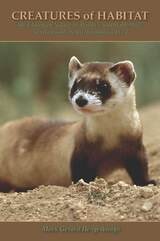
Creatures Of Habitat
The Changing Nature of Wildlife and Wild Places in Utah and the Intermountain WestMark Gerard Hengesbaugh
Utah State University Press, 2001
From flying squirrels on high wooded plateaus to hanging gardens in redrock canyons, the Intermountain West is home to some of the world's rarest and most fascinating animals and plants. Creatures of Habitat details many unique but little-known talents of this region's strange and wonderful wild inhabitants and descibes their connections with native environments. For example, readers will learn about the pronghorn antelope's supercharged cardiovascular system, a brine shrimp-powered shorebird that each year flies nonstop from the Great Salt Lake to Central Argentina, and a rare mustard plant recently discovered on Mount Ogden. Emphasizing how increasing loss and degradation of habitat hinders native species' survival, Mark Gerard Hengesbaugh discusses what is happening to wildlife and wild places and what is being done about it.
Well illustrated, this book has habitat maps, pen-and-ink illustrations, and fifty photos of wildlife and wild places selected by photo editor Dan Miller. Also included are guides to wildlife viewing and lists of Utah species, including those considered sensitive, threatened, or endangered.