Results by title
441 books match the query 'Women and literature' and 27 start with c

CONSUMING FANTASIES
LABOR, LEISURE, AND THE LONDON SHOPGIRL,LISE SHAPIRO SANDERS
The Ohio State University Press, 2006
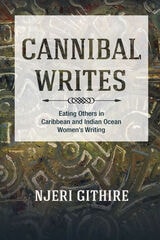
Cannibal Writes
Eating Others in Caribbean and Indian Ocean Women's WritingNjeri Githire
University of Illinois Press, 2014
In Cannibal Writes, Njeri Githire concentrates on the gendered and sexualized dimensions of these visceral metaphors of consumption in works by women writers from Haiti, Jamaica, Mauritius, and elsewhere. Employing theoretical analysis and insightful readings of English- and French-language texts, she explores the prominence of alimentary-related tropes and their relationship to sexual consumption, writing, global geopolitics and economic dynamics, and migration. As she shows, the use of cannibalism in particular as a central motif opens up privileged modes for mediating historical and sociopolitical issues.
Ambitiously comparative, Cannibal Writes ranges across the works of well-known and lesser known writers to tie together two geographic and cultural spaces that have much in common but are seldom studied in parallel.
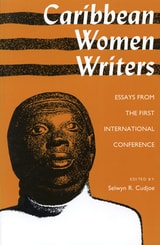
Caribbean Women Writers
Essays from the First International ConferenceSelwyn R. Cudjoe
University of Massachusetts Press, 1990

Changing Our Own Words
Cheryl A. Wall
Rutgers University Press, 1991

Charlotte Bronte and the Storyteller's Audience
Carol Bock
University of Iowa Press, 1992
Charlotte Brontë's World of Death
By Robert Keefe
University of Texas Press, 1979
By the age of eight, Charlotte Brontë had lost first her mother and then her two older sisters. Later, in a second wave of deaths, her brother and two younger sisters died, leaving her a sole survivor.
With subtlety and imagination, Robert Keefe examines Brontë’s works as the creative response to these losses, particularly the loss of her mother. Terrified and yet fascinated by death, struggling with guilt, remorse, and a deep sense of rejection, Charlotte Brontë found in art a way to come to terms with death through its symbolic reenactment. In her earlier writings she created a fictional world marked by devices that allow her to control or deny death. In her later works these mechanisms evolved into mature expressions of a profound psychological reality.
Brontë’s preoccupation with death is seen in her fiction in the recurring patterns of separation and exile. Keefe traces the development of these motifs in the juvenilia and the four novels: The Professor, Jane Eyre, Shirley, and Villette.
Unique in its emphasis on the maternal relationships in Brontë’s life and art, this study also explores certain aspects of her life that have often puzzled biographers.
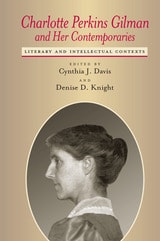
Charlotte Perkins Gilman and Her Contemporaries
Literary and Intellectual ContextsEdited by Cynthia J. Davis and Denise D. Knight
University of Alabama Press, 2004
Considers Gilman’s place in American literary and social history by examining her relationships to other prominent intellectuals of her era
By placing Charlotte Perkins Gilman in the company of her contemporaries, this collection seeks to correct misunderstandings of the feminist writer and lecturer as an isolated radical. Gilman believed and preached that no life is ever led in isolation; indeed, the cornerstone of her philosophy was the idea that “humanity is a relation.”Gilman's highly public and combative stances as a critic and social activist brought her into contact and conflict with many of the major thinkers and writers of the period, including Mary Austin, Margaret Sanger, Ambrose Bierce, Grace Ellery Channing, Lester Ward, Inez Haynes Gillmore, William Randolph Hearst, Karen Horney, William Dean Howells, Catharine Beecher, George Bernard Shaw, and Owen Wister. Gilman wrote on subjects as wide ranging as birth control, eugenics, race, women's rights and suffrage, psychology, Marxism, and literary aesthetics. Her many contributions to social, intellectual, and literary life at the turn of the 20th century raised the bar for future discourse, but at great personal and professional cost.
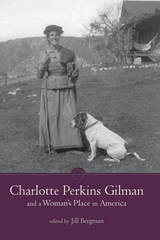
Charlotte Perkins Gilman and a Woman's Place in America
Edited by Jill Bergman
University of Alabama Press, 2017
Charlotte Perkins Gilman and a Woman’s Place in America is a pioneering collection that probes how depictions of space, confinement, and liberation establish both the difficulty and necessity of female empowerment. Turning Victorian notions of propriety and a woman’s place on its ear, this finely crafted essay collection studies Gilman’s writings and the manner in which they push back against societal norms and reject male-dominated confines of space.
The contributors present fascinating and innovative readings of some of Gilman’s most significant works. By examining the settings in “The Yellow Wallpaper” and Herland, for example, the volume analyzes Gilman’s construction of place, her representations of male dominance and female subjugation, and her analysis of the rules and obligations that women feel in conforming to their assigned place: the home.
Additionally, this volume delineates female resistance to this conformity. Contributors highlight how Gilman’s narrators often choose resistance over obedient captivity, breaking free of the spaces imposed upon them in order to seek or create their own habitats. Through biographical interpretations of Gilman’s work that focus on the author’s own renouncement of her “natural” role of wife and mother, contributors trace her relocation to the American West in an attempt to appropriate the masculinized spaces of work and social organization.
Engaging, well-researched, and deftly written, the essays in this collection will appeal to scholars of Gilman, literature, and gender issues alike.
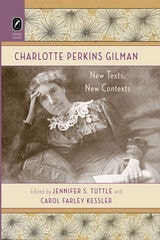
Charlotte Perkins Gilman
New Texts, New ContextsJennifer S. Tuttle and Carol Farley Kessler
The Ohio State University Press, 2011
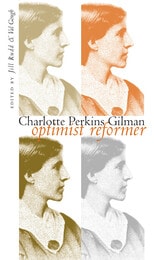
Charlotte Perkins Gilman
Optimist ReformerJill Rudd
University of Iowa Press, 1999
Chicana Ways
Conversations With Ten Chicana WritersKarin Rosa Ikas
University of Nevada Press, 2001

Child Brides and Intruders
Carol Wershoven
University of Wisconsin Press, 1993
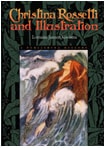
Christina Rossetti and Illustration
A Publishing HistoryLorraine Janzen Kooistra
Ohio University Press, 2002
Readers do not always take into account how books that combine image and text make their meanings. But for the Pre-Raphaelite poet Christina Rossetti, such considerations were central.
Christina Rossetti and Illustration maps the production and reception of Rossetti’s illustrated poetry, devotional prose, and work for children, both in the author’s lifetime and in posthumous twentieth-century reprints.
Lorraine Janzen Kooistra’s reading of Rossetti’s illustrated works reveals for the first time the visual-verbal aesthetic that was fundamental to Rossetti’s poetics. Her exhaustive archival research brings to light new information on how Rossetti’s commitment to illustration and attitudes to copyright and control influenced her transactions with publishers and the books they produced. Janzen Kooistra also tracks the poet’s reception in the twentieth century through a complex web of illustrated books produced for a wide range of audiences.
Analyzing an impressive array of empirical data, Janzen Kooistra shows how Rossetti’s packaging for commodity consumption—by religious presses, publishers of academic editions and children’s picture books, and makers of erotica and collectibles—influenced the reception of her work and her place in literary history.
Claiming a Tradition
Italian American Women WritersMary Jo Bona
Southern Illinois University Press, 1999
Bona discusses the novels in pairs according to their focus on Italian American life. She first examines the traditions of italianitá (a flavor of things Italian) that inform and enhance works of fiction. The novelists in that tradition were Mari Tomasi (Like Lesser Gods, 1949) and Marion Benasutti (No Steady Job for Papa, 1966).
Bona then turns to later novels that highlight the Italian American belief in the family's honor and reputation. Conflicts between generations, specifically between autocratic fathers and their children, are central to Octavia Waldo's 1961 A Cup of the Sun and Josephine Gattuso Hendin's 1988 The Right Thing to Do.
Even when writers choose to steer away from the familial focus, Bona notes, their developmental narratives trace the reintegration of characters suffering from a crisis of cultural identity. Relating the characters' struggles to their relationship to the family, Bona examines Diana Cavallo's 1961 A Bridge of Leaves and Dorothy Bryant's 1978 Miss Giardino.
Bona then discusses two innovative novels— Helen Barolini's 1979 Umbertina and Tina De Rosa's 1980 Paper Fish— both of which feature a granddaughter who invokes her grandmother, a godparent figure. Through Barolini's feminist and De Rosa's modernist perspectives, both novels present a young girl developing artistically.
Closing with a discussion of the contemporary terrain Italian American women traverse, Bona examines such topics as sexual identity when it meets cultural identity and the inclusion of italianitá when Italian American identity is not central to the story. Italian American women writers, she concludes, continue in the 1980s and 1990s to focus on the interplay between cultural identity and women's development.
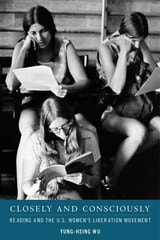
Closely and Consciously
Reading and the US Women's Liberation MovementYung-Hsing Wu
University of Massachusetts Press, 2024
The significant archive of writing that came out of the women’s liberation movement in the United States, from 1965 to 1980, speaks to the value activists placed on reading as an act that is at once personal and yet also about the collective good. Yung-Hsing Wu examines the importance of reading—personal, professional, vocational, aesthetic, and always political—and how the act itself brought a host of women, each with their own history with the movement, into relation, and into a belief in that relation. The value given to reading can be seen in the ways feminists pursued media representation; in consciousness-raising (CR) groups including shared reading in their meetings; in women opening bookstores, developing newsletters, establishing journals, and starting presses; and in corporate publishers pursuing feminist fiction.
Closely and Consciously crisscrosses distinct print spheres, including newsletters and periodicals produced by feminist cells and consciousness-raising groups, feminist presses seeking to articulate their visions for women’s writing, the emergence of feminist literary criticism in first-time monographs and newly established journals, personal and editorial correspondence, press records, and the publishing histories of bestsellers that testified to the increasingly broad popularity of women’s writing. Uniting all these disparate activists and media outlets, and providing crucial relationality, was reading. With a mix of close readings and archival research, Wu unpacks and interprets this central act of reading and why it matters during a crucial moment of feminist history.
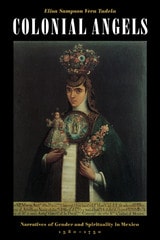
Colonial Angels
Narratives of Gender and Spirituality in Mexico, 1580-1750By Elisa Sampson Vera Tudela
University of Texas Press, 2000
Spain's attempt to establish a "New Spain" in Mexico never fully succeeded, for Spanish institutions and cultural practices inevitably mutated as they came in contact with indigenous American outlooks and ways of life. This original, interdisciplinary book explores how writing by and about colonial religious women participated in this transformation, as it illuminates the role that gender played in imposing the Spanish empire in Mexico.
The author argues that the New World context necessitated the creation of a new kind of writing. Drawing on previously unpublished writings by and about nuns in the convents of Mexico City, she investigates such topics as the relationship between hagiography and travel narratives, male visions of the feminine that emerge from the reworking of a nun's letters to her confessor into a hagiography, the discourse surrounding a convent's trial for heresy by the Inquisition, and the reports of Spanish priests who ministered to noble Indian women. This research rounds out colonial Mexican history by revealing how tensions between Spain and its colonies played out in the local, daily lives of women.
Colonial Strangers
Women Writing the End of the British EmpireLassner, Phyllis
Rutgers University Press, 2004
Drawing on memoirs, fiction, reportage, and film adaptations, Colonial Strangers explores the critical perspectives of writers who correct prevailing stereotypes of British women as agents of imperialism. They also question their own participation in British claims of moral righteousness and British politics of cultural exploitation. These authors take center stage in debates about connections between the racist ideologies of the Third Reich and the British Empire.
Colonial Strangers reveals how the literary responses of key artists represent not only compelling reading, but also a necessary intervention in colonial and postcolonial debates and the canons of modern British fiction.
Coloring Locals
Racial Formation in Katie Chopin's "Youth's Companion" StoriesBonnie James Shaker
University of Iowa Press, 2003
Chopin's canonical status as a feminist rebel and reformer conflicts with the fact that one of her most supportive publishers throughout her life was the Youth's Companion, a juvenile periodical whose thoroughly orthodox “family values” contributed to its success as the longest-running and, at one time, most widely circulating periodical in nineteenth-century America. Not surprisingly, Chopin’s Youth’s Companion stories differ from her canonical texts in that they embrace and advance ideals of orthodox white femininity and masculinity. Rather than viewing these two representations as being at odds with each other, Bonnie Shaker asserts that Chopin's endorsement of conventional gender norms is done in the service of a second political agenda beyond her feminism, one that can help the reader appreciate nuances of identity construction previously misunderstood or overlooked in the body of her work.
Coming to Light
American Women Poets in the Twentieth CenturyDiane Wood Middlebrook and Marilyn Yalom, Editors
University of Michigan Press, 1985
Communication and Women's Friendships
Parallels and Intersections in Literature and LifeJanet Doubler Ward
University of Wisconsin Press, 1993
Conquest of the New Word
Experimental Fiction and Translation in the AmericasBy Johnny Payne
University of Texas Press, 1993
Latin American fiction won great acclaim in the United States during the 1960s, when many North American writers and critics felt that our national writing had reached a low ebb. In this study of experimental fiction from both Americas, Johnny Payne argues that the North American reception of the "boom" in Latin American fiction distorted the historical grounding of this writing, erroneously presenting it as mainly an exotic "magical realism." He offers new readings that detail the specific, historical relation between experimental fiction and various authors' careful, deliberate deformations and reformations of the political rhetoric of the modern state.
Payne juxtaposes writers from Argentina and Uruguay with North American authors, setting up suggestive parallels between the diverse but convergent practices of writers on both continents. He considers Nelson Marra in conjunction with Donald Barthelme and Gordon Lish; Teresa Porzecanski with Harry Mathews; Ricardo Piglia with John Barth; Silvia Schmid and Manuel Puig with Fanny Howe and Lydia Davis; and Jorge Luis Borges and Luisa Valenzuela with William Burroughs and Kathy Acker.
With this innovative, dual-continent approach, Conquest of the New Word will be of great interest to everyone working in Latin American literature, women's studies, translation studies, creative writing, and cultural theory.
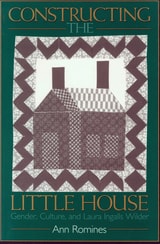
Constructing the Little House
Gender, Culture, and Laura Ingalls WilderAnn Romines
University of Massachusetts Press, 1997
Ann Romines interweaves personal observation with scholarly analysis to address these questions. Writing from a feminist perspective and drawing on resources of gender studies, cultural studies, and new historicist reading, she examines both the content of the novels and the process of their creation. She explores the relationship between mother and daughter working as collaborative authors and calls into question our assumptions about plot, juvenile fiction, and constructions of gender on the nineteenth-century frontier and in the Depression years when the Little House books were written.
This is a book that will appeal both to scholars and to general readers who might welcome an engaging and accessible companion volume to the Little House novels.
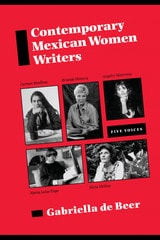
Contemporary Mexican Women Writers
Five VoicesBy Gabriella de Beer
University of Texas Press, 1996
Mexican women writers moved to the forefront of their country's literature in the twentieth century. Among those who began publishing in the 1970s and 1980s are Maria Luisa Puga, Silvia Molina, Brianda Domecq, Carmen Boullosa, and Angeles Mastretta. Sharing a range of affinities while maintaining distinctive voices and outlooks, these are the women whom Gabriella de Beer has chosen to profile in Contemporary Mexican Women Writers.
De Beer takes a three-part approach to each writer. She opens with an essay that explores the writer's apprenticeship and discusses her major works. Next, she interviews each writer to learn about her background, writing, and view of herself and others. Finally, de Beer offers selections from the writer's work that have not been previously published in English translation. Each section concludes with a complete bibliographic listing of the writer's works and their English translations.
These essays, interviews, and selections vividly recreate the experience of being with the writer and sharing her work, hearing her tell about and evaluate herself, and reading the words she has written. The book will be rewarding reading for everyone who enjoys fine writing.

Critical Passions
Selected EssaysJean Franco
Duke University Press, 1999
A key participant in the major debates in Latin American studies—beginning with the “boom” period of the 1960s and continuing through debates on ideology and discourse, Marxism, mass culture, and postmodernism—Franco is recognized for her feminist critique of Latin American writing. While her principal books are all readily available, Franco’s several dozen articles are dispersed in a variety of periodicals in Latin America, Europe, and the United States. Although many of these essays are considered pioneering and classic, they have never before been collected in a single work. In this volume, Mary Louise Pratt and Kathleen Newman have organized the essays into four interrelated sections: feminism and the critique of authoritarianism, mass and popular culture, Latin American literature from the “boom” onward, and the cultural history of Mexico. As a group, these writings demonstrate Franco’s ability to reflect on and judge with equal seriousness all spheres of expression, whether subway graffiti, a fashion manual, or an avant-garde haiku. A bona fide fan of popular and mass media, Franco never allows her critiques to dissolve into the puritanical or reductive; instead, she finds ways to present and debate complex theoretical questions in direct and accessible language.
This volume will draw an extensive readership in Latin American, cultural, and women’s studies.
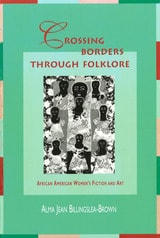
Crossing Borders through Folklore
African American Women's Fiction and ArtAlma Jean Billingslea-Brown
University of Missouri Press, 1999
Examining works by Toni Morrison, Paule Marshall, Faith Ringgold, and Betye Saar, this innovative book frames black women's aesthetic sensibilities across art forms. Investigating the relationship between vernacular folk culture and formal expression, this study establishes how each of the four artists engaged the identity issues of the 1960s and used folklore as a strategy for crossing borders in the works they created during the following two decades.
As a dynamic, open-ended process, folklore historically has enabled African-descended people to establish differential identity, resist dominance, and affirm group solidarity. This book documents the use of expressive forms of folklore in the fiction of Morrison and Marshall and the use of material forms of folklore in the visual representations of Ringgold and Saar. Offering a conceptual paradigm of a folk aesthetic to designate the practices these women use to revise and reverse meanings—especially meanings imposed on images such as Aunt Jemima and Sambo—Crossing Borders through Folklore explains how these artists locate sites of intervention and reconnection. From these sites, in keeping with the descriptive and prescriptive formulations for art during the sixties, Morrison, Marshall, Ringgold, and Saar articulate new dimensions of consciousness and creatively theorize identity.
Crossing Borders through Folklore is a significant and creative contribution to scholarship in both established and still- emerging fields. This volume also demonstrates how recent theorizing across scholarly disciplines has created elastic metaphors that can be used to clarify a number of issues. Because of its interdisciplinary approach, this study will appeal to students and scholars in many fields, including African American literature, art history, women's studies, diaspora studies, and cultural studies.
Cultures of Modernism
Marianne Moore, Mina Loy, and Else Lasker-SchulerCristanne Miller
University of Michigan Press, 2005
Cultures of Modernism explores how the structure and location of literary communities significantly influence who writes, what they write about, and their openness to formal experimentation. These influences particularly affect women writers. Author Cristanne Miller notes striking patterns of similarity in the concerns and lives of women living in geographically distant centers of modernist production. She looks at three significant poets---the American Marianne Moore, the British expatriate Mina Loy, and the German Else Lasker-Schüler---in the context of cultural, national, and local elements to argue that location significantly affected their performances of subjectivity, gender, race, and religion. The first book of its kind, Cultures of Modernism breaks new ground while it contributes to the ongoing reconception of the modernist period.
"A fascinating, provocative, and genuinely original study of a 'different' modernism in poetry---namely, the Modernism of women poets."
---Marjorie Perloff, Stanford University
"An important and ambitious work that makes major contributions to the fields of gender studies and modernist studies, and to the study of modernist poetry."
---Robin Schulze, Pennsylvania State University
"Offers a welcome corrective to the unreflective critical tendency . . . to make broad claims about the historical experiences and cultural conundrums of 'women,' and particularly 'women writers.' Miller offers tour-de-force comparative readings . . . threading together the world-historical with the personal, poetics with the political, and wielding the instruments of scansion as deftly as a surgeon."
---Modernism/modernity, The Official Journal of the Modernist Studies Association
Cristanne Miller is Edward H. Butler Professor of English and Chair of the English Department at the University of Buffalo, State University of New York.
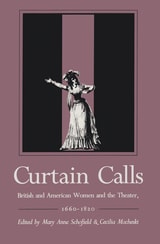
Curtain Calls
British and American Women and the Theater, 1660–1820Mary A. Schofield
Ohio University Press, 1991
“I here and there o’heard a Coxcomb cry,
Ah, rot—’tis a Woman’s Comedy.”
Thus Aphra Behn ushers in a new era for women in the British Theatre (Sir Patient Fancy, 1678). In the hundred years that were to follow—and exactly those years that Curtain Calls examines—women truly took the theater world by storm.
For each woman who chose a career in the theater world of the eighteenth century, there is a unique tale of struggle, insult, success, good or bad fortune, disaster, seduction, or fame. Whether acting, writing, reviewing, or stage managing, women played a major, if frequently unacknowledged, role in the history of the theater from the late seventeenth through the early nineteenth centuries. From Alpha Behn’s earliest plays through the glorious celebrity of Sara Siddons, women molded the taste of the age and carved out in the theater one of the few available opportunities for independence and renown.
Not all the women who tried succeeded, of course, and even the best faced opposition as they challenged the male stronghold of playwriting and theater managing. Curtain Calls maps the new territory as these pioneering women staked it for their own; it chronicles their lives, their triumphs, and their losses.
We begin with Aphra Behn, whose first play was staged in 1670, and conclude in the early decades of the nineteenth century with Inchbald and Siddons. The one hundred and fifty years encompassed by their lives contain the careers of dozens of lesser–known women, a network, as Dr. Johnson would have it, encompassing both talent and tribulation.
Contributors include: Edward Langhans, Linda R. Payne, Pat Rogers, Maureen e. Mulvihill, Deborah Payne, Betty Rizzo, Ellen Donkin, Frances M. Kavenik, Jessica Munns, nancy Cotton, Edna L. Steevs, Doreen Saar, Jean B. Kern, Katherine M. Rogers, Constance Clark, William J. Burling, Judith Phillips Stanton, Douglas Butler, Rose Zimbardo, and the editors.