Results by title
211 books match the query 'Working class' and 19 start with c
Capitalism and Labor
Towards Critical PerspectivesEdited by Klaus Dörre, Nicole Mayer-Ahuja, Dieter Sauer, and Volker Wittke
Campus Verlag, 2012
Capitalism and the Historians
Edited by F. A. Hayek
University of Chicago Press, 1963
Challenge Accepted
A Finnish Immigrant Response to Industrial America in Michigan's Copper CountryGary Kaunonen
Michigan State University Press, 2010
The copper mines of Michigan's Copper Country, in the Upper Peninsula, were active for 150 years, from 1845 until 1995. Many of the mine workers attempted to unionize, in order to obtain better working conditions, wages, and hours.
The Michigan miners were unsuccessful in their struggles with mine owners, which came to a climax in the 1913–14 Copper Country Strike. This nine-month battle between workers represented by the Western Federation of Miners (WFM) and the three major mining companies in the region took a particularly nasty turn on Christmas Eve, 1913, at a party for strikers and their families organized by the WFM. As many as 500 people were in the Italian Benevolent Society hall in Calumet, Michigan, when someone reportedly shouted "fire." There was no fire, but it is estimated that 73–79 people, more than 60 of them children, died in the stampede for the exit.
Against this dramatic backdrop, Gary Kaunonen tells the story of Finnish immigrants to Copper Country. By examining the written record and material culture of Finnish immigrant proletarians-analyzing buildings, cultural institutions, and publications of the socialist-unionist media—Kaunonen adds a new depth to our understanding of the time and place, the events and a people.
Chicago in the Age of Capital
Class, Politics, and Democracy during the Civil War and ReconstructionJohn B. Jentz and Richard Schneirov
University of Illinois Press, 2015

Chinese in the Woods
Logging and Lumbering in the American WestSue Fawn Chung
University of Illinois Press, 2015

City Games
The Evolution of American Urban Society and the Rise of SportsSteven A. Riess
University of Illinois Press, 1989
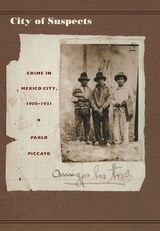
City of Suspects
Crime in Mexico City, 1900–1931Pablo Piccato
Duke University Press, 2001
By investigating postrevolutionary examples of corruption and organized crime, Piccato shines light on the historical foundations of a social problem that remains the main concern of Mexico City today. Emphasizing the social construction of crime and the way it was interpreted within the moral economy of the urban poor, he describes the capital city during the early twentieth century as a contested territory in which a growing population of urban poor had to negotiate the use of public spaces with more powerful citizens and the police. Probing official discourse on deviance, Piccato reveals how the nineteenth-century rise of positivist criminology—which asserted that criminals could be readily distinguished from the normal population based on psychological and physical traits—was used to lend scientific legitimacy to class stratifications and to criminalize working-class culture. Furthermore, he argues, the authorities’ emphasis on punishment, isolation, and stigmatization effectively created cadres of professional criminals, reshaping crime into a more dangerous problem for all inhabitants of the capital.
This unique investigation into crime in Mexico City will interest Latin Americanists, sociologists, and historians of twentieth-century Mexican history.
Civic Labors
Scholar Activism and Working-Class StudiesEdited by Dennis Deslippe, Eric Fure-Slocum, and John W. McKerley
University of Illinois Press, 2016
Class And Its Others
J. K. Gibson-Graham
University of Minnesota Press, 2000
A surprising and innovative look at class that proposes new approaches to this important topic
While references to gender, race, and class are everywhere in social theory, class has not received the kind of theoretical and empirical attention accorded to gender and race. A welcome and much-needed corrective, this book offers a novel theoretical approach to class and an active practice of class analysis.
The authors offer new and compelling ways to look at class through examinations of such topics as sex work, the experiences of African American women as domestic laborers, and blue- and white-collar workers. Their work acknowledges that individuals may participate in various class relations at one moment or over time and that class identities are multiple and changing, interacting with other aspects of identity in contingent and unpredictable ways.
The essays in the book focus on class difference, class transformation and change, and on the intersection of class, race, gender, sexuality, and other dimensions of identity. They find class in seemingly unlikely places-in households, parent-child relationships, and self-employment-and locate class politics on the interpersonal level as well as at the level of enterprises, communities, and nations. Taken together, they will prompt a rethinking of class and class subjectivity that will expand social theory.
Contributors: Enid Arvidson, U of Texas, Arlington; Jenny Cameron, Monash U, Australia; Harriet Fraad; Janet Hotch; Susan Jahoda, U of Massachusetts, Amherst; Amitava Kumar, U of Florida; Cecilia Marie Rio; Jacquelyn Southern; Marjolein van der Veen.
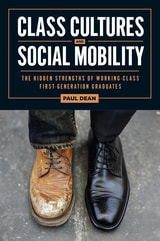
Class Cultures and Social Mobility
The Hidden Strengths of Working-Class First-Generation GraduatesPaul Dean
Rutgers University Press, 2026
When working-class first-generation students enter college or the professional workplace, they often find themselves immersed in entirely new worlds. They must learn the unwritten rules for how to speak, dress, behave, and interact with new peers and colleagues. While striving to fit in and do well, they risk feeling imposter syndrome, a loss of identity, or broken ties with friends and family.
Class Cultures and Social Mobility tells the stories of upwardly mobile first-gen graduates who flipped the script and turned their working-class roots into a strength. This accessible and highly engaging book reveals how first-gen graduates overcame hardship while leveraging unique skills—their working-class cultural capital—in college and their professional careers. It demonstrates there needn’t be a choice between economic success and maintaining authenticity to one’s roots—we can balance the competing demands of the two class worlds together. Whether you're an educator, student, working professional, or advocate, this book provides a powerful way to reimagine the transformations that accompany class mobility.
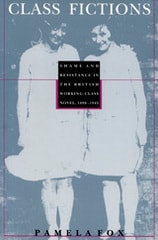
Class Fictions
Shame and Resistance in the British Working Class Novel, 1890–1945Pamela Fox
Duke University Press, 1994
With a focus on certain classics in the working-class literary "canon," such as The Ragged Trousered Philanthropists and Love on the Dole, as well as lesser-known texts by working-class women, Fox uncovers the anxieties that underlie representations of class and consciousness. Shame repeatedly emerges as a powerful counterforce in these works, continually unsettling the surface narrative of protest to reveal an ambivalent relation toward the working-class identities the novels apparently champion.
Class Fictions offers an equally rigorous analysis of cultural studies itself, which has historically sought to defend and value the radical difference of working-class culture. Fox also brings to her analysis a strong feminist perspective that devotes considerable attention to the often overlooked role of gender in working-class fiction. She demonstrates that working-class novels not only expose master narratives of middle-class culture that must be resisted, but that they also reveal to us a need to create counter narratives or formulas of working-class life. In doing so, this book provides a more subtle sense of the role of resistance in working class culture. While of interest to scholars of Victorian and working-class fiction, Pamela Fox’s argument has far-reaching implications for the way literary and cultural studies will be defined and practiced.
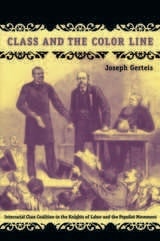
Class and the Color Line
Interracial Class Coalition in the Knights of Labor and the Populist MovementJoseph Gerteis
Duke University Press, 2007
While scholars have long debated whether the Knights and the Populists were genuine in their efforts to cross the color line, Joseph Gerteis shifts attention from that question to those of how, where, and when the movements’ organizers drew racial boundaries. Arguing that the movements were simultaneously racially inclusive and exclusive, Gerteis explores the connections between race and the movements’ economic and political interests in their cultural claims and in the dynamics of local organizing.
Interpreting data from the central journals of the Knights of Labor and the two major Populist organizations, the Farmers’ Alliance and the People’s Party, Gerteis explains how the movements made sense of the tangled connections between race, class, and republican citizenship. He considers how these collective narratives motivated action in specific contexts: in Richmond and Atlanta in the case of the Knights of Labor, and in Virginia and Georgia in that of the Populists. Gerteis demonstrates that the movements’ collective narratives galvanized interracial organizing to varying degrees in different settings. At the same time, he illuminates the ways that interracial organizing was enabled or constrained by local material, political, and social conditions.
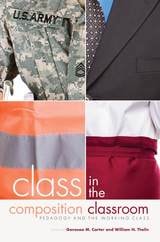
Class in the Composition Classroom
Pedagogy and the Working ClassGenesea M. Carter
Utah State University Press, 2017
Class in the Composition Classroom considers what college writing instructors should know about their working-class students—their backgrounds, experiences, identities, learning styles, and skills—in order to support them in the classroom, across campus, and beyond. In this volume, contributors explore the nuanced and complex meaning of “working class” and the particular values these college writers bring to the classroom.
The real college experiences of veterans, rural Midwesterners, and trade unionists show that what it means to be working class is not obvious or easily definable. Resisting outdated characterizations of these students as underprepared and dispensing with a one-size-fits-all pedagogical approach, contributors address how region and education impact students, explore working-class pedagogy and the ways in which it can reify social class in teaching settings, and give voice to students’ lived experiences.
As community colleges and universities seek more effective ways to serve working-class students, and as educators, parents, and politicians continue to emphasize the value of higher education for students of all financial and social backgrounds, conversations must take place among writing instructors and administrators about how best to serve and support working-class college writers. Class in the Composition Classroom will help writing instructors inside and outside the classroom prepare all their students for personal, academic, and professional communication.
Contributors: Aaron Barlow, Cori Brewster, Patrick Corbett, Harry Denny, Cassandra Dulin, Miriam Eisenstein Ebsworth, Mike Edwards, Rebecca Fraser, Brett Griffiths, Anna Knutson, Liberty Kohn, Nancy Mack, Holly Middleton, Robert Mundy, Missy Nieveen Phegley, Jacqueline Preston, James E. Romesburg, Edie-Marie Roper, Aubrey Schiavone, Christie Toth, Gail G. Verdi
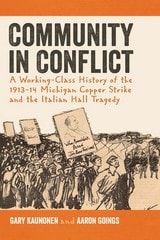
Community in Conflict
A Working-class History of the 1913-14 Michigan Copper Strike and the Italian Hall TragedyGary Kaunonen
Michigan State University Press, 2013
A mirror of great changes that were occurring on the national labor rights scene, the 1913–14 Michigan Copper Strike was a time of unprecedented social upheaval in Michigan’s Upper Peninsula. With organized labor taking an aggressive stance against the excesses of unfettered capitalism, the stage was set for a major struggle between labor and management. The Michigan Copper Strike received national attention and garnered the support of luminaries in organized labor like Mother Jones, John Mitchell, Clarence Darrow, and Charles Moyer. The hope of victory was overshadowed, however, by violent incidents like the shooting of striking workers and their family members, and the bitterness of a community divided. No other event came to symbolize or memorialize the strike more than the Italian Hall tragedy, in which dozens of workers and working-class children died. In Community in Conflict, the efforts of working people to gain a voice on the job and in their community through their unions, and the efforts of employers to crush those unions, take center stage. Previously untapped historical sources such as labor spy reports, union newspapers, coded messages, and artifacts shine new light on this epic, and ultimately tragic, period in American labor history.

Comrade or Brother?
A History of the British Labour MovementMary Davis
Pluto Press, 2009
Critical and iconoclastic, Comrade or Brother? traces the history of the British Labour Movement from its beginnings at the onset of industrialisation through its development within a capitalist society, up to the end of the twentieth-century. Written by a leading activist in the labour movement, the book redresses the balance in much labour history writing. It examines the place of women and the influence of racism and sexism as well as providing a critical analysis of the rival ideologies which played a role in the uneven development of the labour movement.
Counter Cultures
Saleswomen, Managers, and Customers in American Department Stores, 1890-1940Susan Porter Benson
University of Illinois Press, 1986
Critical Study Of Work
edited by Rick Baldoz, Charles Koeber and Philip Kraft
Temple University Press, 2001
The editors have assembled a collection of provocative, original essays on work and workplaces throughout the world that challenge the current celebration of globalization and new technologies. Building on labor process analysis, individual case studies venture beyond factory and office to examine "virtual" workplaces, computer-era cottage work, and emotional and household labor. The settings range from Indian and Irish software factories to Brazilian supermarkets, Los Angeles sweatshops, and Taiwanese department stores.
Other essays seek to make theoretical sense of increasingly de-centered production chains, fluid work relations, and uncertain employment. Individually and collectively the authors construct a new critical study of work, highlighting the connections between geography, technology, gender, race, and class. They offer an accessible and flexible approach to the study of workplace relations and production organization -- and even the notion of work itself.
Critical Teaching and Everyday Life
Ira Shor
University of Chicago Press, 1987

Cumbia!
Scenes of a Migrant Latin American Music GenreHéctor Fernández L Hoeste and Pablo Vila, eds.
Duke University Press, 2013
Contributors. Cristian Alarcón, Jorge Arévalo Mateus, Leonardo D'Amico, Héctor Fernández L'Hoeste, Alejandro L. Madrid, Kathryn Metz, José Juan Olvera Gudiño, Cathy Ragland, Pablo Semán, Joshua Tucker, Matthew J. Van Hoose, Pablo Vila