Results by title
1441 books match the query 'World' and 107 start with c
COALITION GOVERNMENT, SUBNATIONAL STYLE
Multiparty Politics in Europe’s Regional ParliamentsWilliam M. Downs
The Ohio State University Press, 1998
Coalition Government, Subnational Style examines parliamentary democracy in subnational legislative assemblies. Comparing three different European democracies—Germany, France, and Belgium—William M. Downs provides a powerful account of the ways politicians and political parties negotiate the composition of new governments following elections in which no single party wins a clear majority.
Downs argues that postelection alliance building is a window onto many of the political processes fundamental to representative democracy: the interpretations of electoral verdicts; the compromises of campaign pledges; the trade-offs between policy and power; the temporary cooperation between long-term adversaries; the collective decision making; and the blurring of lines of accountability through collective responsibility.
The study reports findings from an unprecedented collection of information, including cross-national survey responses, interviews with political elites, and three decades of postelection studies of coalition building in the German state parliaments, the French regional assemblies, and the Belgian provincial councils and regional parliaments. Coalition Government, Subnational Style conclusively demonstrates that the struggles for government status at subnational levels are profoundly important to both parties and voters and that the outcomes of these struggles can result in governments of varying political complexions. Downs's findings question key assumptions of democratic theory and raise important concerns about individual and organizational behavior in changing institutional and electoral environments, ultimately allowing for a deeper understanding of representation, power, and cooperation outside the more familiar arena of national parliamentary politics.
COMMITTEES IN POST-COMMUNIST DEMOCRATIC PARLIAMENTS
COMPARATIVE INSTITUTIONALIZATIONDAVID M. OLSON
The Ohio State University Press, 2002
The former Communist countries of Eastern Europe provide a treasure-trove of data on the development of democratic institutions. The contributors to this volume use the recent experiences of these countries to identify how the various committee systems are structured and tie the relative strength of the committee system in each country to the relative strength of its legislature. A uniform theoretical framework connects the work of each essay and ties the parts into an informative whole.
Comparative analysis based on seven indicators of institutionalization suggests that the committee systems of Hungary, Poland, and the Czech Republic are more institutionalized than those found elsewhere. Bulgaria is a middle case, while the parliaments of Moldova, Lithuania, and Estonia are the least. Of the indicators, stability in committee membership and extent of committee activity are among the most important for post-communist parliaments in their first decade.
This examination of legislative committees in their beginning stages suggests that the processes of institutionalization are sequenced: expertise in a policy sector is the basis of both the assertion of jurisdictional autonomy by committees and the motive for party control of their membership and officer positions. Basic to these developments, however, is the emergence of a stable and consistent structure of the committee system as a whole. More broadly, committee attributes are closely linked to the condition and functioning of both parliamentary party groups and the government.
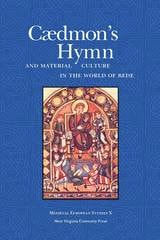
Caedmon's Hymn and Material Culture in the World of Bede
ALLEN J. FRANTZEN
West Virginia University Press, 2007
The essays in this book use the nine-line poem known as Cædmon’s Hymn as a lens on the world of Bede’s Ecclesiastical History. A cowherd who is given a divine gift, Cædmon retells the great narratives of Christian history in the traditional form of Anglo-Saxon verse. An immense amount has been written about this episode, much of it concentrating on the hymn’s significance in the history of English literature. Relatively little attention, however, has been paid to what the story of Cædmon and his hymn might tell us about the material, as well as the textual, culture of Bede’s world. The essays in this collection seek to connect Cædmon’s Hymn to Bede’s material world in various ways. Each chapter begins with the hymn and moves from the text to the worlds of scientific thought, settlements and social hierarchy, monastic reform, and ordinary things. The connections explored here are a sampling of the material concerns Cædmon’s Hymn raises.
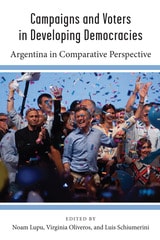
Campaigns and Voters in Developing Democracies
Argentina in Comparative PerspectiveEdited by Noam Lupu, Virginia Oliveros, and Luis Schiumerini
University of Michigan Press, 2019
Canada and Eastern Europe, 1945–1991
Meeting in the MiddleAndrea Chandler
Central European University Press, 2024
How democratic regimes should engage with authoritarian regimes, or self-proclaimed authorities in states under occupation, has long been a subject of debate. The work examines Canada's relations with member-states of the Warsaw Pact during the Cold War. Central and East European communist states were nominally independent but established under occupation. Canadian leaders explored whether engaging in foreign relations with these countries would encourage liberalization or embolden dictatorships. Over time, Canada's position evolved as a policy of encouraging bilateral and multilateral diplomacy, while calling for the respect of human rights. However, Canada's economic relationship with East European states was at times at cross-purposes with its democratic principles. Andrea Chandler concludes that while Canada did play a role in encouraging democratization, the country's leaders did not sufficiently consider the impact of these policies on the citizens of Warsaw Pact countries.
This book treats Canada’s engagement with Hungary, Poland, the German Democratic Republic, Romania, Bulgaria and Czechoslovakiaduring the Cold War, in which the Western countries of the North Atlantic Treaty Organization (including Canada) had an adversarial relation with the Soviet bloc nations.
Capital Choices
Sectoral Politics and the Variation of Sovereign WealthJuergen Braunstein
University of Michigan Press, 2019
Sovereign wealth funds are state-controlled pools of capital that hold financial and real assets, including shares of state enterprises, and manage them to grow the nation’s base of sovereign wealth. The dramatic rise of sovereign wealth funds (SWFs) in both number and size—this group is now larger than the size of global private equity and hedge funds, combined—and the fact that most are located in non-OECD countries, has raised concern about the direction of capitalism. Yet SWFs are not a homogenous group of actors. Why do some countries with large current account surpluses, notably China, create SWFs while others, such as Switzerland and Germany, do not? Why do other countries with no macroeconomic justification, such as Senegal and Turkey, create SWFs? And why do countries with similar macroeconomic features, such as Kuwait and Qatar or Singapore and Hong Kong, choose different types of SWFs?
Capital Choices analyzes the creation of different SWFs from a comparative political economy perspective, arguing that different state-society structures at the sectoral level are the drivers for SWF variation. Juergen Braunstein focuses on the early formation period of SWFs, a critical but little understood area given the high levels of political sensitivity and lack of transparency that surround SWF creation. Braunstein’s novel analytical framework provides practical lessons for the business and finance organizations and policymakers of countries that have created, or are planning to create, SWFs.
Capital Choices
Sectoral Politics and the Variation of Sovereign WealthJuergen Braunstein
University of Michigan Press, 2022
Sovereign wealth funds are state-controlled pools of capital that hold financial and real assets, including shares of state enterprises, and manage them to grow the nation’s base of sovereign wealth. The dramatic rise of sovereign wealth funds (SWFs) in both number and size—this group is now larger than the size of global private equity and hedge funds, combined—and the fact that most are located in non-OECD countries, has raised concern about the direction of capitalism. Yet SWFs are not a homogenous group of actors. Why do some countries with large current account surpluses, notably China, create SWFs while others, such as Switzerland and Germany, do not? Why do other countries with no macroeconomic justification, such as Senegal and Turkey, create SWFs? And why do countries with similar macroeconomic features, such as Kuwait and Qatar or Singapore and Hong Kong, choose different types of SWFs?
Capital Choices analyzes the creation of different SWFs from a comparative political economy perspective, arguing that different state-society structures at the sectoral level are the drivers for SWF variation. Juergen Braunstein focuses on the early formation period of SWFs, a critical but little understood area given the high levels of political sensitivity and lack of transparency that surround SWF creation. Braunstein’s novel analytical framework provides practical lessons for the business and finance organizations and policymakers of countries that have created, or are planning to create, SWFs.
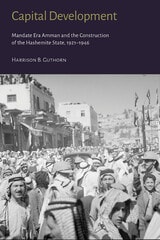
Capital Development
Mandate Era Amman and the Construction of the Hashemite State (1921–1946)Harrison B. Guthorn
Gingko, 2021
Amman, the capital of Jordan, contends with a crisis of identity rooted in how it grew to become a symbol for the Anglo-Hashemite government first, and a city second. As a representation of the new centralized authority, Amman became the seat of the Mandatory government that orchestrated the development of Transjordan, the British mandate established in 1921.
Despite its diminutive size, the city grew to house all the components necessary for a thriving and cohesive state by the end of the British mandate in 1946. However, in spite of its modernizing and regulatory ambitions, the Transjordan government did not control all facets of life in the region. Instead, the story of Transjordan is one of tensions between the state and the realities of the region, and these limitations forced the government to scale down its aspirations. This book presents the history of Amman’s development under the rule of the British mandate from 1921–46 and illustrates how the growth of the Anglo-Hashemite state imbued the city with physical, political, and symbolic significance.
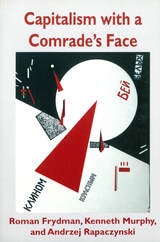
Capitalism with a Comrade's Face
Kenneth Murphy
Central European University Press, 1998
Are nations that are journeying away from communism succeeding in becoming free-market democracies? In what ways do decades of totalitarian rule continue to distort the institutional shape of these societies? Which of communism's legacies may remain as permanent features of their landscape? In an effort to answer these questions, Roman Frydman, Kenneth Murphy, and Andrzej Rapaczynski analyze the turbulent transitions that have taken place in the post-Communist world since the revolutions of 1989-1991.
Each of the essays in this collection dissects the institutional upheaval in a particular institution in transition, such as central banking, the trade union movement, capital markets, or corporate govern-ance. In a lively and accessible style, the authors bring out the links between what was and what will be in the social fabric of Eastern Europe and the former Soviet Union. They expose the fragility of political and economic institutions that can easily threaten the region's rebirth, but they also believe that many post-Communist countries are successfully seizing the opportunity to become reunited with the West and the global economy.
With both sweeping perspective and critical depth, Frydman, Murphy, and Rapaczynski show the wide range of institutional improvisations under way. They weigh the advantages and disadvantages of different reform strategies and assess the role of politics in fostering or arresting the process of transformation. Each essay illuminates the pro-found difficulties of reconciling the needs of economic development with the special interests fighting for their survival.
Captured Societies in Southeast Europe
Networks of Trust and ControlEric Gordy
Central European University Press, 2025
This book presents findings from a collaborative, multidisciplinary research project. Over three years, a group of forty researchers examined informal practices in nine Southeast European states, adopting a mix of qualitative and quantitative methodologies.
This close look at the Balkans illuminates persistent deficits in state legitimacy and capacity. The evidence allows a critical assessment of “Europeanisation” processes that produce only superficial formal changes, and of ways that networks of mutual assistance turn into instruments of social control and closure.
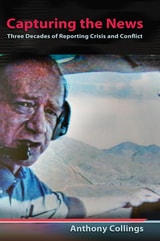
Capturing the News
Three Decades of Reporting Crisis and ConflictAnthony Collings
University of Missouri Press, 2010
Anthony Collings found himself in his share of difficult situations in his thirty-four years as a newsman. Like being captured by AK-47–toting Syrians in Lebanon in 1981 while looking for missiles that threatened a new outbreak of hostilities with Israel, or being “detained” by the KGB in Moscow in 1967 during his first foreign posting for the Associated Press filing stories about Soviet dissidents.
Brimming with entertaining stories about journalism, especially the chaotic early years at CNN when he and his colleagues established the first major cable news network, Collings’s book reveals the dangers and pressures of covering the news and the difficulties of overcoming obstacles to the truth. He recalls smuggling tapes out of Poland after the Communists had imposed martial law; flying dangerously near Libya’s “Line of Death”; interviewing world figures from Brezhnev to Kaddafi and Arafat; and winning awards for covering Iran-Contra and the Oklahoma City bombing. Collings brings fresh insights to the Oliver North affair and examines how the press was suckered in its coverage of the Jessica Lynch prisoner-of-war story in 2003. He voices his concerns regarding oversimplified reporting of complex issues and poses provocative questions about covering terrorism.
In this book, Collings presents an insider’s appraisal of the American news media’s failings and accomplishments. Easy to read, informative, and thoughtful, Capturing the News will enlighten general readers interested in how journalists cover current affairs, while offering newsmen food for thought about the craft and ethics of journalism.
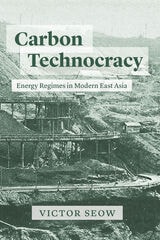
Carbon Technocracy
Energy Regimes in Modern East AsiaVictor Seow
University of Chicago Press, 2021
The coal-mining town of Fushun in China’s Northeast is home to a monstrous open pit. First excavated in the early twentieth century, this pit grew like a widening maw over the ensuing decades, as various Chinese and Japanese states endeavored to unearth Fushun’s purportedly “inexhaustible” carbon resources. Today, the depleted mine that remains is a wondrous and terrifying monument to fantasies of a fossil-fueled future and the technologies mobilized in attempts to turn those developmentalist dreams into reality.
In Carbon Technocracy, Victor Seow uses the remarkable story of the Fushun colliery to chart how the fossil fuel economy emerged in tandem with the rise of the modern technocratic state. Taking coal as an essential feedstock of national wealth and power, Chinese and Japanese bureaucrats, engineers, and industrialists deployed new technologies like open-pit mining and hydraulic stowage in pursuit of intensive energy extraction. But as much as these mine operators idealized the might of fossil fuel–driven machines, their extractive efforts nevertheless relied heavily on the human labor that those devices were expected to displace. Under the carbon energy regime, countless workers here and elsewhere would be subjected to invasive techniques of labor control, ever-escalating output targets, and the dangers of an increasingly exploited earth.
Although Fushun is no longer the coal capital it once was, the pattern of aggressive fossil-fueled development that led to its ascent endures. As we confront a planetary crisis precipitated by our extravagant consumption of carbon, it holds urgent lessons. This is a groundbreaking exploration of how the mutual production of energy and power came to define industrial modernity and the wider world that carbon made.
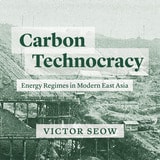
Carbon Technocracy
Energy Regimes in Modern East AsiaVictor Seow
University of Chicago Press, 2021
Audiobook edition
A forceful reckoning with the relationship between energy and power through the history of what was once East Asia’s largest coal mine.
The coal-mining town of Fushun in China’s Northeast is home to a monstrous open pit. First excavated in the early twentieth century, this pit grew like a widening maw over the ensuing decades, as various Chinese and Japanese states endeavored to unearth Fushun’s purportedly “inexhaustible” carbon resources. Today, the depleted mine that remains is a wondrous and terrifying monument to fantasies of a fossil-fueled future and the technologies mobilized in attempts to turn those developmentalist dreams into reality.
In Carbon Technocracy, Victor Seow uses the remarkable story of the Fushun colliery to chart how the fossil fuel economy emerged in tandem with the rise of the modern technocratic state. Taking coal as an essential feedstock of national wealth and power, Chinese and Japanese bureaucrats, engineers, and industrialists deployed new technologies like open-pit mining and hydraulic stowage in pursuit of intensive energy extraction. But as much as these mine operators idealized the might of fossil fuel–driven machines, their extractive efforts nevertheless relied heavily on the human labor that those devices were expected to displace. Under the carbon energy regime, countless workers here and elsewhere would be subjected to invasive techniques of labor control, ever-escalating output targets, and the dangers of an increasingly exploited earth.
Although Fushun is no longer the coal capital it once was, the pattern of aggressive fossil-fueled development that led to its ascent endures. As we confront a planetary crisis precipitated by our extravagant consumption of carbon, it holds urgent lessons. This is a groundbreaking exploration of how the mutual production of energy and power came to define industrial modernity and the wider world that carbon made.
Care at the End of the World
Dreaming of Infrastructure in Crip-of-Color WritingJina B. Kim
Duke University Press, 2025
Carlos Lacerda, Brazilian Crusader
Volume I: The Years 1914-1960By John W. F. Dulles
University of Texas Press, 1991
Playwright, journalist, and spectacularly successful governor, Carlos Lacerda was Brazil's foremost orator in the 20th century and its most controversial politician. He might have become president in the 1960s had not the military taken over. In the words of eminent historian José Honório Rodrigues, "No one person influenced the Brazilian historical process as much as Carlos Lacerda from 1945 to 1968."
In this volume, the first of a two-volume biography, Professor Dulles paints a portrait of a rebellious youth, who had the willfulness of his prominent father and who crusaded for Communism before becoming its most outspoken foe. Recalling Lacerda's rallying cry, "Brazil must be shaken up," Dulles traces the career of the journalist whose unsparing attacks on the men in power led authorities to imprison him and employ thugs who pummeled him physically. The story covers events in which Lacerda helped alter Brazil, such as the redemocratization in 1945 and his revelation of scandals in high places in the early 1950s. An unsuccessful attempt by government men to murder him in 1954 led to the suicide of President Getulio Vargas in 1954.
Lacerda's spirited oratory helped him become Brazil's most popular congressman, but it scared the rulers of Brazil and they prohibited the broadcast of his speeches after he returned from exile in 1956. Their effort to deprive him of his mandate stirred the entire nation and culminated in one of the most dramatic sessions ever held in the Chamber of Deputies.
Dulles, who knew Lacerda well and had access to his papers, sheds light on Lacerda the man, ardent in courtship and in all his undertakings, intellectually restless, and scornful of routine and mediocrity. Lacerda had a vitriolic pen that made bitter enemies, but, as disclosed in these pages, his courage and incorruptibility attracted an enthusiastic following, evident in the landslide election victories that brought him seats on Rio de Janeiro's city council and in the federal Congress.
Carlos Lacerda, Brazilian Crusader
Volume II: The Years 1960-1977By John W. F. Dulles
University of Texas Press, 1991
From reviews of Volume I:
"Brazilian Crusader is no doubt the best biography yet produced on Lacerda and the second volume . . . is certainly worth waiting for."
—Luso-Brazilian Review
Journalist and spectacularly successful governor, Carlos Lacerda was Brazil's foremost orator in the 20th century and its most controversial politician. He might have become president in the 1960s had not the military taken over.
In the first volume, John F. W. Dulles paints a portrait of a rebellious youth, who had the willfulness of his prominent father and who crusaded for Communism before becoming its most outspoken foe. Recalling Lacerda's rallying cry, "Brazil must be shaken up," Dulles traces the career of the journalist whose unsparing attacks on the men in power led authorities to imprison him and employ thugs who pummeled him physically. Lacerda's spirited oratory helped him become Brazil's most popular congressman, but it scared the rulers of Brazil, who prohibited the broadcast of his speeches after he returned from exile in 1956. Their effort to deprive him of his mandate stirred the entire nation and culminated in one of the most dramatic sessions ever held in the Chamber of Deputies.
In the second and final volume, Dulles explores the political and private life of Lacerda from 1960, when he became governor of Brazil's Guanabara state, until his death in 1977. Dulles focuses particularly on the years 1960 to 1968, in which Lacerda played a central role in some of the most drastic political changes that Brazil has experienced in this century.
Lacerda's story ranges from the headlines constantly generated by his political attacks and journalistic sensationalism to private moments of personal tragedy. In telling his story, Dulles draws on hundreds of interviews, as well as extensive research in press archives, Lacerda's public papers, and the private collections of Lacerda's family and associates. This material paints a compelling portrait of an honest administrator who alienated top figures in politics, the press, and the military.
Cartographies of Madrid
Contesting Urban Space at the Crossroads of the Global South and Global NorthSilvia Bermudez
Vanderbilt University Press, 2018
Scholars, investigative journalists, political activists, and a filmmaker combine to document the vast array of Madrid's grassroots movements.
Cash, Clothes, and Construction
Rethinking Value in Bolivia's Pluri-economyKate Maclean
University of Minnesota Press, 2023
A groundbreaking feminist perspective on Movimiento al Socialismo (MAS) rule in Bolivia and the country’s radical transformation under Evo Morales
The presidency of Evo Morales in Bolivia (2006–2019) has produced considerable academic scholarship, much of it focused on indigenous social movements or extractivism, and often triumphalist about the successes of Morales’s Movimiento al Socialismo (MAS). Turning a new lens on the movement, Cash, Clothes, and Construction presents the first gender-based analysis of “pluri-economy,” a central pillar of Bolivia’s program under Morales, evaluating the potential of this vision of “an economy where all economies fit” to embrace feminist critiques of capitalism and economic diversity.
Based on more than twelve years of empirical research exploring the remarkable transformations in Bolivia since 2006, this book focuses on three sectors—finance, clothing, and construction—in which indigenous women have defied gendered expectations. Kate Maclean presents detailed case studies of women selling secondhand high street clothes from the United States in the vast, peri-urban markets of Bolivian cities; Aymaran designers of new pollera (traditional Andean dress) fashions, one of whom exhibited her collection in New York City; and the powerful and rich chola paceña, whose real estate investments have transformed the cultural maps of La Paz and El Alto.
Cash, Clothes, and Construction offers a gendered analysis of the mission of MAS to dismantle neoliberalism and decolonize politics and economy from the perspective of the Indigenous women who have radically transformed Bolivia’s economy from the ground up.
Cast Out
Vagrancy and Homelessness in Global and Historical PerspectiveA. L. Beier
Ohio University Press, 2008
Throughout history, those arrested for vagrancy have generally been poor men and women, often young, able-bodied, unemployed, and homeless. Most histories of vagrancy have focused on the European and American experiences. Cast Out: Vagrancy and Homelessness in Global and Historical Perspective is the first book to consider the shared global heritage of vagrancy laws, homelessness, and the historical processes they accompanied.
In this ambitious collection, vagrancy and homelessness are used to examine a vast array of phenomena, from the migration of labor to social and governmental responses to poverty through charity, welfare, and prosecution. The essays in Cast Out represent the best scholarship on these subjects and include discussions of the lives of the underclass, strategies for surviving and escaping poverty, the criminalization of poverty by the state, the rise of welfare and development programs, the relationship between imperial powers and colonized peoples, and the struggle to achieve independence after colonial rule. By juxtaposing these histories, the authors explore vagrancy as a common response to poverty, labor dislocation, and changing social norms, as well as how this strategy changed over time and adapted to regional peculiarities.
Part of a growing literature on world history, Cast Out offers fresh perspectives and new research in fields that have yet to fully investigate vagrancy and homelessness. This book by leading scholars in the field is for policy makers, as well as for courses on poverty, homelessness, and world history.
Contributors:
Richard B. Allen
David Arnold
A. L. Beier
Andrew Burton
Vincent DiGirolamo
Andrew A. Gentes
Robert Gordon
Frank Tobias Higbie
Thomas H. Holloway
Abby Margolis
Paul Ocobock
Aminda M. Smith
Linda Woodbridge
Cast in Deathless Bronze
Andrew Rowan, the Spanish-American War, and the Origins of American EmpireDonald Tunnicliff Rice
West Virginia University Press, 2016
Donald Tunnicliff Rice reveals the facts behind the story of “A Message to García” while using Rowan’s biography as a window into the history of the Spanish-American War, the Philippine War, and the Moro Rebellion. The result is a compellingly written narrative containing many details never before published in any form, and also an accessible perspective on American diplomatic and military history in the late nineteenth and early twentieth centuries.
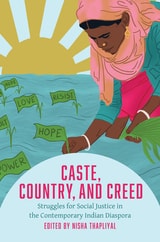
Caste, Country, and Creed
Struggles for Social Justice in the Contemporary Indian DiasporaNisha Thapliyal
Rutgers University Press, 2026
What happens when ancient systems of oppression travel across oceans? How do Indian diaspora communities across five nations challenge centuries-old systems of oppression while building new forms of solidarity? Caste, Country, and Creed: Struggles for Social Justice in the Contemporary Indian Diaspora takes readers inside the dynamic world of contemporary social justice activism spanning Aotearoa New Zealand, Australia, Canada, the United States, and the United Kingdom.
This groundbreaking collection brings together the voices of artists, activists, and scholar-activists who are reshaping conversations about caste discrimination, Islamophobia, and Hindu nationalism beyond India's borders. Through intimate first-person accounts and critical reflections, contributors reveal how diaspora activists are creating powerful counter-narratives and mobilizing collective resistance across local and transnational networks.
The book documents the lived realities of organizing—the values, knowledge traditions, and pivotal moments that spark political protest. Caste, Country, and Creed shows how activists construct alternative knowledge to dissent, build solidarity, and inspire political participation. Contributors offer nuanced insights into the complex relationships and power dynamics that sustain collective action for social justice in the Indian diaspora.
For copyright reasons, this edition is not for sale in India.
Censorship in Romania
Lidia Vianu
Central European University Press, 1998
Challenged Sovereignty
The Impact of Drugs, Crime, Terrorism, and Cyber Threats in the CaribbeanIvelaw Lloyd Griffith
University of Illinois Press, 2024
Informed and up to date, Challenged Sovereignty explains the effects of today’s globalized problems on the contemporary Caribbean.
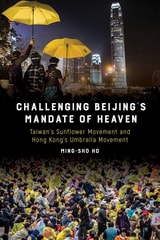
Challenging Beijing's Mandate of Heaven
Taiwan's Sunflower Movement and Hong Kong's Umbrella MovementMing-sho Ho
Temple University Press, 2019
In 2014, the Sunflower Movement in Taiwan grabbed international attention as citizen protesters demanded the Taiwan government withdraw its free-trade agreement with China. In that same year, in Hong Kong, the Umbrella Movement sustained 79 days of demonstrations, protests that demanded genuine universal suffrage in electing Hong Kong’s chief executive. It too, became an international incident before it collapsed. Both of these student-led movements featured large-scale and intense participation and had deep and far-reaching consequences. But how did two massive and disruptive protests take place in culturally conservative societies? And how did the two “occupy”-style protests against Chinese influences on local politics arrive at such strikingly divergent results?
Challenging Beijing’s Mandate of Heaven aims to make sense of the origins, processes, and outcomes of these eventful protests in Taiwan and Hong Kong. Ming-sho Ho compares the dynamics of the two movements, from the existing networks of activists that preceded protest, to the perceived threats that ignited the movements, to the government strategies with which they contended, and to the nature of their coordination. Moreover, he contextualizes these protests in a period of global prominence for student, occupy, and anti-globalization protests and situates them within social movement studies.
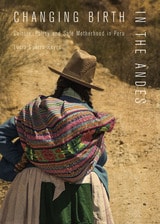
Changing Birth in the Andes
Culture, Policy, and Safe Motherhood in PeruLucia Guerra-Reyes
Vanderbilt University Press, 2019
Peru's Intercultural Birthing Policy of 2005 was intended to solve these longstanding issues by recognizing indigenous cultural values and making biomedical care more accessible and desirable for indigenous women. Yet many difficulties remain.
Guerra-Reyes also gives ethnographic attention to health care workers. She explains the class and educational backgrounds of traditional birth attendants and midwives, interviews doctors and health care administrators, and describes their interactions with local families. Interviews with national policy makers put the program in context.
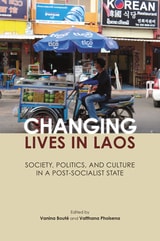
Changing Lives in Laos
Society, Politics, and Culture in a Post-Socialist StateEdited by Vanina Bouté and Vatthana Pholsena
National University of Singapore Press, 2017

Changing Uganda
Dilemmas of Structural AdjustmentHölger Bernt Hansen
Ohio University Press, 1992
Yoweri Museveni battled to power in 1986. His government has impressed many observers as Uganda’s most innovative since it gained independence from Britain in 1962. The Economist recommended it as a model for other African states struggling to develop their resources in the best interests of their peoples.
But where was change to start? At the bottom in building resistance committees, or at the top in tough negotiations with the IMF? How was it to continue? Was it in the restructuring of the national army, in increasing respect for human rights, in the reform of education, in tackling AIDS, or in getting Ugandans to speak a common language? Was it in building more viable survival strategies for the poorest Ugandans or in restructuring the national constitution? The last five years have shown a radical approach to Uganda’s dilemmas.
Holger Bernt Hansen and Michael Twaddle previously edited Uganda Now. It was brought together at a significant moment just as President Museveni was gaining power in 1985-6. It was so much in demand that it even entered the magendo market on the streets of Kampala. The book, which is still in print, was described by The Canadian Journal of African Studies as ‘virtually a mini-encyclopedia of Uganda’ and by The African Studies Review as ‘the best overview of Uganda’s trauma in the last two decades.’
The editors have assembled another team of Ugandan and international scholars to review the dilemmas of introducing revolutionary changes in an African country deeply affected by structural adjustment plans which have been imposed from outside.
Charlotte Delbo
A Life ReclaimedGhislaine Dunant, Translated by Kathryn M. Lachman
University of Massachusetts Press, 2021
Ghislaine Dunant's unforgettable biography of Delbo, La vie retrouvée (2016), captivated French readers and was awarded the Prix Femina. Now translated into English for the first time, Charlotte Delbo: A Life Reclaimed depicts Delbo's lifelong battles as a working-class woman, as a survivor, as a leftist who broke from the Communist Party, and most of all, as a writer whose words compelled others to see.
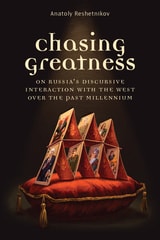
Chasing Greatness
On Russia's Discursive Interaction with the West over the Past MillenniumAnatoly Reshetnikov
University of Michigan Press, 2024
Despite its substantive historical depth, Chasing Greatness is not a book of history. Rather, it is a synthesizing social science work inspired by the continental tradition of the critical history of modernity. As such, the book is more about the present than about the past. Its main aim is to expose and explain the rich conceptual baggage behind Russia’s unceasing great power rhetoric (domestic and international) and how this rhetoric drives the current international crises involving Russia.
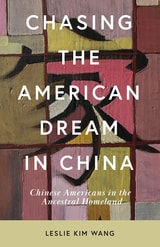
Chasing the American Dream in China
Chinese Americans in the Ancestral HomelandLeslie Kim Wang
Rutgers University Press, 2021
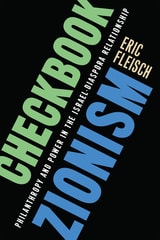
Checkbook Zionism
Philanthropy and Power in the Israel-Diaspora RelationshipEric Fleisch
Rutgers University Press, 2024
By delving into the history of American Jews’ philanthropic giving to Israelis, Fleisch assesses the core nature of power sharing between both sides of the Jewish diaspora to the United States through in-depth contemporary case studies of the relationship between sixteen non-governmental organizations and their American Jewish donors. Field observation, document analysis, and interviews with leaders, activists, and select donors alike serve a critical role here, as Fleisch assesses whether these contemporary philanthropic associations repeat classic dynamics of power-sharing or whether they represent a marked departure from the Checkbook Zionism of old. The result is a new paradigm for evaluating power sharing that can be applied to future considerations of development in the Israel-Diaspora relationship.
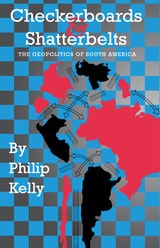
Checkerboards and Shatterbelts
The Geopolitics of South AmericaBy Philip Kelly
University of Texas Press, 1997
Geography has always played a major role in world politics. In this study, Philip Kelly maps the geopolitics of South America, a continent where relative isolation from the power centers in North America and Eurasia and often forbidding internal terrain have given rise to a fascinating and unique geopolitical structure.
Kelly uses the geographical concepts of "checkerboards" and "shatterbelts" to characterize much of South America's geopolitics and to explain why the continent has never been unified nor dominated by a single nation. This approach accounts for both historical relationships among South American countries and for such current situations as Brazil's inability to extend its authority across the continent from Atlantic to Pacific, its traditional competition with Argentina, its territorial expansion toward the continental heartlands, its encirclement by neighbors fearful of such expansion, and its recent rapprochement with Argentina.
An important component of this book is the incorporation of the thinking and writing of South American geopolitical analysts, which leads to an interesting inventory of viewpoints on frontier conflicts, territorial expansion, industrial development, economic cooperation, and United States and European relations. Kelly's findings will be important reading for geographers, political scientists, and students and scholars of Latin American history.

Checkpoint 300
Colonial Space in PalestineMark Griffiths
University of Minnesota Press, 2025
Tracing how a notorious checkpoint shapes power, resistance, and lives in Palestine
Checkpoint 300, the highly securitized border facility between occupied Bethlehem and Jerusalem, is a central feature of Israeli control of Palestinian land and life. An apparatus of turnstiles, overcrowded corridors, and invasive inspections, the checkpoint regulates the movement of hundreds of thousands of Palestinians, granting access to some while excluding most. Offering a nuanced exploration of space, Mark Griffiths reveals Checkpoint 300 as a stark symbol of Israeli colonialism that embodies larger systems of control and violence.
Griffiths’s sensitive and timely work highlights the myriad ways Palestinians are affected by Israel’s spatial control—whether they travel through the checkpoint or not—demonstrating how colonial infrastructures of inequity extend far beyond their physical boundaries to shape daily life. Drawing on nearly a decade of fieldwork, Griffiths examines how colonial power infiltrates family dynamics, enforces gendered mobility restrictions, shapes local economies, and extends into the global exchange of capital and security technologies. He also underscores how Palestinians endure and resist under oppressive conditions and how indigenous forms of life and living are sustained, illuminating how colonial space is contested and countered, unmade and remade.
Blending meticulous research with vivid human stories to show the lived realities of borders, power, and resistance in the West Bank, Checkpoint 300 portrays the checkpoint as an entry into the ways that colonial space is formed through security infrastructure that is both the product and producer of wider geographies of oppression, complicity, and control.
Retail e-book files for this title are screen-reader friendly with images accompanied by short alt text and/or extended descriptions.
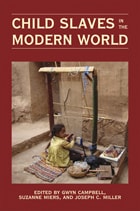
Child Slaves in the Modern World
Gwyn Campbell
Ohio University Press, 2011
Child Slaves in the Modern World is the second of two volumes that examine the distinctive uses and experiences of children in slavery in the nineteenth and twentieth centuries. This collection of previously unpublished essays exposes the global victimization of child slaves from the period of abolition of legal slavery in the nineteenth century to the human rights era of the twentieth century. It contributes to the growing recognitionthat the stereotypical bonded male slave was in fact a rarity.
Nine of the studies are historical, with five located in Africa and three covering Latin America from the British Caribbean to Chile. One study follows the children liberated in the famousAmistad incident (1843). The remaining essays cover contemporary forms of child slavery, from prostitution to labor to forced soldiering.
Child Slaves in the Modern World adds historical depth to the current literature on contemporary slavery, emphasizing the distinctive vulnerabilities of children, or effective equivalents,that made them particularly valuable to those who could acquire and control them. The studies also make clear the complexities of attempting to legislate or decree regulations limiting practices that appear to have been—and continue to be —ubiquitous around the world.
Contributors: Benjamin N. Lawrance, Gwyn Campbell, Cecily Jones, Sue Taylor, Nara Milanich, Martin Klein, Bernard Moitt, Trevor R. Getz, William G. Clarence-Smith, Jonathan Blagbrough, Philip Whalen, Malika Id’ Salah, Zosa de Sas Kropiwnicki, Sarah Maguire, and Mike Dottridge.
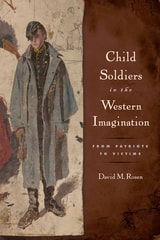
Child Soldiers in the Western Imagination
From Patriots to VictimsRosen, David M
Rutgers University Press, 2015
In this daring new study, anthropologist David M. Rosen investigates why our cultural perception of the child soldier has changed so radically over the past two centuries. Child Soldiers in the Western Imagination reveals how Western conceptions of childhood as a uniquely vulnerable and innocent state are a relatively recent invention. Furthermore, Rosen offers an illuminating history of how human rights organizations drew upon these sentiments to create the very term “child soldier,” which they presented as the embodiment of war’s human cost.
Filled with shocking historical accounts and facts—and revealing the reasons why one cannot spell “infantry” without “infant”—Child Soldiers in the Western Imagination seeks to shake us out of our pervasive historical amnesia. It challenges us to stop looking at child soldiers through a biased set of idealized assumptions about childhood, so that we can better address the realities of adolescents and pre-adolescents in combat. Presenting informative facts while examining fictional representations of the child soldier in popular culture, this book is both eye-opening and thought-provoking.
Children Crossing Borders
Latin American Migrant ChildhoodsEdited by Alejandra J. Josiowicz and Irasema Coronado
University of Arizona Press, 2022
Unified in their common interest in the well-being of children, the contributors bring an unrivaled breadth of experience and research to offer a transnational, multidimensional, and multilayered look at migrant childhoods in Latin America. Organized around three main themes—educational experiences; literature, art and culture, and media depictions; and the principle of the “best interest of the child”—this work offers both theoretical and practical approaches to the complexity of migrant childhood. The essays discuss family and school lives, children’s experience as wage laborers, and the legislation and policies that affect migrants.
This volume draws much-needed attention to the plight of migrant children and their families, illuminating the human and emotional toll that children experience as they crisscross the Americas. Exploring the connections between education, policy, cultural studies, and anthropology, the essays in this volume navigate a space of transnational children’s rights central to Latin American life in the twentieth and twenty-first centuries.
Contributors
Marissa Bejarano-Fernbaugh
Nancie Bouchard
Lina M. Caswell
Irasema Coronado
Valentina Glockner
Alejandra J. Josiowicz
Patrícia Nabuco Martuscelli
María Inés Pacecca
Martha Rodríguez-Cruz
Emily Ruehs-Navarro
Kathleen Tacelosky
Élisabeth Vallet
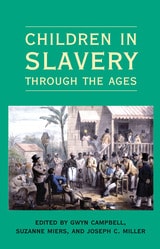
Children in Slavery through the Ages
Gwyn Campbell
Ohio University Press, 2009
Significant numbers of the people enslaved throughout world history have been children. The vast literature on slavery has grown to include most of the history of this ubiquitous practice, but nearly all of it concentrates on the adult males whose strong bodies and laboring capacities preoccupied the masters of the modern Americas. Children in Slavery through the Ages examines the children among the enslaved across a significant range of earlier times and other places; its companion volume will examine the children enslaved in recent American contexts and in the contemporary/modern world.
This is the first collection to focus on children in slavery. These leading scholars bring our thinking about slaving and slavery to new levels of comprehensiveness and complexity. They further provide substantial historical depth to the abuse of children for sexual and labor purposes that has become a significant humanitarian concern of governments and private organizations around the world in recent decades.
The collected essays in Children in Slavery through the Ages fundamentally reconstruct our understanding of enslavement by exploring the often-ignored role of children in slavery and rejecting the tendency to narrowly equate slavery with the forced labor of adult males. The volume’s historical angle highlights many implications of child slavery by examining the variety of children’s roles—as manual laborers and domestic servants to court entertainers and eunuchs—and the worldwide regions in which the child slave trade existed.
Children of God in the World
Paul O'Callaghan
Catholic University of America Press, 2016
China and the Internet
Using New Media for Development and Social ChangeSong Shi
Rutgers University Press, 2024
China as Number One?
The Emerging Values of a Rising PowerYang Zhong and Ronald F. Inglehart
University of Michigan Press, 2024
One of the most significant global events in the last forty years has been the rise of China— economically, technologically, politically, and militarily. The question on people's minds for decades has been whether China will replace the United States as a superpower in the near future. But for China, this power must be comprehensive — having strong economic and militant forces are only two pieces of the puzzle. China must also possess soft power, such as attractive ideologies, values, and culture.
China as Number One? explores China’s soft powers through the eyes of Chinese citizens. Utilizing data from the World Values Survey, the contributors to this collection analyze the potential soft power of a rising China by examining its residents' social values. A comprehensive study of changes and continuities in the political and social values of Chinese citizens, the book examines findings in the context of evolutionary modernization theory and cross-national comparison.
China in the World
Culture, Politics, and World VisionBan Wang
Duke University Press, 2022

China's Hidden Children
Abandonment, Adoption, and the Human Costs of the One-Child PolicyKay Ann Johnson
University of Chicago Press, 2016
Johnson spent years talking with the Chinese parents driven to relinquish their daughters during the brutal birth-planning campaigns of the 1990s and early 2000s, and, with China’s Hidden Children, she paints a startlingly different picture. The decision to give up a daughter, she shows, is not a facile one, but one almost always fraught with grief and dictated by fear. Were it not for the constant threat of punishment for breaching the country’s stringent birth-planning policies, most Chinese parents would have raised their daughters despite the cultural preference for sons. With clear understanding and compassion for the families, Johnson describes their desperate efforts to conceal the birth of second or third daughters from the authorities. As the Chinese government cracked down on those caught concealing an out-of-plan child, strategies for surrendering children changed—from arranging adoptions or sending them to live with rural family to secret placement at carefully chosen doorsteps and, finally, abandonment in public places. In the twenty-first century, China’s so-called abandoned children have increasingly become “stolen” children, as declining fertility rates have left the dwindling number of children available for adoption more vulnerable to child trafficking. In addition, government seizures of locally—but illegally—adopted children and children hidden within their birth families mean that even legal adopters have unknowingly adopted children taken from parents and sent to orphanages.
The image of the “unwanted daughter” remains commonplace in Western conceptions of China. With China’s Hidden Children, Johnson reveals the complex web of love, secrecy, and pain woven in the coerced decision to give one’s child up for adoption and the profound negative impact China’s birth-planning campaigns have on Chinese families.
China's Left-Behind Children
Caretaking, Parenting, and StrugglesXiaojin Chen
Rutgers University Press, 2024
China’s Challenges and International Order Transition
Beyond “Thucydides's Trap”Edited by Huiyun Feng and Kai He
University of Michigan Press, 2020
China’s Challenges and International Order Transition introduces an integrated conceptual framework of “international order” categorized by three levels (power, rules, and norms) and three issue-areas (security, political, and economic). Each contributor engages one or more of these analytical dimensions to examine two questions: (1) Has China already challenged this dimension of international order? (2) How will China challenge this dimension of international order in the future?
The contested views and perspectives in this volume suggest it is too simple to assume an inevitable conflict between China and the outside world. With different strategies to challenge or reform the many dimensions of international order, China’s role is not a one-way street. It is an interactive process in which the world may change China as much as China may change the world.
The aim of the book is to broaden the debate beyond the “Thucydides Trap” perspective currently popular in the West. Rather than offering a single argument, this volume offers a platform for scholars, especially Chinese scholars vs. Western scholars, to exchange and debate their different views and perspectives on China and the potential transition of international order.
Chinese Netizens' Opinions on Death Sentences
An Empirical ExaminationBin Liang and Jianhong Liu
University of Michigan Press, 2021
Few social issues have received more public attention and scholarly debate than the death penalty. While the abolitionist movement has made a successful stride in recent decades, a small number of countries remain committed to the death penalty and impose it with a relatively high frequency. In this regard, the People’s Republic of China no doubt leads the world in both numbers of death sentences and executions. Despite being the largest user of the death penalty, China has never conducted a national poll on citizens’ opinions toward capital punishment, while claiming “overwhelming public support” as a major justification for its retention and use.
Chinese Netizens’ Opinions on Death Sentences: An Empirical Examination uses a forum of public comments to explore and examine Chinese netizens’ opinions on the death penalty. Based on a content analysis of 38,512 comments collected from 63 cases in 2015, this study examines the diversity and rationales of netizens’ opinions, netizens’ interactions, and their evaluation of China’s criminal justice system. In addition, the book discusses China’s social, systemic, and structural problems and critically examines the rationality of netizens’ opinions based on Habermas’s communicative rationality framework. Readers will be able to contextualize Chinese netizens’ discussions and draw conclusions about commonalities and uniqueness of China’s death penalty practice.
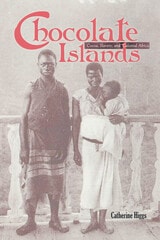
Chocolate Islands
Cocoa, Slavery, and Colonial AfricaCatherine Higgs
Ohio University Press, 2012
In Chocolate Islands: Cocoa, Slavery, and Colonial Africa, Catherine Higgs traces the early-twentieth-century journey of the Englishman Joseph Burtt to the Portuguese colony of São Tomé and Príncipe—the chocolate islands—through Angola and Mozambique, and finally to British Southern Africa. Burtt had been hired by the chocolate firm Cadbury Brothers Limited to determine if the cocoa it was buying from the islands had been harvested by slave laborers forcibly recruited from Angola, an allegation that became one of the grand scandals of the early colonial era. Burtt spent six months on São Tomé and Príncipe and a year in Angola. His five-month march across Angola in 1906 took him from innocence and credulity to outrage and activism and ultimately helped change labor recruiting practices in colonial Africa.
This beautifully written and engaging travel narrative draws on collections in Portugal, the United Kingdom, and Africa to explore British and Portuguese attitudes toward work, slavery, race, and imperialism. In a story still familiar a century after Burtt’s sojourn, Chocolate Islands reveals the idealism, naivety, and racism that shaped attitudes toward Africa, even among those who sought to improve the conditions of its workers.
Chocolate on Trial
Slavery, Politics, and the Ethics of BusinessLowell J. Satre
Ohio University Press, 2005
Chocolate on Trial: Cadbury, Slavery and the Economics of Virtue in Imperial Britain gives a lively and highly readable account of the events surrounding the libel trial in which Cadbury Bros. Ltd. sued the London Standard, following the newspaper's accusation that the firm was hypocritical in its use of slave-grown cocoa. As compelling now as at the turn of the previous century, the issues probed by Lowell J. Satre give invaluable historical background to contemporary issues of business ethics, corporate social responsibility, and globalization. The story Satre tells illuminates what a stubbornly persistent institution slavery was and shows how Cadbury, a company with a well-regarded brand name and logo, endured ethical dilemmas and challenges to its record for social responsibility. Chocolate on Trial brings to life the age-old conflict between economic interests and the value of human life.
Satre illuminates the stubborn persistence of the institution of slavery and shows how Cadbury, a company with a well-regarded brand name from the nineteenth century, faced ethical dilemmas and challenges to its record for social responsibility. Chocolate on Trial brings to life the age-old conflict between economic interests and regard for the dignity of human life.
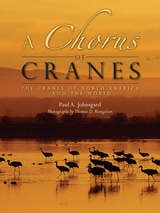
Chorus of Cranes
The Cranes of North America and the WorldPaul A. Johnsgard, Photographs by Thomas D. Mangelsen
University Press of Colorado, 2015
“Since long before medieval times cranes have been considered messengers of the gods, calling annually from on high to remind humans below of the passing years and of their own mortality. Now it is up to humans to take responsibility for controlling our own fate—and also to cry out to protect not only cranes but all the other wonderful creatures that share our increasingly fragile and threatened planetary ecosystem with us."
—Paul A. Johnsgard, from the acknowledgments
Accompanied by the stunning photography of Thomas D. Mangelsen, A Chorus of Cranes details the natural history, biology, and conservation issues surrounding the abundant sandhill crane and the endangered whooping crane in North America. Author Paul A. Johnsgard, one of the leading authorities on cranes and crane biology, describes the fascinating social behaviors, beautiful natural habitats, and grueling seasonal migrations that have stirred the hearts of people as far back as medieval times and garnered the crane a place in folklore and mythology across continents.
Johnsgard has substantially updated and significantly expanded his 1991 work Crane Music, incorporating new information on the biology and status of these two North American cranes and providing abbreviated summaries on the other thirteen crane species of the world. The stories of these birds and their contrasting fates provide an instructive and moving history of bird conservation in North America. A Chorus of Cranes is a gorgeous and invaluable resource for crane enthusiasts, birders, natural historians, and conservationists alike.
The University Press of Colorado gratefully acknowledges the generous support of the Iain Nicholson Audubon Center at Rowe Sanctuary, Audubon Nebraska, Ron and Judy Parks, Wagon Tongue Creek Farm, and the Trull Foundation toward the publication of this book.
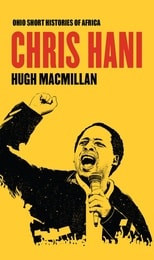
Chris Hani
Hugh Macmillan
Ohio University Press, 2021
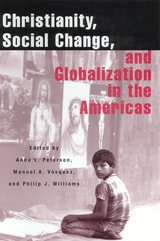
Christianity, Social Change, and Globalization in the Americas
Peterson, Anna L
Rutgers University Press, 2001
Organized around three central themes-family, youth, and community; democratization, citizenship, and political participation; and immigration and transnationalism-the book argues that, at the local level, religion helps people, especially women and youths, solidify their identities and confront the challenges of the modern world. Religious communities are seen as both peaceful venues for people to articulate their needs, and forums for building participatory democracies in the Americas. Finally, the contributors examine how religion enfranchises poor women, youths, and people displaced by war or economic change and, at the same time, drives social movements that seek to strengthen family and community bonds disrupted by migration and political violence.