Results by title
66 books match the query 'Year' and 3 start with c

Cat Woman in Dog Country
A Year on a Southern FarmHelena Feder
University of Alabama Press, 2026
One woman, a tiny farm, unruly chickens, and the challenge of putting down roots in a rapidly changing world
Cat Woman in Dog Country is Helena Feder's witty, perceptive account of life on a tiny North Carolina farm. Part memoir, part nature writing, and part literary how-not-to guide to growing and raising things, it chronicles her attempts to cultivate a small plot while marveling at the symbiotic wonders of figs and wasps, navigating chicken politics, and learning to laugh at her own mistakes.
A transplanted Yankee by way of California, Feder often feels like exactly what the title suggests: a cat woman in dog country. Conspicuous in a place where men still largely own and work the land, she finds herself at once welcomed, bewildered, and fascinated by the culture around her. Along the way, she discovers that teaching Walden requires a very different skill set from growing her own beans and that country life comes with its share of challenges, from failed crops to an alarming abundance of rats and copperheads.
Charming, laugh-out-loud funny, and deeply thoughtful, Cat Woman in Dog Country reflects making a home in an era of climate change, forever chemicals, and environmental uncertainty. It is a book for anyone who ponders the personal, social, and planetary meaning of home.
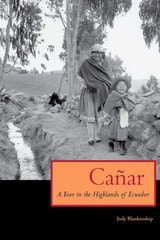
Cañar
A Year in the Highlands of EcuadorBy Judy Blankenship
University of Texas Press, 2005
Once isolated from the modern world in the heights of the Andean mountains, the indigenous communities of Ecuador now send migrants to New York City as readily as they celebrate festivals whose roots reach back to the pre-Columbian past. Fascinated by this blending of old and new and eager to make a record of traditional customs and rituals before they disappear entirely, photographer-journalist Judy Blankenship spent several years in Cañar, Ecuador, photographing the local people in their daily lives and conducting photography workshops to enable them to preserve their own visions of their culture. In this engaging book, Blankenship combines her sensitively observed photographs with an inviting text to tell the story of the most recent year she and her husband Michael spent living and working among the people of Cañar.
Very much a personal account of a community undergoing change, Cañar documents such activities as plantings and harvests, religious processions, a traditional wedding, healing ceremonies, a death and funeral, and a home birth with a native midwife. Along the way, Blankenship describes how she and Michael went from being outsiders only warily accepted in the community to becoming neighbors and even godparents to some of the local children. She also explains how outside forces, from Ecuador's failing economy to globalization, are disrupting the traditional lifeways of the Cañari as economic migration virtually empties highland communities of young people. Blankenship's words and photographs create a moving, intimate portrait of a people trying to balance the demands of the twenty-first century with the traditions that have formed their identity for centuries.
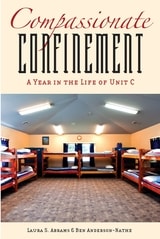
Compassionate Confinement
A Year in the Life of Unit CAbrams, Laura S.
Rutgers University Press, 2013
Received an Honorable Mention for the 2015 Society for Social Work and Research Outstanding Social Work Book Award
To date, knowledge of the everyday world of the juvenile correction institution has been extremely sparse. Compassionate Confinement brings to light the challenges and complexities inherent in the U.S. system of juvenile corrections. Building on over a year of field work at a boys’ residential facility, Laura S. Abrams and Ben Anderson-Nathe provide a context for contemporary institutions and highlight some of the system’s most troubling tensions.
This ethnographic text utilizes narratives, observations, and case examples to illustrate the strain between treatment and correctional paradigms and the mixed messages regarding gender identity and masculinity that the youths are expected to navigate. Within this context, the authors use the boys’ stories to show various and unexpected pathways toward behavior change. While some residents clearly seized opportunities for self-transformation, others manipulated their way toward release, and faced substantial challenges when they returned home.
Compassionate Confinement concludes with recommendations for rehabilitating this notoriously troubled system in light of the experiences of its most vulnerable stakeholders.