Results by title
295 books match the query 'Zoology' and 14 start with c
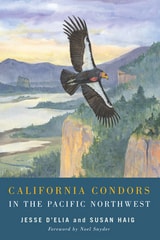
California Condors in the Pacific Northwest
Jesse D'Elia and Susan M. Haig
Oregon State University Press, 2013
Despite frequent depiction as a bird of California and the desert southwest, North America’s largest avian scavenger once graced the skies of the Pacific Northwest, from northern California to British Columbia. This important volume documents the condor’s history in the region, from prehistoric times to the early twentieth century, and explores the challenges of reintroduction.
Jesse D’Elia and Susan Haig investigate the paleontological and observational record as well as the cultural relationships between Native American tribes and condors, providing the most complete assessment to date of the condor’s occurrence in the Pacific Northwest. They evaluate the probable causes of regional extinction and the likelihood that condors once bred in the region, and they assess factors that must be considered in determining whether they could once again thrive in Northwest skies.
Incorporating the newest research and findings and more than eighty detailed historical accounts of human encounters with these birds of prey, California Condors in the Pacific Northwest sets a new standard for examining the historical record of a species prior to undertaking a reintroduction effort. It is a vital reference for academics, agency decision makers, conservation biologists, and readers interested in Northwest natural history. The volume is beautifully illustrated by Ram Papish and includes a number of previously unpublished photographs.
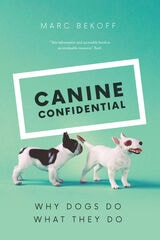
Canine Confidential
Why Dogs Do What They DoMarc Bekoff
University of Chicago Press, 2018
Canine Confidential has the answers. Written by award-winning scientist—and lifelong dog lover—Marc Bekoff, it not only brilliantly opens up the world of dog behavior, but also helps us understand how we can make our dogs’ lives the best they can possibly be. Rooted in the most up-to-date science on cognition and emotion—fields that have exploded in recent years—Canine Confidential is a wonderfully accessible treasure trove of new information and myth-busting. Peeing, we learn, isn’t always marking; grass-eating isn’t always an attempt to trigger vomiting; it’s okay to hug a dog—on their terms; and so much more. There’s still much we don’t know, but at the core of the book is the certainty that dogs do have deep emotional lives, and that as their companions we must try to make those lives as rich and fulfilling as possible. It’s also clear that we must look at dogs as unique individuals and refrain from talking about “the dog.”
Bekoff also considers the practical importance of knowing details about dog behavior. He advocates strongly for positive training—there’s no need to dominate or shame dogs or to make them live in fear—and the detailed information contained in Canine Confidential has a good deal of significance for dog trainers and teachers. He also suggests that trainers should watch and study dogs in various contexts outside of those in which they are dealing with clients, canine and human, with specific needs.
There’s nothing in the world as heartwarming as being greeted by your dog at the end of the workday. Read Canine Confidential, and you’ll be on the road to making your shared lives as happy, healthy, and rewarding as they can possibly be.
Cat Musculature
A Photographic AtlasGordon Greenblatt
University of Chicago Press, 1981
This series of brilliant photographs shows the dissection of the cat musculature. It is designed for use in conjunction with the third edition of Hyman's Comparative Vertebrate Anatomy, edited by Marvalee Wake, although it can be used with other textbooks. Every possible step has been taken to make the photographs easy to interpret and to follow. Reference indications to the Wake texts are included, and also concise data on the origin, insertion, and action of each muscle. The scale is such that in most cases no more than five muscles are shown per photograph, thus simplifying the task of visualizing the individual muscles. An invaluable aid for every student of cat anatomy.
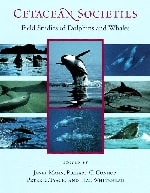
Cetacean Societies
Field Studies of Dolphins and WhalesEdited by Janet Mann, Richard C. Connor, Peter L. Tyack, and Hal Whitehead
University of Chicago Press, 1999
Long-lived, slow to reproduce, and often hidden beneath the water's surface, whales and dolphins (cetaceans) have remained elusive subjects for scientific study even though they have fascinated humans for centuries. Until recently, much of what we knew about cetaceans came from commercial sources such as whalers and trainers for dolphin acts. Innovative research methods and persistent efforts, however, have begun to penetrate the depths to reveal tantalizing glimpses of the lives of these mammals in their natural habitats.
Cetacean Societies presents the first comprehensive synthesis and review of these new studies. Groups of chapters focus on the history of cetacean behavioral research and methodology; state-of-the-art reviews of information on four of the most-studied species: bottlenose dolphins, killer whales, sperm whales, and humpback whales; and summaries of major topics, including group living, male and female reproductive strategies, communication, and conservation drawn from comparative research on a wide range of species.
Written by some of the world's leading cetacean scientists, this landmark volume will benefit not just students of cetology but also researchers in other areas of behavioral and conservation ecology as well as anyone with a serious interest in the world of whales and dolphins.
Contributors are Robin Baird, Phillip Clapham, Jenny Christal, Richard Connor, Janet Mann, Andrew Read, Randall Reeves, Amy Samuels, Peter Tyack, Linda Weilgart, Hal Whitehead, Randall S. Wells, and Richard Wrangham.
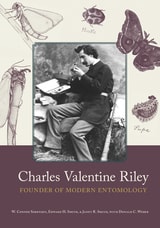
Charles Valentine Riley
Founder of Modern EntomologyW. Conner Sorensen, Edward H. Smith, and Janet R. Smith, with Donald C. Weber
University of Alabama Press, 2019
This definitive biography is the first full account of a fascinating American scientist whose leadership created the modern science of entomology that recognizes both the essential role of insects in natural systems and their challenge to the agricultural food supply that sustains humankind. Charles Valentine Riley: Founder of Modern Entomology tells the story of how Riley (1843–1895), a young British immigrant to America—with classical schooling, only a smattering of natural history knowledge, and with talent in art and writing but no formal training in science—came to play a key role in the reorientation of entomology from the collection and arrangement of specimens to a scientific approach to insect evolution, diversity, ecology, and applied management of insect pests.
Drawing on Riley’s personal diaries, family records, correspondence, and publications, the authors trace Riley’s career as farm laborer, Chicago journalist, Missouri State Entomologist, chief federal entomologist, founder of the National Insect Collection, and initiator of the professional organization that became the Entomological Society of America. Also examined in detail are his spectacular campaigns against the Rocky Mountain Locust that stalled western migration in the 1870s, the Grape Phylloxera that threatened French vineyards in the 1870s and 80s, the Cotton Worm that devastated southern cotton fields after the Civil War, and the Cottony Cushion Scale that threatened the California citrus industry in the 1880s. The latter was defeated through importation of the Vedalia Beetle from Australia, the spectacular first example of biological control of an invasive insect pest by its introduced natural enemy.
A striking figure in appearance and deed, Riley combined scientific, literary, artistic, and managerial skills that enabled him to influence every aspect of entomology. A correspondent of Darwin and one of his most vocal American advocates, he discovered the famous example of mimicry of the Monarch butterfly by the Viceroy, and described the intricate coevolution of yucca moths and yuccas, a complex system that fascinates evolutionary scientists to this day. Whether applying evolutionary theory to pest control, promoting an American silk industry, developing improved spray technologies, or promoting applied entomology in state and federal government and to the public, Riley was the central figure in the formative years of the entomology profession. In addition to showcasing his own renderings of the insects he investigated, this comprehensive account provides fresh insight into the personal and public life of an ingenious, colorful, and controversial scientist, who aimed to discover, understand, and outsmart the insects.
Chimpanzees in Context
A Comparative Perspective on Chimpanzee Behavior, Cognition, Conservation, and WelfareEdited by Lydia M. Hopper and Stephen R. Ross
University of Chicago Press, 2020
After a foreword by Jane Goodall, the book features sections that examine chimpanzee life histories and developmental milestones, behavior, methods of study, animal communication, cooperation, communication, and tool use. The book ends with chapters that consider how we can apply contemporary knowledge of chimpanzees to enhance their care and conservation. Collectively, these chapters remind us of the importance of considering the social, ecological, and cognitive context of chimpanzee behavior, and how these contexts shape our comprehension of chimpanzees. Only by leveraging these powerful perspectives do we stand a chance at improving how we understand, care for, and protect this species.
City Creatures
Animal Encounters in the Chicago WildernessEdited by Gavin Van Horn and Dave Aftandilian
University of Chicago Press, 2015
We usually think of cities as the domain of humans—but we are just one of thousands of species that call the urban landscape home. Chicago residents knowingly move among familiar creatures like squirrels, pigeons, and dogs, but might be surprised to learn about all the leafhoppers and water bears, black-crowned night herons and bison, beavers and massasauga rattlesnakes that are living alongside them. City Creatures introduces readers to an astonishing diversity of urban wildlife with a unique and accessible mix of essays, poetry, paintings, and photographs.
The contributors bring a story-based approach to this urban safari, taking readers on birding expeditions to the Magic Hedge at Montrose Harbor on the North Side, canoe trips down the South Fork of the Chicago River (better known as Bubbly Creek), and insect-collecting forays or restoration work days in the suburban forest preserves.
The book is organized into six sections, each highlighting one type of place in which people might encounter animals in the city and suburbs. For example, schoolyard chickens and warrior wasps populate “Backyard Diversity,” live giraffes loom at the zoo and taxidermy-in-progress pheasants fascinate museum-goers in “Animals on Display,” and a chorus of deep-freeze frogs awaits in “Water Worlds.” Although the book is rooted in Chicago’s landscape, nature lovers from cities around the globe will find a wealth of urban animal encounters that will open their senses to a new world that has been there all along. Its powerful combination of insightful narratives, numinous poetry, and full-color art throughout will help readers see the city—and the creatures who share it with us—in an entirely new light.
Coevolution of Life on Hosts
Integrating Ecology and HistoryDale H. Clayton, Sarah E. Bush, and Kevin P. Johnson
University of Chicago Press, 2015
Following an introduction to coevolutionary concepts, the authors combine experimental and comparative host-parasite approaches for testing coevolutionary hypotheses to explore the influence of ecological interactions and coadaptation on patterns of diversification and codiversification among interacting species. Ectoparasites—a diverse assemblage of organisms that ranges from herbivorous insects on plants, to monogenean flatworms on fish, and feather lice on birds—are powerful models for the study of coevolution because they are easy to observe, mark, and count. As lice on birds and mammals are permanent parasites that spend their entire lifecycles on the bodies of their hosts, they are ideally suited to generating a synthetic overview of coevolution—and, thereby, offer an exciting framework for integrating the concepts of coadaptation and codiversification.

Coloniality in the Cliff Swallow
The Effect of Group Size on Social BehaviorCharles R. Brown and Mary Bomberger Brown
University of Chicago Press, 1996
Drawing on their twelve-year study of a population of cliff swallows in Nebraska, the Browns investigate twenty-six social and ecological costs and benefits of coloniality, many never before addressed in a systematic way for any species. They explore how these costs and benefits are reflected in reproductive success and survivorship, and speculate on the evolution of cliff swallow coloniality.
This work, the most comprehensive and detailed study of vertebrate coloniality to date, will be of interest to all who study social animals, including behavioral ecologists, population biologists, ornithologists, and parasitologists. Its focus on the evolution of coloniality will also appeal to evolutionary biologists and to psychologists studying decision making in animals.
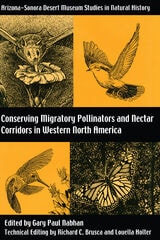
Conserving Migratory Pollinators and Nectar Corridors in Western North America
Gary Paul Nabhan
University of Arizona Press, 2004
This book, a unique work of comparative zoogeography and conservation biology, is the first to bring together studies of these important migratory pollinators and of what we must do to conserve them. It considers the similarities and differences among the behavior and habitat requirements of several species of migratory pollinators and seed dispersers in the West—primarily rufous hummingbirds, white-winged doves, lesser long-nosed bats, and monarch butterflies. It examines the population dynamics of these four species in flyways that extend from the Pacific Ocean to the continental backbone of the Sierra Madre Oriental and Rocky Mountains, and it investigates their foraging and roosting behaviors as they journey from the Tropic of Cancer in western Mexico into the deserts, grasslands, and thornscrub of the U.S.-Mexico borderlands. The four pollinators whose journeys are traced here differ dramatically from one another in foraging strategies and stopover fidelities, but all challenge many of the truisms that have emerged regarding the status of migratory species in general. The rufous hummingbird makes the longest known avian migration in relation to body size and is a key to identifying nectar corridors running through northwestern Mexico to the United States. And there is new evidence to challenge the long-supposed separation of eastern and western monarch butterfly populations by the Rocky Mountains as these insects migrate.
Conserving Migratory Pollinators and Nectar Corridors in Western North America demonstrates new efforts to understand migratory species and to determine whether their densities, survival rates, and health are changing in response to changes in the distribution and abundance of nectar plants found within their ranges. Representing collaborative efforts that bridge field ecology and conservation biology in both theory and practice, it is dedicated to safeguarding dynamic interactions among plants and pollinators that are only now being identified.
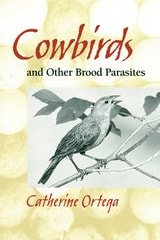
Cowbirds and Other Brood Parasites
Catherine P. Ortega
University of Arizona Press, 1998
In this timely book, Catherine Ortega summarizes and synthesizes a wealth of information on cowbirds from around the world that has appeared since the publication of Herbert Friedmann's classic 1929 monograph on these birds. Most of this information has appeared in the last quarter-century and reflects advances in our understanding of how brood parasitism influences, and is influenced by, host species. Ortega shows that in order to manage cowbirds without further damaging delicate balances in host-parasite relationships, it is necessary to understand such factors as behavior, reproduction, population dynamics, and response to landscape patterns. She examines and explains the origin, evolution, and costs of brood parasitism, and she discusses the philosophical and ecological considerations regarding the management of cowbirds—a controversial issue because of their perceived influence on threatened and endangered birds.
Because brood parasitism has evolved independently in various bird families, information on this adaptive strategy is of great ecological interest and considerable value to wildlife management. Cowbirds and Other Brood Parasites is an important reference on these creatures that enhances our understanding of both their behavior and their part in the natural world.
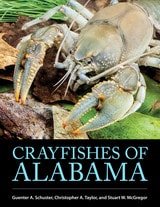
Crayfishes of Alabama
Guenter A. Schuster, Christopher A. Taylor, and Stuart W. McGregor
University of Alabama Press, 2022
A comprehensive assessment of the 99 known species of crayfishes inhabiting the state of Alabama
Crayfishes are common organisms in many freshwater habitats. They are usually the largest invertebrates and often represent the greatest amount of invertebrate biomass in their environments. Identified as a keystone species in many ecological communities, aquatic biologists are fond of saying “they eat everything, and everything eats them.”
Crayfishes—sometimes called crawfishes, crawdads, mudbugs, ditchbugs, yabbies, and flusskrebs—are taxonomically and ecologically a diverse group of aquatic crustaceans. There are more than 600 known species worldwide and North America alone is home to more than 400. As home to 99 documented species, Alabama is a global hotspot for crayfish diversity.
Crayfishes of Alabama is the first comprehensive reference work on the subject and provides the most up-to-date information on the vast range of crayfishes known to reside in Alabama. The authors have collected specimens and data from the state’s major and minor waterways and lakes, as well as specialized habitats such as burrows, caves, roadside ditches, marshes, swamps, and temporary autumnal ponds. This volume represents the most in-depth treatment of crayfishes found in the southeastern United States and offers detailed species accounts including descriptions of morphological characters, color, maximum size, comparative species, distribution and habitat, biology, crayfish associates, and conservation status. The species accounts are accentuated with color photographs, photographic morphological plates, and dot maps showing state and national distributions. A photographic key is provided to guide the identification of all 99 species.
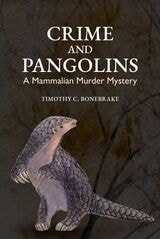
Crime and Pangolins
A Mammalian Murder MysteryTimothy C. Bonebrake
Hong Kong University Press, 2026
In 2018, authorities in Hong Kong seized a shipment from smugglers that contained 88 dead pangolins. Where did these animals come from, and why were they killed? Where were they going? Who was responsible? In classic true crime fashion, Crime and Pangolins examines evidence, suspects, and legal perspectives related to this specific case and, through it, the plight of pangolins globally.
The chapters detail the lives and natural history of pangolins across Africa and Asia while exploring clues that may reveal who is responsible for the endangerment of the species. The book also explores speculation surrounding the possible role of pangolins in the emergence of COVID-19 and, more broadly, the relationship between wildlife trade and zoonotic disease. The resulting tale is one of conservation researchers, public health experts, and global organizations across Asia, Africa, North America, and Europe fighting to create a world in which pangolins can thrive again.
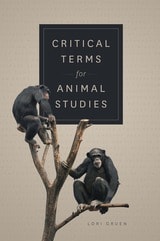
Critical Terms for Animal Studies
Edited by Lori Gruen
University of Chicago Press, 2018
Animal Studies is a rapidly growing interdisciplinary field devoted to examining, understanding, and critically evaluating the complex relationships between humans and
other animals. Scholarship in Animal Studies draws on a variety of methodologies to explore these multi-faceted relationships in order to help us understand the ways in which other animals figure in our lives and we in theirs.
Bringing together the work of a group of internationally distinguished scholars, the contribution in Critical Terms for Animal Studies offers distinct voices and diverse perspectives, exploring significant concepts and asking important questions. How do we take non-human animals seriously, not simply as metaphors for human endeavors, but as subjects themselves? What do we mean by anthropocentrism, captivity, empathy, sanctuary, and vulnerability, and what work do these and other critical terms do in Animal Studies?
An indispensable reference for the field, Critical Terms for Animal Studies not only provides a framework for thinking about animals as subjects of their own experiences, but also serves as a touchstone to help us think differently about our conceptions of what it means to be human, and the impact human activities have on the more than human world.