Results by title
8642 books match the query '20th Century' and 580 start with c
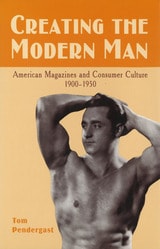
Creating the Modern Man
American Magazines and Consumer Culture, 1900-1950Tom Pendergast
University of Missouri Press, 2000
In the late nineteenth century, general-interest magazines began to reach an unprecedented number of readers and conveyed to those readers diverse messages about the meaning of masculinity in America. Over the next fifty years, these messages narrated a shift from Victorian masculinity, which valued character, integrity, hard work, and duty, to modern masculinity, which valued personality, self-realization, and image. In Creating the Modern Man, Tom Pendergast studies the multifaceted ways that masculinity is represented in magazines published during this transitional period.
Pendergast focuses on the rise of mass consumer culture, demonstrating that consumerism was a key factor in reshaping American notions of masculinity as presented in popular magazines. Whereas much scholarship has decried the effects of consumerism, Pendergast treats consumer culture as an energizing force in the American magazine market. He suggests that such magazines offered men new and meaningful visions of masculine identity and argues that men actively participated in restructuring the masculine ideal. Engaging a wide range of magazines from American Magazine to Esquire to True, Pendergast demonstrates how these publications presented masculinity in ways that reflected the magazines' relationship to advertisers, contributors, and readers.
This fascinating study includes such African American magazines as the Colored American, Crisis, Opportunity, and Ebony. Pendergast reasons that the rise of modern masculinity opened the way for African American men to identify with normative masculine values. As white men reinvented the idea of the "self-made man" for a new era, black men struggled to negotiate a meaningful place for black masculinity in a culture intent on denying them access.
The first complete investigation of the representation of men in American magazines, Creating the Modern Man makes an important contribution to our understanding of these publications, both as elements of mass culture and as interesting institutions in their own right. Pendergast takes readers inside the complex world of magazine publishing, demonstrating how magazines slowly yet surely help create the cultural images that shape societal gender roles.

Creating the New Woman
The Rise of Southern Women's Progressive Culture in Texas, 1893-1918Judith N. McArthur
University of Illinois Press, 1998
Regionally distinct yet influenced by national trends, women's progressive culture in Texas offers a valuable opportunity to analyze the evolution of women's voluntary associations, their challenges to southern conventions of race and class, and their quest for social change and political power.
Judith McArthur traces how general concerns of national progressive organizations about pure food, prostitution, and education reform shaped programs at the state and local levels. Southern women differed from their Northern counterparts by devising new approaches to settlement work and taking advantage of World War I to challenge southern gender and racial norms. McArthur's original analysis details how women in Texas succeeded in securing partial voting rights before passage of the Nineteenth Amendment. She also provides valuable comparisons between North and South, among various southern states, and between black and white, and male and female, progressives.
Creating the Self in the Contemporary American Theatre
Robert J. Andreach
Southern Illinois University Press, 1998
Combining his skills as both a professional reviewer of theatre and a literary critic, Robert J. Andreach finds himself in a unique position to provide coherence to what most observers perceive as an unrelated welter of contemporary theatrical experiences. Exploring the theatre from the 1960s to the present, he shows the various ways in which the contemporary American theatre creates a personal, theatrical, and national self.
Andreach argues that the contemporary American theatre creates multiple selves that reflect and give voice to the many communities within our multicultural society. These selves are fragmented and enclaved, however, which makes necessary a counter movement that seeks, through interaction among the various parts, to heal the divisions within, between, and among them.
In his examination of the contemporary theatre, Andreach demonstrates that the plays and the performance art of the feminist, African-American, Hispanic-American, Asian-American, and Native American theatres are equal to the works created within the dominant Eurocentric culture.
He then turns to comparable works created within the culture of what performance artist Karen Finley calls the "one male god," works that reflect the breakup of an old order. He discusses the experimental theatre, which turns to the imagination to reveal the nature of the self, and concludes with an examination of recent American works, pointing out in each either the presence or absence of resolution within the divisions of self.
Creating with Roots
Contemporary Chinese National Folk Dance ChoreographyRui Xu
University of Michigan Press, 2025
Creating with Roots offers a detailed breakdown of key terms and concepts necessary for understanding Chinese national folk dance and analyzes 37 examples of choreography dating from the 1940s to 2000. The author situates these explanations within the longer history of cultural practice and theory in China and in relation to the international dance discourses of the former Soviet Union, Eastern Europe, Western Europe, and North America.
Creolized Sexualities
Undoing Heteronormativity in the Literary Imagination of the Anglo-CaribbeanAlison Donnell
Rutgers University Press, 2022

Crime Uncovered
Anti-heroEdited by Fiona Peters and Rebecca Stewart
Intellect Books, 2015
Crime Uncovered: Antihero tackles that question and more. Mixing the popular and iconic, contemporary and ancient, the book explores the place and appeal of the antihero. Using figures from books, TV, film, and more, including such up-to-the-minute examples as True Detective’s Rust Cole, the book places the antihero’s actions within the society he or she is rejecting, showing how expectations and social and familial structures create the backdrop against which the antihero’s posture becomes compelling. Featuring interviews with genre masters James Ellroy and Paul Johnston, Crime Uncovered: Antiherois an accessible, engaging analysis of what drives us to embrace those characters who acknowledge—or even flaunt—the dark side we all have somewhere deep inside.
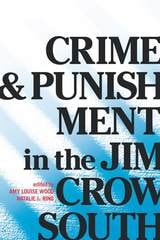
Crime and Punishment in the Jim Crow South
Edited by Amy Louise Wood and Natalie J. Ring
University of Illinois Press, 2019
In this collection, Amy Louise Wood and Natalie J. Ring present nine groundbreaking essays about the carceral system and its development over time. Topics range from activism against police brutality to the peculiar path of southern prison reform to the fraught introduction of the electric chair. The essays tell nuanced stories of rapidly changing state institutions, political leaders who sought to manage them, and African Americans who appealed to the regulatory state to protect their rights.
Contributors: Pippa Holloway, Tammy Ingram, Brandon T. Jett, Seth Kotch, Talitha L. LeFlouria, Vivien Miller, Silvan Niedermeier, K. Stephen Prince, and Amy Louise Wood
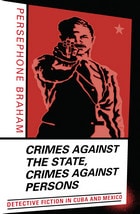
Crimes against the State, Crimes against Persons
Detective Fiction in Cuba and MexicoPersephone Braham
University of Minnesota Press, 2004
An interpretation of the ideologies and kinships of detective fiction in Cuba and Mexico
The transplanted, inherently modern detective genre serves as an especially effective lens for exposing the fissures and divergences of modernity in post-1968 Mexico and revolutionary Cuba.
Combining in-depth critical analyses with the theoretical insights of current literary and cultural theory and Latin American postmodern studies, Crimes against the State, Crimes against Persons shows how the Cuban novela negra examines the Revolution through an incisive chronicle of life under a decaying regime, and how the Mexican neopoliciaco reveals the oppressive politics of modernization and globalization in Latin America.International in scope, comparative in approach, Braham’s study presents a unique inquiry into the ethical and aesthetic complexities that Latin American authors face in adapting genre detective fiction—a modern, metropolitan model—to radically diverse creative and ideological programs. Considering the work of writers such as Leonardo Padura Fuentes and Paco Ignacio Taibo II, as well as such English-language influences as G. K. Chesterton and Chester Himes, Braham also addresses Marxist critiques of the culture industry and emergent Latin American concepts of postmodernity.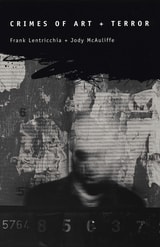
Crimes of Art and Terror
Frank Lentricchia and Jody McAuliffe
University of Chicago Press, 2003
Crimes of Art and Terror reveals how the desire beneath many romantic literary visions is that of a terrifying awakening that would undo the West's economic and cultural order. This is also the desire, of course, of what is called terrorism. As the authority of writers and artists recedes, it is criminals and terrorists, Lentricchia and McAuliffe suggest, who inherit this romantic, destructive tradition. Moving freely between the realms of high and popular culture, and fictional and actual criminals, the authors describe a web of impulses that catches an unnerving spirit.
Lentricchia and McAuliffe's unorthodox approach pairs Dostoevsky's Crime and Punishment with Martin Scorsese's King of Comedy and connects the real-life Unabomber to the surrealist Joseph Cornell and to the hero of Bret Easton Ellis's bestselling novel American Psycho. They evoke a desperate culture of art through thematic dialogues among authors and filmmakers as varied as Don DeLillo, Joseph Conrad, Francis Ford Coppola, Jean Genet, Frederick Douglass, Hermann Melville, and J. M. Synge, among others. And they conclude provocatively with an imagined conversation between Heinrich von Kleist and Mohamed Atta. The result is a brilliant and unflinching reckoning with the perilous proximity of the impulse to create transgressive art and the impulse to commit violence.
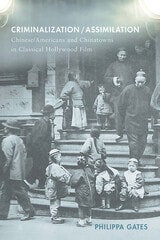
Criminalization/Assimilation
Chinese/Americans and Chinatowns in Classical Hollywood FilmPhilippa Gates
Rutgers University Press, 2019
Crisis of Conscience
Arkansas Methodists and the Civil Rights StruggleJames T. Clemons
Butler Center for Arkansas Studies, 2007
Crisis of the Wasteful Nation
Empire and Conservation in Theodore Roosevelt's AmericaIan Tyrrell
University of Chicago Press, 2014
In Crisis of the Wasteful Nation, Ian Tyrrell gives us a cohesive picture of Roosevelt’s engagement with the natural world along with a compelling portrait of how Americans used, wasted, and worried about natural resources in a time of burgeoning empire. Countering traditional narratives that cast conservation as a purely domestic issue, Tyrrell shows that the movement had global significance, playing a key role in domestic security and in defining American interests around the world. Tyrrell goes beyond Roosevelt to encompass other conservation advocates and policy makers, particularly those engaged with shaping the nation’s economic and social policies—policies built on an understanding of the importance of crucial natural resources. Crisis of the Wasteful Nation is a sweeping transnational work that blends environmental, economic, and imperial history into a cohesive tale of America’s fraught relationships with raw materials, other countries, and the animal kingdom.
Critical Environments
Postmodern Theory and the Pragmatics of the “Outside”Cary Wolfe
University of Minnesota Press, 1998
Argues for a pragmatist orientation for postmodern theory.
Taking up the problem that has stalled contemporary theory—its treatment of the object of knowledge, the “outside,” as nothing but what a particular discourse makes of it—this book suggests a solution: a reinvigorated, posthumanist form of pragmatism.
Author Cary Wolfe investigates three of the most significant strains of postmodern theory (pragmatism, systems theory, and poststructuralism) and shows how each confronts the specter of an “outside” not wholly constituted by discourses, language games, and interpretive communities. He then assesses these confrontations in light of an essentially pragmatic view of theory, one that constantly asks what practical and material difference it makes, and to whom, how these issues are negotiated. Wolfe concludes by comparing the pragmatist view of the relation of theory to politics with important work in contemporary post-Marxism. In arguing for a pragmatist orientation for postmodern theory, Wolfe deploys continental critical theory to avoid the nativism and “American exceptionalism” that has traditionally accompanied pragmatist philosophy. Unique in its collation of major theorists rarely considered together, Critical Environments incorporates detailed discussions of the work of Richard Rorty, Walter Benn Michaels, Stanley Cavell, Humberto Maturana, Francisco Varela, Niklas Luhmann, Michel Foucault, Gilles Deleuze, Fredric Jameson, and others, and ranges across fields from feminist philosophy of science to the theory of ideology. Wolfe draws on recent work in systems theory to articulate a properly postmodern pragmatism. In doing so, he offers American readers a detailed introduction to systems theory, which he situates and critiques in the broader context of philosophical pragmatism, the theory of democratic social antagonism, and materialist theories of ideology, knowledge, and power. An answer to the widespread charge of relativism leveled against postmodern theory, his work will enhance and inspire new kinds of critical thought.
Critical Essays
Volume 1: 1944–1948Georges Bataille
Seagull Books, 2023
In the aftermath of the Second World War, French thinker and writer Georges Bataille forged a singular path through the moral and political impasses of his age. In 1946, animated by “a need to live events in an increasingly conscious way,” and to reject any compartmentalization of intellectual life, Bataille founded the journal Critique. Adopting the format of the review essay, he surveyed the post-war cultural landscape while advancing his reflections on excess, non-knowledge, and the general economy. Focusing on literature as a mode of sovereign uselessness, he tackled prominent and divisive figures such as Henry Miller and Albert Camus.
In keeping with Critique’s mission to explore the totality of human knowledge, Bataille’s articles did not just focus on the literary but featured important reflections on the science of sexuality, the Chinese Revolution, and historical accounts of drunkenness, among other matters. Throughout, he was attuned to how humanity would deal with the excessive forces of production and destruction it had unleashed, his aim being a way of thinking and living that would inhabit that excess.
This is the first of three volumes collecting Bataille’s post-war essays. Beginning with an article on Nietzsche and fascism written shortly after the liberation of Paris and running to the end of 1948, these texts make available for the first time in English the systematic diversity of Bataille’s post-war thought.
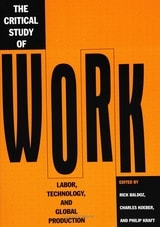
Critical Study Of Work
edited by Rick Baldoz, Charles Koeber and Philip Kraft
Temple University Press, 2001
The editors have assembled a collection of provocative, original essays on work and workplaces throughout the world that challenge the current celebration of globalization and new technologies. Building on labor process analysis, individual case studies venture beyond factory and office to examine "virtual" workplaces, computer-era cottage work, and emotional and household labor. The settings range from Indian and Irish software factories to Brazilian supermarkets, Los Angeles sweatshops, and Taiwanese department stores.
Other essays seek to make theoretical sense of increasingly de-centered production chains, fluid work relations, and uncertain employment. Individually and collectively the authors construct a new critical study of work, highlighting the connections between geography, technology, gender, race, and class. They offer an accessible and flexible approach to the study of workplace relations and production organization -- and even the notion of work itself.
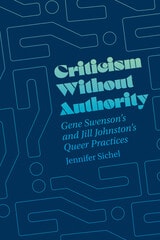
Criticism Without Authority
Gene Swenson's and Jill Johnston’s Queer PracticesJennifer Sichel
University of Chicago Press, 2025
In the early 1960s, Gene Swenson and Jill Johnston began to imagine art criticism as something unruly and expansive, rejecting modernist appeals to purity and coherence that had overtaken the field. These critics were deeply enmeshed in New York’s avant-garde art scene, and both were explicitly and unapologetically queer. First working independently of one another, then later in dialogue, Swenson and Johnston demanded criticism become life-sustaining, subverting protocols and distorting its form beyond recognition. They utilized criticism as a means of navigating queer existence and reclaimed terms like lesbian, homosexual, mad, and psychotic as their own.
Jennifer Sichel follows the intertwined paths of Swenson and Johnston, providing a history of queer practices that were central to the development of avant-garde art but have been largely overlooked. Criticism Without Authority makes their work visible not just as criticism, but as its own form of art. As Sichel shows, Swenson's and Johnston’s practices, bucking categories and disciplinary formations, resist historical streamlining and stand as a key for unlocking the queerness of postwar art history.
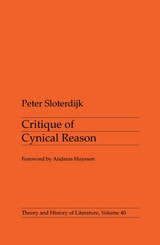
Critique Of Cynical Reason
Peter Sloterdijk
University of Minnesota Press, 1988
In 1983, two centuries after the publication of Kant's Critique of Pure Reason, another philosophical treatise-polemical in nature, with a title that conscious and disrespectfully alludes to the earlier work —appeared in West Germany. Pete Sloterdijk's Critique of Cynical Reason stirred both critical acclaim and consternation and attracted a wide readership, especially among those who had come of age in the 1960s. Sloterdijk finds cynicism the dominant mode in contemporary culture in personal and institutional settings; his book is less a history of the impulse than. an investigation of its role in the postmodern 1970s and 1980s, among those whose earlier hopes for social change had crumbled and faded away. Sloterdijk thus brings into cultural and political discourse an issue which, though central to the mood of a generation, has remained submerged throughout the current debate about modernity and postmodernity.
With Adorno and Horkeimer's Dialectic of Enlightenment as his primary jumping-off point, Sloterdijk also draws upon, and contends with, the poststructuralist concepts of Deleuze and Guattari. He defines cynicism as enlightened false consciousness—a sensibility "well off and miserable at the same time," able to function in the workaday world yet assailed by doubt and paralysis; and, as counterstrategy, proposes the kynicism of antiquity—the sensuality and loud, satiric laughter of Diogenes. Above all, Sloterdijk is determined to resist the amnesia inherent in cynicism. The twentieth-century German historical experience lies behind his work, which closes with a brilliant essay on the Weimar Republic —the fourteen years between a lost war and Hitler's ascent to power, and a time when the cynical mode first achieved cultural dominance.

Critique of Exotica
Music, Politics and the Culture IndustryJohn Hutnyk
Pluto Press, 2000
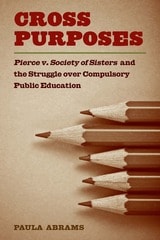
Cross Purposes
Pierce v. Society of Sisters and the Struggle over Compulsory Public EducationPaula Abrams
University of Michigan Press, 2009
"A definitive study of an extremely important, though curiously neglected, Supreme Court decision, Pierce v. Society of Sisters."
---Robert O'Neil, Professor of Law Emeritus, University of Virginia School of Law
---Richard W. Garnett, Professor of Law and Associate Dean, Notre Dame Law School
"A well-written, well-researched blend of law, politics, and history."
---Joan DelFattore, Professor of English and Legal Studies, University of Delaware
In 1922, the people of Oregon passed legislation requiring all children to attend public schools. For the nativists and progressives who had campaigned for the Oregon School Bill, it marked the first victory in a national campaign to homogenize education---and ultimately the populace. Private schools, both secular and religious, vowed to challenge the law. The Catholic Church, the largest provider of private education in the country and the primary target of the Ku Klux Klan campaign, stepped forward to lead the fight all the way to the U.S. Supreme Court.
In Pierce v. Society of Sisters (1925), the court declared the Oregon School Bill unconstitutional and ruled that parents have the right to determine how their children should be educated. Since then, Pierce has provided a precedent in many cases pitting parents against the state.
Paula Abrams is Professor of Constitutional Law at Lewis & Clark Law School.
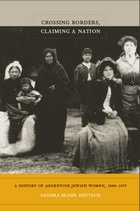
Crossing Borders, Claiming a Nation
A History of Argentine Jewish Women, 1880–1955Sandra McGee Deutsch
Duke University Press, 2010
Drawing on extensive archival research and original oral histories, Deutsch tells the stories of individual women, relating their sentiments and experiences as both insiders and outsiders to state formation, transnationalism, and cultural, political, ethnic, and gender borders in Argentine history. As agricultural pioneers and film stars, human rights activists and teachers, mothers and doctors, Argentine Jewish women led wide-ranging and multifaceted lives. Their community involvement—including building libraries and secular schools, and opposing global fascism in the 1930s and 1940s—directly contributed to the cultural and political lifeblood of a changing Argentina. Despite their marginalization as members of an ethnic minority and as women, Argentine Jewish women formed communal bonds, carved out their own place in society, and ultimately shaped Argentina’s changing pluralistic culture through their creativity and work.
Crossing Borders
Reception Theory, Poststructuralism, DeconstructionRobert C. Holub
University of Wisconsin Press, 1992
Robert C. Holub critically investigates the histories of reception theory, poststructuralism, and deconstruction in postwar Germany and the United States. He looks at how imported theories assume a place in the political discourse of a country, and how indigenous intellectual traditions and prejudices affect, modify, or even distort foreign theories.
Holub addresses many timely questions: Why did reception theory, so prominent in Germany in the 1960s and 1970s, fail to have an impact on American academics until the 1980s? Why did postructuralism, and specifically the writings of Michel Foucault, fail to find a home in German academia while becoming an important theoretical voice in the United States? How did deconstruction, originally considered by American scholars as merely a sophisticated tool for analysis, get taken up by leftists who argued for an affinity between the critique of language and the critique of capitalism? And finally, how have American intellectuals responded to revelations of fascism in the pasts of Paul de Man and Martin Heidegger?
Crossing Borders effectively demonstrates the extent to which theoretical work needs to be understood in cultural, intellectual, and institutional contexts. Holub argues that the praxis of theories is determined not only by their content and style, but also by the environment in which they must function. The success of a transplanted theory, he contends, is due less to its inherent merits than to the hospitability of the environment on to which it is grafted.
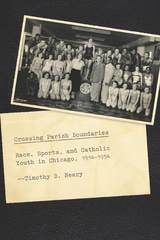
Crossing Parish Boundaries
Race, Sports, and Catholic Youth in Chicago, 1914-1954Timothy B. Neary
University of Chicago Press, 2016
In this book, Timothy B. Neary reveals the history of Bishop Bernard Sheil’s Catholic Youth Organization (CYO), which brought together thousands of young people of all races and religions from Chicago’s racially segregated neighborhoods to take part in sports and educational programming. Tens of thousands of boys and girls participated in basketball, track and field, and the most popular sport of all, boxing, which regularly filled Chicago Stadium with roaring crowds. The history of Bishop Sheil and the CYO shows a cosmopolitan version of American Catholicism, one that is usually overshadowed by accounts of white ethnic Catholics aggressively resisting the racial integration of their working-class neighborhoods. By telling the story of Catholic-sponsored interracial cooperation within Chicago, Crossing Parish Boundaries complicates our understanding of northern urban race relations in the mid-twentieth century.
Crossing Segregated Boundaries
Remembering Chicago School DesegregationDionne Danns
Rutgers University Press, 2021
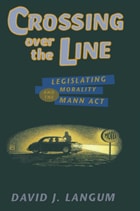
Crossing over the Line
Legislating Morality and the Mann ActDavid J. Langum
University of Chicago Press, 1994
This book is the first history of the Mann Act's often bizarre career, from its passage to the amendment that finally laid it low. In David J. Langum's hands, the story of the Act becomes an entertaining cautionary tale about the folly of legislating private morality.
Langum recounts the colorful details of numerous court cases to show how enforcement of the Act mirrored changes in America's social attitudes. Federal prosecutors became masters in the selective use of the Act: against political opponents of the government, like Charlie Chaplin; against individuals who eluded other criminal charges, like the Capone mobster "Machine Gun" Jack McGurn; and against black men, like singer Chuck Berry and boxer Jack Johnson, who dared to consort with white women. The Act engendered a thriving blackmail industry and was used by women like Frank Lloyd Wright's wife to extort favorable divorce settlements.
"Crossing over the Line is a work of scholarship as wrought by a civil libertarian, and the text . . . sizzles with the passion of an ardent believer in real liberty under reasonable laws."—Jonathan Kirsch, Los Angeles Times
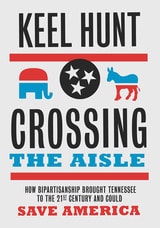
Crossing the Aisle
How Bipartisanship Brought Tennessee to the Twenty-First Century and Could Save AmericaKeel Hunt
Vanderbilt University Press, 2018
The Tennessee story, as the Pulitzer Prize–winning author Jon Meacham observes in his foreword to this book, offers striking examples of bipartisan cooperation on many policy fronts—and a mode of governing that provides lessons for America in this frustrating era of partisan stalemate.
For more on Crossing the Aisle and author Keel Hunt, visit KeelHunt.com.
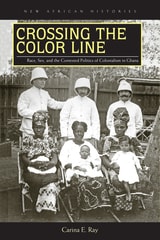
Crossing the Color Line
Race, Sex, and the Contested Politics of Colonialism in GhanaCarina E. Ray
Ohio University Press, 2015
Winner of the 2017 Aidoo-Snyder Book Prize
Winner of the 2016 American Historical Association’s Wesley-Logan Prize in African diaspora
Finalist for the 2016 Fage and Oliver Prize from the African Studies Association of the UK
Interracial sex mattered to the British colonial state in West Africa. In Crossing the Color Line, Carina E. Ray goes beyond this fact to reveal how Ghanaians shaped and defined these powerfully charged relations. The interplay between African and European perspectives and practices, argues Ray, transformed these relationships into key sites for consolidating colonial rule and for contesting its hierarchies of power. With rigorous methodology and innovative analyses, Ray brings Ghana and Britain into a single analytic frame to show how intimate relations between black men and white women in the metropole became deeply entangled with those between black women and white men in the colony in ways that were profoundly consequential.
Based on rich archival evidence and original interviews, the book moves across different registers, shifting from the micropolitics of individual disciplinary cases brought against colonial officers who “kept” local women to transatlantic networks of family, empire, and anticolonial resistance. In this way, Ray cuts to the heart of how interracial sex became a source of colonial anxiety and nationalist agitation during the first half of the twentieth century.
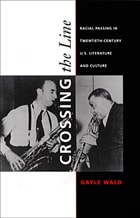
Crossing the Line
Racial Passing in Twentieth-Century U.S. Literature and CultureGayle Wald
Duke University Press, 2000
Wald begins her reading of twentieth-century passing narratives by analyzing works by African American writers James Weldon Johnson, Jessie Fauset, and Nella Larsen, showing how they use the “passing plot” to explore the negotiation of identity, agency, and freedom within the context of their protagonists' restricted choices. She then examines the 1946 autobiography Really the Blues, which details the transformation of Milton Mesirow, middle-class son of Russian-Jewish immigrants, into Mezz Mezzrow, jazz musician and self-described “voluntary Negro.” Turning to the 1949 films Pinky and Lost Boundaries, which imagine African American citizenship within class-specific protocols of race and gender, she interrogates the complicated representation of racial passing in a visual medium. Her investigation of “post-passing” testimonials in postwar African American magazines, which strove to foster black consumerism while constructing “positive” images of black achievement and affluence in the postwar years, focuses on neglected texts within the archives of black popular culture. Finally, after a look at liberal contradictions of John Howard Griffin’s 1961 auto-ethnography Black Like Me, Wald concludes with an epilogue that considers the idea of passing in the context of the recent discourse of “color blindness.”
Wald’s analysis of the moral, political, and theoretical dimensions of racial passing makes Crossing the Line important reading as we approach the twenty-first century. Her engaging and dynamic book will be of particular interest to scholars of American studies, African American studies, cultural studies, and literary criticism.
Crossing the Postmodern Divide
Albert Borgmann
University of Chicago Press, 1993
"[This] thoughtful book is the first remotely realistic map out of the post modern labyrinth."—Joseph Coates, The Chicago Tribune
"Rather astoundingly large-minded vision of the nature of humanity, civilization and science."—Kirkus Reviews
Crossing the Water
A Photographic Path to the Afro-Cuban Spirit WorldClaire Garoutte and Anneke Wambaugh
Duke University Press, 2007
A book of more than 150 striking photographs in both black and white and color, Crossing the Water includes images of elaborate Santería altars and Palo spirit cauldrons, as well as of Santiago and his religious “family” engaged in ritual practices: the feeding of the spirits, spirit possession, and private and collective healing ceremonies. As the charismatic head of a large religious community, Santiago helps his godchildren and others who consult him to cope with physical illness, emotional crises, contentious relationships, legal problems, and the hardships born of day-to-day survival in contemporary Cuba. He draws on the distinct yet intertwined traditions of Santería, Palo Monte, and Espiritismo to foster healing of both mind and body—the three religions form a coherent theological whole for him.
Santiago eventually became Garoutte’s and Wambaugh’s spiritual godfather, and Crossing the Water is informed by their experiences as initiates of Santería and Palo Monte. Their text provides nuanced, clear explanations of the objects and practices depicted in the images. Describing the powerful intensity of human-spirit interactions, and evoking the sights, smells, sounds, and choreography of ritual practice, Crossing the Water takes readers deep inside the intimate world of Afro-Cuban spirituality.
Crossing through Chueca
Lesbian Literary Culture in Queer MadridJill Robbins
University of Minnesota Press, 2010
Jill Robbins traverses the various literary spaces of the city associated with queer culture, in particular the gay barrio of Chueca, revealing how it is a product of interrelations—a site crisscrossed by a multiplicity of subjects who constitute it as a queer space through the negotiation of their sexual, racial, gender, and class identities. Robbins recognizes Chueca as a political space as well, a refuge from homophobia. She also shows how the spatial and literary practices of Chueca relate to economic issues.
In examining how women’s sexual identities have become visible in and through the Chueca phenomenon, this work is a revealing example of transnational queer studies within the broader Western discussion on gender and sexuality.
Crossroads Modernism
Descent And Emergence In African-American Literary CultureEdward M. Pavlic
University of Minnesota Press, 2002
An essential reconsideration of black literature and culture and its response to modernity
In the African American encounter with modernism, all was not confrontation. Rather, as Edward M. Pavli´c demonstrates here, African American artists negotiated the intersection of high modernism in Europe and American discourse to fashion their own distinctive response to American modernity. A deft repositioning of black literature and culture, Pavli´c’s book re-envisions the potentials and dilemmas where the different traditions of modernism meet and firmly establishes African American modernism at this cultural crossroads.
Offering new insights into the work of a variety of African American artists—including Ralph Ellison, Richard Wright, Zora Neale Hurston, James Baldwin, Toni Morrison, Robert Hayden, David Bradley, Yusef Komunyakaa, Romare Bearden, and John Coltrane—Pavli´c explores the complex ways in which key modernist philosophical ideas and creative techniques have informed black culture. Crossroads Modernism also provides an in-depth look at how West African cultural legacies are brought to bear in the structure of a truly African American modernist creative process. The book brings to light two interrelated strains of black modernism: Afro-Modernism, which employs established modernist concerns and conceits to illuminate internal and psychological experience; and Diasporic Modernism, which places greater emphasis on shared cultural space and builds on traditions rooted in West African cultures.Whereas much has been said about the (generally racist) use of "blackness" in constituting modernism, Crossroads Modernism is the first book to expose the key role that modernism has played in the constitution of "blackness" in African-American aesthetics. In light of this work, canonical texts in African American literature can no longer be read as devoid of their own singular contribution to international modernism.
Crucibles of Black Empowerment
Chicago's Neighborhood Politics from the New Deal to Harold WashingtonJeffrey Helgeson
University of Chicago Press, 2014
In Crucibles of Black Empowerment, Jeffrey Helgeson recounts the rise of African American political power and activism from the 1930s onward, revealing how it was achieved through community building. His book tells stories of the housewives who organized their neighbors, building tradesmen who used connections with federal officials to create opportunities in a deeply discriminatory employment sector, and the social workers, personnel managers, and journalists who carved out positions in the white-collar workforce. Looking closely at black liberal politics at the neighborhood level in Chicago, Helgeson explains how black Chicagoans built the networks that eventually would overthrow the city’s seemingly invincible political machine.
Cruel Destiny and The White Negress
Two Novels by Cléante Desgraves ValcinAdam Nemmers
Rutgers University Press, 2024
Cruel Destiny (1929) tells the tragic love story of Armand and Adeline, drawn together by a magnetic attraction, yet kept apart by a dark family secret. Depicting the heavy expectations placed upon women in Haiti’s elite society, it also explores the troubled and twisted relationships between the Haitians and their former colonial masters, the French.
In The White Negress (1934), a Frenchwoman moves to Haiti and is torn between two very different men, a Black Haitian lawyer, and a white American carpetbagger. Putting a fresh spin on the tired tragic mulatta trope, Valcin reveals the racial prejudices, class tensions, and anti-colonial resentments of an island under American occupation.
Together, these two novels expand our understanding of Caribbean literature, as well as the political struggles and artistic triumphs of Black women in the Americas.
Cruel Modernity
Jean Franco
Duke University Press, 2013
Franco draws on human-rights documents, memoirs, testimonials, novels, and films, as well as photographs and art works, to explore not only cruel acts but the discriminatory thinking that made them possible, their long-term effects, the precariousness of memory, and the pathos of survival.

Cruiser HNLMS Tromp
Jantinus Mulder
Amsterdam University Press, 2023
Crunch!
A History of the Great American Potato ChipDirk Burhans
University of Wisconsin Press, 2017
Crunch! also uncovers a dark side of potato chip history, including a federal investigation of the snack food industry in the 1990s following widespread allegations of antitrust activity, illegal buyouts, and predatory pricing. In the wake of these "Great Potato Chip Wars," corporate snack divisions closed and dozens of family-owned companies went bankrupt. Yet, despite consolidation, many small chippers persist into the twenty-first century, as mom-and-pop companies and upstart "boutique" businesses serve both new consumers and markets with strong regional loyalties.
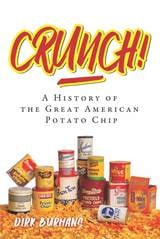
Illustrated with images of early snack food paraphernalia and clever packaging from the glory days of American advertising art, Crunch! is an informative tour of large and small business in America and the vicissitudes of popular tastes.
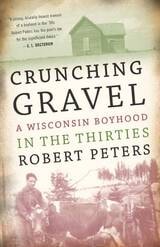
Crunching Gravel
A Wisconsin Boyhood in the ThirtiesRobert Louis Peters
University of Wisconsin Press, 1993
No nostalgic tale of the good old days, Robert Peters’s recollections of his adolescence vividly evoke the Depression on a hardscrabble farm near Eagle River: Dad driving the Vilas County Relief truck, Lars the Swede freezing to death on his porch, the embarassment of graduation in a suit from welfare. The hard efforts to put fish and potatoes and blueberries on the table are punctuated by occasional pleasures: the Memorial Day celebration, swimming at Perch Lake, the county fair with Mother’s prizes for jam and the exotic delights of the midway. Peters’s clear-eyed memoir reveals a poet’s eye for rich and stark detail even as a boy of twelve.
“Peters misses nothing, from the details of the town’s Fourth of July celebration to the cause and effect of a young cousin’s suicide to the calibrations of racism toward Indians that was so acceptable then. It is a fascinating, unsentimental look at a piece of our past.”—Margaret E. Guthrie, New York Times Book Review
“It’s unlikely that any other contemporary poet and scholar as distinguished has risen from quite so humble beginnings as Robert Peters. Born and raised by semiliterate parents on a subsistence farm in northeastern Wisconsin, Peters lived harrowingly close to the eventual stuff of his poetry—the dependency of humans on animal lives, the inexplicable and ordinary heroism and baseness of people facing extreme conditions, the urgency of physical desire. . . . Sterling childhood memoirs.”—Booklist
“Robert Peters has written a memoir exemplary because he insists on the specific, on the personal and the local. It is also enormously satisfying to read, and it is among the most authentic accounts of childhood and youth I know—a Wisconsin David Copperfield!”—Thom Gunn
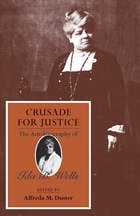
Crusade for Justice
The Autobiography of Ida B. WellsIda B. Wells
University of Chicago Press, 1970
"No student of black history should overlook Crusade for Justice."—William M. Tuttle, Jr., Journal of American History
"Besides being the story of an incredibly courageous and outspoken black woman in the face of innumerable odds, the book is a valuable contribution to the social history of the United States and to the literature of the women's movement as well."—Elizabeth Kolmer, American Quarterly
"[Wells was] a sophisticated fighter whose prose was as thorough as her intellect."—Walter Goodman, New York Times
"An illuminating narrative of a zealous, race-conscious, civic- and church-minded black woman reformer, whose life story is a significant chapter in the history of Negro-White relations."—Thelma D. Perry, Negro History Bulletin
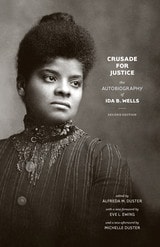
Crusade for Justice
The Autobiography of Ida B. Wells, Second EditionIda B. Wells
University of Chicago Press, 2020
Ida B. Wells is an American icon of truth telling. Born to slaves, she was a pioneer of investigative journalism, a crusader against lynching, and a tireless advocate for suffrage, both for women and for African Americans. She co-founded the NAACP, started the Alpha Suffrage Club in Chicago, and was a leader in the early civil rights movement, working alongside W. E. B. Du Bois, Madam C. J. Walker, Mary Church Terrell, Frederick Douglass, and Susan B. Anthony.
This engaging memoir, originally published 1970, relates Wells’s private life as a mother as well as her public activities as a teacher, lecturer, and journalist in her fight for equality and justice. This updated edition includes a new foreword by Eve L. Ewing, new images, and a new afterword by Ida B. Wells’s great-granddaughter, Michelle Duster.
Crusoes and Other Castaways in Modern French Literature
Solitary AdventuresJoseph Acquisto
University of Delaware Press, 2012
Published by University of Delaware Press. Distributed worldwide by Rutgers University Press.
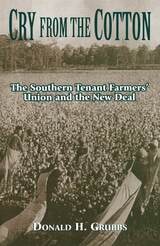
Cry from the Cotton
The Southern Tenant Farmers' Union and the New DealDonald Grubbs
University of Arkansas Press, 2000
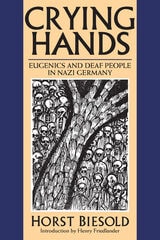
Crying Hands
Eugenics and Deaf People in Nazi GermanyHorst Biesold
Gallaudet University Press, 2003
When the Nazis assumed power in Germany in 1933, they wasted no time in implementing their radical policies, first by securing passage of the Law for the Prevention of Offspring with Hereditary Diseases. Among those designated by this law as “congenitally disabled” were deaf people. Horst Biesold’s newly translated book examines this neglected aspect of Nazi “racial hygiene” through interviews with more than 1,000 deaf survivors of this brutal law that authorized forced sterilizations, abortions, and eventually murder.
Crying Hands meticulously delineates the antecedents of Nazi eugenics, beginning with Social Darwinism (postulated in the mid-nineteenth century) and tracing the various sterilization laws later initiated throughout the world, including many passed and practiced in the United States. This exceptional scholarship is movingly paralleled by the human faces fixed to the numbing statistics, as in story after story those affected recount their irretrievable loss, pain, and misplaced shame imposed upon them by the Nazi regime. Through their stories, told to Biesold in German Sign Language, they have given voice to the countless others who died from the specious science practiced by the Third Reich. And now their own trials have finally been acknowledged.
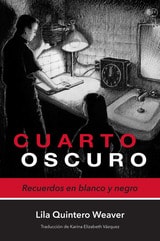
Cuarto oscuro
Recuerdos en blanco y negroLila Quintero Weaver, translated by Karina Elizabeth Vázquez
University of Alabama Press, 2018
Por medio de impresionantes ilustraciones, la autora ofrece una memoria cautivante y conmovedora de la infancia, las relaciones raciales, la etnicidad y la identidad en el sur de los Estados Unidos.
La novela gráfico de Lila Quintero-Weaver que obtuvo amplio reconocimiento crítico. Por medio de impresionantes ilustraciones, la autora ofrece una memoria cautivante y conmovedora de la infancia, las relaciones raciales, la etnicidad y la identidad en el sur de los Estados Unidos. Sus dibujos de estilo sutil, pero efectivo, refuerzan dramáticament una sentida narración.
En 1961, cuando la autora tenía cinco años, su familia salió de Buenos Aires, Argentina, para emigrar a los Estados Unidos y establecerse en Marion, un pueblo en el corazón del Black Belt de Alabama. En una región definida por la segregación racial, la familia Quintero, por su condición de clase media educada, se halló en una situación privilegiada para observar las tensiones que minaban la cultura y la sociedad en la que vivían.
Weaver salió de constancia de lo que signifacaba ser una niña latina en una le las regiones más racistas del sur de los Estados Unidos, tratando de entender tanto un país extranjero, como el horror de las relaciones raciales de nuestra nación. Excluida de las categorías raciales empleadas por entonces, la autora observó desde muy temprana edad las desigualdades de la cultura estadounidense, regida por un ideal de belleza femenina que privilegiaba a la mujer rubia y de ojos azules. A lo largo de su vida, Weaver ha luchado por encontrar su lugar en la sociedad norteamericana cuestionando la discriminación de su entorno. Cuarto oscuro contituye su legado visual y verbal sobre esa lucha.
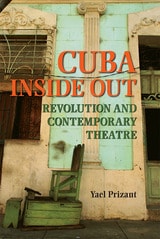
Cuba Inside Out
Revolution and Contemporary TheatreYael Prizant
Southern Illinois University Press, 2014
The collapse of the Soviet Union in 1989 drastically altered life in Cuba. Theatre artists were faced with new economic and social realities that changed their day-to-day experiences and ways of looking at the world beyond the island. The Cuban Revolution’s resistance to and intersections with globalization, modernity, emigration and privilege are central to the performances examined in this study. The first book-length study in English of Cuban and Cuban American plays, Cuba Inside Out provides a framework for understanding texts and performances that support, challenge, and transgress boundaries of exile and nationalism. Prizant reveals the intricacies of how revolution is staged theatrically, socially, and politically on the island and in the Cuban diaspora. This close examination of seven plays written since 1985 seeks to alter how U.S. audiences perceive Cuba, its circumstances, and its theatre.
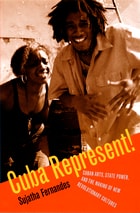
Cuba Represent!
Cuban Arts, State Power, and the Making of New Revolutionary CulturesSujatha Fernandes
Duke University Press, 2006
Combining textual analyses of films, rap songs, and visual artworks; ethnographic material collected in Cuba; and insights into the nation’s history and political economy, Fernandes details the new forms of engagement with official institutions that have opened up as a result of changing relationships between state and society in the post-Soviet period. She demonstrates that in a moment of extreme hardship and uncertainty, the Cuban state has moved to a more permeable model of power. Artists and other members of the public are collaborating with government actors to partially incorporate critical cultural expressions into official discourse. The Cuban leadership has come to recognize the benefits of supporting artists: rappers offer a link to increasingly frustrated black youth in Cuba; visual artists are an important source of international prestige and hard currency; and films help unify Cubans through community discourse about the nation. Cuba Represent! reveals that part of the socialist government’s resilience stems from its ability to absorb oppositional ideas and values.

Cuban Miami
Robert M Levine
Rutgers University Press, 2000
For two centuries, Cuban exiles have found their way to the United States, especially to Florida. But since Castro's victory in 1959, Miami has seen almost one million Cubans arrive by sea and air. The impact on this area has been enormous. Miami---known as the "Exile Capital"---has a greater cultural affinity to Havana and the rest of Latin America than to Tallahassee, Florida's capital.
Cuban Miami is the first analytical, photographic record of Cuban migration to south Florida. Robert M. Levine and Moises Asis have interviewed members of every sector of the Cuban exile community, from the first pioneers to the mass waves in the early 1960s to those who arrived by raft during the late 1990s. In their wide-ranging investigation of Cuban-U.S. history, they touch upon all aspects of Cuban influence: politics, cuisine, music, assimilation, discrimination, and institution buildings. Miami has more Cuban food establishments than the nearby island does. The city has been fertile ground for germinating a unique synthesis of Cuban and Americans are the most prosperous immigrant group in the United States today, this success has come at a price---living in exile can exact a personal toll.
Cuban Miami is a feast for the eyes, including 180 photographs and original cartoons drawn for the book by Jose M. Varela, a well-known member of the Cuban-American community.
Cuir Dissidence
Tracing Restorative Criticism and Breaking Bonds with the Mexican CanonFrancesca Dennstedt
Vanderbilt University Press, 2025
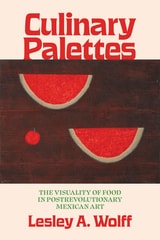
Culinary Palettes
The Visuality of Food in Postrevolutionary Mexican ArtLesley A. Wolff
University of Texas Press, 2025
2026 Mejor libro Humanidades, Mexico Section of the Latin American Studies Association
2026 Honorable Mention, First Book Prize, Cultural Studies Association
2025 Excellence in Scholarly Research and Publication Award, SECAC (formerly the Southeastern College Art Conference)
How the visual culture of food, cookery, and consumption played a central role in the making of postrevolutionary Mexico.
Postrevolutionary Mexico City was a site of anxious nation-building, as rampant modernization converged and clashed with the nation’s growing nostalgia for its pre-Columbian heritage. During this volatile period, food became a meaningful symbol for a Mexican citizenry seeking new modes of national participation.
Culinary Palettes explores how the artistic invocation of food cultures became an arena in which to negotiate the political entanglements of postrevolutionary Mexico. Lesley Wolff casts a nuanced eye on the work of visual artists such as Tina Modotti, Carlos González, and Rufino Tamayo, who nurtured the symbolic and performative power of iconic foods such as pulque, mole poblano, and watermelon. Through analysis of a wide array of visual evidence, including paintings, architecture, vintage postcards, menus, and cookbooks, Culinary Palettes demonstrates how these artists positioned their work within a broad visual landscape that relied upon the power of Mexican foodways in the urban and national imagination. In the studios of modernists, Wolff argues, artistic production, foodways, and Indigeneity proved to be mutually constitutive—and at times weaponized—agents in articulating competing claims to a new nationhood.
Culinary Poetics and Edible Images in Twentieth-Century American Literature
Stacie Cassarino
The Ohio State University Press, 2018
Cassarino takes the reader through the changing dynamics of food production and consumption, from wartime sensibilities of patriotic eating to the postwar excess of culinary cosmopolitanism and finally to contemporary supermarket pastorals. She pairs chefs and poets—Julia Child and Gertrude Stein, Poppy Cannon and Frank O’Hara, Vertamae Smart-Grosvenor and Harryette Mullen—to argue that each converts eating into an aesthetic opportunity that has the power to impact how people consume. In this way, Cassarino reveals the modern cookbook not just as a literary counterpart to contemporary poetry but also as vital to the literature and art occurring around it. From Futurist cookbooks to fast food lyrics, from Gullah recipes to Eat Art, she reminds us that global foodscapes are connected to aesthetic movements in literature and art.
Cultivating Health
Los Angeles Women and Public Health ReformKoslow, Jennifer
Rutgers University Press, 2009
Cultivating Health, an interdisciplinary chronicle, details women's impact on remaking health policy, despite the absence of government support. Combining primary source and municipal archival research with comfortable prose, Jennifer Lisa Koslow explores community nursing, housing reform, milk sanitation, childbirth, and the campaign against venereal disease in late nineteenth and early twentieth century Los Angeles. She demonstrates how women implemented health care reform and civic programs while laying the groundwork for a successful transition of responsibility back to government.
Koslow highlights women's home health care and urban policy-changing accomplishments and pays tribute to what would become the model for similar service-based systems in other American centers.