Results by title
18284 books match the query 'United States' and 1260 start with c
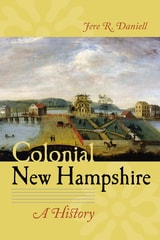
Colonial New Hampshire
A HistoryJere R. Daniell
University Press of New England, 2015
Colonial Racial Capitalism
Susan Koshy, Lisa Marie Cacho, Jodi A. Byrd, and Brian Jordan Jefferson, editors
Duke University Press, 2022
Contributors. Joanne Barker, Jodi A. Byrd, Lisa Marie Cacho, Michael Dawson, Iyko Day, Ruth Wilson Gilmore, Alyosha Goldstein, Cheryl I. Harris, Kimberly Kay Hoang, Brian Jordan Jefferson, Susan Koshy, Marisol LeBrón, Jodi Melamed, Laura Pulido
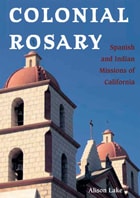
Colonial Rosary
The Spanish and Indian Missions of CaliforniaAlison Lake
Ohio University Press, 2006
California would be a different place today without the imprint of Spanish culture and the legacy of Indian civilization. The colonial Spanish missions that dot the coast and foothills between Sonoma and San Diego are relics of a past that transformed California’s landscape and its people.
In a spare and accessible style, Colonial Rosary looks at the complexity of California’s Indian civilization and the social effects of missionary control. While oppressive institutions lasted in California for almost eighty years under the tight reins of royal Spain, the Catholic Church, and the government of Mexico, letters and government documents reveal the missionaries’ genuine concern for the Indian communities they oversaw for their health, spiritual upbringing, and material needs.
With its balanced attention to the variety of sources on the mission period, Colonial Rosary illuminates ongoing debates over the role of the Franciscan missions in the settlement of California.
By sharing the missions’ stories of tragedy and triumph, author Alison Lake underlines the importance of preserving these vestiges of California’s prestatehood period. An illustrated tour of the missions as well as a sensitive record of their impact on California history and culture, Colonial Rosary brings the story of the Spanish missions of California alive.
Colonial Search For A Southern Eden
Louis B. Wright
University of Alabama Press, 2008
European imperialists began to dream of other kinds of wealth besides gold in the New World
The Colonial Search for a Southern Eden compiles three insightful lectures delivered by renowned historian Louis B. Wright at the Dancy Foundation in 1951. Wright explores the 17th‑century English colonial vision for the American South—not as a gold rush, but as a fertile terrain primed for economic prosperity through well‑planned plantations and commercial crops.
Across its concise 75 pages, Wright charts the transformation of settlers’ aspirations—from hopes of quick wealth to cultivated visions of tobacco, silk, sugar, and cotton plantations meant to create a utopian "Southern Eden". These were carefully cultivated not just for their profitability but to establish structured, enduring societies complementary to English economic goals.
Wright—a Guggenheim Fellow, Benjamin Franklin Medalist, and former director of the Folger Shakespeare Library—brings scholarly precision and elegant prose to this study, making it accessible to both historians and general readers. Publishers and reviewers have praised it as “extremely interesting and well written,” highlighting its focused yet comprehensive interpretation of colonial Southern motivations and their long-term implications. This work stands as a pivotal contribution to early American economic and colonial history—offering a nuanced understanding of how idealistic and ideological goals shaped plantation culture and southern development in the Atlantic colonies.
With its concise structure and authoritative voice, The Colonial Search for a Southern Eden is ideal for historians, students, and enthusiasts seeking to understand the ideological underpinnings of colonial Southern society.
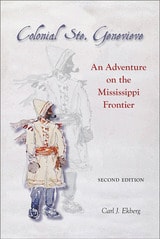
Colonial Ste. Genevieve
An Adventure on the Mississippi FrontierCarl J. Ekberg
Southern Illinois University Press, 1996
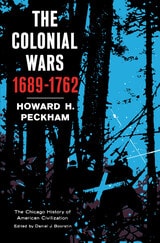
Colonial Wars, 1689-1762
Howard H. Peckham
University of Chicago Press, 1965
Mr. Peckham chronicles the events of these wars, summarizing the struggle for empire in America among France, England, and Spain. He indicates how the colonists applied the experience they gained from fighting Indians to their engagements with European powers. And what they learned from the colonial wars they translated into a political philosophy that led to independence and self-government.
The ready involvement of the colonies in European ambitions, the success and failure of co-operation between colony and mother country, the efforts of the English colonies together, and the growing differences between them and Britain give the narrative continuity and rising excitement.
Colonial Wars, 1689-1762
Howard H. Peckham
University of Chicago Press, 1965
Although the colonial wars consisted of almost continuous raids and skirmishes between the English and French colonists and their Indian allies and enemies, they can be separated into four major conflicts, corresponding to four European wars of which they were, in varying degrees, a part: King William's War (1689-97) (War of the League of Augsburg); Queen Anne's War (1702-13) (War of the Spanish Succession); King George's War (1744-48) (War of the Austrian Succession); and The French and Indian War (1755-62) (Seven Years' War).
Mr. Peckham chronicles the events of these wars, summarizing the struggle for empire in America among France, England, and Spain. He indicates how the colonists applied the experience they gained from fighting Indians to their engagements with European powers. And what they learned from the colonial wars they translated into a political philosophy that led to independence and self-government.
The ready involvement of the colonies in European ambitions, the success and failure of co-operation between colony and mother country, the efforts of the English colonies together, and the growing differences between them and Britain give the narrative continuity and rising excitement.
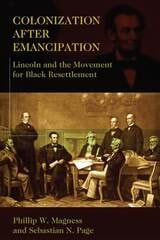
Colonization After Emancipation
Lincoln and the Movement for Black ResettlementPhillip W. Magness and Sebastian N. Page
University of Missouri Press, 2011
Colonization after Emancipation: Lincoln and the Movement for Black Resettlement explores the previously unknown truth about Lincoln’s attitude toward colonization. Scholars Phillip W. Magness and Sebastian N. Page combed through extensive archival materials, finding evidence, particularly within British Colonial and Foreign Office documents, which exposes what history has neglected to reveal—that Lincoln continued to pursue colonization for close to a year after emancipation. Their research even shows that Lincoln may have been attempting to revive this policy at the time of his assassination.
Using long-forgotten records scattered across three continents—many of them untouched since the Civil War—the authors show that Lincoln continued his search for a freedmen’s colony much longer than previously thought. Colonization after Emancipation reveals Lincoln’s highly secretive negotiations with the British government to find suitable lands for colonization in the West Indies and depicts how the U.S. government worked with British agents and leaders in the free black community to recruit emigrants for the proposed colonies. The book shows that the scheme was never very popular within Lincoln’s administration and even became a subject of subversion when the president’s subordinates began battling for control over a lucrative “colonization fund” established by Congress.
Colonization after Emancipation reveals an unexplored chapter of the emancipation story. A valuable contribution to Lincoln studies and Civil War history, this book unearths the facts about an ill-fated project and illuminates just how complex, and even convoluted, Abraham Lincoln’s ideas about the end of slavery really were.
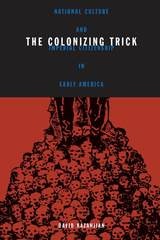
Colonizing Trick
National Culture And Imperial Citizenship In Early AmericaDavid Kazanjian
University of Minnesota Press, 2003
An illuminating look at the concepts of race, nation, and equality in eighteenth- and nineteenth-century America
The idea that “all men are created equal” is as close to a universal tenet as exists in American history. In this hard-hitting book, David Kazanjian interrogates this tenet, exploring transformative flash points in early America when the belief in equality came into contact with seemingly contrary ideas about race and nation. The Colonizing Trick depicts early America as a white settler colony in the process of becoming an empire-—one deeply integrated with Euro-American political economy, imperial ventures in North America and Africa, and pan-American racial formations.
Kazanjian traces tensions between universal equality and racial or national particularity through theoretically informed critical readings of a wide range of texts: the political writings of David Walker and Maria Stewart, the narratives of black mariners, economic treatises, the personal letters of Thomas Jefferson and Phillis Wheatley, Charles Brockden Brown’s fiction, congressional tariff debates, international treaties, and popular novelettes about the U.S.–Mexico War and the Yucatán’s Caste War. Kazanjian shows how emergent racial and national formations do not contradict universalist egalitarianism; rather, they rearticulate it, making equality at once restricted, formal, abstract, and materially embodied.
Color Lines, Country Lines
Race, Immigration, and Wealth Stratification in AmericaLingxin Hao
Russell Sage Foundation, 2007
Color Lines
Affirmative Action, Immigration, and Civil Rights Options for AmericaJohn David Skrentny
University of Chicago Press, 2001
Contributors:
Erik Bleich
Lawrence D. Bobo
Frank Dobbin
John Aubrey Douglass
Hugh Davis Graham
Kyra R. Greene
Erin Kelly
George R. La Noue
Jennifer Lee
Michael Lichter
Deborah C. Malamud
Sunita Parikh
John C. Sullivan
Thomas J. Sugrue
Carol M. Swain
Steven M. Teles
Roger Waldinger
Christine Min Wotipka
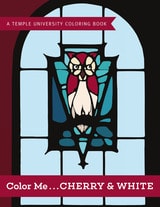
Color me...Cherry & White
A Temple University Coloring BookTemple University Press, 2018
The first ever Temple University adult coloring book, Color Me...Cherry & White contains more than twenty iconic Temple University landmarks. From the magnificent Baptist Temple with its ornate stained glass windows, to Hooter the Owl, the campus food trucks, and the SEPTA rail station, students, parents, and alumni—even future Owls—now have a personal campus canvas to color with markers, pencils or crayons.
The images in Color Me...Cherry & White were created from photographs from the University Photography Department and crafted into pages for amateur artists to beautify. The designs will stoke memories as well as provide stress relief as artists create their own impressions of the campus. Moreover, this keepsake will make the perfect gift and provide memories for the worldwide Temple community.

Color of Privilege
Three Blasphemies on Race and FeminismAida Hurtado
University of Michigan Press, 1996
Colorado Day by Day
Derek Everett
University Press of Colorado, 2019
Colorado Day by Day is an engaging, this-day-in-history approach to the key figures and forces that have shaped Colorado from ancient times to the present. Historian Derek R. Everett presents a vignette for each day of the calendar year, exploring Colorado’s many facets through distilled tales of people, places, events, and trends.
Entries incorporate tales from each of the state’s sixty-four counties and feature both well-known and obscure cultural moments, including events in Native American, African American, Asian American, Hispano, and women’s history. Allowing the reader to explore the state’s heritage as individual threads or as part of the greater tapestry, Colorado Day by Day recovers much lost history and will be an entertaining and useful source of lore for anyone who enjoys or is curious about Colorado history.
Colorado Profiles
Men and Women Who Shaped the Centennial StateJohn H. Monnett
University Press of Colorado, 1996
Colorado State Capitol
History, Politics, PreservationDerek Everett
University Press of Colorado, 2005
In one comprehensive volume historian Derek Everett traces the establishment, planning, construction, and history of Colorado's state capitol - including a discussion on the importance of restoring and preserving the building for current and future generations of Coloradoans.
Colorado Water Law for Non-Lawyers
P. Andrew Jones
University Press of Colorado, 2009
This book will appeal to at students, non-lawyers involved with water issues, and general readers interested in Colorado’s complex water rights law.
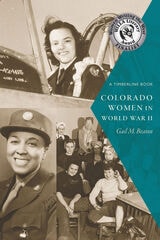
Colorado Women in World War II
Gail M. Beaton
University Press of Colorado, 2023
Four months before the attack on Pearl Harbor on December 7, 1941, Mildred McClellan Melville, a member of the Denver Woman’s Press Club, predicted that war would come for the United States and that its long arm would reach into the lives of all Americans. And reach it did. Colorado women from every corner of the state enlisted in the military, joined the workforce, and volunteered on the home front. As military women, they served as nurses and in hundreds of noncombat positions. In defense plants they riveted steel, made bullets, inspected bombs, operated cranes, and stored projectiles. They hosted USO canteens, nursed in civilian hospitals, donated blood, drove Red Cross vehicles, and led scrap drives; and they processed hundreds of thousands of forms and reports. Whether or not they worked outside the home, they wholeheartedly participated in a kaleidoscope of activities to support the war effort.
In Colorado Women in World War II Gail M. Beaton interweaves nearly eighty oral histories—including interviews, historical studies, newspaper accounts, and organizational records—and historical photographs (many from the interviewees themselves) to shed light on women’s participation in the war, exploring the dangers and triumphs they felt, the nature of their work, and the lasting ways in which the war influenced their lives. Beaton offers a new perspective on World War II—views from field hospitals, small steel companies, ammunition plants, college classrooms, and sugar beet fields—giving a rare look at how the war profoundly transformed the women of this state and will be a compelling new resource for readers, scholars, and students interested in Colorado history and women’s roles in World War II.
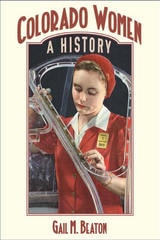
Colorado Women
A HistoryGail M. Beaton
University Press of Colorado, 2012
The experiences of Colorado women differed greatly across economic, ethnic, and racial backgrounds. Marital status, religious affiliation, and sexual orientation colored their worlds and others' perceptions and expectations of them. Each chapter addresses the everyday lives of women in a certain period, placing them in historical context, and is followed by vignettes on women's organizations and notable individuals of the time.
Native American, Hispanic, African American, Asian and Anglo women's stories hail from across the state--from the Eastern Plains to the Front Range to the Western Slope--and in their telling a more complete history of Colorado emerges. Colorado Women makes a significant contribution to the discussion of women's presence in Colorado that will be of interest to historians, students, and the general reader interested in Colorado, women's and western history.
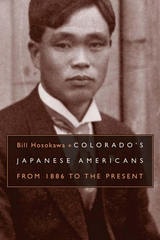
Colorado's Japanese Americans
From 1886 to the PresentBill Hosokawa
University Press of Colorado, 2005
Hosokawa traces personal histories, such as Bob Sakata's journey from internment in a relocation camp to his founding of a prosperous truck farm; the conviction of three sisters for assisting the escape of German POWs; and the years of initiative and determination behind Toshihiro Kizaki's ownership of Sushi Den, a beloved Denver eatery. In addition to personal stories, the author also relates the larger history of the interweave of cultures in Colorado, from the founding of the Navy's Japanese language school at the University of Colorado to the merging of predominantly white and Japanese American congregations at Arvada's Simpson United Methodist Church.
With the author's long view and sharp eye, Colorado's Japanese Americans creates a storied document of lasting legacy about the Issei and Nisei in Colorado.

Colorado
A HistoryDerek Everett
University Press of Colorado, 2026
From prehistoric seas to modern ski slopes, Colorado: A History explores the people, places, conflicts, environments, and ideas that have shaped the state—and the forces that continue to guide it today.
The choices that built Colorado brought both opportunity and devastating consequences. What looked like a triumph from one perspective often represented tragedy from another. Join Dr. Derek Everett on a sweeping journey through time, meeting the Natives and newcomers, the business owners and workers, and the communities and governments that transformed the landscape along the way. Drawing on the latest scholarship, Colorado: A History brings those competing stories together to reveal a state whose past is as complicated, surprising, and unfinished as its future.
Colorado
A History of the Centennial State, Fifth EditionCarl Abbott
University Press of Colorado, 2013
The fifth edition tells of conflicts, shifting alliances, and changing ways of life as Hispanic, European, and African American settlers flooded into a region that was already home to Native Americans. Providing a balanced treatment of the entire state’s history—from Grand Junction to Lamar and from Trinidad to Craig—the authors also reveal how Denver and its surrounding communities developed and gained influence.
While continuing to elucidate the significant impact of mining, agriculture, manufacturing, and tourism on Colorado, this edition broadens and focuses its coverage by consolidating material on Native Americans into one chapter and adding a new chapter on sports history. The authors also expand their discussion of the twentieth century with updated sections on the environment, economy, politics, and recent cultural conflicts. New illustrations, updated statistics, and an extensive bibliography including Internet resources enhance this edition.
Colorado
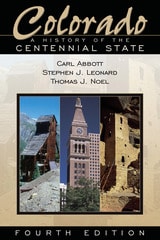
A History of the Centennial State, Fourth EditionCarl Abbott
University Press of Colorado, 2005
The new edition tells of conflicts, new alliances, and changing ways of life as Hispanic, European, and African American settlers flooded into a region that was already home to Native Americans. Providing balanced coverage of the entire state's history - from Grand Junction to Lamar and from Trinidad to Craig - the authors also reveal how Denver and its surrounding communities developed and gained influence.
While continuing to elucidate the significant impact of mining, agriculture, manufacturing, and tourism on Colorado, this new edition broadens its coverage. The authors expand their discussion of the twentieth century with several new chapters on the economy, politics, and cultural conflicts of recent years. In addition, they address changes in attitudes toward the natural environment as well as the contributions of women, Hispanics, African Americans, and Asian Americans to the state. Dozens of new illustrations, updated statistics, and an extensive bibliography of the most recent research on Colorado history enhance this edition.
Colorado
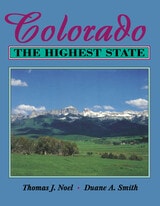
The Highest StateThomas J. Noel
University Press of Colorado, 1995
In each chapter of this book, you will find some questions, activities, and suggested reading to help you learn more of Colorado's story than we can present here. In these pages. you will discover a high, dry state with rugged natural beauty and an awesome history.
Colorado
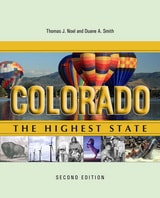
The Highest State, Second EditionThomas J. Noel
University Press of Colorado, 2011
Each chapter is followed by questions, suggested activities, recommended reading, a "Did you know?" trivia section, and recommended websites, movies, and other multimedia that highlight the important concepts covered and lead the reader to more information. Additionally, the book is filled with photographs, making Colorado: The Highest State a fantastic text for middle and high school Colorado history courses.
Colored Amazons
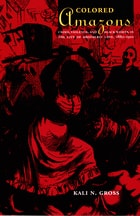
Crime, Violence, and Black Women in the City of Brotherly Love, 1880–1910Kali N. Gross
Duke University Press, 2006
Gross draws on prison records, trial transcripts, news accounts, and rare mug shot photographs. Providing an overview of Philadelphia’s black women criminals, she describes the women’s work, housing, and leisure activities and their social position in relation to the city’s native-born whites, European immigrants, and elite and middle-class African Americans. She relates how news accounts exaggerated black female crime, trading in sensationalistic portraits of threatening “colored Amazons,” and she considers criminologists’ interpretations of the women’s criminal acts, interpretations largely based on notions of hereditary criminality. Ultimately, Gross contends that the history of black female criminals is in many ways a history of the rift between the political rhetoric of democracy and the legal and social realities of those marginalized by its shortcomings.
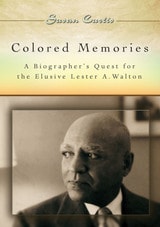
Colored Memories
A Biographer's Quest for the Elusive Lester A. WaltonSusan Curtis
University of Missouri Press, 2008
Lester A. Walton was a well-known public figure in his day. An African American journalist, cultural critic, diplomat, and political activist, he was an adviser to presidents and industrialists in a career that spanned the first six decades of the twentieth century. He was a steadfast champion of democracy and lived to see the passage of major civil rights legislation. But one word best describes Walton today: forgotten.
Exploring the contours of this extraordinary life, Susan Curtis seeks to discover why our collective memory of Walton has failed. In a unique narrative of historical research, she recounts a fifteen-year journey, from the streets of Harlem and “The Ville” in St. Louis to scattered archives and obscure public records, as she uncovers the mysterious circumstances surrounding Walton’s disappearance from national consciousness. And despite numerous roadblocks and dead ends in her quest, she tells how she came to know this emblematic citizen of the American Century in surprising ways.
In this unconventional book—a postmodern ghost story, an unprecedented experiment in life-writing—Curtis shares her discoveries as a researcher. Relating her frustrating search through long-overlooked documents to discover this forgotten man, she offers insight into how America’s obsession with race has made Walton’s story unwelcome. She explores the treachery, duplicity, and archival accidents that transformed a man dedicated to the fulfillment of American democracy into a shadowy figure.
Combining anecdotal memories with the investigative instincts of the historian, Curtis embraces the subjectivity of her research to show that what a society forgets or suppresses is just as important as what it includes in its history. Colored Memories is a highly original work that not only introduces readers to a once-influential figure but also invites us to reconsider how we view, understand, and preserve the past.
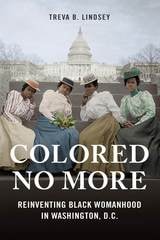
Colored No More
Reinventing Black Womanhood in Washington, D.C.Treva B. Lindsey
University of Illinois Press, 2017
Treva B. Lindsey presents New Negro womanhood as a multidimensional space that included race women, blues women, mothers, white collar professionals, beauticians, fortune tellers, sex workers, same-gender couples, artists, activists, and innovators. Drawing from these differing but interconnected African American women's spaces, Lindsey excavates a multifaceted urban and cultural history of struggle toward a vision of equality that could emerge and sustain itself. Upward mobility to equal citizenship for African American women encompassed challenging racial, gender, class, and sexuality status quos. Lindsey maps the intersection of these challenges and their place at the core of New Negro womanhood.
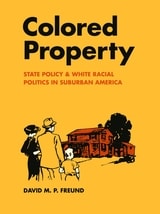
Colored Property
State Policy and White Racial Politics in Suburban AmericaDavid M. P. Freund
University of Chicago Press, 2007
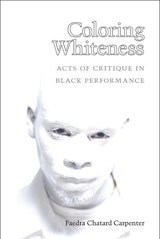
Coloring Whiteness
Acts of Critique in Black PerformanceFaedra Chatard Carpenter
University of Michigan Press, 2014
Columbus, Georgia, 1865
The Last True Battle of the Civil WarCharles A. Misulia
University of Alabama Press, 2010
Columbus, Georgia, 1865 is a comprehensive study of the Easter Sunday, April 16, 1865, conflict, which occurred in the dark of night and extended over a mile and half through a series of forts and earthworks and was finally decided in an encounter on a bridge a thousand feet in length. This volume offers the first complete account of this battle, examining and recounting in depth not only the composition and actions of the contending forces, which numbered some three thousand men on each side, but meticulously detailing the effect of the engagement on the city of Columbus and its environs.
Misulia’s study fills in an omission in the grand account of our cataclysmic national struggle and adds a significant chapter to the history of an important regional city. In addition, Misulia takes on the long-vexing question of which encounter should be recognized as the last battle of the Civil War and argues persuasively that Columbus, Georgia, qualifies for this distinction on a number of counts.
Columbus, Ohio
Two Centuries of Business and Environmental ChangeMansel G. Blackford
The Ohio State University Press, 2016
Precisely because they lived in a midsize, midwestern city, Columbus residents could learn from the earlier experiences of their counterparts in older, larger coastal metropolises, and then go beyond them. Not having large sunk costs in pre-existing water systems, Columbus residents could, for instance, develop new, world-class, state-of-the-art methods for treating water and sewage, steps essential for urban expansion. Columbus, Ohio explores how city residents approached urban challenges—especially economic and environmental ones—and how they solved them.
Columbus, Ohio: Two Centuries of Business and Environmental Change concludes that scholars and policy makers need to pay much more attention to environmental issues in the shaping of cities, and that they need to look more closely at what midwestern metropolises accomplished, as opposed to simply examining coastal cities.
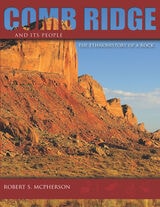
Comb Ridge and Its People
The Ethnohistory of a RockRobert McPherson
Utah State University Press, 2009
West of the Four Corners and east of the Colorado River, in southeastern Utah, a unique one-hundred-mile-long, two-hundred-foot-high, serrated cliff cuts the sky. Whether viewed as barrier wall or sheltering sanctuary, Comb Ridge has helped define life and culture in this region for thousands of years. Today, the area it crosses is still relatively remote, though an important part of a scenic complex of popular tourist destinations that includes Natural Bridges National Monument and Grand Gulch just to the west, Glen Canyon National Recreation Area and Lake Powell a bit farther west, Canyonlands National Park to the north, Hovenweep National Monument to the east, and the San Juan River and Monument Valley to the south. Prehistorically Comb Ridge split an intensively used Ancient Puebloan homeland. It later had similar cultural—both spiritual and practical—significance to Utes, Paiutes, and Navajos and played a crucial role in the history of European American settlement. To tell the story of this rock that is unlike any other rock in the world and the diverse people whose lives it has affected, Robert S. McPherson, author of multiple books on Navajos and on the Four Corners region, draws on the findings of a major, federally funded project to research the cultural history of Comb Ridge. He carries the story forward to contention over present and future uses of Comb Ridge and the spectacular country surrounding it.
The book is the winner of the 2009 Utah Book Award for Nonfiction.
Combat Chaplain
A Thirty-Year Vietnam BattleJames D. Johnson
University of North Texas Press, 2001
Combat Zoning
Military Land-Use Planning In NevadaDavid Loomis
University of Nevada Press, 1993
Loomis provides a clear and disturbing picture of military land-use planning and how it has affected residents in Nevada. He contends that a lack of citizen participation in the development of land-use plans is a weakness in the planning process and that both the military and the citizenry should take an active role to avoid future conflicts.
Combat in an Age of Terror
The 7th Infantry Regiment in America's Modern Wars, Korea through IraqJohn C. McManus
University of Missouri Press, 2025
In this in-depth history of the 7th, acclaimed combat historian John C. McManus takes readers from cold war campaigns through the global war on terror, chronicling the modern era of the regiment’s amazing history. Covering desperate fights for Korean hills, the struggle for control of steamy Vietnamese villages, and the lightning campaign of Desert Storm, the narrative culminates in the 7th’s toils in the Middle East. More than anything, McManus’s chronicle of the 7th portrays these unremarkable, ordinary individuals as the heart and soul of the United States Army. McManus gives a complete account of their struggles, anguish, fears, sacrifices, triumphs, and pride, providing a compelling glimpse not only of these soldiers’ journey through American history, but of the shaping of our nation as a whole.
Based on nearly a decade of research, from archives to battlefield visits to McManus’s personal interviews with countless 7th Infantry soldiers, and illustrated with maps and sixteen pages of photographs, this book is a definitive and moving story of Americans in combat.
Combating Jihadism
American Hegemony and Interstate Cooperation in the War on TerrorismBarak Mendelsohn
University of Chicago Press, 2009
Combating Mountaintop Removal
New Directions in the Fight against Big CoalBryan T. McNeil
University of Illinois Press, 2012
Combating Teen Smoking
Research and Policy StrategiesPeter D. Jacobson, Paula M. Lantz, Kenneth E. Warner, Jeffrey Wasserman, Harold A. Pollack, and Alexis K. Ahlstrom
University of Michigan Press, 2001
Combative Politics
The Media and Public Perceptions of LawmakingMary Layton Atkinson
University of Chicago Press, 2017
By the time a bill is pushed through Congress or ultimately defeated, we’ve often been exposed to weeks, months—even years—of media coverage that underscores the unpopular process of policymaking, and Mary Layton Atkinson argues that this leads us to reject the bill itself. Contrary to many Americans’ understandings of the policymaking process, the best answer to a complex problem is rarely self-evident, and politicians must weigh many potential options, each with merits and drawbacks. As the public awaits a resolution, the news media tend to focus not on the substance of the debate but on descriptions of partisan combat. This coverage leads the public to believe everyone in Washington has lost sight of the problem altogether and is merely pursuing policies designed for individual political gain. Politicians in turn exacerbate the problem when they focus their objections to proposed policies on the lawmaking process, claiming, for example, that a bill is being pushed through Congress with maneuvers designed to limit minority party input. These negative portrayals become linked in many people’s minds with the policy itself, leading to backlash against bills that may otherwise be seen as widely beneficial. Atkinson argues that journalists and educators can make changes to help inoculate Americans against the idea that debate always signifies dysfunction in the government. Journalists should strive to better connect information about policy provisions to the problems they are designed to ameliorate. Educators should stress that although debate sometimes serves political interests, it also offers citizens a window onto the lawmaking process that can help them evaluate the work their government is doing.
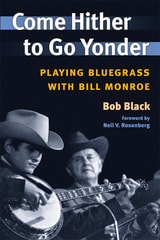
Come Hither to Go Yonder
Playing Bluegrass with Bill MonroeBob Black
University of Illinois Press, 2005
Bob Black was a member of Bill Monroe's Blue Grass Boys in the 1970s. Black's memoir of his time with the man he called the Chief offers the unique vantage point of a man who traveled and performed extensively with the Father of Bluegrass at a time when the music had opened up to new audiences--and Monroe had become a living legend.
Both role model and taskmaster, Monroe exerted a profound influence on Black and the musicians who have carried on the bluegrass tradition. In addition to Black's one-of-a-kind story, Come Hither to Go Yonder includes complete listing of Black's appearances with Monroe, recollections of the memorable experiences they shared while working together, descriptions of other important musicians and bands, and suggestions for further reading and listening.
Offering a rare perspective on the creative forces that drove one of America's greatest composers and musical innovators, Come Hither to Go Yonder rewards fans of Bill Monroe and bluegrass while offering an insider's view of a crucial time in the music's history.
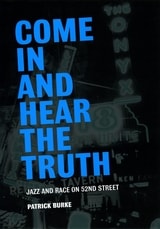
Come In and Hear the Truth
Jazz and Race on 52nd StreetPatrick Burke
University of Chicago Press, 2008
Come In and Hear the Truth uses a range of materials, from classic photographs to original interviews with musicians, to bring the street’s vibrant history to life and to shed new light on the interracial contacts and collaborations it generated.
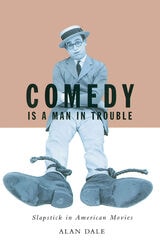
Comedy Is A Man In Trouble
Slapstick In American MoviesAlan Dale
University of Minnesota Press, 2002
An enthusiast’s look at the art of physical comedy—now in paperback!
Legendary screen comedian Jerry Lewis once said, "The premise of all comedy is a man in trouble." The films that endeared Lewis and others to us hinged on the physical assault of their hero, the pie in the face or slip on the banana peel that reduced the movie star to the level of the audience. Alan Dale presents a lively and accessible look at slapstick, a form of comedy with roots in the circus and vaudeville that has been refashioned by actors ranging from Buster Keaton to the Marx Brothers, from Katharine Hepburn to Jim Carrey.
Winner of the Theater Library Association’s Special Jury Prize for Distinguished Achievement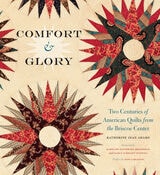
Comfort and Glory
Two Centuries of American Quilts from the Briscoe CenterBy Katherine Jean Adams
University of Texas Press, 2016
Quilts bear witness to the American experience. With a history that spans the early republic to the present day, this form of textile art can illuminate many areas of American life, such as immigration and settlement, the development of our nation’s textile industry, and the growth of mass media and marketing. In short, each quilt tells a story that is integral to America’s history.
Comfort and Glory introduces an outstanding collection of American quilts and quilt history documentation, the Winedale Quilt Collection at the Briscoe Center for American History at the University of Texas at Austin. This volume showcases 115 quilts—nearly one-quarter of the Winedale Collection—through stunning color photographs (including details) and essays about each quilt’s history and construction. The selections span more than two hundred years of American quiltmaking and represent a broad range of traditional styles and functions. Utility quilts, some worn or faded, join show quilts, needlework masterpieces, and “best” quilts saved for special occasions. Texas quilts, including those made in or brought to Texas during the nineteenth century, constitute a significant number of the selections. Color photographs of related documents and material culture objects from the Briscoe Center’s collections—quilting templates, a painted bride’s box, sheet music, a homespun dress, a brass sewing bird, and political ephemera, among them—enrich the stories of many of the quilts.
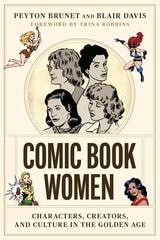
Comic Book Women
Characters, Creators, and Culture in the Golden AgeBy Peyton Brunet and Blair Davis; foreword by Trina Robbins
University of Texas Press, 2022
2023 Ray and Pat Browne Best Single Work by One or More Authors in Popular and American Culture, Popular and American Culture Association (PACA) / Popular Culture Association (PCA)
2023 Ray and Pat Browne Best Edited Reference/Primary Source Work in Popular Culture Award (Honorable Mention), Popular and American Culture Association (PACA) / Popular Culture Association (PCA)
2023 Peter C. Rollins Book Award, Southwest Texas Popular Culture and American Culture Associations (SWPACA)
A revisionist history of women's pivotal roles as creators of and characters in comic books.
The history of comics has centered almost exclusively on men. Comics historians largely describe the medium as one built by men telling tales about male protagonists, neglecting the many ways in which women fought for legitimacy on the page and in publishers’ studios. Despite this male-dominated focus, women played vital roles in the early history of comics. The story of how comic books were born and how they evolved changes dramatically when women like June Tarpé Mills and Lily Renée are placed at the center rather than at the margins of this history, and when characters such as the Black Cat, Patsy Walker, and Señorita Rio are analyzed.
Comic Book Women offers a feminist history of the golden age of comics, revising our understanding of how numerous genres emerged and upending narratives of how male auteurs built their careers. Considering issues of race, gender, and sexuality, the authors examine crime, horror, jungle, romance, science fiction, superhero, and Western comics to unpack the cultural and industrial consequences of how women were represented across a wide range of titles by publishers like DC, Timely, Fiction House, and others. This revisionist history reclaims the forgotten work done by women in the comics industry and reinserts female creators and characters into the canon of comics history.
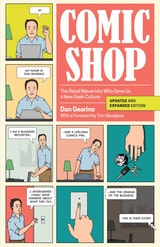
Comic Shop
The Retail Mavericks Who Gave Us a New Geek CultureDan Gearino
Ohio University Press, 2019
The modern comic book shop was born in the early 1970s. Its rise was due in large part to Phil Seuling, the entrepreneur whose direct market model allowed shops to get comics straight from the publishers. Stores could then better customize their offerings and independent publishers could access national distribution. Shops opened up a space for quirky ideas to gain an audience and helped transform small-press series, from Teenage Mutant Ninja Turtles to Bone, into media giants.
Comic Shop is the first book to trace the history of these cultural icons. Dan Gearino brings us from their origins to the present-day, when the rise of digital platforms and a changing retail landscape have the industry at a crossroads. When the book was first published in 2017, Gearino had spent a year with stores around the country, following how they navigated the business. For this updated and expanded paperback edition, he covers the wild retail landscape of 2017 and 2018, a time that was brutal for stores and rich for comics as an art form.
Along the way he interviews pioneers of comics retailing and other important players, including many women; top creators; and those who continue to push the business in new directions. A revised guide to dozens of the most interesting shops around the United States and Canada is a bonus for fans.
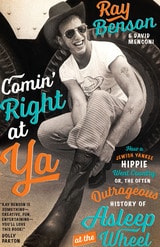
Comin' Right at Ya
How a Jewish Yankee Hippie Went Country, or, the Often Outrageous History of Asleep at the WheelBy Ray Benson, and David Menconi
University of Texas Press, 2015
A who’s who of American popular music fills this lively memoir, in which Ray Benson recalls how a Philadelphia Jewish hippie and his bandmates in Asleep at the Wheel turned on generations of rock and country fans to Bob Wills–style Western swing.
A six-foot-seven-inch Jewish hippie from Philadelphia starts a Western swing band in 1970, when country fans hate hippies and Western swing. It sounds like a joke but—more than forty years, twenty-five albums, and ten Grammy Awards later—Asleep at the Wheel is still drawing crowds around the world. The roster of musicians who’ve shared a stage with the Wheel is a who’s who of American popular music—Van Morrison, Willie Nelson, Dolly Parton, Emmylou Harris, George Strait, Vince Gill, Lyle Lovett, and so many more. And the bandleader who’s brought them all together is the hippie that claimed Bob Wills’s boots: Ray Benson.
In this hugely entertaining memoir, Benson looks back over his life and wild ride with Asleep at the Wheel from the band’s beginning in Paw Paw, West Virginia, through its many years as a Texas institution. He vividly recalls spending decades in a touring band, with all the inevitable ups and downs and changes in personnel, and describes the making of classic albums such as Willie and the Wheel and Tribute to the Music of Bob Wills and the Texas Playboys. The ultimate music industry insider, Benson explains better than anyone else how the Wheel got rock hipsters and die-hard country fans to love groovy new-old Western swing. Decades later, they still do.
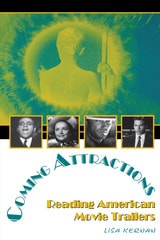
Coming Attractions
Reading American Movie TrailersBy Lisa Kernan
University of Texas Press, 2004
Movie trailers—those previews of coming attractions before the start of a feature film—are routinely praised and reviled by moviegoers and film critics alike: "They give away too much of the movie." "They're better than the films." "They only show the spectacular parts." "They lie." "They're the best part of going to the movies." But whether you love them or hate them, trailers always serve their purpose of offering free samples of a film to influence moviegoing decision-making. Indeed, with their inclusion on videotapes, DVDs, and on the Internet, trailers are more widely seen and influential now than at any time in their history.
Starting from the premise that movie trailers can be considered a film genre, this pioneering book explores the genre's conventions and offers a primer for reading the rhetoric of movie trailers. Lisa Kernan identifies three principal rhetorical strategies that structure trailers: appeals to audience interest in film genres, stories, and/or stars. She also analyzes the trailers for twenty-seven popular Hollywood films from the classical, transitional, and contemporary eras, exploring what the rhetorical appeals within these trailers reveal about Hollywood's changing conceptions of the moviegoing audience. Kernan argues that movie trailers constitute a long-standing hybrid of advertising and cinema and, as such, are precursors to today's heavily commercialized cultural forms in which art and marketing become increasingly indistinguishable.

Coming Home to China
Yi-Fu Tuan
University of Minnesota Press, 2007
In the summer of 2005, distinguished geographer Yi-Fu Tuan ventured to China to speak at an international architectural conference, returning for the first time to the place he had left as a child sixty-four years before. He traveled from Beijing to Shanghai, addressing college audiences, floating down the Yangtze River on a riverboat, and visiting his former home in Chongqing.
In this enchanting volume, Tuan’s childhood memories and musings on the places encountered during this homecoming are interspersed with new lectures, engaging overarching principles of human geography as well as the changing Chinese landscape. Throughout, Tuan’s interactions with his hosts, with his colleague’s children, and even with a garrulous tour guide, offer insights into one who has spent his life studying place, culture, and self.
At the beginning of his trip, Tuan wondered if he would be a stranger among people who looked like him. By its end, he reevaluates his own self-definition as a hyphenated American and sheds new light on human identity’s complex roots in history, geography, and language.
Yi-Fu Tuan is author of Cosmos and Hearth, Dear Colleague, and Space and Place, all from Minnesota. He retired from the University of Wisconsin-Madison in 1998.
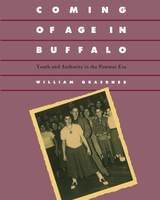
Coming Of Age In Buffalo
Youth and Authority in the Postwar EraWilliam Graebner
Temple University Press, 1993
Pegged pants poodle skirts, record hops, rock ‘n’ roll, soda shops: in the interval between the bombing of Hiroshima and the assassination of John F. Kennedy, these were distinguishing marks of the "typical" postwar teenager-if there was a "typical" teenager. In this richly illustrated account of Youth in postwar Buffalo, William Graebner argues that the so-called Youth culture was really a variety of "disparate subcultures, united by age but in conflict over class, race, ethnicity, and gender." Using scrap books, oral histories, school Yearbooks, and material culture, he shows how Buffalo teenagers were products of diverse and often antagonistic subcultures. The innocuous strains of "Rock Around the Clock" muffled the seething gang loyalties and countercultural influence of James Dean, Marlon Brando, and Buffalo’s own "Hound Dog" Lorenz. Racial antipathies once held in check spilled out on Memorial Day, 1956, when white and black Youth clashed on board a take Erie pleasure boat in a "riot" that recast the city’s race relations for decades to come.
While exploring the diversity within Youth subcultures, Graebner examines the ways in which adults—educators, clergy, representatives of the media, and other authorities—sought to contain this generation. The Hi-Teen Club, Buffalo Plan dress code, record hops, graduation ceremonies, film censorship, and restrictions on secret societies and on corner lounging were all forms of social engineering that reinforced social and economic boundaries that were at the heart of the dominant culture. The prevailing adult influence on activities, attitudes, and style served to redirect the "misguided Youth" of the fifties and to obliterate their image from public memory. Although the media still portrays this decade as the golden age of cultural homogeneity, the diversity in musical preferences, hair and clothing styles, and allegiances to disc jockeys suggest the wide diversity of Youth experiences and challenges to adult authority that were part of coming of age in postwar America.