Results by title
18316 books match the query 'United states' and 1261 start with c
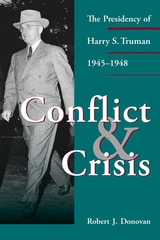
Conflict and Crisis
The Presidency of Harry S. Truman, 1945-1948Robert J. Donovan
University of Missouri Press, 1996
“It was a quiet on the second floor. The vice-president walked solemnly into Mrs. Roosevelt’s sitting room, where she waited, grave and calm. With her was her daughter, Mrs. Anna Roosevelt Boettiger, her husband, Colonel John Boettiger, and Stephan Early. Truman knew at a glance that his premonition had been true. Mrs. Roosevelt came forward directly and put her arm on his shoulder.
‘Harry, the President is dead.’”
Robert J. Donovan’s Conflict and Crisis presents a detailed account of Harry S. Truman’s presidency from 1945-1948.
Confluences
Religion, Health, and Diversity in MissouriSigne Cohen
University of Missouri Press, 2025
The contributors to this volume explore connections between religious affiliation, race, gender, ethnicity, epidemiology, and attitudes towards health and medicine in Missouri from the nineteenth century to the present day. They ask what role religious belief systems play in healthcare outcomes and offer important arguments for building a dialogue between faith communities and medical caregivers. Centering on Missouri as a site for religious transformation and diversity, this volume documents how religious perspectives shape contemporary America.
Initial chapters outline the religious history of Missouri, relaying the history of medicine in the region before and after Missouri statehood. Subsequent essays document Missouri’s religious diversity by contemplating Native American, Asian American, and African American religious experiences in Missouri, intentionally recovering and respectfully contextualizing understudied events and forgotten individuals. The volume’s remaining essays consider religious responses to the Cholera, Influenza, and Covid-19 epidemics and show how Native American, Euro-American, and African American Missourians have transformed U.S. history and healthcare. Collectively, the essays in this book demonstrate that religious freedom, medical knowledge, and transnational encounters are woven into the historical fabric of the region.
Featuring essays by experts in Religious Studies and Health Sciences, this volume will be of interest to scholars of religion, sociology, public health, and medicine, as well as readers more generally interested in the history and culture of Missouri.
Confounded Expectations
The Law's Struggle with Personal ResponsibilityGeorge W. Jarecke and Nancy K. Plant
Southern Illinois University Press, 2000
George W. Jarecke and Nancy K. Plant present a selection of cases across a broad spectrum of American law to demonstrate that our society relies inappropriately on the legal system to cure ills the system was not designed to address.
Jarecke and Plant note that while we in the United States worry considerably about the problem of individual assumption of responsibility—whether for personal mistakes, financial setbacks, or pure bad luck—we appear uneasy about the concept and unclear about what it means on a daily basis. Not only are we incapable of accepting personal responsibility; we barely know what it means to do so.
Mistakenly, we turn to the legal system to solve this dilemma. Yet our laws as our legislators write them, as judges interpret them, as lawyers argue them, and as juries apply them send mixed messages about whether and how we should exercise personal responsibility.
Each chapter of Confounded Expectations features one main case to explain one legal theory, with other cases noted as examples of facets of each theory. To demonstrate the law that requires merchants to guarantee the quality of their products, for example, Jarecke and Plant discuss the case of the band mothers whose fund-raising luncheon menu included turkey salad contaminated by salmonella. Peripheral cases include a horse falsely sold as a gelding, a riding mower that tipped over when used as instructed, makeup that was guaranteed to be safe but caused a rash, and pigs sick with hog cholera.
Confronting AIDS through Literature
The Responsibilities of RepresentationEdited by Judith Laurence Pastore
University of Illinois Press, 1993
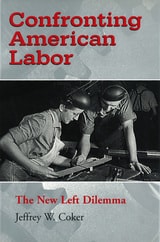
Confronting American Labor
The New Left DilemmaJeffrey W. Coker
University of Missouri Press, 2002
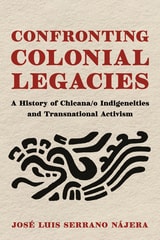
Confronting Colonial Legacies
A History of Chicana/o Indigeneities and Transnational ActivismJosé Luis Serrano Nájera
University of Arizona Press, 2026
This work offers a groundbreaking account of how Chicana/o activists have engaged in sustained efforts to reclaim Indigenous identity through political struggle, cultural expression, and transnational solidarity.
Author José Luis Serrano Nájera takes an in-depth look at the history of Chicana/o indigeneity, starting with the Chicana/o Movement of the 1960s and 1970s and through twenty-first century transnational activism and solidarity movements. Serrano Nájera reveals how claims to indigeneity were rooted in reciprocal relationships with Indigenous communities and driven by a shared commitment to decolonization. Through chapters on visual and performing arts, ceremony, education, and grassroots organizing, this book challenges reductive narratives of cultural appropriation and instead foregrounds the complex and historically grounded nature of Chicana/o indigeneity.
Drawing on extensive archival research, Serrano Nájera demonstrates how Chicana/o indigeneity has contributed to broader Indigenous rights movements, including efforts that culminated in the 2007 United Nations Declaration on the Rights of Indigenous Peoples. This work highlights the intercontinental dimensions of Chicana/o activism and offers a vital source for scholars and students in Chicana/o studies, Indigenous studies, ethnic studies, history, and political science. Confronting Colonial Legacies is a compelling call to rethink the politics of identity, sovereignty, and solidarity across the Americas.
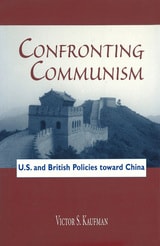
Confronting Communism
U.S. and British Policies toward ChinaVictor S. Kaufman
University of Missouri Press, 2001
In Confronting Communism, Victor S. Kaufman examines how the United States and Great Britain were able to overcome serious disagreements over their respective approaches toward Communist China. Providing new insight into the workings of alliance politics, specifically the politics of the Anglo- American alliance, the book covers the period from 1948—a year before China became an area of contention between London and Washington—through twenty years of division to the gradual resolution of Anglo-American divergences over the People's Republic of China beginning in the mid-1960s. It ends in 1972, the year of President Richard Nixon's historic visit to the People's Republic, and also the year that Kaufman sees as bringing an end to the Anglo-American differences over China.
Kaufman traces the intricate and subtle pressures each ally faced in determining how to approach Beijing. The British aspect is of particular interest because Britain viewed itself as being within "three circles": Western Europe, the Atlantic alliance, and the Commonwealth. Important as well to British policy with respect to China was the concern about being dragged into another Korean-style conflict. The impact of decisions on these "circles," as well as the fear of another war, appeared time and again in Britain's decision making.
Kaufman shows how the alliance avoided division over China largely because Britain did the majority of the compromising. Reliant upon the United States militarily and financially, most U.K. officials made concessions to their Washington counterparts. Readers of Confronting Communism will come away with a better understanding of alliance politics. They will learn that such decision making, for both Great Britain and the United States, was a highly complex process, one that posed serious challenges to the Anglo-American alliance. Despite those challenges, accord between London and Washington prevailed.
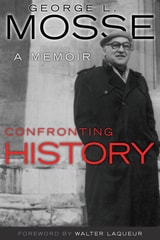
Confronting History
A MemoirGeorge L. Mosse; Foreword by Walter Laqueur
University of Wisconsin Press, 2000
Confronting History describes Mosse's opulent childhood in Weimar Berlin; his exile in Paris and England, including boarding school and study at Cambridge University; his second exile in the U.S. at Haverford, Harvard, Iowa, and Wisconsin; and his extended stays in London and Jerusalem. Mosse discusses being a Jew and his attachment to Israel and Zionism, and he addresses his gayness, his coming out, and his growing scholarly interest in issues of sexuality. This touching memoir—told with the clarity, passion, and verve that entranced thousands of Mosse's students—is guided in part by his belief that "what man is, only history tells" and, most of all, by the importance of finding one's self through the pursuit of truth and through an honest and unflinching analysis of one's place in the context of the times.
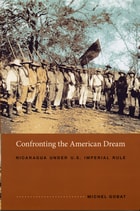
Confronting the American Dream
Nicaragua under U.S. Imperial RuleMichel Gobat
Duke University Press, 2005
Gobat focuses primarily on the reactions of the elites to Americanization, because the power and identity of these Nicaraguans were the most significantly affected by U.S. imperial rule. He describes their adoption of aspects of “the American way of life” in the mid–nineteenth century as strategic rather than wholesale. Chronicling the U.S. occupation of 1912–33, he argues that the anti-American turn of Nicaragua’s most Americanized oligarchs stemmed largely from the efforts of U.S. bankers, marines, and missionaries to spread their own version of the American dream. In part, the oligarchs’ reversal reflected their anguish over the 1920s rise of Protestantism, the “modern woman,” and other “vices of modernity” emanating from the United States. But it also responded to the unintended ways that U.S. modernization efforts enabled peasants to weaken landlord power. Gobat demonstrates that the U.S. occupation so profoundly affected Nicaragua that it helped engender the Sandino Rebellion of 1927–33, the Somoza dictatorship of 1936–79, and the Sandinista Revolution of 1979–90.
Congregation and Community
Ammerman, Nancy
Rutgers University Press, 1996
Change--in population, economy, and culture--is sweeping through American communities. Corner groceries are stocking new foods. New roads are being built and Main Streets abandoned. Schools have come and gone, and old friends move away as strangers arrive. But in every community, no matter how volatile, religious institutions provide for their members places of moral guidance and spiritual nurture, civic participation, and identity.
How do congregations react to significant community change? Why do some religious institutions decline in the face of racial integration while others adapt and grow? How do congregations make sense of economic distress? Do they provide havens from community upheaval or vehicles for change? Congregation and Community is the most comprehensive study to date of congregations in the face of community transformation. Nancy Ammerman and her colleagues include stories of over twenty congregations in nine communities from across the nation, communities with new immigrant populations, growing groups of gays and lesbians, rapid suburbanization, and economic dislocations.
With almost half of the nation's population attending religious services each week, it is impossible to understand change in American society without a close look at congregations. Congregation and Community will exist as a standard resource for years to come, and clergy, academics, and general readers alike will benefit from its insights.
Congregations in Conflict
The Battle over HomosexualityHartman, Keith
Rutgers University Press, 1996
A Methodist church puts its minister on trial after he marches in a gay rights parade. A Quaker meeting struggles to decide whether to marry a lesbian couple. An entire congregation is thrown out of the Southern Baptist Convention for deciding that a gay divinity student had a sincere calling to the ministry, and an order of celibate monks comes out of the closet. An Episcopal priest blesses two same-sex relationships--then a closeted gay lawyer leads the charge to have him fired.
Homosexuality is the most divisive issue facing churches today. Like the issue of slavery 150 years ago, it is a matter that ignites passionate convictions on both sides, a matter that threatens to turn members of the same faith against each other, to divide congregations, and possibly even to fragment several denominations. Like slavery, it is an issue that calls up basic questions about what it means to be a Christian. How does one know right from wrong? Is the Bible fallible? Do good Christians always follow their church's teachings, or are they allowed to think for themselves on moral issues? And to what source does one finally look to determine what God really wants?
While many books have been written analyzing the scriptural and theological dimensions of the conflict, none has yet shown how it is being played out in the pews. Congregations in Conflict examines nine churches that were split by disagreements over gay and lesbian issues, and how the congregations resolved them.
Hartman explores in very readable prose how different denominations have handled their conflicts and what it says about the nature of their faith. He shows some churches coming through their struggles stronger and more unified, while others irrevocably split. Most importantly, he illuminates how people with a passionate clash of beliefs can still function together as a community of faith.
Congress Overwhelmed
The Decline in Congressional Capacity and Prospects for ReformEdited by Timothy M. LaPira, Lee Drutman, and Kevin R. Kosar
University of Chicago Press, 2020
The essays in Congress Overwhelmed assess Congress’s declining capacity and explore ways to upgrade it. Some provide broad historical scope. Others evaluate the current decay and investigate how Congress manages despite the obstacles. Collectively, they undertake the most comprehensive, sophisticated appraisal of congressional capacity to date, and they offer a new analytical frame for thinking about—and improving—our underperforming first branch of government.
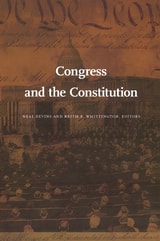
Congress and the Constitution
Neal Devins and Keith E. Whittington, eds.
Duke University Press, 2005
Several contributors offer wide-ranging accounts of the workings of Congress. They look at lawmakers’ attitudes toward Congress’s role as a constitutional interpreter, the offices within Congress that help lawmakers learn about constitutional issues, Congress’s willingness to use its confirmation power to shape constitutional decisions by both the executive and the courts, and the frequency with which congressional committees take constitutional questions into account. Other contributors address congressional deliberation, paying particular attention to whether Congress’s constitutional interpretations are sound. Still others examine how Congress and the courts should respond to one another’s decisions, suggesting how the courts should evaluate Congress’s work and considering how lawmakers respond to Court decisions that strike down federal legislation. While some essayists are inclined to evaluate Congress’s constitutional interpretation positively, others argue that it could be improved and suggest institutional and procedural reforms toward that end. Whatever their conclusions, all of the essays underscore the pervasive and crucial role that Congress plays in shaping the meaning of the Constitution.
Contributors. David P. Currie, Neal Devins, William N. Eskridge Jr.. John Ferejohn, Louis Fisher, Elizabeth Garrett, Michael J. Gerhardt, Michael J. Klarman, Bruce G. Peabody, J. Mitchell Pickerill, Barbara Sinclair, Mark Tushnet, Adrian Vermeule, Keith E. Whittington, John C. Yoo
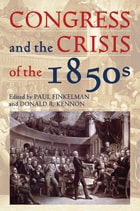
Congress and the Crisis of the 1850s
Paul Finkelman
Ohio University Press, 2011
During the long decade from 1848 to 1861 America was like a train speeding down the track, without an engineer or brakes. The new territories acquired from Mexico had vastly increased the size of the nation, but debate over their status—and more importantly the status of slavery within them—paralyzed the nation. Southerners gained access to the territories and a draconian fugitive slave law in the Compromise of 1850, but this only exacerbated sectional tensions. Virtually all northerners, even those who supported the law because they believed that it would preserve the union, despised being turned into slave catchers. In 1854, in the Kansas-Nebraska Act, Congress repealed the ban on slavery in the remaining unorganized territories. In 1857, in the Dred Scott case, the Supreme Court held that all bans on slavery in the territories were unconstitutional. Meanwhile, northern whites, free blacks, and fugitive slaves resisted the enforcement of the 1850 fugitive slave law. In Congress members carried weapons and Representative Preston Brooks assaulted Senator Charles Sumner with a cane, nearly killing him. This was the decade of the 1850s and these were the issues Congress grappled with.
This volume of new essays examines many of these issues, helping us better understand the failure of political leadership in the decade that led to the Civil War.
Contributors
Spencer R. Crew
Paul Finkelman
Matthew Glassman
Amy S. Greenberg
Martin J. Hershock
Michael F. Holt
Brooks D. Simpson
Jenny Wahl
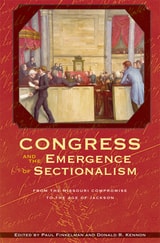
Congress and the Emergence of Sectionalism
From the Missouri Compromise to the Age of JacksonPaul Finkelman
Ohio University Press, 2008
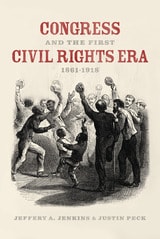
Congress and the First Civil Rights Era, 1861-1918
Jeffery A. Jenkins and Justin Peck
University of Chicago Press, 2021
The authors examine in detail how the Republican Party slowly withdrew its support for a meaningful civil rights agenda, as well as how Democrats and Republicans worked together to keep civil rights off the legislative agenda at various points. In doing so, Jenkins and Peck show how legal institutions can be used both to liberate and protect oppressed minorities and to assert the power of the white majority against those same minority groups.
Congress and the Nuclear Freeze
An Inside Look at the Politics of a Mass MovementDouglas Waller
University of Massachusetts Press, 1987
Congress and the People’s Contest
The Conduct of the Civil WarPaul Finkelman
Ohio University Press, 2018
Congress and the Rent-Seeking Society
Glenn R. Parker
University of Michigan Press, 1996
Skillfully blending historical data with microeconomic theory, Glenn Parker argues that the incentives for congressional service have declined over the years, and that with that decline has come a change in the kind of person who seeks to enter Congress. The decline in the attractiveness of Congress is a consequence of congressional careerists and of the growth in the rent-seeking society, a term which describes the efforts of special interests to obtain preferential treatment by using the machinery of government--legislation and regulations.
Parker provides a fresh and controversial perspective to the debate surrounding the relative merits of career or amateur politicians. He argues that driving career politicians from office can have pernicious effects on the political system: it places the running of Congress in the hands of amateur politicians, who stand to lose little if they are found engaging in illegal or quasi-legal practices. On the other hand, career legislators risk all they have invested in their long careers in public service if they engage in unsavory practices. As Parker develops this controversial argument, he provides a fresh perspective on the debate surrounding the value of career versus amateur politicians.
Little attention has been given to the long-term impact of a rent-seeking society on the evolution of political institutions. Parker examines empirically and finds support for hypotheses that reflect potential symptoms of adverse selection in the composition of Congress: (1) rent-seeking politicians are more inclined than others to manipulate institutional arrangements for financial gain; (2) the rent-seeking milieu of legislators are more likely to engage in rent-seeking activity than earlier generations; (3) and the growth of rent-seeking activity has hastened the departure of career legislators.
Glenn R. Parker is Distinguished Research Professor, Florida State University.
Congress in Reverse
Repeals from Reconstruction to the PresentJordan M. Ragusa and Nathaniel A. Birkhead
University of Chicago Press, 2020
Congress in Reverse is the first book to attempt to answer these questions. Jordan M. Ragusa and Nathaniel A. Birkhead examine when and why existing statutes are successfully “undone,” arguing that repeals are most common when the parties are united on the issue—which was not the case when it came to Obamacare for the Republican Party—and the majority party wins control of Congress after a long stint in the minority. By shifting focus from the making of laws to their un-making, Congress in Reverse opens up a new arena for studying legislative activity in Congress.
Congress of States
Proceedings of the Provisional Congress of the Confederate States of AmericaR. David Carlson
University of Alabama Press, 2023
A landmark publication of public reports that reveal the founding of the Confederate government
Past publications of the proceedings of the Confederate Congress have focused on the public sessions of the Regular Confederate States Congress that met in Richmond, Virginia from February 1862 to March 1865. Omitted were the formative early sessions of the Montgomery, Alabama and Richmond, Virginia Provisional Congresses of 1861 and 1862. In Congress of States, David Carlson reveals these critical early meetings.
To illuminate this pivot point in American and Southern history, Carlson has drawn on detailed and often verbatim minutes reported in Richmond, Montgomery, Charleston, New Orleans, Savannah, and Augusta newspapers, assembling here a unique set of transcriptions that reveal the birth of the Confederate government.
Congress of States provides an introduction to the Provisional Confederate Congress and the purpose of this work relative to the Southern Historical Society’s landmark 1923 publication “Proceedings of the Confederate Congress,” which detailed the 1862–1865 Regular Confederate Congress. He also includes a chronology outlining the major events of the secession crisis, annotated minutes for the Provisional Confederate Congress’s five sessions, appendices featuring the leadership and committees of the Provisional Congress, and fascinating examples of the proposed Confederate emblem and flags debated by the delegates.
A key set of primary sources that scholars, historians, librarians, and political scientists will value for years to come, Congress of States will also be essential reading for the general reader interested in American and Southern history, the Antebellum South, and the Civil War.
Congress, the President, and the Federal Reserve
The Politics of American Monetary Policy-MakingIrwin L. Morris
University of Michigan Press, 2002
Current formal theories of the general policy-making process are utilized to construct an explanatory framework that identifies the mechanisms through which congressional and executive influence is exercised. The theoretical framework presented in the text also helps to explain the political dynamics of several of the most significant policy decisions of the Federal Reserve during the last half-century. In addition, this book provides a unique perspective on the manner in which Fed policymakers attempt to shield themselves from unwelcome political influence.
While the main focus of Congress, the President, and the Federal Reserve is monetary policy-making, it also speaks to the political nature of policy-making in a more general sense and provides a guide for the future study of the political dynamics in a wide variety of substantive policy areas. Thus it will interest not only political scientists and economists interested in monetary policy-making specifically but also those interested in the nature of public policy-making more generally.
Irwin L. Morris is Assistant Professor of Political Science, University of Maryland.
Congressional Communication
Content and ConsequencesDaniel Lipinski
University of Michigan Press, 2004
--Bruce Oppenheimer, Vanderbilt University
"The communication between representatives and their constituents is where election strategy and policy explanations are merged and, until now, we have had only anecdotal evidence. Lipinski's book sheds light on this important part of American political life."
--David Brady, Stanford University
Congressional Communication challenges the notion that legislators "run against Congress" by routinely denigrating the institution. Using a unique, systematic analysis of the communication from members of Congress to their constituents over a five-year period, Daniel Lipinski challenges this notion, demonstrating key partisan differences in representatives' portrayals of congressional activities. While members of the majority party tend to report that the institution-and, hence, their party-is performing well, members of the minority party are more likely to accuse Congress of doing a poor job.
The findings in Congressional Communication offer the first strong empirical evidence from the electoral arena in support of controversial party government theories. Moving beyond previous studies that look only at legislators' messages, Lipinski's research also reveals the effects of these politically strategic claims on voters, whose interpretations don't necessarily bear out the legislators' intended effects.
Daniel Lipinski is Assistant Professor of Political Science at the University of Tennessee.
Congressional Parties, Institutional Ambition, and the Financing of Majority Control
Eric S. Heberlig and Bruce A. Larson
University of Michigan Press, 2013
With the need for ever increasing sums of money to fuel the ongoing campaign for majority control, both Republicans and Democrats have made large donations to the party and its candidates mandatory for members seeking advancement within party and congressional committee hierarchies. Eric S. Heberlig and Bruce A. Larson analyze this development and discuss its implications for American government and democracy. They address the consequences of selecting congressional leaders on the basis of their fundraising skills rather than their legislative capacity and the extent to which the battle for majority control leads Congress to prioritize short-term electoral gains over long-term governing and problem-solving.
Congressional Realignment, 1925-1978
By Barbara Sinclair
University of Texas Press, 1982
Ronald Reagan's election in 1980 brought with it a major shift in the composition of the U.S. Congress for the first time in several decades. The subsequent introduction of an enormous amount of new legislation sparked debate among many political observers that a new coalition was being built in American politics and that a significant change in the issues on the agenda before Congress heralded a Republican realignment.
Barbara Sinclair's study is a major contribution to our understanding of realignment politics in the House of Representatives. It also provides important insight into the changes in American political life in the late twentieth century.
Congressional Realignment poses three basic, related questions: What are the sources of agenda change? What determines congressional voting alignments and alignment change? Under what conditions are the barriers to major policy change overcome? Sinclair's answers are impressive both in their scholarship and in the depth and intelligence of her insights.
Congressmen's Voting Decisions
John W. Kingdon
University of Michigan Press, 1989
Conifers of the New England–Acadian Forest
A Cultural HistorySteve Keating
University of Massachusetts Press, 2024
Why did white pine help spark the American Revolution? How did balsam aid the development of germ theory? What does hemlock have to do with making leather? In Conifers of the New England–Acadian Forest, microbiologist Steve Keating explores how conifers influenced the course of human history, writing in a style that is both scientific and accessible.
Keating’s study focuses on one of the most forested and wild ecoregions in North America, which extends into New York, New England, and Canada and includes Acadia National Park. Here, spruces, firs, and cedars of the northern boreal forest mix with hemlocks and pines of more temperate climates. This combination helps create the appearance, aroma, and ecology of the region, and the trees’ unique botanical traits have been ingeniously utilized by numerous peoples including the Iroquois, French explorers, beer brewers, and shipbuilders. Keating concludes with identification guides for the conifers and where they can be found in Acadia National Park.
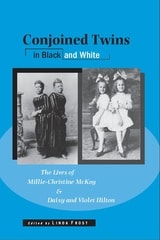
Conjoined Twins in Black and White
The Lives of Millie-Christine McKoy and Daisy and Violet HiltonEdited by Linda Frost
University of Wisconsin Press, 2009
Conjoined Twins in Black and White provides contemporary readers with the twins’ autobiographies, the first two “show histories” to be republished since their original appearance, a previously unpublished novella, and a nineteenth-century medical examination, each of which attempts to define these women and reveal the issues of race, gender, and the body prompted by the twins themselves. The McKoys, born slaves, were kidnapped and taken to Britain, where they worked as entertainers until they were reunited with their mother in an emotional chance encounter. The Hiltons, cast away by their horrified mother at birth, worked the carnival circuit as vaudeville performers until the WWII economy forced them to the burlesque stage. The hardships, along with the triumphs, experienced by these very different sister sets lend insight into our fascination with conjoined twins.
Conjured Bodies
Queer Racialization in Contemporary LatinidadLaura Grappo
University of Texas Press, 2022
2022 Honorable Mention, John Leo & Dana Heller Award for Best Single Work, Anthology, Multi-Authored, or Edited Book in LGBTQ Studies, Popular Culture Association (PCA)
2023 Honorable Mention, Outstanding Book, Latinx Studies Section of Latin American Studies Association (LASA)
2024 Honorable Mention — Best LGBTQ+ Themed Book, Empowering Latino Futures’ International Latino Book Awards
This study argues that powerful authorities and institutions exploit the ambiguity of Latinidad in ways that obscure inequalities in the United States.
Is Latinidad a racial or an ethnic designation? Both? Neither? The increasing recognition of diversity within Latinx communities and the well-known story of shifting census designations have cast doubt on the idea that Latinidad is a race, akin to white or Black. And the mainstream media constantly cover the “browning” of the United States, as though the racial character of Latinidad were self-evident.
Many scholars have argued that the uncertainty surrounding Latinidad is emancipatory: by queering race—by upsetting assumptions about categories of human difference—Latinidad destabilizes the architecture of oppression. But Laura Grappo is less sanguine. She draws on case studies including the San Antonio Four (Latinas who were wrongfully accused of child sex abuse); the football star Aaron Hernandez’s incarceration and suicide; Lorena Bobbitt, the headline-grabbing Ecuadorian domestic-abuse survivor; and controversies over the racial identities of public Latinx figures to show how media institutions and state authorities deploy the ambiguities of Latinidad in ways that mystify the sources of Latinx political and economic disadvantage. With Latinidad always in a state of flux, it is all too easy for the powerful to conjure whatever phantoms serve their interests.
Conjuring Freedom
Music and Masculinity in the Civil War's “Gospel Army”Johari Jabir
The Ohio State University Press, 2017
Reflecting the structure of the ring shout—the counterclockwise song, dance, drum, and story in African American history and culture—Conjuring Freedom offers three new concepts to cultural studies in order to describe the practices, techniques, and implications of the troop’s performance: (1) Black Communal Conservatories, borrowing from Robert Farris Thompson’s “invisible academies” to describe the structural but spontaneous quality of black music-making, (2) Listening Hermeneutics, which accounts for the generative and material affects of sound on meaning-making, and (3) Sonic Politics, which points to the political implications of music’s use in contemporary representations of race and history.

Conjuring Hitler
How Britain and America Made the Third ReichGuido Giacomo Preparata
Pluto Press, 2005
Conjuring Science
Scientific Symbols and Cultural Meanings in American LifeToumey, Christopher P.
Rutgers University Press, 1996
What are the implications for Americans when actors who play doctors on television endorse medical products, or when an entire town in the Midwest prepares for an earthquake based on the specious advice of a zoologist? These are just two of the many questions Christopher Toumey asks in his investigation of the role of science in American culture. Toumey focuses on the ways in which the symbols of science are employed to signify scientific authority in a variety of cases, from the selling of medical products to the making of public policy about AIDS/HIV––a practice he calls "conjuring" science. It is this "conjuring" of the images and symbols of scientific authority that troubles Toumey and leads him to reflect on the history of public understanding and perceptions of science in the United States. He argues that while most Americans invest a great deal of authority in science, there is a vacuum of understanding about scientific knowledge. This gap between belief and understanding greatly influences public policy decisions and democratic processes.
Toumey argues that instead of comprehending scientific knowledge, methods, or standards, most Americans know science only in terms of symbols that stand for science and that stand between people and scientific understanding. He breaks this paradox down into three questions. First, what are the historical conditions that have caused the culture of science to be so estranged from other parts of American culture? Second, how does science fit into American democratic culture today? And third, if the symbols of science are being used to endorse or legitimize certain values and meanings, but not the values and meanings of science, then to what do they refer?
In witty, readable prose, Toumey investigates these questions by presenting five episodes of science in American life: the fluoridation controversies; the 1986 California referendum on AIDS/HIV policy; the cold fusion controversy; the anti-evolution of creationism; and the mad- scientist stories of fiction and film.
Conjuring the Folk
Forms of Modernity in African AmericaDavid G. Nicholls
University of Michigan Press, 2000
In a series of revisionary readings, Nicholls studies how the "folk" is shaped by the ideology of form. He examines the presence of a spectral "folk" in Toomer's modernist pastiche, Cane. He explores how Hurston presents folklore as a contemporary language of resistance in her ethnography, Mules and Men. In Claude McKay's naturalistic romance, Banana Bottom, Nicholls discovers the figuration of an alternative modernity in the heroine's recovery of her lost "folk" identity. He unearths the individualist ethos of Booker T. Washington in two novels by George Wylie Henderson. And he reveals how Richard Wright's photo-documentary history, 12 Million BlackVoices, places the "folk" in a Marxian narrative of modernization toward class-consciousness.
A provocative rereading of the cultural politics of the Harlem Renaissance, Conjuring the Folk offers a new way of understanding literary responses to migration, modernization, and the concept of the "folk" itself.
David G. Nicholls is a post-doctoral fellow in the Center for the Study of Race, Politics, and Culture, University of Chicago.

Connecting Boys With Books 2
Michael Sullivan
American Library Association, 2008
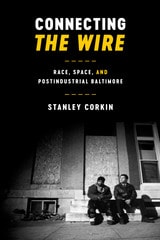
Connecting The Wire
Race, Space, and Postindustrial BaltimoreBy Stanley Corkin
University of Texas Press, 2017
Critically acclaimed as one of the best television shows ever produced, the HBO series The Wire (2002–2008) is a landmark event in television history, offering a raw and dramatically compelling vision of the teeming drug trade and the vitality of life in the abandoned spaces of the postindustrial United States. With a sprawling narrative that dramatizes the intersections of race, urban history, and the neoliberal moment, The Wire offers an intricate critique of a society riven by racism and inequality.
In Connecting The Wire, Stanley Corkin presents the first comprehensive, season-by-season analysis of the entire series. Focusing on the show’s depictions of the built environment of the city of Baltimore and the geographic dimensions of race and class, he analyzes how The Wire’s creator and showrunner, David Simon, uses the show to develop a social vision of its historical moment, as well as a device for critiquing many social “givens.” In The Wire’s gritty portrayals of drug dealers, cops, longshoremen, school officials and students, and members of the judicial system, Corkin maps a web of relationships and forces that define urban social life, and the lives of the urban underclass in particular, in the early twenty-first century. He makes a compelling case that, with its embedded history of race and race relations in the United States, The Wire is perhaps the most sustained and articulate exploration of urban life in contemporary popular culture.
Connecting in College
How Friendship Networks Matter for Academic and Social SuccessJanice M. McCabe
University of Chicago Press, 2016
As McCabe and the students she talks to show, the friendships we forge in college are deeply meaningful, more meaningful than we often give them credit for. They can also vary widely. Some students have only one tight-knit group, others move between several, and still others seem to meet someone new every day. Some students separate their social and academic lives, while others rely on friendships to help them do better in their coursework. McCabe explores how these dynamics lead to different outcomes and how they both influence and are influenced by larger factors such as social and racial inequality. She then looks toward the future and how college friendships affect early adulthood, ultimately drawing her findings into a set of concrete solutions to improve student experiences and better guarantee success in college and beyond.
Connecting the West
Historic Railroad Stops and Stage Stations in Elko County, NevadaShawn Hall
University of Nevada Press, 2002
Shawn Hall's immensely popular guidebooks to Nevada ghost towns have become essential resources for backcountry explorers and scholars alike. Now Hall returns to Elko County to survey the county's railroad and stage stations, as well as other sites not included in his earlier survey of this colorful section of the state. As in his earlier volumes, Hall includes a history of each site he lists, along with period and contemporary photographs, directions for locating the sites, and an assessment of their present condition. His historical accounts, based on a wide range of primary and secondary sources, are both scholarly and engaging, rich in anecdotes and personalities, and in the fascinating minutia of history often ignored by more academic writers. Shawn Hall's dedication to documenting Nevada's thousands of historic sites has enriched our knowledge of the state's relatively brief but very eventful past. Connecting the West is a worthy addition to Hall's remarkable efforts to preserve the state's history.
Connexions
Histories of Race and Sex in North AmericaEdited by Jennifer Brier, Jim Downs, and Jennifer L. Morgan
University of Illinois Press, 2016
Conquering the American Wilderness
The Triumph of European Warfare in the Colonial NortheastGuy Chet
University of Massachusetts Press, 2003
A study of military tactics and strategy before the War of Independence, this book reexamines the conquest of the North American wilderness and its native peoples by colonial settlers. Historians have long believed that the peculiar conditions of the New World, coupled with the success of Indians tactics, forced the colonists to abandon traditional European methods of warfare and to develop a new “American” style of combat. By combining firearms with guerrilla-like native tactics, colonial commanders were able not only to subdue their Indian adversaries but eventually to prevail against more conventionally trained British forces during the American Revolution. Yet upon closer scrutiny, this common understanding of early American warfare turns out to be more myth than reality.
As Guy Chet reveals, clashes between colonial and Indian forces during the seventeenth and eighteenth centuries did not lead to a reevaluation and transformation of conventional military doctrine. On the contrary, the poor performance of the settlers during King Philip's War (1675–76) and King William's War (1689–1697) prompted colonial magistrates to address the shortcomings of their military forces through a greater reliance on British troops and imperial administrators. Thus, as the eighteenth century wore on, growing military success in the New England colonies reflected an increasing degree of British planning, administration, participation, and command. The colonies' military and political leadership, Chet argues, never rejected the time-tested principles of European warfare, and even during the American War of Independence, the republic's military leadership looked to Europe for guidance in the art of combat.
Conquest of the New Word
Experimental Fiction and Translation in the AmericasBy Johnny Payne
University of Texas Press, 1993
Latin American fiction won great acclaim in the United States during the 1960s, when many North American writers and critics felt that our national writing had reached a low ebb. In this study of experimental fiction from both Americas, Johnny Payne argues that the North American reception of the "boom" in Latin American fiction distorted the historical grounding of this writing, erroneously presenting it as mainly an exotic "magical realism." He offers new readings that detail the specific, historical relation between experimental fiction and various authors' careful, deliberate deformations and reformations of the political rhetoric of the modern state.
Payne juxtaposes writers from Argentina and Uruguay with North American authors, setting up suggestive parallels between the diverse but convergent practices of writers on both continents. He considers Nelson Marra in conjunction with Donald Barthelme and Gordon Lish; Teresa Porzecanski with Harry Mathews; Ricardo Piglia with John Barth; Silvia Schmid and Manuel Puig with Fanny Howe and Lydia Davis; and Jorge Luis Borges and Luisa Valenzuela with William Burroughs and Kathy Acker.
With this innovative, dual-continent approach, Conquest of the New Word will be of great interest to everyone working in Latin American literature, women's studies, translation studies, creative writing, and cultural theory.
Consensual Incapacity to Marry
Catherine Godfrey-Howell
St. Augustine's Press, 2019
The anthropology that supports marriage perceives justice to be a particular reality, and for this reason marriage will always be a subject of law and of great interest to jurists and sociologists alike. With respect to the realization of justice in marriage, understood as the moment the bond is created, Catholic ecclesiology and canon law articulate an original legal category––namely, the consensual incapacity to marry. In the last fifty years, however, and despite the juridical innovations provided by the current Code of Canon Law promulgated in 1983, American canonical practice in the sphere of marriage law has lost its foundation. The consequences of this include mechanisms of judgment that are rendered incoherent although not inactive, particularly in local tribunals reviewing claims of marriage nullity. In other words, the application of law in the Catholic Church moves forward without a clear indication of its anthropological basis. Canon law, then, on the issue of marriage is perceived to be purposefully oppressive or absolutely meaningless.
Jurists, scholars, and members of the Roman Curia acknowledge that, more than a general response to this crisis of law and marriage, what might be needed most is greater scrutiny of the canon in which the formula for consensual incapacity appears. It is furthermore acknowledged that American canonical practice is perhaps the most influential in the world, and is responsible for shaping and sustaining the global attention given to this issue. To fully grasp the crisis and the best way forward, a profile of this canon in American jurisprudence is fundamental and demanded presently. The new course charted by canonical studies and formation of jurists, as well as the new developments in ecclesiastical legislation, will find guidance in this study provided by Catherine Godfrey-Howell, and further insight in the foreword given by the American Cardinal prelate and former Prefect of the Apostolic Signatura, Raymond Leo Cardinal Burke.
Consequences of Growing Up Poor
Greg J. Duncan
Russell Sage Foundation, 1997
Consequences of Peace
The Versailles Settlement - Aftermath and LegacyAlan Sharp
Haus Publishing, 2010
Conservancy
The Land Trust Movement in AmericaRichard Brewer
Dartmouth College Press, 2004

Conservation Fallout
Nuclear Protest At Diablo CanyonJohn Wills
University of Nevada Press, 2012
An unprecedented look at nuclear politics in California Vehement, widespread opposition accompanied the rise of the U.S. nuclear industry during the 1960s and 1970s. In Conservation Fallout, John Wills examines one of the most controversial atomic projects of the period: Pacific Gas and Electric Company’s decision to build its premier nuclear power plant at Diablo Canyon, a relatively unsettled, biologically rich, and especially scenic part of the central California coastline. Two competing visions of California emerged while the plant underwent construction. Environmentalists used Diablo as a symbol of impending ecological doomsday, while PG&E envisioned it as the model that would usher in a new age of energy production. The Sierra Club almost disbanded over whether to condone or protest the reactor project. Divisions also emerged in the local community as residents and politicians, enticed by the promise of cheap electricity and lucrative tax revenues, found themselves pitted against others who feared the dangers of radiation in their own backyards. The controversy intensified when a fault line was discovered within three miles of the plant. Grassroots groups The Mothers for Peace, a local women’s group, and The Abalone Alliance, a statewide nonviolent direct-action organization, did their utmost to stop the plant from going on-line. In 1979, an Alliance rally in San Francisco attracted 25,000 people, while 40,000 others gathered in San Luis Obispo. During a two-week-long blockade of the Diablo plant in 1981, over 1,900 activists were jailed, the largest arrest in the history of American antinuclear protest. Despite its significance in the history of twentieth-century environmental issues and the continuing debate over the safety of nuclear power, the full story of Diablo Canyon has not been told until now. Wills bases his account on extensive interviews with the individuals involved, as well as on the archives of the Sierra Club, several protest organizations, public agencies, PG&E, and others. The result is an engaging, balanced examination of nuclear politics in California. By focusing on one of the last wild places in the state and its transformation into a major technological center, and on the evolution and strategies of the little-studied grassroots protest groups determined to protect California and resist the spread of nuclear technology, Wills has made a major contribution to our understanding of America’s nuclear age.
Conservative Counterrevolution
Challenging Liberalism in 1950s MilwaukeeTula A. Connell
University of Illinois Press, 2016
Conservative Innovators
How States Are Challenging Federal PowerBen Merriman
University of Chicago Press, 2019
Conservative Innovators traces the activity of far-right conservatives in Kansas who have in the past decade used the powers of state-level offices to fight federal regulation on a range of topics from gun control to voting processes to Medicaid. Telling their story, Ben Merriman then expands the scope of the book to look at the tactics used by conservative state governments across the country to resist federal regulations, including coordinated lawsuits by state attorneys general, refusals to accept federal funds and spending mandates, and the creation of programs designed to restrict voting rights. Through this combination of state-initiated lawsuits and new administrative practices, these state officials weakened or halted major parts of the Obama Administration’s healthcare, environmental protection, and immigration agendas and eroded federal voting rights protections. Conservative Innovators argues that American federalism is entering a new, conflict-ridden era that will make state governments more important in American life than they have been at any time in the past century.
Conserving Culture
A NEW DISCOURSE ON HERITAGEEdited by Mary Hufford
University of Illinois Press, 1994
heritage protection in the United States and how it has been implemented in
specific cases. Contributors challenge the division of heritage into nature,
the built environment, and culture. They describe cultural conservation as an
integrated process for resource planning and recommend supplanting the current
prescriptive approach with one that is more responsive to grass-roots cultural
concerns.
Considering Emma Goldman
Feminist Political Ambivalence and the Imaginative ArchiveClare Hemmings
Duke University Press, 2018
Consoling Ghosts
Stories of Medicine and Mourning from Southeast Asians in ExileJean M. Langford
University of Minnesota Press, 2013
In conversation with emigrants from Laos and Cambodia, Jean M. Langford repeatedly met with spirits: the wandering souls of the seriously ill, dangerous ghosts of those who died by violence, restless ancestors displaced from their homes. For these emigrants, the dead not only appear in memories, safely ensconced in the past, but also erupt with a physical force into the daily life and dreams of the present.
Inspired by these conversations, Consoling Ghosts is a sustained contemplation of relationships with the dying and the dead. At their heart, as Langford’s work reveals, emigrants’ stories are parables not of cultural difference but rather of life and death. Langford inquires how and why spirits become implicated in remembering and responding to violence, whether the bloody violence of war or the more structural violence of social marginalization and poverty. What is at stake, she asks, when spirits break out of their usual confinement as symbolic figures for history, heritage, or trauma to haunt the corridors of hospitals and funeral homes? Emigrants’ theories and stories of ghosts, Langford suggests, inherently question the metaphorical status of spirits, in the process challenging both contemporary bioethics of dying and dominant styles of mourning. Consoling Ghosts explores the possibilities opened up by a more literal existence of ghosts, from the confrontation of shades of past violence through bodily ritual to rites of mourning that unfold in acts of material care for the dead instead of memorialization.
Ultimately the book invites us to consider alternate ways of facing death, conducting relationships with the dead and dying, and addressing the effects of violence that continue to reverberate in bodies and social worlds.