Results by title
3703 books match the query '19th century' and 228 start with c
Challenging Chicago
Coping with Everyday Life, 1837-1920Perry R. Duis
University of Illinois Press, 2006
Follow along and encounter some of Chicago’s most infamous citizens--the loathed Traction Baron, high-speed “scorchers,” and peddlers of “swill milk.” Learn about the perils of payday, the lunchtime problems of women, the lure of dime museums, and the fatal attraction of Chicago’s “cruelest place.” Against this bleak backdrop emerged the innovators and institutions that made Chicago the vibrant city it is today. The superbly textured narrative is enhanced by eighty-six historic photographs and illustrations.
Challenging Colonial Narratives
Nineteenth-Century Great Lakes ArchaeologyMatthew A. Beaudoin
University of Arizona Press, 2019
To create a conceptual bridge between disparate dialogues, Beaudoin examines multigenerational nineteenth-century Mohawk and settler sites in southern Ontario, Canada. He demonstrates that few obvious differences exist and calls for more nuanced interpretive frameworks. Using conventional categories, methodologies, and interpretative processes from Indigenous and settler archaeologies, Beaudoin encourages archaeologists and scholars to focus on the different or similar aspects among sites to better understand the nineteenth-century life of contemporaneous Indigenous and settler peoples.
Beaudoin posits that the archaeological record represents people’s navigation through the social and political constraints of their time. Their actions, he maintains, were undertaken within the understood present, the remembered past, and perceived future possibilities. Deconstructing existing paradigms in colonial and postcolonial theories, Matthew A. Beaudoin establishes a new, dynamic discourse on identity formation and politics within the power relations created by colonization that will be useful to archaeologists in the academy as well as in cultural resource management.
Champagne Charlie and Pretty Jemima
Variety Theater in the Nineteenth CenturyGillian Rodger
University of Illinois Press, 2010
In this rich, imaginative survey of variety musical theater, Gillian M. Rodger masterfully chronicles the social history and class dynamics of the robust, nineteenth-century American theatrical phenomenon that gave way to twentieth-century entertainment forms such as vaudeville and comedy on radio and television. Fresh, bawdy, and unabashedly aimed at the working class, variety honed in on its audience's fascinations, emerging in the 1840s as a vehicle to accentuate class divisions and stoke curiosity about gender and sexuality. Cross-dressing acts were a regular feature of these entertainments, and Rodger profiles key male impersonators Annie Hindle and Ella Wesner while examining how both gender and sexuality gave shape to variety. By the last two decades of the nineteenth century, variety theater developed into a platform for ideas about race and whiteness.
As some in the working class moved up into the middling classes, they took their affinity for variety with them, transforming and broadening middle-class values. Champagne Charlie and Pretty Jemima places the saloon keepers, managers, male impersonators, minstrels, acrobats, singers, and dancers of the variety era within economic and social contexts by examining the business models of variety shows and their primarily white, working-class urban audiences. Rodger traces the transformation of variety from sexualized entertainment to more family-friendly fare, a domestication that mirrored efforts to regulate the industry, as well as the adoption of aspects of middle-class culture and values by the shows' performers, managers, and consumers.
Chang and Eng Reconnected
The Original Siamese Twins in American CultureCynthia Wu
Temple University Press, 2012
Conjoined twins Chang and Eng Bunker have fascinated the world since the nineteenth century. In her captivating book, Chang and Eng Reconnected, Cynthia Wu traces the “Original Siamese Twins” through the terrain of American culture, showing how their inseparability underscored tensions between individuality and collectivity in the American popular imagination.
Using letters, medical documents and exhibits, literature, art, film, and family lore, Wu provides a trans-historical analysis that presents the Bunkers as both a material presence and as metaphor. She also shows how the twins figure in representations of race, disability, and science in fictional narratives about nation building.
As astute entrepreneurs, the twins managed their own lives; nonetheless, as Chang and Eng Reconnected shows, American culture has always viewed them through the multiple lenses of difference.
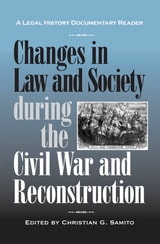
Changes in Law and Society during the Civil War and Reconstruction
A Legal History Documentary ReaderEdited by Christian G. Samito
Southern Illinois University Press, 2009
The first comprehensive collection of legal history documents from the Civil War and Reconstruction, this volume shows the profound legal changes that occurred during the Civil War era and highlights how law, society, and politics inextricably mixed and set American legal development on particular paths that were not predetermined. Editor Christian G. Samito has carefully selected excerpts from legislation, public and legislative debates, court cases, investigations of white supremacist violence in the South, and rare court-martial records, added his expert analysis, and illustrated the selections with telling period artwork to create an outstanding resource that demonstrates the rich and important legal history of the era.
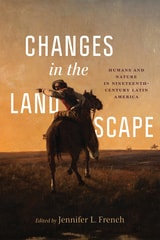
Changes in the Landscape
Humans and Nature in Nineteenth-Century Latin AmericaEdited by Jennifer L. French
Vanderbilt University Press, 2024
Ranging from the immediate aftermath of the Spanish‑American Wars of Independence (1810–1826) to the early twentieth century (1925), the volume’s essays cover a wide variety of genres and forms of cultural production, from José Hernández’s epic poem Martín Fierro to prose fiction, painting and photography, and the personal albums compiled by Spanish-American women. Individually and collectively, the essays engage with scientific writing as both a discourse of power and a source of potentially significant, even revelatory information about human and nonhuman nature. Changes in the Landscape enables readers to more fully understand the transition from colonial regimes to the ecocidal extractivism of the export boom (1870–1930) by drawing out and analyzing some of the cognitive resources and rhetorical strategies that were available to imagine, protest, or enact new norms and expectations regarding the relations between human and nonhuman life, be it the life of wildflowers, waterfalls, or Cuba’s Ciénaga de Zapata.
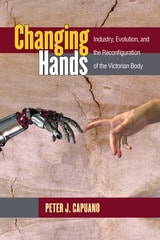
Changing Hands
Industry, Evolution, and the Reconfiguration of the Victorian BodyPeter J. Capuano
University of Michigan Press, 2015
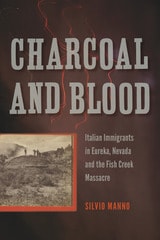
Charcoal and Blood
Italian Immigrants in Eureka, Nevada, and the Fish Creek MassacreSilvio Manno
University of Nevada Press, 2016
Through meticulous research on the event, relying on such primary sources as newspaper articles, author Silvio Manno provides the only comprehensive account of Eureka’s charcoal crisis and what came to be known as the Fish Creek Massacre. This is a well-documented narrative history of an important instance of class and ethnic conflict in the West. Readers interested in Nevada history, Italian American history, frontier trade unionism, and mining in the West will find this book a unique examination of an incident that occurred almost a century and a half ago and that has, until now, been largely overlooked.
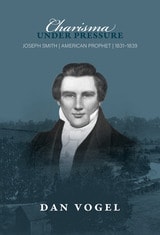
Charisma under Pressure
Joseph Smith, American Prophet, 1831–1839Dan Vogel
Signature Books, 2023
But just who was Joseph Smith? What motivated him? In examining Smith’s life during his Ohio and Missouri sojourns, Vogel seeks to answer those questions. But, Vogel is quick to note, “There are, in fact, many possible constructions of Joseph Smith, and depending on how one assesses the evidence for his truth-claims, a completely different Joseph Smith emerges. But this is probably as Smith wanted it.”
During this period, Smith established a temple, printing presses, additional scripture, expanded church offices, and built a bank—all indicating a sense of permanence and strength for his young church at one level while causing its near collapse at another.
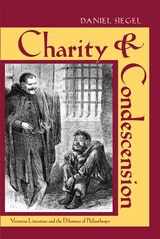
Charity and Condescension
Victorian Literature and the Dilemmas of PhilanthropyDaniel Siegel
Ohio University Press, 2012
Charity and Condescension explores how condescension, a traditional English virtue, went sour in the nineteenth century, and considers how the failure of condescension influenced Victorian efforts to reform philanthropy and to construct new narrative models of social conciliation. In the literary work of authors like Dickens, Eliot, and Tennyson, and in the writing of reformers like Octavia Hill and Samuel Barnett, condescension—once a sign of the power and value of charity—became an emblem of charity’s limitations.
This book argues that, despite Victorian charity’s reputation for idealistic self-assurance, it frequently doubted its own operations and was driven by creative self-critique. Through sophisticated and original close readings of important Victorian texts, Daniel Siegel shows how these important ideas developed even as England struggled to deal with its growing underclass and an expanding notion of the state’s responsibility to its poor.

Charlotte Bronte and the Storyteller's Audience
Carol Bock
University of Iowa Press, 1992
Charlotte Brontë's World of Death
By Robert Keefe
University of Texas Press, 1979
By the age of eight, Charlotte Brontë had lost first her mother and then her two older sisters. Later, in a second wave of deaths, her brother and two younger sisters died, leaving her a sole survivor.
With subtlety and imagination, Robert Keefe examines Brontë’s works as the creative response to these losses, particularly the loss of her mother. Terrified and yet fascinated by death, struggling with guilt, remorse, and a deep sense of rejection, Charlotte Brontë found in art a way to come to terms with death through its symbolic reenactment. In her earlier writings she created a fictional world marked by devices that allow her to control or deny death. In her later works these mechanisms evolved into mature expressions of a profound psychological reality.
Brontë’s preoccupation with death is seen in her fiction in the recurring patterns of separation and exile. Keefe traces the development of these motifs in the juvenilia and the four novels: The Professor, Jane Eyre, Shirley, and Villette.
Unique in its emphasis on the maternal relationships in Brontë’s life and art, this study also explores certain aspects of her life that have often puzzled biographers.
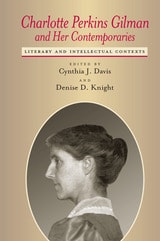
Charlotte Perkins Gilman and Her Contemporaries
Literary and Intellectual ContextsEdited by Cynthia J. Davis and Denise D. Knight
University of Alabama Press, 2004
Considers Gilman’s place in American literary and social history by examining her relationships to other prominent intellectuals of her era
By placing Charlotte Perkins Gilman in the company of her contemporaries, this collection seeks to correct misunderstandings of the feminist writer and lecturer as an isolated radical. Gilman believed and preached that no life is ever led in isolation; indeed, the cornerstone of her philosophy was the idea that “humanity is a relation.”Gilman's highly public and combative stances as a critic and social activist brought her into contact and conflict with many of the major thinkers and writers of the period, including Mary Austin, Margaret Sanger, Ambrose Bierce, Grace Ellery Channing, Lester Ward, Inez Haynes Gillmore, William Randolph Hearst, Karen Horney, William Dean Howells, Catharine Beecher, George Bernard Shaw, and Owen Wister. Gilman wrote on subjects as wide ranging as birth control, eugenics, race, women's rights and suffrage, psychology, Marxism, and literary aesthetics. Her many contributions to social, intellectual, and literary life at the turn of the 20th century raised the bar for future discourse, but at great personal and professional cost.
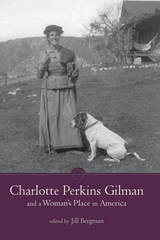
Charlotte Perkins Gilman and a Woman's Place in America
Edited by Jill Bergman
University of Alabama Press, 2017
Charlotte Perkins Gilman and a Woman’s Place in America is a pioneering collection that probes how depictions of space, confinement, and liberation establish both the difficulty and necessity of female empowerment. Turning Victorian notions of propriety and a woman’s place on its ear, this finely crafted essay collection studies Gilman’s writings and the manner in which they push back against societal norms and reject male-dominated confines of space.
The contributors present fascinating and innovative readings of some of Gilman’s most significant works. By examining the settings in “The Yellow Wallpaper” and Herland, for example, the volume analyzes Gilman’s construction of place, her representations of male dominance and female subjugation, and her analysis of the rules and obligations that women feel in conforming to their assigned place: the home.
Additionally, this volume delineates female resistance to this conformity. Contributors highlight how Gilman’s narrators often choose resistance over obedient captivity, breaking free of the spaces imposed upon them in order to seek or create their own habitats. Through biographical interpretations of Gilman’s work that focus on the author’s own renouncement of her “natural” role of wife and mother, contributors trace her relocation to the American West in an attempt to appropriate the masculinized spaces of work and social organization.
Engaging, well-researched, and deftly written, the essays in this collection will appeal to scholars of Gilman, literature, and gender issues alike.
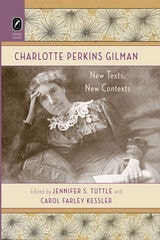
Charlotte Perkins Gilman
New Texts, New ContextsJennifer S. Tuttle and Carol Farley Kessler
The Ohio State University Press, 2011
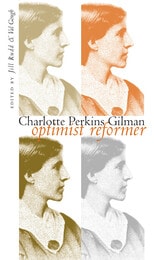
Charlotte Perkins Gilman
Optimist ReformerJill Rudd
University of Iowa Press, 1999
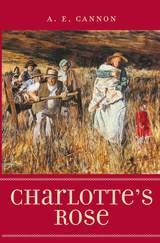
Charlotte's Rose
A. E. Cannon
University of Utah Press, 2011
Charlotte’s Rose—justifiably back in print—tells the story of a young Welsh girl, Charlotte Edwards, who, soon after her mother dies, sails with her father from England to the United States to become part of a company of Mormon handcart pioneers—emigrants with no horses or oxen who themselves pulled the heavy carts filled with their belongings. These were arduous journeys. While on the Mormon Trail, Charlotte befriends a young mother who later dies in childbirth. Though only 12 years old, Charlotte assumes responsibility for the infant and carries her to Utah. Over the course of their journey together, Charlotte becomes deeply attached to the baby she calls Rose, which makes Charlotte’s choice at the novel’s end particularly poignant.
The author, A. E. Cannon, is adept at creating vivid, multifaceted, believable characters and has crafted a story of pioneers that will seem relevant to today’s young people. The reader will quickly be drawn into the story as Charlotte struggles to navigate the trials of an adolescent moving into adulthood. Although this is a book about Mormon pioneers, it is in fact about the larger American experience of immigration—a drama still unfolding today—and Charlotte’s coming-of-age journey will resonate with readers young and old.
Chasing Good Sense
A Boy's Life on the FrontierHomer McCarty and Coralie McCarty Beyers
University of Utah Press, 2018
In the spirit of Huck Finn, Buck embarks on adventures and mischief with his loyal friend, Earl. Naïve, eager, and inquisitive, he seeks to make sense of his world. McCarty’s portrayal of the period is often humorous, capturing the intimacy of place and family through a young boy’s eyes.
McCarty completed this work in 1948. Had it not been for a series of fortuitous events and the dedication of his granddaughters, including Coralie Beyers, these pages would have been lost. Thanks to her efforts, her grandfather’s lively, entertaining book is now available for readers to relish and enjoy.
Chateaubriand Across Empires
Fabienne Moore
Bucknell University Press, 0
What happens when the liberty of ancient nobility collides with the revolutionary ideals of equality? This groundbreaking study explores how the American, French, Haitian, and Greek Revolutions redefined freedom—and how French Romantic figure Chateaubriand grappled with that transformation. Tracing his travels across England, North America, and the Mediterranean, this book uncovers Chateaubriand’s seductive visions of “paradises lost,” which were taken up, challenged, and reimagined by Anglophone and Hispanic writers.
From Charlotte Brontë to Harriet Beecher Stowe, from Byron to Bolaño authors found in Chateaubriand a conflicted but powerful voice at the crossroads of liberty, race, religion, and empire. This is the first comprehensive study to situate Chateaubriand within the histories of colonialism and global revolution, revealing a literary legacy that remains startlingly relevant in today’s struggles over equality.
Published by Bucknell University Press. Distributed worldwide by Rutgers University Press.
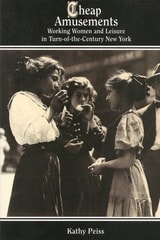
Cheap Amusements
Kathy Peiss
Temple University Press, 1987
Kathy Peiss follows working women into saloons, dance halls, Coney Island amusement parks, social clubs, and nickelodeons to explore the culture of these young women between 1880 and 1920 as expressed in leisure activities. By examining the rituals and styles they adopted and placing that culture in the larger context of urban working-class life, she offers us a complex picture of the dynamics shaping a working woman's experience and consciousness at the turn-of-the-century. Not only does her analysis lead us to new insights into working-class culture, changing social relations between single men and women, and urban courtship, but it also gives us a fuller understanding of the cultural transformations that gave rise to the commercialization of leisure.
The early twentieth century witnessed the emergence of "heterosocial companionship" as a dominant ideology of gender, affirming mixed-sex patterns of social interaction, in contrast to the nineteenth century's segregated spheres. Cheap Amusements argues that a crucial part of the "reorientation of American culture" originated from below, specifically in the subculture of working women to be found in urban dance halls and amusement resorts.
Chemical Crimes
Science and Poison in Victorian Crime FictionCheryl Blake Price
The Ohio State University Press, 2019
From the Newgate and Silver Fork novels of the 1830s to the emergent genres of science and detective fiction of the 1890s, Price advocates for the classification of a new type of poisoner, one who combined crime with methodical scientific know-how: the chemical criminal. Chemical Crimes shows how authors used the subversiveness of chemical crimes to challenge the supposed disciplinary force of forensic detection and suggests that generic developments were inspired as much by criminal scientific innovation as they were by the rise of the detective–scientist. By focusing on chemical crime’s appearance at significant moments, this book traces how reactions to Victorian science inspired change in nineteenth-century crime fiction.
Chicago 1890
The Skyscraper and the Modern CityJoanna Merwood-Salisbury
University of Chicago Press, 2009
Chicago’s first skyscrapers are famous for projecting the city’s modernity around the world. But what did they mean at home, to the Chicagoans who designed and built them, worked inside their walls, and gazed up at their façades? Answering this multifaceted question, Chicago 1890 reveals that early skyscrapers offered hotly debated solutions to the city’s toughest problems and, in the process, fostered an urban culture that spread across the country.
An ambitious reinterpretation of the works of Louis Sullivan, Daniel Burnham, and John Wellborn Root, this volume uses their towering achievements as a lens through which to view late nineteenth-century urban history. Joanna Merwood-Salisbury sheds new light on many of Chicago’s defining events—including violent building trade strikes, the Haymarket bombing, the World’s Columbian Exposition, and Burnham’s Plan of Chicago—by situating the Masonic Temple, the Monadnock Building, and the Reliance Building at the center of the city’s cultural and political crosscurrents.
While architects and property owners saw these pioneering structures as manifestations of a robust American identity, immigrant laborers and social reformers viewed them as symbols of capitalism’s inequity. Illuminated by rich material from the period’s popular press and professional journals, Merwood-Salisbury’s chronicle of this contentious history reveals that the skyscraper’s vaunted status was never as inevitable as today’s skylines suggest.
Chicago Before the Fire
An Economic HistoryLouis P. Cain
University of Illinois Press, 2025
An advantageous location and entrepreneurial passion helped fuel Chicago’s transformation from a fur trading post to a thriving city. Louis P. Cain’s economic history places pre-1871 Chicago within the narrative of national expansion and examines infrastructure, finance, and other areas of city life. Business histories tell the story of fortunes made with essential products like meat and grain. Sketches of titans like William Ogden and Cyrus McCormick reveal how real estate, farm equipment, and other industries became engines of local growth. Cain also details public health improvements that made Lake Michigan safe as a water supply while census data informs a portrait of Chicago’s population and the lives of the free Blacks and Irish immigrants at the bottom of the socioeconomic ladder.
Panoramic and up to date, Chicago before the Fire looks at how an intersection of geography, vision, and investment built a great American city.
Chicago Business and Industry
From Fur Trade to E-CommerceEdited by Janice L. Reiff
University of Chicago Press, 2013
Drawing on the award-winning Encyclopedia of Chicago, Janice L. Reiff has compiled a unique history of work in the Windy City. Beginning with an overview of the city’s commercial development, Chicago Business and Industry considers how key industries shaped—and were shaped by—both the local and global economies. The city’s phenomenal population growth, its proximity to water, and its development of railroads made Chicago one of the most productive markets for lumber and grain throughout the nineteenth century. The region’s once-booming steel industry, on the other hand, suffered a dramatic decline in the second half of the twentieth century, when already weakened demand met with increasing international competition. Chicago Business and Industry chronicles the Chicago region’s changing fortunes from its beginning.
Reiff has compiled and updated essays from the Encyclopedia covering the city’s most historically famous—and infamous—companies, from the Union Stock Yard to Montgomery Ward to the Board of Trade. The book concludes with a historical account of labor types and issues in the city, with attention to such topics as health-care workers, unemployment, and unionization. Today, Groupon and a host of other high-tech firms have led some experts to christen Chicago the Silicon Valley of the Midwest. Reiff’s new introduction takes account of these and other recent trends.
Engaging, accessible, and packed with fascinating facts, Chicago Business and Industry invites readers into the history and diversity of work in the city, helping them understand how Chicago became Chicago.
Chicago Dreaming
Midwesterners and the City, 1871-1919Timothy B. Spears
University of Chicago Press, 2005
Through innovative readings of Theodore Dreiser, Willa Cather, and Richard Wright, Spears argues that the migratory perspective was crucial to the rise of Chicago's emerging literary culture. In following the paths of several well-known migrants, including Jane Addams, cartoonist John T. McCutcheon, and businessman John Glessner, Spears also shows how the view from the hinterland permeated urban culture and informed the development of key Chicago institutions. Further exploring the notion of dreaming, he brings to light the internal desires that lured Midwestern migrants to the city as well as the nostalgia that led them to dream of the homes they left behind.
With this fascinating new take on the rise of Chicago, Chicago Dreaming blurs the line between country and city to reveal the provincial character of modern urban culture.
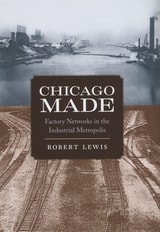
Chicago Made
Factory Networks in the Industrial MetropolisRobert Lewis
University of Chicago Press, 2008
Robert Lewis documents how manufacturers, attracted to greenfield sites on the city’s outskirts, began to build factory districts there with the help of an intricate network of railroad owners, real estate developers, financiers, and wholesalers. These immense networks of social ties, organizational memberships, and financial relationships were ultimately more consequential, Lewis demonstrates, than any individual achievement. Beyond simply giving Chicago businesses competitive advantages, they transformed the economic geography of the region. Tracing these transformations across seventy-five years, Chicago Made establishes a broad new foundation for our understanding of urban industrial America.
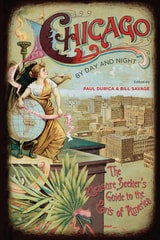
Chicago by Day and Night
The Pleasure Seeker's Guide to the Paris of AmericaPaul Durica and Bill Savage
Northwestern University Press, 2013
Chicago by Day and Night: The Pleasure Seeker’s Guide to the Paris of America is an actual guidebook to Chicago for visitors to the World’s Columbian Exposition of 1893. This unauthorized handbook to the rowdy city outside the elegant fairgrounds explores pleasures high and low. The theaters and music, architectural glories, parks and boulevards, churches and synagogues, and other elevated pursuits the authors included in 1893 gave the book a veneer of high culture. But the book owed its popularity to its insider tips about Chicago's lurid and louche entertainments—drink, gambling, and sex. With a wink and tongue firmly in cheek, the original authors condemned Gilded Age vice while offering curious travelers precise directions to the dubious, decadent, and debauched quarters of the Windy City.
To introduce this compulsively readable, gift-quality journey through the Chicago of 1893, Chicago writers and humorists Paul Durica and Bill Savage have added an expert introduction to Gilded Age Chicago and the World's Columbian Exposition. Showcasing the first Ferris wheel, dazzling new electrification technologies, and exhibits from around the world, the Exposition was Chicago’s chance to prove it had risen from the ashes of the Great Fire and would claim a place among the world’s great cities.
Both a perfect keepsake or gift for Chicago travelers as well as an invaluable text for readers interested in the history of Chicago, the Midwest, or Gilded Age urban life, Chicago by Day and Night is a beloved classic of Chicago writing.
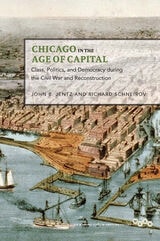
Chicago in the Age of Capital
Class, Politics, and Democracy during the Civil War and ReconstructionJohn B. Jentz and Richard Schneirov
University of Illinois Press, 2015
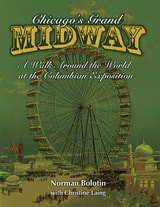
Chicago's Grand Midway
A Walk around the World at the Columbian ExpositionNorman Bolotin
University of Illinois Press, 2017
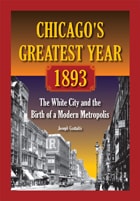
Chicago's Greatest Year, 1893
The White City and the Birth of a Modern MetropolisJoseph Gustaitis
Southern Illinois University Press, 2013
In 1893, the 27.5 million visitors to the Chicago World’s Fair feasted their eyes on the impressive architecture of the White City, lit at night by thousands of electric lights. In addition to marveling at the revolutionary exhibits, most visitors discovered something else: beyond the fair’s 633 acres lay a modern metropolis that rivaled the world’s greatest cities. The Columbian Exposition marked Chicago’s arrival on the world stage, but even without the splendor of the fair, 1893 would still have been Chicago’s greatest year.
An almost endless list of achievements took place in Chicago in 1893. Chicago’s most important skyscraper was completed in 1893, and Frank Lloyd Wright opened his office in the same year. African American physician and Chicagoan Daniel Hale Williams performed one of the first known open-heart surgeries in 1893. Sears and Roebuck was incorporated, and William Wrigley invented Juicy Fruit gum that year. The Field Museum, the Art Institute of Chicago, and the Museum of Science and Industry all started in 1893. The Cubs’ new ballpark opened in this year, and an Austro-Hungarian immigrant began selling hot dogs outside the World’s Fair grounds. His wares became the famous “Chicago hot dog.”
“Cities are not buildings; cities are people,” writes author Joseph Gustaitis. Throughout the book, he brings forgotten pioneers back to the forefront of Chicago’s history, connecting these important people of 1893 with their effects on the city and its institutions today. The facts in this history of a year range from funny to astounding, showcasing innovators, civic leaders, VIPs, and power brokers who made 1893 Chicago about so much more than the fair.
Chicago's Historic Hyde Park
Susan O'Connor Davis
University of Chicago Press, 2013
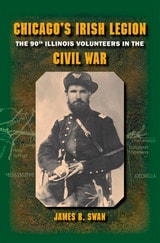
Chicago's Irish Legion
The 90th Illinois Volunteers in the Civil WarJames B. Swan
Southern Illinois University Press, 2009
Extensively documented and richly detailed, Chicago’s Irish Legion tells the compelling story of Chicago’s 90th Illinois Volunteer Infantry, the only Irish regiment in Major General William Tecumseh Sherman’s XV Army Corps. Swan’s sweeping history of this singular regiment and its pivotal role in the Western Theater of the Civil War draws heavily from primary documents and first-person observations, giving readers an intimate glimpse into the trials and triumphs of ethnic soldiers during one of the most destructive wars in American history.
At the onset of the bitter conflict between the North and the South, Irish immigrants faced a wall of distrust and discrimination in the United States. Many Americans were deeply suspicious of Irish religion and politics, while others openly doubted the dedication of the Irish to the Union cause. Responding to these criticisms with a firm show of patriotism, the Catholic clergy and Irish politicians in northern Illinois—along with the Chicago press and community—joined forces to recruit the Irish Legion. Composed mainly of foreign-born recruits, the Legion rapidly dispelled any rumors of disloyalty with its heroic endeavors for the Union. The volunteers proved to be instrumental in various battles and sieges, as well as the marches to the sea and through the Carolinas, suffering severe casualties and providing indispensable support for the Union. Swan meticulously traces the remarkable journey of these unique soldiers from their regiment’s inception and first military engagement in 1862 to their disbandment and participation in the Grand Review of General Sherman’s army in 1865.
Enhancing the volume are firsthand accounts from the soldiers who endured the misery of frigid winters and brutal environments, struggling against the ravages of disease and hunger as they marched more than twenty-six hundred miles over the course of the war. Also revealed are personal insights into some of the war’s most harrowing events, including the battle at Chattanooga and Sherman’s famous campaign for Atlanta. In addition, Swan exposes the racial issues that affected the soldiers of the 90th Illinois, including their reactions to the Emancipation Proclamation and the formations of the first African American fighting units. Swan rounds out the volume with stories of survivors’ lives after the war, adding an even deeper personal dimension to this absorbing chronicle.
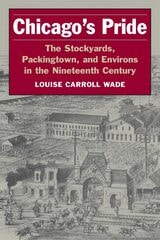
Chicago's Pride
The Stockyards, Packingtown, and Environs in the Nineteenth CenturyLouise Carroll Wade
University of Illinois Press, 2002
Wade traces the rise of the livestock trade and meat-packing industry, efforts to control the resulting air and water pollution, expansion of the work force and status of packinghouse employees, changes within the various ethnic neighborhoods, the vital role of voluntary organizations (especially religious organizations) in shaping the new community, and the ethnic influences on politics in this “instant” industrial suburb and powerful magnet for entrepreneurs, wage earners, and their families.
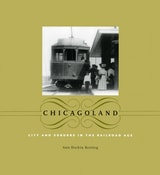
Chicagoland
City and Suburbs in the Railroad AgeAnn Durkin Keating
University of Chicago Press, 2005
Historian and coeditor of the acclaimed Encyclopedia of Chicago, Ann Durkin Keating resurrects for us here the bustling network that defined greater Chicagoland. Taking a new approach to the history of the city, Keating shifts the focus to the landscapes and built environments of the metropolitan region. Organized by four categories of settlements-farm centers, industrial towns, commuter suburbs, and recreational and institutional centers-that framed the city, Chicagoland offers the collective history of 230 neighborhoods and communities, the people who built them, and the structures they left behind that still stand today.
Keating reanimates nineteenth-century Chicagoland with more than a hundred photographs and maps; we find here the taverns, depots, and way stations that were the hubs of the region's vibrant, mobile life. Keating also includes an appendix of driving tours so readers can see this history for themselves. Chicagoland takes us into the buildings and sites that are still part of our landscape and repopulates them with the stories and characters behind their creation. The result is a wide-angle historical view of Chicago, an entirely new way to understand the region.
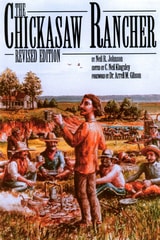
Chickasaw Rancher, Revised Edition
Neil R. Johnson
University Press of Colorado, 2001
The Chickasaw Rancher follows Montford T. Johnson's family and friends for the next thirty-two years. Neil R. Johnson describes the work, the ranch parties, cattle rustling, gun fights, tornadoes, the run of 1889, the hard deaths of many along the way, and the rise, fall, and revival of the Chickasaw Nation.
This revised edition of The Chickasaw Rancher, edited by C. Neil Kingsley, Neil R. Johnson's grandson, is the perfect addition to any reader's collection of the history of the American West.
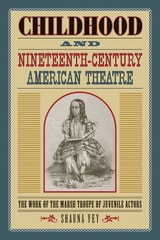
Childhood and Nineteenth-Century American Theatre
The Work of the Marsh Troupe of Juvenile ActorsShauna Vey
Southern Illinois University Press, 2015
Looking at the daily work lives of five members of the Marsh Troupe—the father and manager, Robert Marsh, and four child performers, Mary Marsh, Alfred Stewart, Louise Arnot, and Georgie Marsh—Vey reveals the realities of the antebellum theatre and American society: the rise of the nineteenth-century impresario; the emerging societal constructions of girlhood and goodness; the realities of child labor; the decline of the apprenticeship model of actor training; shifts in gender roles and the status of working women; and changes in the economic models of theatre production, including the development of the stock company system.
Both a microhistory of a professional theatre company and its juvenile players in the decade before the Civil War and a larger narrative of cultural change in the United States, Childhood and Nineteenth-Century American Theatre sheds light on how childhood was idealized both on and off the stage, how the role of the child in society shifted in the nineteenth century, and the ways economic value and sentiment contributed to how children were viewed.
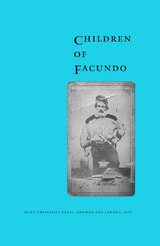
Children of Facundo
Caudillo and Gaucho Insurgency during the Argentine State-Formation Process (La Rioja, 1853-1870)Ariel de la Fuente
Duke University Press, 2000
La Rioja, a province in the northwest section of the country, was the land of the caudillos immortalized by Domingo F. Sarmiento, particularly in his foundational and controversial book Facundo. De la Fuente focuses on the repeated rebellions in this district during the 1860s, when Federalist caudillos and their followers, the gauchos, rose up against the new Unitarian government. In this social and cultural analysis, de la Fuente argues that the conflict was not a factional struggle between two ideologically identical sectors of the elite, as commonly depicted. Instead, he believes, the struggle should be seen from the perspective of the lower-class gauchos, for whom Unitarianism and Federalism were highly differentiated party identities that represented different experiences during the nineteenth century. To reconstruct this rural political culture de la Fuente relies on sources that heretofore have been little used in the study of nineteenth-century Latin American politics, most notably a rich folklore collection of popular political songs, folktales, testimonies, and superstitions passed down by old gauchos who had been witnesses or protagonists of the rebellions. Criminal trial records, private diaries, and land censuses add to the originality of de la Fuente’s study, while also providing a new perspective on Sarmiento’s works, including the classic Facundo.
This book will interest those specializing in Latin American history, literature, politics, and rural issues.
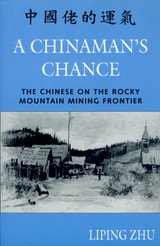
Chinaman's Chance
The Chinese on the Rocky Mountain Mining FrontierLiping Zhu
University Press of Colorado, 2000
Thus, the Chinese portrayed all the stereotypical frontier roles-victors, victims, and villains. Their basic material needs were guaranteed, and many individuals were able to climb up the economic ladder. Frontier justice was used to settle disputes; Chinese-Americans frequently challenged white opponents in the various courts as well as in gun battles.
Interesting and provocative, A Chinaman's Chance not only offers general readers a narrative account of the Rocky Mountain mining frontier, but also introduces a fresh interpretation of the Chinese experience in nineteenth-century America to scholars interested in Asian American studies, immigration history, and ethnicity in the American West.
Chinese American Literature since the 1850s
Xiao-huang Yin
University of Illinois Press, 2000
The writings of immigrants from China and their descendants in the United States reflect the changes and continuity in the Chinese American experience. Xiao-huang Yin combines literary and historical scholarship to trace the origins and development of this extensive, neglected body of literature.
Chinese American Literature since the 1850s covers representative works from the 1850s to the present. Selections include journalism and autobiography by nineteenth-century Chinese authors; writings on the walls of Angel Island, the main Asian immigrant arrival point on the West Coast; writings of late-nineteenth and early-twentieth-century "cultivated Chinese," students and scholars who came to America to advance their educations; important writing by immigrants such as Chen Ruoxi, Yu Lihua, and Zhang Xiguo; and the works of more recent authors like Sui Sin Far, Jade Snow Wong, Frank Chin, Maxine Hong Kingston, and Amy Tan.
An essential introduction and guide to the field, Chinese American Literature since the 1850s enlarges the available body of literature and provides new insights into the Chinese American immigrant experience and the writing inspired by it.
Chinese Americans in the Heartland
Migration, Work, and CommunityHuping Ling
Rutgers University Press, 2022
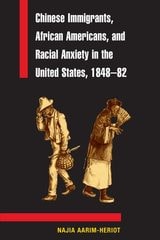
Chinese Immigrants, African Americans, and Racial Anxiety in the United States, 1848-82
Najia Aarim-Heriot
University of Illinois Press, 2003
The “Chinese question” and the “Negro problem” were bound up with one another in nineteenth-century America. Indeed, the negative stereotypes, exclusionary laws, and incendiary rhetoric employed against both populations bore striking similarities.
Najia Aarim-Heriot forcefully demonstrates that the anti-Chinese sentiment behind the passage of the Chinese Exclusion Act of 1882 is inseparable from the racial double standards applied by mainstream white society toward white and nonwhite groups during the same period. Aarim-Heriot argues that previous studies on American Sinophobia have overemphasized the resentment labor organizations felt toward incoming Chinese workers. As a result, scholars have overlooked the broader ways in which the growing nation sought to define and unify itself through the exclusion and oppression of nonwhite peoples.
A challenge to traditional approaches to Chinese American history, Chinese immigrants, African Americans, and Racial Anxiety in the United States, 1848–82 offers a holistic examination of American Sinophobia and the racialization of national immigration policies.
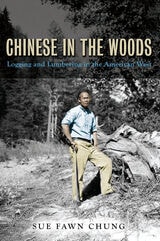
Chinese in the Woods
Logging and Lumbering in the American WestSue Fawn Chung
University of Illinois Press, 2015
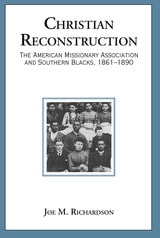
Christian Reconstruction
The American Missionary Association and Southern Blacks, 1861-1890Joe M. Richardson
University of Alabama Press, 2008
"Joe Richardson's Christian Reconstruction is a solid addition to historical scholarship on the work of Yankee missionaries among the freedmen during the Civil War and Reconstruction. . . . Without question, this is the most comprehensive history of the American Missionary Association (AMA), and no one has uncovered as much detailed information on any other Northern aid society. Rich in detail and strongly recommended, the book argues that the AMA struggled to prepare the liberated slaves for civil and political equality by freeing them of the shackles of ignorance, superstition and sin.This book ought to be read by all those interested in Northern educational and social reformers in the Reconstruction South."
--The Journal of American History
"In an extraordinarily balanced study Richardson has synthesized a wealth of sources and research to produce a thoroughly convincing interpretation of the AMA and southern blacks. Besides exploring relations between the two, his main objective has been to assess the AMA's effectiveness in bringing blacks into the American mainstream. Because of his successful labors, we now have a much-needed comprehensive study of that most influential missionary organization. Whether addressing conflicts between the AMA and the US military over the treatment of contrabands, charges of racism among black and white missionaries, or the quality of association colleges, Richardson does not allow his obvious admiration for the AMA to interfere. . . . With bold logic and considerable subtlety Richardson has made an impressive contribution.
--The Journal of Southern History
Christina Rossetti and Illustration
A Publishing HistoryLorraine Janzen Kooistra
Ohio University Press, 2002
Readers do not always take into account how books that combine image and text make their meanings. But for the Pre-Raphaelite poet Christina Rossetti, such considerations were central.
Christina Rossetti and Illustration maps the production and reception of Rossetti’s illustrated poetry, devotional prose, and work for children, both in the author’s lifetime and in posthumous twentieth-century reprints.
Lorraine Janzen Kooistra’s reading of Rossetti’s illustrated works reveals for the first time the visual-verbal aesthetic that was fundamental to Rossetti’s poetics. Her exhaustive archival research brings to light new information on how Rossetti’s commitment to illustration and attitudes to copyright and control influenced her transactions with publishers and the books they produced. Janzen Kooistra also tracks the poet’s reception in the twentieth century through a complex web of illustrated books produced for a wide range of audiences.
Analyzing an impressive array of empirical data, Janzen Kooistra shows how Rossetti’s packaging for commodity consumption—by religious presses, publishers of academic editions and children’s picture books, and makers of erotica and collectibles—influenced the reception of her work and her place in literary history.
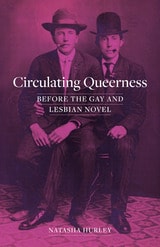
Circulating Queerness
Before the Gay and Lesbian NovelNatasha Hurley
University of Minnesota Press, 2018
A new history of the queer novel shows its role in constructing gay and lesbian lives
The gay and lesbian novel has long been a distinct literary genre with its own awards, shelving categories, bookstore spaces, and book reviews. But very little has been said about the remarkable history of its emergence in American literature, particularly the ways in which the novel about homosexuality did not just reflect but actively produced queer life.
Drawing on Mikhail Bakhtin’s insight that the history of society is connected to the history of language, author Natasha Hurley charts the messy, complex movement by which the queer novel produced the very frames that made it legible as a distinct literature and central to the imagination of queer worlds. Her vision of the queer novel's development revolves around the bold argument that literary circulation is the key ingredient that has made the gay and lesbian novel and its queer forebears available to its audiences.
Challenging the narrative that the gay and lesbian novel came into view in response to the emergence of homosexuality as a concept, Hurley posits a much longer history of this novelistic genre. In so doing, she revises our understanding of the history of sexuality, as well as of the processes of producing new concepts and the evolution of new categories of language.
Circus World
Roustabouts, Animals, and the Work of Putting on the Big ShowAndrea Ringer
University of Illinois Press, 2024
Andrea Ringer examines the industry-wide circus world--the collection of shows that traveled by rail, wagon, steamboat, and car--and the traditional and nontraditional laborers who created it. Performers and their onstage labor played an integral part in the popularity of the circus. But behind the scenes, other laborers performed the endless menial tasks that kept the show on the road. Circus operators regulated employee behavior both inside and outside the tent even as the employees themselves blurred the line between leisure and labor until, in all parts of the show, the workers could not escape their work.
Illuminating and vivid, Circus World delves into the gender, class, and even species concerns within an extinct way of life.
Citadel In The Wilderness
The Story of Fort Snelling and the Northwest FrontierEvan Jones
University of Minnesota Press, 2001
The lively history of this frontier fort.
History/Regional
The lively history of this frontier fort, now back in print!In 1824 Colonel Josiah Snelling erected a stone fortress at the point where the Minnesota and Mississippi rivers merged, on territory secured by Lieutenant Zebulon Pike in a treaty with the Sioux chief Little Crow. Evan Jones describes the intriguing history of Fort Snelling, the Gibraltar of the West, its effect on the Native Americans of the region, and its role in the westward movement.“A story of bitter and complex rivalries. . . . With massive towers and walls capping a limestone cliff, [Fort Snelling] defied attack. But it influenced movements and events hundreds of miles away. The Sioux opposed the Chippewa, the North West Company contended with the Hudson’s Bay outfit, and Astor’s American Fur Company fought them both. . . . This book unfolds a forty-year struggle in the wilderness.” --New York Times Book Review“The author offers here a rollicking tale of high adventure and low shenanigans in and around Fort Snelling. As much the story of the Indians of the region as of the hardy Americans (famous and infamous) who walked inside this fort’s impressive walls, Citadel relays its message of courage and chicanery with a minimum of ‘undying prose’ but a maximum of straightforward and incisive storytelling.” --Library JournalEvan Jones (1915–1996) was born in Le Sueur, Minnesota. A writer of American history and cookbooks, he is the author of The Minnesota (also published in paperback by University of Minnesota Press), Trappers and Mountain Men, Epicurean Delight: The Life and Times of James Beard, and The L. L. Bean Book of New New England Cookery.ISBN 0-8166-3879-9 Paper £10.95 $14.95 256 Pages 23 black-and-white photos 5 3/8 x 8 1/2 MayFesler-Lampert Minnesota Heritage SeriesTranslation Inquiries: Penguin Putnam, Inc.
Citizen of a Wider Commonwealth
Ulysses S. Grant's Postpresidential DiplomacyEdwina S. Campbell
Southern Illinois University Press, 2012
Traveling commercially and on U.S. Navy warships, Grant visited ports of call throughout the British Empire, Europe, and Asia, including Britain, France, Egypt, the Ottoman Empire, Greece, Italy, the Netherlands, Germany, Scandinavia, Russia, Spain, Portugal, Gibraltar, Ireland, India, Singapore, Hong Kong, China, and Japan. Along the way, he met with monarchs, ministers, and average citizens, creating the model for the summitry and public diplomacy practiced by future American presidents and articulating concepts of national self-determination, international organization, and the peaceful settlement of international disputes decades before Elihu Root’s advocacy of binding international arbitration and Woodrow Wilson’s proposal for the League of Nations.
Campbell reveals Grant to be a skillful envoy who brought to his travels the deep interest in foreign policy issues he had shown during his administration. Grant confirmed the United States’ commitment to Anglo-American cooperation, demonstrated America’s interest in the territorial integrity of China, affirmed American faith in universal (male) suffrage as the basis for governmental legitimacy, and asserted the importance of an international order based on equality and justice for all states and their citizens. Grant’s efforts shaped not only John Hay’s Open Door policy in 1899–1900 but also the broader American approach to twentieth-century international relations. Throughout the trip, Julia Grant proved essential to the success of her husband’s mission, and Campbell tells how the couple impressed people around the world with an enduring image of an American president and first lady.
By illuminating the significance of Grant’s often overlooked postpresidential travels, Citizen of a Wider Commonwealth establishes the eighteenth president as a key diplomat whose work strongly influenced the direction of future U.S. foreign policy and contributes substantially to the study of American international relations.

City Games
The Evolution of American Urban Society and the Rise of SportsSteven A. Riess
University of Illinois Press, 1989
City Water, City Life
Water and the Infrastructure of Ideas in Urbanizing Philadelphia, Boston, and ChicagoCarl Smith
University of Chicago Press, 2013