547 books match the query 'California' and 56 start with c
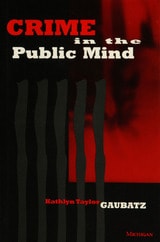
cover of Crime in the Public Mind

Crime in the Public Mind

Kathlyn Taylor Gaubatz

University of Michigan Press, 1995
Crime in the Public Mind explores the politics of crime and criminal justice, examining in depth what Americans think about penalties for criminal offenders. While some are resigned, others are desperate; a few are hopeful and forgiving, but most are frustrated and angry. In fact, fully eighty percent of the population believes that the court system should deal more harshly with criminal offenders. In this readable account, Kathlyn Taylor Gaubatz makes use of intensive interviews with Americans from varied walks of life in order to reveal the fascinating nuances in the public's views on criminal justice, and in their motivations for holding these views. She questions our easy acceptance of the very existence of a public consensus around such a complex, intractable issue as crime. Why do Americans support harsh penal policies when crime rates are actually falling? How does this attitude square with our increasingly liberal social ideas? What logic is there to support stiff sentencing when the vast majority of the public acknowledges that prisons have been powerless to reduce crime in our nation to an acceptable level? The author powerfully weaves narratives from those she interviewed to construct an in-depth theory about who joins and who spurns the consensus on criminal justice. She explores the complex relationship between our political beliefs and our attitudes toward crime, revealing in some cases a telling dissonance. Through careful argumentation and demonstration, Crime in the Public Mind concludes that Americans have become harsher on crime not in spite of becoming more liberal on a variety of other social issues, but at least in part because we have done so. At a time when crime has been called the political issue of the decade, Crime in the Public Mind forces us to confront our assumptions, to sort through our fear. It gives us an opportunity to balance our desire for safety and our desire to see justice done with our innate compassion and understanding. By exposing the paradoxes of our beliefs, the author pushes us to reconsider whether incarceration really is the answer to every criminal offense and invites us to contemplate saner and perhaps more effective approaches to criminal justice. "In the great tradition of Robert Lane's Political Ideology, Gaubatz has discovered that what the 'common man' (and woman) believes about crime and punishment is more complicated than the polling numbers would allow. While clearly in sympathy with those who dissent from get-tough approaches, she offers a balanced, insightful, and timely understanding of public attitudes about criminal justice. Experts, policymakers, students, and concerned citizens should read this fine book."- John J. DiIulio, Jr., Princeton University and Director, Brookings Institution Center for Public Management Kathlyn Taylor Gaubatz holds a Ph.D. in politics from Princeton University and is Executive Director of a non profit agency that provides housing, counseling, child-care, and other services to homeless families and individuals in San Franciso.
[more]
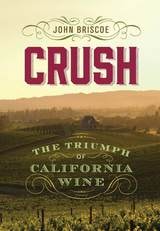
cover of Crush: The Triumph of California Wine

Crush

The Triumph of California Wine

John Briscoe

University of Nevada Press, 2018

Winner, TopShelf Magazine Book Awards Historical Non-fiction 

Finalist, Northern California Book Awards General Non-Fiction


Look. Smell. Taste. Judge. Crush is the 200-year story of the heady dream that wines as good as the greatest of France could be made in California. A dream dashed four times in merciless succession until it was ultimately realized in a stunning blind tasting in Paris. In that tasting, in the year of America's bicentennial, California wines took their place as the leading wines of the world.

For the first time, Briscoe tells the complete and dramatic story of the ascendancy of California wine in vivid detail. He also profiles the larger story of California itself by looking at it from an entirely innovative perspective, the state seen through its singular wine history.

With dramatic flair and verve, Briscoe not only recounts the history of wine and winemaking in California, he encompasses a multidimensional approach that takes into account an array of social, political, cultural, legal, and winemaking sources. Elements of this history have plot lines that seem scripted by a Sophocles, or Shakespeare. It is a fusion of wine, personal histories, cultural, and socioeconomic aspects.

Crush is the story of how wine from California finally gained its global due. Briscoe recounts wine’s often fickle affair with California, now several centuries old, from the first harvest and vintage, through the four overwhelming catastrophes, to its amazing triumph in Paris.
[more]
cover of Cuchama and Sacred Mountains

Cuchama and Sacred Mountains

Walter Y. Evans-Wentz

Ohio University Press, 1981

W. Y. Evans–Wentz, great Buddhist scholar and translator of such now familiar works as the Tibetan Book of the Dead and the Tibetan Book of the Great Liberation, spent his final years in California. There, in the shadow of Cuchama, one of the Earth’s holiest mountains, he began to explore the astonishing parallels between the spiritual teaching of America’s native peoples and that of the deeply mystical Hindus and Tibetans. Cuchama and Sacred Mountains, a book completed shortly before his death in 1965, is the fruit of those explorations.

To Cuchama, “Exalted High Place,” came the young Cochimi and Yuma boys for initiation into the mystic rites for their people. In solitude they sought and received guidance and wisdom. In this same way, the peoples of ancient Greece, the Hebrews, the early Christians, and the Hindus had found access to inner truth on their own holy mountains: and in this same way must the modern person find the path to inner knowing.

Surveying many of the most Sacred Mountains in North America, South America, Europe, and Asia, Evans–Wentz expresses the belief that the secret power of these high places has not passed away but only awaits the coming of a New Age. This new age, in accord with the oldest prophecies of our continent, will be a time of renaissance, the long–waited era of harmony and peace among all peoples.

This renaissance shall be uniquely American, a renewal based on the values so long honored by the Americans before Columbus, and so ruthlessly trampled by the “civilized” Europeans who overran them. No other race of people has been as spiritual in their way of life than the original Americans, notes Evans–Wentz. Perhaps none other has known such martyrdom. Yet the secret greatness of the Indian religion still lives, ancient as the Earth itself, yet ageless in its power to renew.
[more]
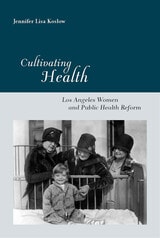
cover of Cultivating Health: Los Angeles Women and Public Health Reform

Cultivating Health

Los Angeles Women and Public Health Reform

Koslow, Jennifer

Rutgers University Press, 2009

At the dawn of the Progressive Era, when America was experiencing an industrial boom, many working families often ate contaminated food, lived in decaying urban tenements, and had little access to medical care. In a city that demanded change, Los Angeles women, rather than city officials, championed the call to action.

Cultivating Health, an interdisciplinary chronicle, details women's impact on remaking health policy, despite the absence of government support. Combining primary source and municipal archival research with comfortable prose, Jennifer Lisa Koslow explores community nursing, housing reform, milk sanitation, childbirth, and the campaign against venereal disease in late nineteenth and early twentieth century Los Angeles. She demonstrates how women implemented health care reform and civic programs while laying the groundwork for a successful transition of responsibility back to government.

Koslow highlights women's home health care and urban policy-changing accomplishments and pays tribute to what would become the model for similar service-based systems in other American centers.
[more]
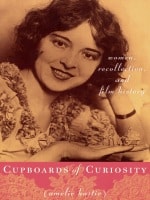
cover of Cupboards of Curiosity: Women, Recollection, and Film History

Cupboards of Curiosity

Women, Recollection, and Film History

Amelie Hastie

Duke University Press, 2007

In Cupboards of Curiosity Amelie Hastie rethinks female authorship within film history by expanding the historical archive to include dollhouses, scrapbooks, memoirs, cookbooks, and ephemera. Focusing on women who worked during the silent-film era, Hastie reveals how female stars, directors, and others appropriated personal or “domestic” cultural forms not only to publicize their own achievements but also to reflect on specific films and the broader film industry. Whether considering Colleen Moore’s thirty-six scrapbooks or Dietrich’s eccentric book Marlene Dietrich’s ABC, Hastie emphasizes how these women spoke for themselves—as collectors, historians, critics, and experts—often explicitly contemplating the role their writings and material objects would play in subsequent constructions of history.

Hastie pays particular attention to the actresses Colleen Moore and Louise Brooks and Hollywood’s first female director, Alice Guy-Blaché. From the beginning of her career, Moore worked intently to preserve a lasting place for herself as a Hollywood star, amassing collections of photos, souvenirs, and clippings as well as a dollhouse so elaborate that it drew extensive public attention. Brooks’s short essays reveal how she participated in the creation of her image as Lulu and later emerged as a critic of film stardom. The recovery of Blaché’s role in film history by feminist critics in the 1970s and 1980s was made possible by the existence of the director’s own autobiographical history. Broadening her analytical framework to include contemporary celebrities, Hastie turns to how-to manuals authored by female stars, from Zasu Pitts’s cookbook Candy Hits to Christy Turlington’s Living Yoga. She discusses how these assertions of celebrity expertise in realms seemingly unrelated to film and visual culture allow fans to prolong their experience of stardom.
[more]
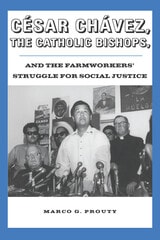
cover of César Chávez, the Catholic Bishops, and the Farmworkers’ Struggle for Social Justice

César Chávez, the Catholic Bishops, and the Farmworkers’ Struggle for Social Justice

Marco G. Prouty

University of Arizona Press, 2006

César Chávez and the farmworkers’ struggle for justice polarized the Catholic community in California’s Central Valley during the 1965–1970 Delano Grape Strike. Because most farmworkers and landowners were Catholic, the American Catholic Church was placed in the challenging position of choosing sides in an intrafaith conflict. Twice Chávez petitioned the Catholic Church for help. Finally, in 1969 the American Catholic hierarchy responded by creating the Bishops’ Ad Hoc Committee on Farm Labor. This committee of five bishops and two priests traveled California’s Central Valley and mediated a settlement in the five-year conflict. Within months, a new and more difficult struggle began in California’s lettuce fields. This time the Catholic Church drew on its long-standing tradition of social teaching and shifted its policy from neutrality to outright support for César Chávez and his union, the United Farmworkers (UFW). The Bishops’ Committee became so instrumental in the UFW’s success that Chávez declared its intervention “the single most important thing that has helped us.” Drawing upon rich, untapped archival sources at the United States Conference of Catholic Bishops, Marco Prouty exposes the American Catholic hierarchy’s internal, and often confidential, deliberations during the California farm labor crisis of the 1960s and 1970s. He traces the Church’s gradual transition from reluctant mediator to outright supporter of Chávez, providing an intimate view of the Church’s decision-making process and Chávez’s steadfast struggle to win rights for farmworkers. This lucid, solidly researched text will be an invaluable addition to the fields of labor history, social justice, ethnic studies, and religious history.
[more]