Results by title
205 books match the query 'City' and 58 start with c
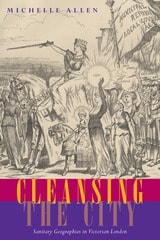
Cleansing the City
Sanitary Geographies in Victorian LondonMichelle Allen
Ohio University Press, 2008
From the novels of Charles Dickens and George Gissing to anonymous magazine articles and pamphlets, resistance to reform found expression in the nostalgic appreciation of a threatened urban landscape and anxiety about domestic autonomy in an era of networked sanitary services. Cleansing the City emphasizes the disruptions and disorientation occasioned by purification—a process we are generally inclined to see as positive. By recovering these sometimes oppositional, sometimes ambivalent responses, Michelle Allen elevates a significant undercurrent of Victorian thought into the mainstream and thus provides insight into the contested nature of sanitary modernization.
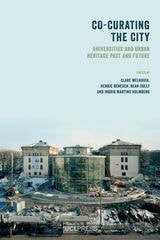
Co-Curating the City
Universities and Urban Heritage Past and FutureEdited by Clare Melhuish, Henric Benesch, Dean Sully, and Ingrid Martins Holmberg
University College London, 2022
Co-Curating the City explores the role of universities in the construction and mobilization of heritage discourses in urban development and regeneration processes, with a focus on six case study sites ranging from Sweden to Brazil. The book expands the field of critical heritage studies in the urban domain, arguing that universities should position themselves as significant institutions in the development of urban heritage narratives and heavily influence urban development. The case studies investigate how universities, as mixed communities of interest dispersed across buildings and urban sites, utilize strategies of engagement with local people and neighborhoods and ask how this could contribute to a reshaping of ideas, narratives, and lived experience of urban heritage in which universities have a distinctive agency.
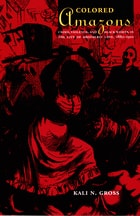
Colored Amazons
Crime, Violence, and Black Women in the City of Brotherly Love, 1880–1910Kali N. Gross
Duke University Press, 2006
Gross draws on prison records, trial transcripts, news accounts, and rare mug shot photographs. Providing an overview of Philadelphia’s black women criminals, she describes the women’s work, housing, and leisure activities and their social position in relation to the city’s native-born whites, European immigrants, and elite and middle-class African Americans. She relates how news accounts exaggerated black female crime, trading in sensationalistic portraits of threatening “colored Amazons,” and she considers criminologists’ interpretations of the women’s criminal acts, interpretations largely based on notions of hereditary criminality. Ultimately, Gross contends that the history of black female criminals is in many ways a history of the rift between the political rhetoric of democracy and the legal and social realities of those marginalized by its shortcomings.
Consumed In The City
Observing Tuberculosis At Century'S EndPaul Draus
Temple University Press, 2004
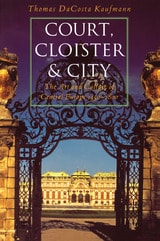
Court, Cloister, and City
The Art and Culture of Central Europe, 1450-1800Thomas DaCosta Kaufmann
University of Chicago Press, 1995
"Kaufmann throws considerable light on one of the more neglected and least understood periods in art history."—Philadelphia Inquirer
"A wonderful book which does justice both to a formal analysis of the art and to an explanation of broader political and economic forces at work."—Virginia Quarterly Review
"Important and stimulating, Kaufmann's study examines the cultural legacy of a region too little known and understood."—Choice
"Peaks of the creative heritage which [Kaufmann] describes reserve their message—and their surprises—for those who visit them in situ. But invest in Kaufmann's volume before you go."—R. J. W. Evans, New York Review of Books
Creative Urban Milieus
Historical Perspectives on Culture, Economy, and the CityEdited by Martina Heßler and Clemens Zimmermann
Campus Verlag, 2008
Skeptical of the current euphoria surrounding the commercialization of culture, a distinguished group of contributors apply a comparative and historical perspective to probe how creative works have affected the global economy. Drawing on lessons from urban planning, art history, and cultural spectacles alike, Creative Urban Milieus will change the way we think about the symbiotic relationship between cities and innovation.

Crossing Great Divides
City and Country in Environmental and Political DisorderJohn D. Fairfield
Temple University Press, 2024
Conventional urban environmental reform has made modern city life possible, but it has done little to limit the despoliation of distant places. Nevertheless, the successes of urban environmental reform remind us of what is possible.
John Fairfield concludes with a case study of Phoenix, Arizona to demonstrate this dysfunctional relationship between city and country while developing a sympathetic critique of the Green New Deal. He suggests how we might bridge the “great divide” as we face the daunting challenges the twenty-first century is pressing upon us.

Cultivating the City
The Long Struggle to Put Land to UseNate Ela
University of Chicago Press, 2027
A story of law and social policy in a place you might not expect: community gardens and urban farms.
Though Chicago is a city of legendary skyscrapers and dense apartment blocks, it is also a city of wide-open tracts of land. This surprising juxtaposition can be viewed as an opportunity, in that available land can become a food source for urban dwellers, especially those experiencing poverty or limited access to grocery stores. But most empty land in Chicago remains empty — why? In Cultivating the City, sociologist and legal scholar Nate Ela examines the history of Chicago’s urban farms and gardens, their promotion as a tool to support the poor and unemployed, and their repeated failure to take root as a permanent part of Chicago’s landscape.
Ela’s fresh take on contemporary urban agriculture features a new perspective on social policy and urban governance. For hundreds of years, social reformers have worked to address poverty and unemployment by letting people use land to grow food. Reformers experimented with the possibilities of property use, including deals to match gardeners with public or private land, proposals to let growers use land without owners’ permission, and the transformation of private land into municipal gardens. By exposing the dynamics of this longstanding but long-overlooked form of social policy in Chicago, Ela offers a new strategy for cultivating cities that are productive, resilient, and just.