Results by title
244 books match the query 'Crime' and 82 start with c
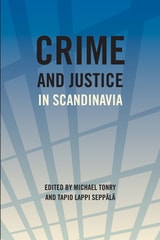
Crime and Justice, Volume 40
Crime and Justice in ScandinaviaEdited by Michael Tonry and Tapio Lappi-Seppälä
University of Chicago Press Journals, 2012
Since 1979 the Crime and Justice series has presented a review of the latest international research, providing expertise to enhance the work of sociologists, psychologists, criminal lawyers, justice scholars, and political scientists. The series explores a full range of issues concerning crime, its causes, and its cure.
Volume 40, Crime and Justice in Scandinavia, offers the most comprehensive and authoritative look ever available at criminal justice policies, practices, and research in the Nordic countries. Topics range from the history of violence through juvenile delinquency, juvenile justice, and sentencing to controversial contemporary policies on prostitution, victims, and organized crime. Contributors to this volume include Jon-Gunnar Bernburg, Ville Hinkkanen, Cecilie Høigård, Hanns von Hofer, Charlotta Holmström, Janne Kivivuori, Lars Korsell, Tapio Lappi-Seppälä, Paul Larsson, Martti Lehti, Torkild Hovde Lyngstad, Sven-Axel Månsson, Anita Rönneling, Lise-Lotte Rytterbro, Torbjørn Skardhamar, May-Len Skilbrei, and Henrik Tham.
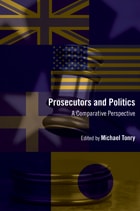
Crime and Justice, Volume 41
Prosecutors and Politics: A Comparative PerspectiveEdited by Michael Tonry
University of Chicago Press Journals, 2012
Prosecutors are powerful figures in any criminal justice system. They decide what crimes to prosecute, whom to pursue, what charges to file, whether to plea bargain, how aggressively to seek a conviction, and what sentence to demand. In the United States, citizens can challenge decisions by police, judges, and corrections officials, but courts keep their hands off the prosecutor. Curiously, in the United States and elsewhere, very little research is available that examines this powerful public role. And there is almost no work that critically compares how prosecutors function in different legal systems, from state to state or across countries. Prosecutors and Politics begins to fill that void.
Police, courts, and prisons are much the same in all developed countries, but prosecutors differ radically. The consequences of these differences are enormous: the United States suffers from low levels of public confidence in the criminal justice system and high levels of incarceration; in much of Western Europe, people report high confidence and support moderate crime control policies; in much of Eastern Europe, people’s perceptions of the law are marked by cynicism and despair. Prosecutors and Politics unpacks these national differences and provides insight into this key area of social control.
Since 1979 the Crime and Justice series has presented a review of the latest international research, providing expertise to enhance the work of sociologists, psychologists, criminal lawyers, justice scholars, and political scientists. The series explores a full range of issues concerning crime, its causes, and its cure.
Crime and Justice, Volume 42
Crime and Justice in America: 1975-2025Edited by Michael Tonry
University of Chicago Press Journals, 2012
For the American criminal justice system, 1975 was a watershed year. Offender rehabilitation and individualized sentencing fell from favor. The partisan politics of “law and order” took over. Among the results four decades later are the world’s harshest punishments and highest imprisonment rate. Policymakers’ interest in what science could tell them plummeted just when scientific work on crime, recidivism, and the justice system began to blossom. Some policy areas—sentencing, gun violence, drugs, youth violence—became evidence-free zones. In others—developmental crime prevention, policing, recidivism studies, evidence mattered. Crime and Justice in America: 1975-2025 tells how policy and knowledge did and did not interact over time and charts prospects for the future. What accounts for the timing of particular issues and research advances? What did science learn or reveal about crime and justice, and how did that knowledge influence policy? Where are we now, and, perhaps even more important, where are we going?
The contributors to this volume, the leading scholars in their fields, bring unsurpassed breadth and depth of knowledge to bear in answering these questions. They include Philip J. Cook, Francis T. Cullen, Jeffrey Fagan, David Farrington, Daniel S. Nagin, Peter Reuter, Lawrence W. Sherman, and Franklin E. Zimring.
For thirty-five years, the Crime and Justice series has provided a platform for the work of sociologists, psychologists, criminal lawyers, justice scholars, and political scientists as it explores the full range of issues concerning crime, its causes, and it remedies.
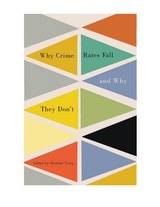
Crime and Justice, Volume 43
Why Crime Rates Fall, and Why They Don'tEdited by Michael Tonry
University of Chicago Press Journals, 2015
The contributors to this volume include Marcelo Aebi, Andromachi Tseloni, Eric Baumer, Manuel Eisner, Graham Farrell, Janne Kivivuori, Tapio Lappi-Seppälä, Suzy McElrath, Richard Rosenfeld, Rossella Selmini, Nick Tilley, and Kevin T. Wolff.
Crime and Justice, Volume 44
A Review of ResearchEdited by Michael Tonry
University of Chicago Press Journals, 2015
Crime and Justice, Volume 45
Sentencing Policies and Practices in Western Countries: Comparative and Cross-National PerspectivesEdited by Michael Tonry
University of Chicago Press Journals, 2016
Crime and Justice, Volume 46
Reinventing American Criminal JusticeEdited by Michael Tonry
University of Chicago Press Journals, 2017
Crime and Justice, Volume 47
A Review of ResearchEdited by Michael Tonry
University of Chicago Press Journals, 2018
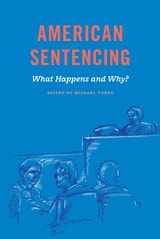
Crime and Justice, Volume 48
American SentencingEdited by Michael Tonry
University of Chicago Press Journals, 2019
This volume covers what students, scholars, practitioners, and policy makers need to know about how sentencing really works, what a half century’s “reforms” have and have not accomplished, how sentencing processes can be made fairer, and how sentencing outcomes can be made more just. Its writers are among America’s leading scholarly specialists—often the leading specialist—in their fields.
Clearly and accessibly written, American Sentencing is ideal for teaching use in seminars and courses on sentencing, courts, and criminal justice. Its authors’ diverse perspectives shed light on these issues, making it likely the single, most authoritative source of information on the state of sentencing in America today.
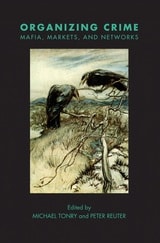
Crime and Justice, Volume 49
Organizing Crime: Mafias, Markets, and NetworksEdited by Michael Tonry and Peter Reuter
University of Chicago Press Journals, 2021
For most Americans, The Godfather, The Sopranos, and the Cosa Nostra exemplify organized crime. In Asia the term conjures up images of Japanese yakuza and Chinese triads, in Italy the Cosa Nostra and ‘Ndrangheta, in Latin America Mexican narco-gangs and Colombian drug cartels, in the Netherlands transnational drug and human trafficking, and in Scandinavia outlaw motorcycle gangs. Some but not all those organizations are “mafias” with centuries-long histories, distinctive cultures, and complicated relationships with local communities and governments. Others are new, large but transitory and with no purpose other than maximizing profits from illegal markets.
Organized crime organizations have existed for centuries. Serious scholarly, as opposed to journalistic or law enforcement, efforts to understand them, however, date back only a few decades. Authoritative overviews were, until very recently, impossible. Rigorous, analytically acute, and methodologically sophisticated literatures did not exist. They have begun to emerge. They have developed in many countries, involve work in different languages and disciplines, and deploy a wide range of methods.
Organizing Crime: Mafias, Markets, and Networks provides the most exhaustive overview ever published of knowledge about organized crime. It provides intensive accounts of American, Italian, and Dutch developments, covers both national mafias and transnational criminality, and delves in depth into gender, human capital, and money laundering issues. The writers are based in seven countries. To a person they are, or are among, the world’s most distinguished specialists in their subjects. At last, credible explanations and testable hypotheses are available concerning when, why, and under what circumstances mafias and other organized crime organizations come into being, what makes them distinctive, what they do and with what effects, and how to contain them.
Crime and Justice, Volume 50
A Review of ResearchEdited by Michael Tonry
University of Chicago Press Journals, 2021
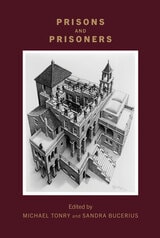
Crime and Justice, Volume 51
Prisons and PrisonersEdited by Michael Tonry and Sandra Bucerius
University of Chicago Press Journals, 2022
Since 1979, the Crime and Justice series has presented a review of the latest international research, providing expertise to enhance the work of sociologists, psychologists, criminal lawyers, justice scholars, and political scientists. The series explores a full range of issues concerning crime, its causes, and its cures. In both the review and the occasional thematic volumes, Crime and Justice offers an interdisciplinary approach to address core issues in criminology.
Volume 51 of Crime and Justice is the first to reprise a predecessor, Prisons (Volume 26, 1999), edited by series editor Michael Tonry and the late Joan Petersilia. In Prisons and Prisoners, editors Michael Tonry and Sandra Bucerius revisit the subject for several reasons.
In 1999, most scholarly research concerned developments in Britain and the United States and was published in English. Much of that was sociological, focused on inmate subcultures, or psychological, focused on how prisoners coped with and adapted to prison life. Some, principally by economists and statisticians, sought to measure the crime-preventive effects of imprisonment generally and the deterrent effects of punishments of greater and lesser severity. In 2022, serious scholarly research on prisoners, prisons, and the effects of imprisonment has been published and is underway in many countries. That greater cosmopolitanism is reflected in the pages of this volume. Several essays concern developments in places other than Britain and the United States. Several are primarily comparative and cover developments in many countries. Those primarily concerned with American research draw on work done elsewhere.
The subjects of prison research have also changed. Work on inmate subcultures and coping and adaptation has largely fallen by the wayside. Little is being done on imprisonment’s crime-preventive effects, largely because they are at best modest and often perverse. An essay in Volume 50 of Crime and Justice, examining the 116 studies then published on the effects of imprisonment on subsequent offending, concluded that serving a prison term makes ex-prisoners on average more, not less, likely to reoffend.
In 1999, little research had been done on the effects of imprisonment on prisoners’ families, children, or communities, or even—except for recidivism— on ex-prisoners’ later lives: family life, employment, housing, physical and mental health, or achievement of a conventional, law-abiding life. The first comprehensive survey of what was then known was published in the earlier Crime and Justice: Prisons volume. An enormous literature has since emerged, as essays in this volume demonstrate. Comparatively little work had been done by 1999 on the distinctive prison experiences of women and members of non-White minority groups. That too has changed, as several of the essays make clear.
What is not clear is the future of imprisonment. Through more contemporary and global lenses, the essays featured in this volume not only reframe where we are in 2022 but offer informed insights into where we might be heading.
Crime and Justice, Volume 52
A Review of ResearchEdited by Michael Tonry
University of Chicago Press Journals, 2024
Since 1979, Crime and Justice has presented a review of the latest international research, providing expertise to enhance the work of sociologists, psychologists, criminal lawyers, justice scholars, and political scientists. The series explores a full range of issues concerning crime, its causes, and its cures. In both the review and the thematic volumes, Crime and Justice offers an interdisciplinary approach to address core issues in criminology.
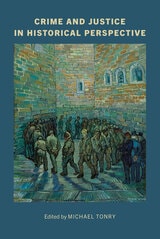
Crime and Justice, Volume 53
Crime and Justice in Historical PerspectiveEdited by Michael Tonry
University of Chicago Press Journals, 2024
Since 1979, Crime and Justice has presented a review of the latest international research, providing expertise to enhance the work of sociologists, psychologists, criminal lawyers, justice scholars, and political scientists. The series explores a full range of issues concerning crime, its causes, and its cures. In both the review and the thematic volumes, Crime and Justice offers an interdisciplinary approach to address core issues in criminology.
Crime and Justice, Volume 54
A Review of ResearchEdited by Michael Tonry
University of Chicago Press Journals, 2025
Since 1979, Crime and Justice: A Review of Research has presented reviews of the latest international research in criminology and criminal justice, providing expertise to enhance the work of sociologists, psychologists, criminal lawyers, criminologists, and political scientists. Volume 54 publishes first-rate review essays by leading scholars that summarize what is known about both cutting-edge and enduring subjects, what needs to be known, and how that might be accomplished. The wide-ranging, multidisciplinary topics covered include crime trends, immigration and crime, mass incarceration, money laundering, penal policy in Eastern and Central Europe, criminal frauds, the concept of lesser eligibility, and W. E. B. Du Bois’s unheralded contributions to criminology.
Crime and Justice, Volume 5
An Annual Review of ResearchEdited by Michael Tonry and Norval Morris
University of Chicago Press Journals, 1983
Crime and Justice, Volume 6
An Annual Review of ResearchEdited by Michael Tonry and Norval Morris
University of Chicago Press Journals, 1985

Crime and Justice, Volume 8
Communities and CrimeEdited by Albert J. Reiss Jr. and Michael Tonry
University of Chicago Press Journals, 1987
Examining the ways in which communities both affect crime and are affected by it, this volume seeks to explain the wide variation of crime levels among different communities. As it attempts to redress the bias toward describing crime in terms of individuals, Communities and Crime brings concentrated attention to crime at a community level, suggesting ways in which neighborhoods can change their crime patterns.
Crime and Justice, Volume 9
Prediction and Classification in Criminal Justice Decision MakingEdited by Don M. Gottfredson and Michael Tonry
University of Chicago Press Journals, 1988
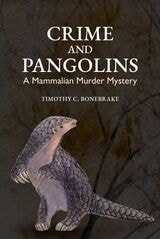
Crime and Pangolins
A Mammalian Murder MysteryTimothy C. Bonebrake
Hong Kong University Press, 2026
In 2018, authorities in Hong Kong seized a shipment from smugglers that contained 88 dead pangolins. Where did these animals come from, and why were they killed? Where were they going? Who was responsible? In classic true crime fashion, Crime and Pangolins examines evidence, suspects, and legal perspectives related to this specific case and, through it, the plight of pangolins globally.
The chapters detail the lives and natural history of pangolins across Africa and Asia while exploring clues that may reveal who is responsible for the endangerment of the species. The book also explores speculation surrounding the possible role of pangolins in the emergence of COVID-19 and, more broadly, the relationship between wildlife trade and zoonotic disease. The resulting tale is one of conservation researchers, public health experts, and global organizations across Asia, Africa, North America, and Europe fighting to create a world in which pangolins can thrive again.
Crime and Punishment in Latin America
Law and Society Since Late Colonial TimesRicardo D. Salvatore, Carlos Aguirre, and Gilbert M. Joseph, eds.
Duke University Press, 2001
While disassociating law from a strictly legalist approach, the volume showcases a number of highly original studies on topics such as the role of law in processes of state formation and social and political conflict, the resonance between legal and cultural phenomena, and the contested nature of law-enforcing discourses and practices. Treating law as an ambiguous and malleable arena of struggle, the contributors to this volume—scholars from North and Latin America who represent the new wave in legal history that has emerged in recent years-- demonstrate that law not only produces and reformulates culture, but also shapes and is shaped by larger processes of political, social, economic, and cultural change. In addition, they offer valuable insights about the ways in which legal systems and cultures in Latin America compare to those in England, Western Europe, and the United States.
This volume will appeal to scholars in Latin American studies and to those interested in the social, cultural, and comparative history of law and legal phenomena.
Contributors. Carlos Aguirre, Dain Borges, Lila Caimari, Arlene J. Díaz, Luis A. Gonzalez, Donna J. Guy, Douglas Hay, Gilbert M. Joseph, Juan Manuel Palacio, Diana Paton, Pablo Piccato, Cristina Rivera Garza, Kristin Ruggiero, Ricardo D. Salvatore, Charles F. Walker
Crime and Punishment in the Jim Crow South
Edited by Amy Louise Wood and Natalie J. Ring
University of Illinois Press, 2019
In this collection, Amy Louise Wood and Natalie J. Ring present nine groundbreaking essays about the carceral system and its development over time. Topics range from activism against police brutality to the peculiar path of southern prison reform to the fraught introduction of the electric chair. The essays tell nuanced stories of rapidly changing state institutions, political leaders who sought to manage them, and African Americans who appealed to the regulatory state to protect their rights.
Contributors: Pippa Holloway, Tammy Ingram, Brandon T. Jett, Seth Kotch, Talitha L. LeFlouria, Vivien Miller, Silvan Niedermeier, K. Stephen Prince, and Amy Louise Wood
Crime and Social Justice in Indian Country
Edited by Marianne O. Nielsen and Karen Jarratt-Snider
University of Arizona Press, 2018
Crime and Social Justice in Indian Country calls to attention the need for culturally appropriate research protocols and critical discussions of social and criminal justice in Indian Country. The contributors come from the growing wave of Native American as well as non-Indigenous scholars who employ these methods. They reflect on issues in three key areas: crime, social justice, and community responses to crime and justice issues. Topics include stalking, involuntary sterilization of Indigenous women, border-town violence, Indian gaming, child welfare, and juvenile justice. These issues are all rooted in colonization; however, the contributors demonstrate how Indigenous communities are finding their own solutions for social justice, sovereignty, and self-determination.
Thanks to its focus on community responses that exemplify Indigenous resilience, persistence, and innovation, this volume will be valuable to those on the ground working with Indigenous communities in public and legal arenas, as well as scholars and students. Crime and Social Justice in Indian Country shows the way forward for meaningful inclusions of Indigenous peoples in their own justice initiatives.
Contributors
Alisse Ali-Joseph
William G. Archambeault
Cheryl Redhorse Bennett
Danielle V. Hiraldo
Lomayumptewa K. Ishii
Karen Jarratt-Snider
Eileen Luna-Firebaugh
Anne Luna-Gordinier
Marianne O. Nielsen
Linda M. Robyn
Crime and the Media
The Post-Modern SpectacleEdited by David Kidd-Hewitt and Richard Osborne
Pluto Press, 1996
Real-life crime, crime reconstruction and crime as entertainment are categories that are now so interdependent that the media itself is in danger of confusing the genres as it seeks to profit from their undoubted appeal. This intertextuality is a key theme in this collection. The contributors highlight and theorise the symbiosis that exists between real crime and its representations, from media moral panics, policing the crisis and representing order to the postmodern confusion of crime and spectacle, trial by media and trials on media. As recent debates have shown all too starkly, the media's neutrality in this critical area is ever more problematic.
This is an invaluable introduction to new thinking in a pressing contemporary debate.
Crime in Verse
The Poetics of Murder in the Victorian EraEllen L. O’Brien
The Ohio State University Press, 2008
Crime in the Public Mind
Kathlyn Taylor Gaubatz
University of Michigan Press, 1995
Crime, Corrections, and the COVID-19 Pandemic
Responses and Adaptations in the U.S. Criminal Justice SystemEdited by Breanne Pleggenkuhle and Joseph A. Schafer
Southern Illinois University Press, 2025
Analyses of crime and justice in an unprecedented time
While COVID-19 lockdowns affected nearly everyone worldwide, feelings of anxiety and fear were exacerbated for those already entangled in the criminal justice system. Scholars recognized the unique opportunity to study crime and the justice system’s response during this period, though they soon realized that determining the pandemic’s effects would be a complicated, nuanced process.
Crime, Corrections, and the COVID-19 Pandemic features analyses and findings from more than thirty contributors in eleven essays. The collection examines the multifaceted social, economic, cultural, legislative, and policy responses to COVID-19 and their impacts on crime and justice. It also explores how professionals across the criminal justice system—police officers, campus police officers, attorneys, judges, correctional staff, and community supervision agents—adapted to unprecedented challenges.
The book provides real-world evidence of how unconventional solutions and groundbreaking practices were implemented in response to a global crisis. Contributors analyze how incarcerated individuals, their families, and their supervisors dealt with the fear of transmission, medical care, and death. Their findings, which are necessarily dependent on timing, place, measurement, and operationalization, include both change and stasis, both negative and positive outcomes. For instance, while minor and property-related offenses initially declined, violent crimes like homicide and intimate partner violence increased. Drug usage patterns changed, leading to a rise in opioid overdoses, and despite the rise in digital interactions, there was no significant difference in self-reported cybervictimization. Furthermore, rates of gang-related crimes did not decrease. Policy and public health responses reshaped criminal activities, influencing the methods and motivations behind theft, child and elder abuse, and other offenses. This volume includes in-depth examinations of certain often-overlooked crimes, such as labor trafficking, and provides direct insights into the job challenges faced by criminal justice professionals, from probation personnel to labor rights advocates.
Emerging innovations in health risk management within correctional facilities led to increased awareness and focus on specific types of crime. Responses to the pandemic revealed significant challenges, such as burnout among justice system personnel, difficulties in adapting and innovating, and challenges in providing services to vulnerable populations.
Through diverse perspectives and empirical approaches ranging from advanced statistical analysis to qualitative interviews, Crime, Corrections, and the COVID-19 Pandemic offers a comprehensive exploration of the complexities that affect research results. It showcases the resilience and innovation within the criminal justice field and details the challenges professionals in this area tackled during a universally trying time, presenting valuable lessons for future crises.
Crime, Punishment, and Mental Illness
Law and the Behavioral Sciences in ConflictErickson, Patricia
Rutgers University Press, 2008
In Crime, Punishment, and Mental Illness, Patricia E. Erickson and Steven K. Erickson explore how societal beliefs about free will and moral responsibility have shaped current policies and they identify the differences among the goals, ethos, and actions of the legal and health care systems. Drawing on high-profile cases, the authors provide a critical analysis of topics, including legal standards for competency, insanity versus mental illness, sex offenders, psychologically disturbed juveniles, the injury and death rates of mentally ill prisoners due to the inappropriate use of force, the high level of suicide, and the release of mentally ill individuals from jails and prisons who have received little or no treatment.

Crimes of August
A NovelRubem Fonseca
Tagus Press, 2014
Rubem Fonseca's Crimes of August offers the first serious literary treatment of the cataclysmic events of August 1954, arguably the most turbulent month in Brazilian history. A rich novel, both culturally and historically, Crimes of August tells two stories simultaneously. The first is private, involving the well-delineated character of Alberto Mattos, a police officer. The other is public, focusing on events that begin with the attempted assassination of Carlos Lacerda, a demagogic journalist and political enemy of President Getúlio Vargas, and culminate in Vargas's suicide on August 24,1954. Throughout this suspenseful novel, deceptively couched as a thriller, Fonseca interweaves fact and fiction in a complex, provocative plot. At the same time, he re-creates the atmosphere of the 1950s, when Rio de Janeiro was Brazil's capital and the nexus of political intrigue and corruption. Mattos is assigned to solve the brutal murder of a wealthy entrepreneur in the aftermath of what appears to be a homosexual liaison. An educated and introspective man, and one of the few in his precinct not on the take from the bankers of the illegal lottery, Mattos suffers from alienation and a bleeding ulcer. His investigation puts him on a dangerous collision course with the conspiracy to depose Vargas, the novel's other narrative thread. The two overlap at several points, coming to their tragic end with the aged politician's suicide and Mattos's downfall.
Criminal Justice in Native America
Edited by Marianne O. Nielsen and Robert A. Silverman
University of Arizona Press, 2009
Each of the fourteen chapters of Criminal Justice in Native America was commissioned specifically for this volume. Contributors—many of whom are Native Americans—rank among the top scholars in their fields. Some of the chapters treat broad subjects, including crime, police, courts, victimization, corrections, and jurisdiction. Others delve into more specific topics, including hate crimes against Native Americans, state-corporate crimes against Native Americans, tribal peacemaking, and cultural stresses of police officers. Separate chapters are devoted to women and juveniles.
The well-known scholar Marianne Nielsen provides a context-setting introduction, in which she addresses the history of the legal treatment of Native Americans in the United States as well as a provocative conclusion that details important issues for current and future research in Native American criminal justice studies. Intended to introduce students to the substantive concerns of a range of disciplines that contribute to Native American Studies—among them, criminal justice and criminology, law, sociology, and anthropology—Criminal Justice in Native America will interest all readers who are concerned about relationships between Native peoples and prevailing criminal justice systems.
Criminology and Public Policy
Putting Theory to WorkHugh Barlow
Temple University Press, 2009
In applying theories to real world issues—such as reducing crime and violence, prisoner reentry policies, gang behavior, and treatment courts—the contributors take both a macro and micro level approach. They find, too, that it is often difficult to turn theory into practice. Still, the very attempt pushes the criminal justice system toward workable solutions rather than ideological approaches, an orientation the editors believe will lead to greater progress in combating one of our society’s greatest difficulties.
Contributors include: Robert Agnew, Ronald L. Akers, Gordon Bazemore, Ronald V. Clarke, J. Heith Copes, Frank Cullen, Marcus Felson, Marie Griffin, Scott Jacques, David Kauzlarich, Jean McGloin, Steven Messner, Alex Piquero, Nicole Leeper Piquero, Nancy Rodriguez, Richard B. Rosenfeld, Dawn Rothe, Andrea Schoepfer, Neal Shover, Cassia Spohn, Katherine Tellis, Charles Tittle, Richard Wright, and the editors.
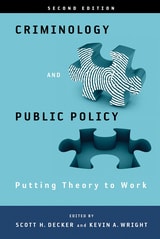
Criminology and Public Policy
Putting Theory to WorkScott H. Decker and Kevin A. Wright
Temple University Press, 2018
In the field of criminal justice, public policy is designed to address the problems brought on by criminal behavior and the response to that behavior. However, too often, the theories carefully developed in the academy fail to make their way into programs and policy. The editors and contributors to this second edition of Criminology and Public Policy highlight the recent development of “translational criminology” to address the growing movement in criminology to use the results of criminological research and theory to better inform policy and practice.
The essays in Criminology and Public Policy propose an in-depth look at both theory and practice and how they are integrated across a number of key criminal justice problems—from racial and environmental concerns to gun control and recidivism rates as well as police use of force and mass incarceration. The end result is an essential volume that blends both theory and practice in an effort to address the critical problems in explaining, preventing, responding to, and correcting criminal behavior.
Contributors include: Robert K. Ax, Michelle N. Block, Anthony A. Braga, Rod K. Brunson, Jennifer Carlson, Ronald V. Clarke, Shea Cronin, Megan Denver, Kevin M. Drakulich, Grant Duwe, Amy Farrell, Cheryl Jonson, Charis E. Kubrin, Justin Kurland, Megan Kurlychek, Shannon Magnuson, Daniel P. Mears, Robert D. Morgan, Kathleen Powell, Danielle Rudes, Cassia Spohn, Cody Telep, Natalie Todak, Glenn Trager, Jillian J. Turanovic, Sara Wakefield, Patricia Warren, David Weisburd, Michael D. White, Rob White, Lauren Wilson and the editors