715 books match the query 'Ethnic relations' and 56 start with c
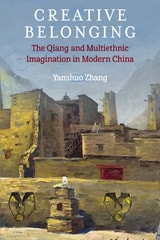
cover of Creative Belonging: The Qiang and Multiethnic Imagination in Modern China

Creative Belonging

The Qiang and Multiethnic Imagination in Modern China

Yanshuo Zhang

University of Michigan Press, 2026

China is a multicultural country home to fifty-five ethnic minority groups, yet due to linguistic and cultural barriers many of these groups remain understudied or unknown in the West. The Qiang, one of modern China’s officially recognized ethnic minorities, is also China’s longest-standing ethnoracial identity marker that has existed since the earliest recorded history of China. Creative Belonging investigates the formation and evolution of the Qiang as a people, a concept, and a cultural history in China. It further examines how the contemporary Qiang ethnic group interacts strategically with mainstream Chinese society, challenging the historically entrenched hierarchies between the sociocultural “centers” of China and its ethnic “peripheries.” 

This book is based on years of ethnographic and textual-archival research in the Himalayan regions of southwest China, where the contemporary Qiang group resides. Drawing on a diverse range of official and local political discourses and previously unstudied literary, historiographical, and cinematic works, Yanshuo Zhang illuminates how the Qiang have carved out spaces of “creative belonging” within the parameters of multiculturalism in contemporary China. Rooted in ethnographic and textual-archival research, the book presents original materials produced by Qiang indigenous writers, scholars, artists, grassroots village cultural activists, and entrepreneurs at both the local and the global levels. Creative Belonging invites readers to rethink ethnicity and national belonging in China by centering minority groups’ efforts to expand the meanings and implications of “Chinese culture.” 
[more]
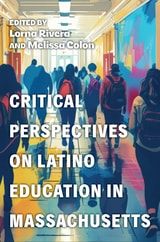
cover of Critical Perspectives on Latino Education in Massachusetts

Critical Perspectives on Latino Education in Massachusetts

Lorna Rivera and Melissa Colón, editors

University of Massachusetts Press, 2025

In Massachusetts, the Latino population increased by 475 percent between 1980 and 2017, marking a dramatic growth. This diverse ethnic community of Puerto Ricans, Dominicans, Salvadoreans, Colombians, Brazilians, and more also contains a wide range of cultures, immigration and migration experiences, languages, and socio-political backgrounds. However, there are numerous commonalities involving education. Recent research at the Mauricio Gastón Institute for Latino Community Development and Policy reveals that Latino students in Massachusetts are more likely to attend public schools, in communities with significant academic achievement and opportunity gaps as well as other challenges, from food scarcity to higher rates of unemployment. At the same time, the state-wide shift to standards-based education has had a disproportionately negative impact on Latino students, who already feel the effects of politically motivated anti-immigrant policies and laws that limit bilingual education.

This collection of essays, from those working inside the classroom as well as researchers taking a broader look at policy, addresses the array of issues facing Latino students in Massachusetts. These perspectives paint a complex picture of the educational experience for Latinos, and offer expert suggestions for improving classrooms, school environments, and ultimate educational outcomes for an important growing demographic in the Commonwealth.

In addition to editors Lorna Rivera and Melissa Colón, this volume’s contributors include Almudena G. Abeyta, Nasteho Ali, Cristina Araujo Brinkerhoff, Michael Berardino, Alex Briesacher, Thomas Conroy, Judenie Dabel, Liya Escalera, Luis Enrique Esquivel, Deyja Enriquez, Isahiah Erilus, Nyal Fuentes, Jazmin Rubi Flete Gomez, Manuel Frau-Ramos, Kimberly A. S. Howard, Patricia Krueger-Henney, Steven Lue, Mary Jo Marion, Timothy E. Murphy, Cecilia Nardi, Laurie Occhipinti, Alexandra Oliver-Davila, Chong Myung Park, Angelica Rodriquez, Marta T. Rosa, Diana Santiago, Melissa Sargent, Ester Shapiro, V. Scott H. Solberg, Fabián Torres-Ardila, Ashley Torres Carrasquillo, Paul Trunfio, Carmen N. Veloria, and Heilam Xie.
[more]
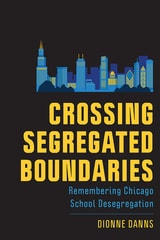
cover of Crossing Segregated Boundaries: Remembering Chicago School Desegregation

Crossing Segregated Boundaries

Remembering Chicago School Desegregation

Dionne Danns

Rutgers University Press, 2021
Scholars have long explored school desegregation through various lenses, examining policy, the role of the courts and federal government, resistance and backlash, and the fight to preserve Black schools. However, few studies have examined the group experiences of students within desegregated schools. Crossing Segregated Boundaries centers the experiences of over sixty graduates of the class of 1988 in three desegregated Chicago high schools. Chicago’s housing segregation and declining white enrollments severely curtailed the city’s school desegregation plan, and as a result desegregation options were academically stratified, providing limited opportunities for a chosen few while leaving the majority of students in segregated, underperforming schools. Nevertheless, desegregation did provide a transformative opportunity for those students involved. While desegregation was the external impetus that brought students together, the students themselves made integration possible, and many students found that the few years that they spent in these schools had a profound impact on broadening their understanding of different racial and ethnic groups. In very real ways, desegregated schools reduced racial isolation for those who took part.
[more]
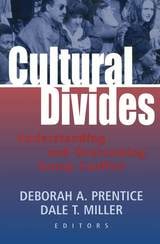
cover of Cultural Divides: Understanding and Overcoming Group Conflict

Cultural Divides

Understanding and Overcoming Group Conflict

Deborah Prentice

Russell Sage Foundation, 1999
Thirty years of progress on civil rights and a new era of immigration to the United States have together created an unprecedented level of diversity in American schools, workplaces, and neighborhoods. But increased contact among individuals from different racial and ethnic groups has not put an end to misunderstanding and conflict. On the contrary, entrenched cultural differences raise vexing questions about the limits of American pluralism. Can a population of increasingly mixed origins learn to live and work together despite differing cultural backgrounds? Or, is social polarization by race and ethnicity inevitable? These are the dilemmas explored in Cultural Divides, a compendium of the latest research into the origins and nature of group conflict, undertaken by a distinguished group of social psychologists who have joined forces to examine the effects of culture on social life. Cultural Divides shows how new lines of investigation into intergroup conflict shape current thinking on such questions as: Why are people so strongly prone to attribute personal differences to group membership rather than to individual nature? Why are negative beliefs about other groups so resistent to change, even with increased contact? Is it possible to struggle toward equal status for all people and still maintain separate ethnic identities for culturally distinct groups? Cultural Divides offers new theories about how social identity comes to be rooted in groups: Some essays describe the value of group membership for enhancing individual self-esteem, while others focus on the belief in social hierarchies, or the perception that people of different skin colors and ethnic origins fall into immutably different categories. Among the phenomena explored are the varying degrees of commitment and identification felt by many black students toward their educational institutions, the reasons why social stigma affects the self-worth of some minority groups more than others, and the peculiar psychology of hate crime perpetrators. The way cultural boundaries can impair our ability to resolve disputes is a recurrent theme in the volume. An essay on American cultures of European, Asian, African, and Mexican origin examines core differences in how each traditionally views conflict and its proper methods of resolution. Another takes a hard look at the multiculturalist agenda and asks whether it can realistically succeed. Other contributors describe the effectiveness of social experiments aimed at increasing positive attitudes, cooperation, and conflict management skills in mixed group settings. Cultural Divides illuminates the beliefs and attitudes that people hold about themselves in relation to others, and how these social thought processes shape the formation of group identity and intergroup antagonism. In so doing, Cultural Divides points the way toward a new science of cultural contact and confronts issues of social change that increasingly affect all Americans.
[more]
cover of Culture and Resource Conflict: Why Meanings Matter

Culture and Resource Conflict

Why Meanings Matter

Douglas L. Medin

Russell Sage Foundation, 2006
In a multi-cultural society, differing worldviews among groups can lead to conflict over competing values and behaviors. Nowhere is this tension more concrete than in the wilderness, where people of different cultures hunt and fish for the same animals. White Americans tend to see nature as something external which they have some responsibility to care for. In contrast, Native Americans are more likely to see themselves as one with nature. In Culture and Resource Conflict, authors Douglas Medin, Norbert Ross, and Douglas Cox investigate the discord between whites and Menominee American Indians over hunting and fishing, and in the process, contribute to our understanding of how and why cultures so often collide. Based on detailed ethnographic and experimental research, Culture and Resource Conflict finds that Native American and European American hunters and fishermen have differing approaches—or mental models—with respect to fish and game, and that these differences lead to misunderstanding, stereotyping, and conflict. Menominee look at the practice of hunting and fishing for sport as a sign of a lack of respect for nature. Whites, on the other hand, define respect for nature more on grounds of resource management and conservation. Some whites believe—contrary to fact—that Native Americans are depleting animal populations with excessive hunting and fishing, while the Menominee protest that they only hunt what they need and make extensive use of their catch. Yet the authors find that, despite these differences, the two groups share the fundamental underlying goal of preserving fish and game for future generations, and both groups see hunting and fishing as deeply meaningful activities. At its core, the conflict between these two groups is more about mistrust and stereotyping than actual disagreement over values. Combining the strengths of psychology and anthropology, Culture and Resource Conflict shows how misunderstandings about the motives of others can lead to hostility and conflict. As debates over natural resources rage worldwide, this unique book demonstrates the obstacles that must be overcome for different groups to reach consensus over environmental policy.
[more]
cover of Czecho/Slovakia: Ethnic Conflict, Constitutional Fissure, Negotiated Breakup

Czecho/Slovakia

Ethnic Conflict, Constitutional Fissure, Negotiated Breakup

Eric Stein

University of Michigan Press, 2000

As the clock struck midnight on December 31, 1992, Czechoslovakia, the only genuine democracy in post-World War I Central-Eastern Europe, broke up into two independent successor states. This book explores the failed search for a postcommunist constitution and it records in a lively style a singular instance of the peaceful settlement of an ethnic dispute.
For more than three years after the implosion of the Communist regime in 1989, the Czechs and Slovaks negotiated the terms of a new relationship to succeed the centralized federation created under communism. After failing to agree to the terms of a new union, the parties agreed on an orderly breakup.
In the background of the narrative loom general issues such as: What are the sources of ethnic conflict and what is the impact of nationalism? Why do ethnic groups choose secession and what makes for peaceful rather than violent separation? What factors influence the course of postcommunist constitutional negotiations, which are inevitably conducted in the context of institutional and societal transformation? The author explores these issues and the reasons for the breakup.
Eric Stein, a well-known scholar of comparative law and a native of Czechoslovakia, was invited by the Czechoslovak government to assist in the drafting of a new constitution. This book is based on his experiences during years of work on these negotiations as well as extensive interviews with political figures, journalists, and academics and extensive research in the primary documents. It will appeal to historians, lawyers, and social scientists interested in the process of transformation in Eastern Europe and the study of ethnic conflict, as well as the general reader interested in modern European history.
Eric Stein is Hessel E. Yntema Professor Emeritus, University of Michigan Law School. He previously served with the United States Department of State in the Legal Advisor's Office. He is the author of many books and articles on comparative law and the law of the European Community.
[more]