Results by title
1107 books match the query 'Memoirs' and 58 start with c

Crossing the Blue Willow Bridge
A Journey to My Daughter's Birthplace in ChinaNancy McCabe
University of Missouri Press, 2011
Crossing the River
A Memoir of the American Left, the Cold War, and Life in East GermanyVictor Grossman
University of Massachusetts Press, 2003
What could possibly impel a relatively privileged twenty-four-year-old American-serving in the U.S. Army in Germany in 1952 to swim across the Danube River to what was then referred to as the Soviet Zone? How are we to understand his decision to forsake the land of his birth and build a new life in the still young German Democratic Republic? These are the questions at the core of this memoir by Victor Grossman, who was born Stephen Wechsler but changed his name after defecting to the GDR.
A child of the Depression, Grossman witnessed firsthand the dislocations wrought by the collapse of the U.S. economy during the 1930s. Widespread unemployment and poverty, CIO sit-down strikes, and the fight to save Republican Spain from fascism-all made an indelible impression as he grew up in an environment that nurtured a commitment to left-wing causes. He continued his involvement with communist activities as a student at Harvard in the late 1940s and after graduation, when he took jobs in two factories in Buffalo, New York, and tried to organize their workers.
Fleeing McCarthyite America and potential prosecution, Grossman worked in the GDR with other Western defectors and eventually became, as he notes, the “only person in the world to attend Harvard and Karl Marx universities.” Later, he was able to establish himself as a freelance journalist, lecturer, and author. Traveling throughout East Germany, he evaluated the failures as well as the successes of the GDR's “socialist experiment.” He also recorded his experiences, observations, and judgments of life in East Berlin after reunification, which failed to bring about the post-Communist paradise so many had expected.
Written with humor as well as candor, Crossing the River provides a rare look at the Cold War from the other side of the ideological divide.
Mark Solomon, a distinguished historian of the American left, provides a historical afterword that places Grossman's experiences in a larger Cold War context.
Crossing the Yard
Thirty Years as a Prison VolunteerRichard Shelton
University of Arizona Press, 2007
Richard Shelton was a young English professor in 1970 when a convict named Charles Schmid—a serial killer dubbed the “Pied Piper of Tucson” in national magazines—shared his brooding verse. But for Shelton, the novelty of meeting a death-row monster became a thirty-year commitment to helping prisoners express themselves. Shelton began organizing creative writing workshops behind bars, and in this gritty memoir he offers up a chronicle of reaching out to forgotten men and women—and of creativity blossoming in a repressive environment. He tells of published students such as Paul Ashley, Greg Forker, Ken Lamberton, and Jimmy Santiago Baca who have made names for themselves through their writing instead of their crimes. Shelton also recounts the bittersweet triumph of seeing work published by men who later met with agonizing deaths, and the despair of seeing the creative strides of inmates broken by politically motivated transfers to private prisons. And his memoir bristles with hard-edged experiences, ranging from inside knowledge of prison breaks to a workshop conducted while a riot raged outside a barricaded door. Reflecting on his decision to tutor Schmid, Shelton sees that the choice “has led me through bloody tragedies and terrible disappointments to a better understanding of what it means to be human.”
Crossing the Yard is a rare story of professional fulfillment—and a testament to the transformative power of writing.
Cuarto oscuro
Recuerdos en blanco y negroLila Quintero Weaver, translated by Karina Elizabeth Vázquez
University of Alabama Press, 2018
Por medio de impresionantes ilustraciones, la autora ofrece una memoria cautivante y conmovedora de la infancia, las relaciones raciales, la etnicidad y la identidad en el sur de los Estados Unidos.
La novela gráfico de Lila Quintero-Weaver que obtuvo amplio reconocimiento crítico. Por medio de impresionantes ilustraciones, la autora ofrece una memoria cautivante y conmovedora de la infancia, las relaciones raciales, la etnicidad y la identidad en el sur de los Estados Unidos. Sus dibujos de estilo sutil, pero efectivo, refuerzan dramáticament una sentida narración.
En 1961, cuando la autora tenía cinco años, su familia salió de Buenos Aires, Argentina, para emigrar a los Estados Unidos y establecerse en Marion, un pueblo en el corazón del Black Belt de Alabama. En una región definida por la segregación racial, la familia Quintero, por su condición de clase media educada, se halló en una situación privilegiada para observar las tensiones que minaban la cultura y la sociedad en la que vivían.
Weaver salió de constancia de lo que signifacaba ser una niña latina en una le las regiones más racistas del sur de los Estados Unidos, tratando de entender tanto un país extranjero, como el horror de las relaciones raciales de nuestra nación. Excluida de las categorías raciales empleadas por entonces, la autora observó desde muy temprana edad las desigualdades de la cultura estadounidense, regida por un ideal de belleza femenina que privilegiaba a la mujer rubia y de ojos azules. A lo largo de su vida, Weaver ha luchado por encontrar su lugar en la sociedad norteamericana cuestionando la discriminación de su entorno. Cuarto oscuro contituye su legado visual y verbal sobre esa lucha.
Curating the American Past
A Memoir of a Quarter Century at the Smithsonian National Museum of American HistoryPete Daniel
University of Arkansas Press, 2022
“As is well known, Pete is an outstanding storyteller, and this book is no exception."
—Claire Strom, Journal of Southern History
In addition to chronicling significant exhibit work at the Smithsonian National Museum of American History, Curating the American Past, captures the excitement inherent in researching and writing history and Pete Daniel’s efforts to prevent diluted celebratory stories from replacing the red meat of the American past.
In Curating the American Past, Pete Daniel reveals how curators collect objects, plan exhibits, and bring alive the country’s complex and exciting history. In vivid detail, Daniel recounts the exhilaration of innovative research, the joys of collaboration, and the rewards of mentoring new generations of historians. In a career distinguished by prize-winning publications and pathbreaking exhibitions, Daniel also confronted the challenges of serving as a public historian tasked with protecting a definitive American museum from the erosion of scholarly standards. Curating the American Past offers a wealth of museum wisdom, illuminating the crucial role that dedicated historians and curators serve within our most important repositories of cultural memory.
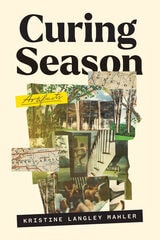
Curing Season
ArtifactsKristine Langley Mahler
West Virginia University Press, 2022
“A lovely and rapturous excavation and examination of the past, a lesson in writing oneself into history when it doesn’t offer you a space.” —Jenny Boully, author of Betwixt-and-Between: Essays on the Writing Life
After spending four years of adolescence in suburban North Carolina, Kristine Langley Mahler, even as an adult, is still buffeted by the cultural differences between her pioneer-like upbringing in Oregon and the settled southern traditions into which she could never assimilate. Collecting evidence of displacement—a graveyard in a mall parking lot, a suburban neighborhood of white kids bused to desegregate public schools in the 1990s, and the death of her best friend—Curing Season is an attempt to understand her failed grasp at belonging.
Mahler’s yearning for acceptance remains buried like a splinter, which she carefully tweezes out in the form of artifacts from her youth. But it isn’t until she encounters a book of local family histories that she takes inhabitation and truth apart, grafting and twisting and imprinting her history on theirs, until even she can no longer tell the difference between their truth and her own. Using inventive essay forms, Mahler pries apart the cracks of exclusion and experiments with the nature of belonging, memory, and place. Curing Season is a coming-of-age memoir for anyone who grew up anywhere but home.
Curiouser and Curiouser
EssaysNicholas Delbanco
The Ohio State University Press, 2017
Whether exploring the history of personal viewing in the business of museum-going, musing on the process of rewriting one’s earliest published work, or looking back on the twists and turns of a life that spans the greater part of the twentieth century and into the twenty-first, Delbanco’s Curiouser and Curiouser invites adventurous readers to follow him down the rabbit hole as he reflects on life as a student, an observer, a writer, a lover, a father, a teacher, and most importantly, a participant in the everyday experiences of human life.
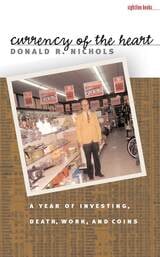
Currency of the Heart
A Year of Investing, Death, Work, and CoinsDonald Nichols
University of Iowa Press, 2002
Nichols uses money in myriad forms—a grandfather‘s silver dollar, stocks and bonds, salaries, pallets of coins at the U.S. Mint, on-the-job dealings with coin collectors—as touchstones for reflections on relationships, motives, and a career "like one of those moving walkways in airports." His father's health is measured, tested, and evaluated in part by the health of his finances; at the same time, the turmoil and mystery surrounding both money and relationships are reflected in this memorable story.