Results by title
1066 books match the query 'Political' and 55 start with c
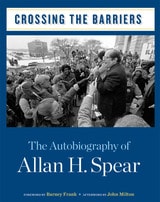
Crossing the Barriers
The Autobiography of Allan H. SpearAllan H. Spear
University of Minnesota Press, 2010
Spear's memoirs are fascinating and moving: in early chapters on his childhood and college years, he writes with great introspection about his growing self-awareness of being gay. Later he writes about his development as an intellectual, particularly as a white man fighting to win legitimacy for the study of African-American history and culture. During his time at the University of Minnesota, Spear became deeply involved with the Minnesota Democratic-Farmer-Labor Party (DFL) and the antiwar movement. At the same time, Spear became increasingly active in the emerging gay rights movement and began the process of coming out to his friends and colleagues.
After a failed run for the Minnesota House in 1968, Spear was elected to the Minnesota Senate in 1972 and served as Senate president from 1993-2000. In 1993, he was instrumental in the passage of the Minnesota Human Rights Act, which protected LGBT people from discrimination in housing, education, and employment-an achievement he considered one of the finest of his career. A skilled parliamentarian, he remained a progressive leader in the legislature until his retirement in 2000.
Spear passed away on October 11, 2008, leaving his memoir slightly incomplete. A stirring afterword by John Milton completes the story of Spear's life, chronicling the recognition of his accomplishments as a politician and activist during his final years.
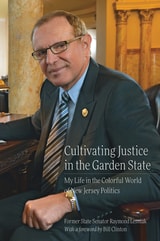
Cultivating Justice in the Garden State
My Life in the Colorful World of New Jersey PoliticsRaymond Lesniak
Rutgers University Press, 2022
He recounts the many causes he championed in his forty years as a state legislator, from the landmark Environmental Cleanup Responsibility Act to bills concerning animal protections, marriage equality, women’s reproductive rights, and the abolition of the death penalty. He also delves into his experiences on the national stage as a key advisor for Bill Clinton and Al Gore’s presidential campaigns. With refreshing candor, Lesniak describes both his greatest achievements and his moments of failure, including his unsuccessful 2017 gubernatorial run.
Cultivating Justice in the Garden State is both a gripping American success story and a must-read for anyone seeking to understand the inner workings of our political system. It offers an insider’s perspective on the past fifty years of New Jersey politics, while presenting a compelling message about what leaders and citizens can do to improve the state’s future.
Cultured Force
Makers and Defenders of the French Colonial EmpireBarnett Singer and John Langdon
University of Wisconsin Press, 2008
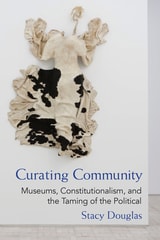
Curating Community
Museums, Constitutionalism, and the Taming of the PoliticalStacy Douglas
University of Michigan Press, 2017
Curating Community is a book for academics, artists, curators, and constitutional designers interested in legacies of violence, transitional justice, and democracy.
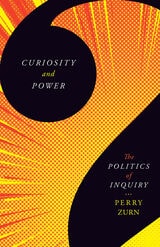
Curiosity and Power
The Politics of InquiryPerry Zurn
University of Minnesota Press, 2021
A trailblazing exploration of the political stakes of curiosity
Curiosity is political. Who is curious, when, and how reflects the social values and power structures of a given society. In Curiosity and Power, Perry Zurn explores the political philosophy of curiosity, staking the groundbreaking claim that it is a social force—the heartbeat of political resistance and a critical factor in social justice. He argues that the very scaffolding of curiosity is the product of political architectures, and exploring these values and architectures is crucial if we are to better understand, and more ethically navigate, the struggle over inquiry in an unequal world.
Curiosity and Power explores curiosity through the lens of political philosophy—weaving in Nietzsche, Foucault, and Derrida in doing so—and the experience of political marginalization, demonstrating that curiosity is implicated equally in the maintenance of societies and in their transformation. Curiosity plays as central a role in establishing social institutions and fields of inquiry as it does in their deconstruction and in building new forms of political community. Understanding curiosity is critical to understanding politics, and understanding politics is critical to understanding curiosity.
Drawing not only on philosophy and political theory but also on feminist theory, race theory, disability studies, and trans studies, Curiosity and Power tracks curiosity in the structures of political marginalization and resistance—from the Civil Rights Movement to building better social relationships. Curiosity and Power insists that the power of curiosity be recognized and engaged responsibly.