828 books match the query 'Research' and 86 start with c
cover of Crime and Justice, Volume 10: An Annual Review of Research

Crime and Justice, Volume 10

An Annual Review of Research

Edited by Michael Tonry and Norval Morris

University of Chicago Press Journals, 1988
[more]
cover of Crime and Justice, Volume 12: An Annual Review of Research

Crime and Justice, Volume 12

An Annual Review of Research

Edited by Michael Tonry and Norval Morris

University of Chicago Press Journals, 1989
[more]
cover of Crime and Justice, Volume 14: An Annual Review of Research

Crime and Justice, Volume 14

An Annual Review of Research

Edited by Michael Tonry

University of Chicago Press Journals, 1991
[more]
cover of Crime and Justice, Volume 16: An Annual Review of Research

Crime and Justice, Volume 16

An Annual Review of Research

Edited by Michael Tonry

University of Chicago Press Journals, 1992
[more]
cover of Crime and Justice, Volume 17: An Annual Review of Research

Crime and Justice, Volume 17

An Annual Review of Research

Edited by Michael Tonry

University of Chicago Press Journals, 1993
[more]
cover of Crime and Justice, Volume 1: An Annual Review of Research

Crime and Justice, Volume 1

An Annual Review of Research

Edited by Norval Morris and Michael Tonry

University of Chicago Press Journals, 1980

[more]
cover of Crime and Justice, Volume 20: An Annual Review of Research

Crime and Justice, Volume 20

An Annual Review of Research

Edited by Michael Tonry

University of Chicago Press Journals, 1996

Founded in 1979, Crime and Justice addresses important developments in the criminal justice system. This distinguished series of commissioned essays encompasses topics both within and outside of the accepted core of research on crime and justice, including legal, psychological, biological, sociological, historical, and ethical considerations. Individual essays in Volume 20 include articles by Michael Tonry and Mary Lynch on intermediate sanctions; Thomas J. Bernard and Jeffrey B. Snipes on theoretical integration in criminology; Antony Duff on recent work in the philosophy of punishment; Eugene Maguin and Rolf Loeber on academic performance and delinquency; Thomas M. Mieczkowski on the measurement of drug prevalence in the United States; and Ellen G. Cohn and David P. Farrington on Crime and Justice in the criminal justice and criminology literature.
[more]
cover of Crime and Justice, Volume 22: An Annual Review of Research

Crime and Justice, Volume 22

An Annual Review of Research

Edited by Michael Tonry

University of Chicago Press Journals, 1997
[more]
cover of Crime and Justice, Volume 23: An Annual Review of Research

Crime and Justice, Volume 23

An Annual Review of Research

Edited by Michael Tonry

University of Chicago Press Journals, 1998
Volume 23 includes articles by Daniel Nagin on deterrence; James Alan Fox and Jack Levin on serial and mass murder; Stephen J. Morse on "New Excuse" defenses; Christian Pfeiffer on youth violence in Western Europe; Roxanne Lieb, Vernon Quinsey, and Lucy Berliner on sexual psychopath laws; Rolf Loeber and Marc Le Blanc on the development of juvenile offending; and Michael Tonry on intermediate sanctions in sentencing guidelines.
[more]
cover of Crime and Justice, Volume 25: An Annual Review of Research

Crime and Justice, Volume 25

An Annual Review of Research

Edited by Michael Tonry

University of Chicago Press Journals, 1999
For years this distinguished series has provided scholars and practitioners with timely, cross-disciplinary reviews of research on some of today's most pressing policy issues. Volume 25 includes articles by Jeffery A. Fagan and Richard B. Freeman on crime and work; John Braithwaite on restorative justice; Josine Junger-Tas and Ineke Haen Marshall on self-report methodology in crime research; Roger Lane on the history of murder in America; and James B. Jacobs and Lauryn P. Gouldin on Cosa Nostra.

[more]
cover of Crime and Justice, Volume 27: A Review of Research

Crime and Justice, Volume 27

A Review of Research

Edited by Michael Tonry

University of Chicago Press Journals, 2000
For twenty years, this distinguished series has provided both scholars and practitioners with timely, cross-disciplinary reviews of the best research on today's most contentious and pressing policy issues. Volume 27 includes articles by William Spelman on recent studies of prisons and crime; Brandon C. Welsh and David P. Farrington on monetary costs and benefits of crime prevention programs; Donna Bishop on juvenile offenders in the criminal justice system; Leena Kurki on restorative and community justice in the United States; Martha J. Smith and Ronald V. Clarke on crime and public transport; and Francis T. Cullen/Bonnie S. Fisher/Brandon K. Applegate on public opinion about punishment and corrections.

[more]
cover of Crime and Justice, Volume 28: A Review of Research

Crime and Justice, Volume 28

A Review of Research

Edited by Michael Tonry

University of Chicago Press Journals, 2001

The most relevant topics for today=s policy makers and academicians are presented in a manner both comprehensive and accessible. As editor, Tonry has created a careful blend of the key philosophical, theoretical, and policy-relevant issues of the day. This volume is a must for any bookshelf. —Criminal Justice Review

Volume 28 is a review of recent research on criminal justice issues, with a careful balance of research, theory, and practice.

Contributors:

John Laub and Robert J. Sampson on Desistance From Crime

Norval Morris and Leena Kurki on Supermax Prisons

Richard Harding on Private Prisons

David Boerner and Roxanne Lieb on Sentencing Reform In The Other Washington, 1975-2000

Michael A. Bellesiles on the History Of Firearms Regulation

Grant T. Harris, Tracey A. Skilling, and Marnie E. Rice on Psychopathy And Crime

Daniel Nagin on Costs And Benefits Of Crime Prevention.
[more]
cover of Crime and Justice, Volume 29: A Review of Research

Crime and Justice, Volume 29

A Review of Research

Edited by Michael Tonry

University of Chicago Press Journals, 2002

"The most relevant topics for today’s policy makers and academicians are presented in a manner both comprehensive and accessible. As editor, Tonry has created a careful blend of the key philosophical, theoretical, and policy-relevant issues of the day . . . . A must for any bookshelf."—Criminal Justice Review

Volume 29 is a review of recent research on criminal justice issues, with a careful balance of research, theory, and practice.
[more]
cover of Crime and Justice, Volume 2: An Annual Review of Research

Crime and Justice, Volume 2

An Annual Review of Research

Edited by Norval Morris and Michael Tonry

University of Chicago Press Journals, 1981
[more]
cover of Crime and Justice, Volume 30: A Review of Research

Crime and Justice, Volume 30

A Review of Research

Edited by Michael Tonry

University of Chicago Press Journals, 2003

"The most relevant topics for today's policy makers and academicians are presented in a manner both comprehensive and accessible. As editor, Tonry has created a careful blend of the key philosophical, theoretical, and policy-relevant issues of the day. . . . A must for any bookshelf."—Crime and Justice Review

Volume 30 is a survey volume of recent research on criminal justice issues, with a careful balance of research, theory, and practice.

Contributors:
Alfred Blumstein
Rick Brown
Ronald V. Clarke
Anthony N. Doob
Manuel Eisner
David P. Farrington
Rosemary Gartner
James Jacobs
Candace Kruttschnitt
Ellen Peters
Alex R. Piquero
Tom R. Tyler
Cheryl Marie Webster
[more]
cover of Crime and Justice, Volume 32: A Review of Research

Crime and Justice, Volume 32

A Review of Research

Edited by Michael Tonry

University of Chicago Press Journals, 2004

Since 1979 the Crime and Justice series has presented important developments in the criminal justice system that enhance the work of sociologists, psychologists, criminal lawyers, justice scholars, and political scientists. Crime and Justice offers an interdisciplinary approach to core issues in criminology, with perspectives from biology, law, psychology, ethics, history, and sociology.

Volume 32 covers criminal justice issues, with a careful balance of research, theory, and practice. Topics in this volume include: environmental crime, the effects of wrongful imprisonment, the assessment of macro-level predictors and theories of crime, ethnic differences in intergenerational crime patterns, sentencing guidelines in Minnesota from 1978 to 2003, and the results of five decades of neutralization research.

Contributors:
Heith Copes
Francis T. Cullen
Richard S. Frase
Adrian Grounds
Shadd Maruna
Travis C. Pratt
Aaron S. Routhe
Neal Shover
David J. Smith
[more]
cover of Crime and Justice, Volume 34: A Review of Research

Crime and Justice, Volume 34

A Review of Research

Edited by Michael Tonry

University of Chicago Press Journals, 2006
Since 1979, the Crime and Justice series has presented international crime-related research to enrich the work of sociologists, psychologists, criminal lawyers, justice scholars, and political scientists. Volume 34 covers criminal justice issues with a careful balance of research, theory, and practice.It offers an interdisciplinary approach to core issues in criminology, with perspectives from biology, law, psychology, ethics, history, and sociology.
[more]
cover of Crime and Justice, Volume 37: A Review of Research

Crime and Justice, Volume 37

A Review of Research

Edited by Michael Tonry

University of Chicago Press Journals, 2008
Since 1979 the Crime and Justice series has presented a review of the latest international research, providing expertise to enhance the work of sociologists, psychologists, criminal lawyers, justice scholars, and political scientists. The series explores a full range of issues concerning crime, its causes, and its cure. Volume 37 covers a range of criminal justice issues from the effects of parental imprisonment on children to economists and crime. Contributors to this volume are Shawn Bushway, Todd Clear, Francis T. Cullen, David P. Farrington, Tappio Lappi-Sappälä, Cheryl N. Lero-Jonson, Matthew Melewski, Joseph Murray, Joan Petersilia, Alex Piquero, Peter Reuter, Michael Tonry, James D. Unnever, and David Weisburd.
 
[more]
cover of Crime and Justice, Volume 38: A Review of Research

Crime and Justice, Volume 38

A Review of Research

Edited by Michael Tonry

University of Chicago Press Journals, 2009

Since 1979, Crime and Justice has presented an annual review of the latest international research, providing expertise to enhance the work of sociologists, psychologists, criminal lawyers, justice scholars, and political scientists. The series explores a full range of issues concerning crime, its causes, and its cure. Volume 38 covers a range of criminal justice issues, from the effects of parental imprisonment on children to economists and crime.
[more]
cover of Crime and Justice, Volume 39: A Review of Research

Crime and Justice, Volume 39

A Review of Research

Edited by Michael Tonry

University of Chicago Press Journals, 2010

Since 1979 the Crime and Justice series has presented a review of the latest international research, providing expertise to enhance the work of sociologists, psychologists, criminal lawyers, justice scholars, and political scientists. The series explores a full range of issues concerning crime, its causes, and its cure. Volume 39 covers a range of criminal justice issues, including how drug enforcement affects drug prices, the source of racial disparity in imprisonment, rape and attrition in the legal process, and sex offender recidivism. Contributors to this volume include: Brigitte Bouhours, Jonathan P. Caulkins , Aaron Chalfin, Philip J. Cook, , Kathleen Daly, Denise C. Gottfredson, David S. Kirk, John H. Laub, Stephen D. Mastrofski , Chongmin Na, Steven Raphael, Michael D. Reisig, Peter Reuter, Dirk van Zyl Smit, Keith Soothill, Michael Tonry, and James J. Willis.

[more]
cover of Crime and Justice, Volume 3: An Annual Review of Research

Crime and Justice, Volume 3

An Annual Review of Research

Edited by Michael Tonry and Norval Morris

University of Chicago Press Journals, 1982
[more]
cover of Crime and Justice, Volume 44: A Review of Research

Crime and Justice, Volume 44

A Review of Research

Edited by Michael Tonry

University of Chicago Press Journals, 2015
Volume 44 of Crime and Justice is essential reading for scholars, policy makers, and practitioners who need to know about the latest advances in knowledge concerning crime, its causes, and its control. Contents include Robert D. Crutchfield on the complex interactions among race, social class, and crime; Cassia Spohn on race, crime, and punishment in America; Marianne van Ooijen and Edward Kleemans on the “Dutch model” of drug policy; Beau Kilmer, Peter Reuter, and Luca Giommoni on cross-national and comparative knowledge about drug use and control drugs; Michael Tonry on federal sentencing policy since 1984; Kathryn Monahan, Laurence Steinberg, and Alex R. Piquero on the growing influence of bioscience and developmental psychology on juvenile justice policy and practice; Cheryl Lero Jonson and Francis T. Cullen on prisoner reentry programs; James P. Lynch and Lynn A. Addington on cultural changes in tolerance of violence amd their  effects on crime statistics; Brandon C. Welsh, David P. Farrington, and B. Raffan Gowar on benefit-cost analysis of crime prevention; Torbjorn Skardhamar, Jukka Savolainen, Kjersti N. Aase, and Torkild H. Lyngstad  on the effects of marriage on criminality; and John MacDonald on the effects on crime rates and patterns of urban design and development.
[more]
cover of Crime and Justice, Volume 47: A Review of Research

Crime and Justice, Volume 47

A Review of Research

Edited by Michael Tonry

University of Chicago Press Journals, 2018
Since 1979, the Crime and Justice series has presented a review of the latest international research, providing expertise to enhance the work of sociologists, psychologists, criminal lawyers, justice scholars, and political scientists. The series explores a full range of issues concerning crime, its causes, and its cures. In both the review and the thematic volumes, Crime and Justice offers an interdisciplinary approach to address core issues in criminology. Volume 47 will be a review volume featuring, among other selections, a top-of-class impact ranking.
 
[more]
cover of Crime and Justice, Volume 50: A Review of Research

Crime and Justice, Volume 50

A Review of Research

Edited by Michael Tonry

University of Chicago Press Journals, 2021
Since 1979 the Crime and Justice series has presented a review of the latest international research, providing expertise to enhance the work of sociologists, psychologists, criminal lawyers, justice scholars, and political scientists. The series explores a full range of issues concerning crime, its causes, and its cures. In both the review and the thematic volumes, Crime and Justice offers an interdisciplinary approach to address core issues in criminology.
[more]
cover of Crime and Justice, Volume 52: A Review of Research

Crime and Justice, Volume 52

A Review of Research

Edited by Michael Tonry

University of Chicago Press Journals, 2024

Volume 52 is an annual survey of cutting-edge issues by preeminent criminology scholars.
 
Since 1979, Crime and Justice has presented a review of the latest international research, providing expertise to enhance the work of sociologists, psychologists, criminal lawyers, justice scholars, and political scientists. The series explores a full range of issues concerning crime, its causes, and its cures. In both the review and the thematic volumes, Crime and Justice offers an interdisciplinary approach to address core issues in criminology.
 
[more]
cover of Crime and Justice, Volume 54: A Review of Research

Crime and Justice, Volume 54

A Review of Research

Edited by Michael Tonry

University of Chicago Press Journals, 2025

Critical state-of-the-art reviews exploring a range of subjects concerning crime, its causes, and its cures.

Since 1979, Crime and Justice: A Review of Research has presented reviews of the latest international research in criminology and criminal justice, providing expertise to enhance the work of sociologists, psychologists, criminal lawyers, criminologists, and political scientists. Volume 54 publishes first-rate review essays by leading scholars that summarize what is known about both cutting-edge and enduring subjects, what needs to be known, and how that might be accomplished. The wide-ranging, multidisciplinary topics covered include crime trends, immigration and crime, mass incarceration, money laundering, penal policy in Eastern and Central Europe, criminal frauds, the concept of lesser eligibility, and W. E. B. Du Bois’s unheralded contributions to criminology.
 
[more]
cover of Crime and Justice, Volume 5: An Annual Review of Research

Crime and Justice, Volume 5

An Annual Review of Research

Edited by Michael Tonry and Norval Morris

University of Chicago Press Journals, 1983
[more]
cover of Crime and Justice, Volume 6: An Annual Review of Research

Crime and Justice, Volume 6

An Annual Review of Research

Edited by Michael Tonry and Norval Morris

University of Chicago Press Journals, 1985
[more]
cover of Critical Digital Humanities: The Search for a Methodology

Critical Digital Humanities

The Search for a Methodology

James E. Dobson

University of Illinois Press, 2019
Can established humanities methods coexist with computational thinking? It is one of the major questions in humanities research today, as scholars increasingly adopt sophisticated data science for their work. James E. Dobson explores the opportunities and complications faced by humanists in this new era. Though the study and interpretation of texts alongside sophisticated computational tools can serve scholarship, these methods cannot replace existing frameworks. As Dobson shows, ideas of scientific validity cannot easily nor should be adapted for humanities research because digital humanities, unlike science, lack a leading-edge horizon charting the frontiers of inquiry. Instead, the methods of digital humanities require a constant rereading. At the same time, suspicious and critical readings of digital methodologies make it unwise for scholars to defer to computational methods. Humanists must examine the tools--including the assumptions that went into the codes and algorithms--and questions surrounding their own use of digital technology in research. Insightful and forward thinking, Critical Digital Humanities lays out a new path of humanistic inquiry that merges critical theory and computational science.
[more]
cover of Critical Ethnic Studies: A Reader

Critical Ethnic Studies

A Reader

Critical Ethnic Studies Editorial Collective

Duke University Press, 2016
Building on the intellectual and political momentum that established the Critical Ethnic Studies Association, this Reader inaugurates a radical response to the appropriations of liberal multiculturalism while building on the possibilities enlivened by the historical work of Ethnic Studies. It does not attempt to circumscribe the boundaries of Critical Ethnic Studies; rather, it offers a space to promote open dialogue, discussion, and debate regarding the field's expansive, politically complex, and intellectually rich concerns. Covering a wide range of topics, from multiculturalism, the neoliberal university, and the exploitation of bodies to empire, the militarized security state, and decolonialism, these twenty-five essays call attention to the urgency of articulating a Critical Ethnic Studies for the twenty-first century. 
 
 
[more]
cover of Critical Indigenous Studies: Engagements in First World Locations

Critical Indigenous Studies

Engagements in First World Locations

Edited by Aileen Moreton-Robinson

University of Arizona Press, 2016

With increasing speed, the emerging discipline of critical Indigenous studies is expanding and demarcating its territory from Indigenous studies through the work of a new generation of Indigenous scholars. Critical Indigenous Studies makes an important contribution to this expansion, disrupting the certainty of disciplinary knowledge produced in the twentieth century, when studying Indigenous peoples was primarily the domain of non-Indigenous scholars.
 
Aileen Moreton-Robinson’s introductory essay provides a context for the emerging discipline. The volume is organized into three sections: the first includes essays that interrogate the embedded nature of Indigenous studies within academic institutions; the second explores the epistemology of the discipline; and the third section is devoted to understanding the locales of critical inquiry and practice.
 
Each essay places and contemplates critical Indigenous studies within the context of First World nations, which continue to occupy Indigenous lands in the twenty-first century. The contributors include Aboriginal, Metis, Maori, Kanaka Maoli, Filipino-Pohnpeian, and Native American scholars working and writing through a shared legacy born of British and later U.S. imperialism. In these countries, critical Indigenous studies is flourishing and transitioning into a discipline, a knowledge/power domain where distinct work is produced, taught, researched, and disseminated by Indigenous scholars.

View the Table of Contents
here.

Contributors:

Hokulani K. Aikau
Chris Andersen
Larissa Behrendt
Vicente M. Diaz
Noelani Goodyear Kaopua
Daniel Heath Justice
Brendan Hokowhitu
Aileen Moreton-Robinson
Jean M. O'Brien
Noenoe Silva
Kim Tallbear
Robert Warrior       
[more]
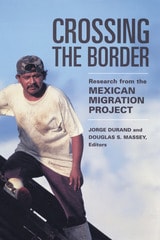
cover of Crossing the Border: Research from the Mexican Migration Project

Crossing the Border

Research from the Mexican Migration Project

Jorge Durand

Russell Sage Foundation, 2004
Discussion of Mexican migration to the United States is often infused with ideological rhetoric, untested theories, and few facts. In Crossing the Border, editors Jorge Durand and Douglas Massey bring the clarity of scientific analysis to this hotly contested but under-researched topic. Leading immigration scholars use data from the Mexican Migration Project—the largest, most comprehensive, and reliable source of data on Mexican immigrants currently available—to answer such important questions as: Who are the people that migrate to the United States from Mexico? Why do they come? How effective is U.S. migration policy in meeting its objectives? Crossing the Border dispels two primary myths about Mexican migration: First, that those who come to the United States are predominantly impoverished and intend to settle here permanently, and second, that the only way to keep them out is with stricter border enforcement. Nadia Flores, Rubén Hernández-León, and Douglas Massey show that Mexican migrants are generally not destitute but in fact cross the border because the higher comparative wages in the United States help them to finance homes back in Mexico, where limited credit opportunities makes it difficult for them to purchase housing. William Kandel's chapter on immigrant agricultural workers debunks the myth that these laborers are part of a shadowy, underground population that sponges off of social services. In contrast, he finds that most Mexican agricultural workers in the United States are paid by check and not under the table. These workers pay their fair share in U.S. taxes and—despite high rates of eligibility—they rarely utilize welfare programs. Research from the project also indicates that heightened border surveillance is an ineffective strategy to reduce the immigrant population. Pia Orrenius demonstrates that strict barriers at popular border crossings have not kept migrants from entering the United States, but rather have prompted them to seek out other crossing points. Belinda Reyes uses statistical models and qualitative interviews to show that the militarization of the Mexican border has actually kept immigrants who want to return to Mexico from doing so by making them fear that if they leave they will not be able to get back into the United States. By replacing anecdotal and speculative evidence with concrete data, Crossing the Border paints a picture of Mexican immigration to the United States that defies the common knowledge. It portrays a group of committed workers, doing what they can to realize the dream of home ownership in the absence of financing opportunities, and a broken immigration system that tries to keep migrants out of this country, but instead has kept them from leaving.
[more]
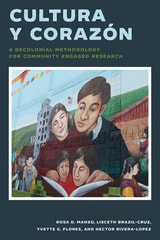
cover of Cultura y Corazón: A Decolonial Methodology for Community Engaged Research

Cultura y Corazón

A Decolonial Methodology for Community Engaged Research

Rosa D. Manzo, Lisceth Brazil-Cruz, Yvette G. Flores, and Hector Rivera-Lopez

University of Arizona Press, 2020

Cultura y Corazón is a research approach and practice that is rooted in the work of Latinx and Chicanx scholars and intellectuals. The book documents best practices for Community Based and Participatory Action Research (CBPAR), which is both culturally attuned and scientifically demonstrated. This methodology takes a decolonial approach to engaging community members in the research process and integrates critical feminist and indigenous epistemologies.

Cultura y Corazón presents case studies from the authors’ work within the fields of education and health. It offers key strategies to working in partnership with marginalized Latinx communities that are grounded in deep respect for the communities’ cultures and lived experiences. This book is intended for students, researchers, and practitioners who want to work with vulnerable populations through a community-based approach that truly respects and integrates culture, values, and funds of knowledge.
 
[more]
cover of Curating Research Data Volume One: Practical Strategies for Your Digital Repository

Curating Research Data Volume One

Practical Strategies for Your Digital Repository

Lisa R. Johnston

Assoc of College & Research Libraries, 2017
[more]
cover of Curating Research Data Volume Two: A Handbook of Current Practice

Curating Research Data Volume Two

A Handbook of Current Practice

Lisa R. Johnston

Assoc of College & Research Libraries, 2017

[more]
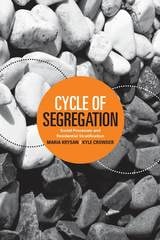
cover of Cycle of Segregation: Social Processes and Residential Stratification

Cycle of Segregation

Social Processes and Residential Stratification

Maria Krysan

Russell Sage Foundation, 2017

The Fair Housing Act of 1968 outlawed housing discrimination by race and provided an important tool for dismantling legal segregation. But almost fifty years later, residential segregation remains virtually unchanged in many metropolitan areas, particularly where large groups of racial and ethnic minorities live. Why does segregation persist at such high rates and what makes it so difficult to combat? In Cycle of Segregation, sociologists Maria Krysan and Kyle Crowder examine how everyday social processes shape residential stratification. Past neighborhood experiences, social networks, and daily activities all affect the mobility patterns of different racial groups in ways that have cemented segregation as a self-perpetuating cycle in the twenty-first century.
 
Through original analyses of national-level surveys and in-depth interviews with residents of Chicago, Krysan and Crowder find that residential stratification is reinforced through the biases and blind spots that individuals exhibit in their searches for housing. People rely heavily on information from friends, family, and coworkers when choosing where to live. Because these social networks tend to be racially homogenous, people are likely to receive information primarily from members of their own racial group and move to neighborhoods that are also dominated by their group. Similarly, home-seekers who report wanting to stay close to family members can end up in segregated destinations because their relatives live in those neighborhoods. The authors suggest that even absent of family ties, people gravitate toward neighborhoods that are familiar to them through their past experiences, including where they have previously lived, and where they work, shop, and spend time. Because historical segregation has shaped so many of these experiences, even these seemingly race-neutral decisions help reinforce the cycle of residential stratification. As a result, segregation has declined much more slowly than many social scientists have expected.
 
To overcome this cycle, Krysan and Crowder advocate multi-level policy solutions that pair inclusionary zoning and affordable housing with education and public relations campaigns that emphasize neighborhood diversity and high-opportunity areas. They argue that together, such programs can expand the number of destinations available to low-income residents and help offset the negative images many people hold about certain neighborhoods or help introduce them to places they had never considered. Cycle of Segregation demonstrates why a nuanced understanding of everyday social processes is critical for interrupting entrenched patterns of residential segregation.
 
[more]