Results by title
857 books match the query 'Schools' and 64 start with c
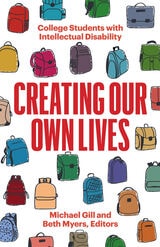
Creating Our Own Lives
College Students with Intellectual DisabilityMichael Gill
University of Minnesota Press, 2023
Young adults with intellectual disability tell the story of their own experience of higher education
How do students with intellectual disability experience higher education? Creating Our Own Lives addresses this question through the eyes of participants themselves. In relating their experiences and aspirations, these student perspectives mount a powerful challenge to assumptions that intellectual disability is best met with protection or segregation.
Taken together, the essays expose and contradict the inherently ableist claim that individuals with intellectual disability cannot be reliable storytellers. Instead, their deeply informative stories serve as a corrective narrative. The first of the four sections, “Laying the Foundation: Why Everyone Belongs in College,” focuses on belonging and inclusion; the second, “Opening Up Possibilities: Overcoming Doubt and Uncertainty,” conveys the optimism of this generation of advocates through stories of personal hardship, hopeful perseverance, and triumph over adversity; the third, “Inclusion as Action: Diversifying Student Experiences,” supports the understanding of diverse student experiences in inclusive higher education; and the fourth, “Supporting Growth: Peer Mentoring and Advice,” offers guidance to those reimagining and creating educational spaces.
Students with disabilities belong in higher education. Not only does this book serve as an important record of students enrolled in inclusive higher education programs, it is also an unprecedented resource, packed with information and inspiration both for parents seeking opportunities for their children and for individuals with intellectual disability who aspire to attend college.
Contributors: Makayla Adkins, Olivia Baist, Brandon Baldwin, George Barham, Marquavious Barnes, Katie Bartlett, Steven Brief, De'Onte Brown, Meghan Brozaitis, Mary Bryant, Gracie Carrol, Taylor Cathey, Maia Chamberlain, Antonio E. Contreras, Kim Dean, Elizabeth Droessler, Katie Ducett, Keiron Dyck, Rachel Gomez, Deriq Graves, Micah Gray, Maggie Guillaume, Cleo Hamilton, Nathan Heald, Joshua R. Hourigan, Hannah Lenae Humes, Courtney Jorgensen, Eilish Kelderman, Kailin Kelderman, Kenneth Kelty, Kaelan Knowles, Karlee Lambert, Kate Lisotta, Rachel Mast, Elise McDaniel, Emma Miller, Jake Miller, Lydia Newnum, Brenna Mantz Nielsen, Carly O’Connell, Nadia Osbey, Stirling Peebles, Breyan Pettaway, Amanda Pilkenton, True Rafferty, Taylor Ruppe, Lawrence Sapp, Tyler Shore, Brianna Silva, Alex Smith, Elliott Smith, Phillandra Smith, Payton Storms, Allen Thomas, Kylie Walter, Stephen Wanser, Sayid Webb, Breana Whittlesey, Luke Wilcox, Adam Wolfond.

Creating a Framework for Developing Sessional Teachers in Higher Education
A practical guide for education leadersEdited by Neil Sutherland and Alex Standen
University College London, 2026
Addressing a critical yet underserved community in higher education, this volume is the first of its kind to focus on the professional development of sessional and atypically contracted teaching staff.
Across higher education, a significant proportion of teaching is carried out by non-permanent staff, be they graduate teaching assistants, associate lecturers, visiting lecturers, postdoctoral researchers, or hourly paid staff. Their work is invaluable to the sector, yet they frequently lack access to structured professional development and institutional support.
Creating a Framework for Developing Sessional Teachers in Higher Education aims to address this problem with guidance for the higher education leaders who support and manage sessional teachers. It offers a comprehensive framework that will enable education leaders to improve the experience and effectiveness of sessional staff through practical guidance, evidence-informed recommendations, best practice case studies, sector-wide research, and the lived experience of academic leaders. The book explores key areas including induction, teaching, learning and assessment practices, mentoring, reward and recognition, community building and ongoing professional development. It presents strategies for embedding consistency and quality across departments and disciplines while recognizing the individuality and diverse contributions of sessional teachers. With clear, actionable guidance and insights from across the higher education sector, this book is an essential resource for education leaders such as program directors, department heads, faculty managers, and anyone involved in academic staffing and teaching development. It champions an inclusive, sustainable approach to educational leadership—one that values and rewards all contributors to student learning.
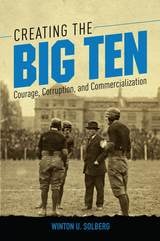
Creating the Big Ten
Courage, Corruption, and CommercializationWinton U Solberg
University of Illinois Press, 2018
Winton U. Solberg explores the relationship between higher education and collegiate football in the Big Ten's first fifty years. This formative era saw debates over eligibility and amateurism roil the sport. In particular, faculty concerned with academics clashed with coaches, university presidents, and others who played to win. Solberg follows the conference's successful early efforts to put the best interests of institutions and athletes first. Yet, as he shows, commercial concerns undid such work after World War I as sports increasingly eclipsed academics. By the 1940s, the Big Ten's impact on American sports was undeniable. It had shaped the development of intercollegiate athletics and college football nationwide while serving as a model for other athletic conferences.

Creativity and Academic Activism
Instituting Cultural StudiesMeaghan Morris and Mette Hjort, eds.
Duke University Press, 0
This book also investigates the impact of managerialism, marketization, and globalization on university cultures, asking what critical cultural scholarship can do in such increasingly adversarial conditions. Experiments in Asian universities are emphasized as exemplary of what can or could be achieved in other contexts of globalized university policy.
Contributors. Tony Bennett, Stephen Ching-Kiu Chan, Kuan-Hsing Chen, Douglas Crimp, Dai Jinhua, John Nguyet Erni, Mette Hjort, Josephine Ho, Koichi Iwabuchi, Meaghan Morris, Tejaswini Niranjana, Wang Xiaoming, Audrey Yue
Creativity and Academic Activism
Instituting Cultural StudiesMeaghan Morris and Mette Hjort, eds.
Duke University Press, 0
This book also investigates the impact of managerialism, marketization, and globalization on university cultures, asking what critical cultural scholarship can do in such increasingly adversarial conditions. Experiments in Asian universities are emphasized as exemplary of what can or could be achieved in other contexts of globalized university policy.
Contributors. Tony Bennett, Stephen Ching-Kiu Chan, Kuan-Hsing Chen, Douglas Crimp, Dai Jinhua, John Nguyet Erni, Mette Hjort, Josephine Ho, Koichi Iwabuchi, Meaghan Morris, Tejaswini Niranjana, Wang Xiaoming, Audrey Yue
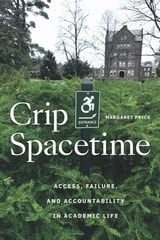
Crip Spacetime
Access, Failure, and Accountability in Academic LifeMargaret Price
Duke University Press, 2024
Crisis Leadership in Higher Education
Theory and PracticeRalph A. Gigliotti
Rutgers University Press, 2020
Crisis in Higher Education
A Plan to Save Small Liberal Arts Colleges in AmericaJeffrey R. Docking
Michigan State University Press, 2014
Critical Latin American And Latino Studies
Juan Poblete
University of Minnesota Press, 2003
Situates these dynamic disciplines within debates around globalization
This book brings together some of the most prominent scholars working across the spectrum of Latin American and Latino studies to explore their changing intellectual undertaking in relation to global processes of change. Critical Latin American and Latino Studies identifies the challenges and possibilities of more politically engaged and theoretically critical modes of scholarly practice.
One objective is to provide a brief critical history of the study of various Latin American cultures—Latino, Chicano, Puerto Rican, among others. But these essays also serve to assess the roles of ethnic and area studies in light of changing scholarly trends, from emphases on gender and sexuality to a focus on postcoloniality and globalization. The result is an important contribution to current debates on the conditions of contemporary knowledge production. Contributors: Tomás Almaguer, San Francisco State U; Frances R. Aparicio, U of Illinois, Chicago; John Beverley, U of Pittsburgh; Angie Chabram-Dernersesian, U of California, Davis; Román de la Campa, SUNY, Stony Brook; Juan Flores, Hunter College and CUNY; Walter D. Mignolo, Duke U; Giorgio Perissinotto, U of California, Santa Barbara; Kirsten Silva Gruesz, U of California, Santa Cruz; Stefano Varese, U of California, Davis; George Yúdice, NYU; Juan Zevallos Aguilar, Villanova U.
Critical Perspectives on Academic Writing
The politics and Practices of Writing Development in UK Higher EducationEdited by Ayanna Prevatt-Goldstein and David Mallows
University College London, 2026
This volume addresses the most pressing issues in higher education today, such as inclusion, academic integrity, and generative AI.
This timely collection explores the politics and practices of academic writing development in UK higher education. The volume addresses issues of access, equity, and generative AI in the context of student writing, to consider what makes writing academic, why it matters, and how we can change the field for the better.
Critical Teaching and Everyday Life
Ira Shor
University of Chicago Press, 1987
Cultivating Ecologies for Digital Media Work
The Case of English StudiesCatherine C. Braun
Southern Illinois University Press, 2014
Braun’s in-depth study documents English professors and the challenges they face in both career and classroom as they attempt to gain appropriate value for digital teaching and creation within their field, departments, and institutions. Braun proposes that to move English studies into the future, three main questions must be addressed. First, what counts as a text? How should we approach the reading of texts? Finally, how should we approach the production of texts? In addition to reconsidering the nature of texts in English studies, she calls for crucial changes in higher-education institutional procedures themselves, including new methods of evaluating digital scholarship on an even playing field with other forms of work during the processes for promotion and tenure.
With insightful expertise, Braun analyzes how the new age of digital scholarship not only complements the traditional values of the English studies discipline but also offers constructive challenges to old ideas about texts, methods, and knowledge production. Cultivating Ecologies for Digital Media Work is the first volume to offer specific examination of the digital shift’s impact on English studies and provides the scaffold upon which productive conversations about the future of the field and digital pedagogy can be built.

Curricular Problems in Science at the College Level
Palmer O. Johnson
University of Minnesota Press, 1930
Curricular Problems in Science at the College Level was first published in 1930. Minnesota Archive Editions uses digital technology to make long-unavailable books once again accessible, and are published unaltered from the original University of Minnesota Press editions.
Curriculum or Craftsmanship
Elementary School Teachers in a Bureaucratic SystemHarry L. Gracey
University of Chicago Press, 1972
The majority of teachers are "production" oriented. They believe that their job is to see that the children in their charge complete as much of the standardized grade level curriculum as possible during the school year. They do achieve some success in preparing children for life in a society where bureaucracy is the dominant form of social organization.
The other significant type of teaching orientation is that of the "craftsmen." These instructors see their goal as the development of each individual's learning potential, with the curriculum built upon the specific needs and interests of each child. Bureaucratic school structures do nothing to promote this kind of teaching.
Any ideas that are at variance with the school's organizational structure will fail. The craftsman teachers do not have the time to communicate the standardized programs desired by the school board and also to make use of their own individualistic techniques. Further, the continued use of the former cancels the effects of the craftsman approach.
In delineating his conclusions, Professor Gracey includes his observations on the community and educational setting of the study, the two types of teachers, the administration, the parents, and the children's response to educational organization.
This study is unique in approaching its educational subject matter from a sociological point of view; Professor Gracey intended it as a study of behavior in organizations. It should also serve educational goals, however, and will therefore interest educators and concerned citizens as well as sociologists.