Results by title
4127 books match the query 'Science' and 251 start with c

Certainty
A Refutation of ScepticismPeter D. Klein
University of Minnesota Press, 1981
Certainty was first published in 1981. Minnesota Archive Editions uses digital technology to make long-unavailable books once again accessible, and are published unaltered from the original University of Minnesota Press editions.
Philosophers have traditionally used two strategies to refute the sceptical that empirical knowledge is not possible because our beliefs cannot be adequately justified. One strategy rejects the sceptics' position because it conflicts with the supposedly obvious claim that we do have knowledge. The other defends an analysis of knowledge limited to a weak set of necessary and sufficient conditions of knowledge or limited to a set of conditions specifically designed to be immune to sceptical attack.
In Certainty: A Refutation of Scepticism, Peter D. Klein uses a third strategy. He argues that scepticism can be refuted even if it is granted to the sceptics that knowledge entails absolute certainty. The argument for his thesis has two parts. He identifies the various types of scepticism and shows that the arguments for them depend upon epistemic principles which, when examined carefully, are unable to support the sceptical conclusions. Klein then argues — contrary to the views of most nonsceptics—that knowledge entails certainty and that some empirical beliefs are absolutely certain. In the course of his argument Klein develops and defends an account of justification, knowledge, and certainty. The result is a theory of knowledge based upon a model of justification designed to be acceptable to sceptics, nonsceptics, foundationalists, and coherentists.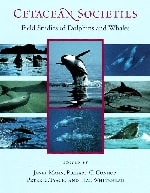
Cetacean Societies
Field Studies of Dolphins and WhalesEdited by Janet Mann, Richard C. Connor, Peter L. Tyack, and Hal Whitehead
University of Chicago Press, 1999
Long-lived, slow to reproduce, and often hidden beneath the water's surface, whales and dolphins (cetaceans) have remained elusive subjects for scientific study even though they have fascinated humans for centuries. Until recently, much of what we knew about cetaceans came from commercial sources such as whalers and trainers for dolphin acts. Innovative research methods and persistent efforts, however, have begun to penetrate the depths to reveal tantalizing glimpses of the lives of these mammals in their natural habitats.
Cetacean Societies presents the first comprehensive synthesis and review of these new studies. Groups of chapters focus on the history of cetacean behavioral research and methodology; state-of-the-art reviews of information on four of the most-studied species: bottlenose dolphins, killer whales, sperm whales, and humpback whales; and summaries of major topics, including group living, male and female reproductive strategies, communication, and conservation drawn from comparative research on a wide range of species.
Written by some of the world's leading cetacean scientists, this landmark volume will benefit not just students of cetology but also researchers in other areas of behavioral and conservation ecology as well as anyone with a serious interest in the world of whales and dolphins.
Contributors are Robin Baird, Phillip Clapham, Jenny Christal, Richard Connor, Janet Mann, Andrew Read, Randall Reeves, Amy Samuels, Peter Tyack, Linda Weilgart, Hal Whitehead, Randall S. Wells, and Richard Wrangham.
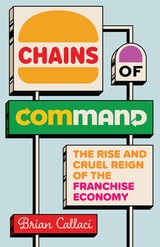
Chains of Command
The Rise and Cruel Reign of the Franchise EconomyBrian Callaci
University of Chicago Press, 2026
A surprising look at the big business of owning small businesses and what America’s franchise economy means for its workers.
Walk into a McDonald’s anywhere in the United States, and it will be identical to every other McDonald’s in the country. Yet, that particular store is almost certainly owned and operated by an “independent” franchisee. While McDonald’s presents an image of centralized uniformity to the consumer, it shows a different face to the small business owners operating its stores under its control and the workers preparing its product to its standards. How then does McDonald’s—and its big business peers—manage to be two things at once?
In this revelatory work, economist Brian Callaci shows how franchisors have altered the legal treatment of corporations in their favor through a decades-long crusade of lobbying and litigation. Their efforts subsequently unleashed a slew of legal and economic sins upon the US economy and labor force, allowing multinational corporations to control continent-spanning empires while outsourcing employment and scapegoating legal responsibilities onto small businesses. The result: the unfettered growth of some of America’s most recognizable businesses, at the aggregate expense of America’s workers.
Remarkable in both its scale and synthesis, Callaci’s story is the first chronicle of this business movement—initially resisted by US courts before experiencing a dramatic reversal of fortune after decades of campaigning by some of America’s most established entrepreneurs. An urgent and erudite history, Chains of Command reveals how the US labor market was tamed one small business at a time.

Chalk Up Another One
Edited by Sidney Harris
Rutgers University Press, 1994

Challenging Nature
Local Knowledge, Agroscience, and Food Security in Tanga Region, TanzaniaPhilip W. Porter
University of Chicago Press, 2005
Porter first began work on this project in 1972, asking 250 farmers in the region about life history, environmental and agricultural changes, types of crops grown and methods of planting, environmental assessments, agricultural practices, food and water supplies, training and education, and attitudes toward nature. Twenty years later, he returned and reinterviewed as many farmers as could be found from the first survey. The result contextualizes the environmental history of the region while informing current and future agricultural development.
Challenging Pregnancy
A Journey through the Politics and Science of Healthcare in AmericaGenevieve Grabman
University of Iowa Press, 2022
Ultimately, national anti-abortion politics—not medicine or her own choices—determined the outcome of Grabman’s pregnancy. At every juncture, anti-abortion politics limited the care available to her, the doctors and hospitals willing to treat her, the tools doctors could use, and the words her doctors could say. Although she asked for aggressive treatment to save at least one baby, hospital ethics boards blocked all able doctors from helping her.
Challenging Pregnancy is about Grabman’s harrowing pregnancy and the science and politics of maternal healthcare in the United States, where every person must self-advocate for the desired outcome of their own pregnancy.
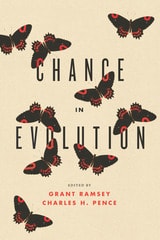
Chance in Evolution
Edited by Grant Ramsey and Charles H. Pence
University of Chicago Press, 2016
The book begins by placing chance in historical context, starting with the ancients and moving through Darwin and his contemporaries, documenting how the understanding of chance changed as Darwin’s theory of evolution by natural selection developed into the modern synthesis, and how the acceptance of chance in Darwinian theory affected theological resistance to it. Subsequent chapters detail the role of chance in contemporary evolutionary theory—in particular, in connection with the concepts of genetic drift, mutation, and parallel evolution—as well as recent empirical work in the experimental evolution of microbes and in paleobiology. By engaging in collaboration across biology, history, philosophy, and theology, this book offers a comprehensive and synthetic overview both of the history of chance in evolution and of our current best understanding of the impact of chance on life on earth.
Changes in the Landscape
Humans and Nature in Nineteenth-Century Latin AmericaEdited by Jennifer L. French
Vanderbilt University Press, 2024
Ranging from the immediate aftermath of the Spanish‑American Wars of Independence (1810–1826) to the early twentieth century (1925), the volume’s essays cover a wide variety of genres and forms of cultural production, from José Hernández’s epic poem Martín Fierro to prose fiction, painting and photography, and the personal albums compiled by Spanish-American women. Individually and collectively, the essays engage with scientific writing as both a discourse of power and a source of potentially significant, even revelatory information about human and nonhuman nature. Changes in the Landscape enables readers to more fully understand the transition from colonial regimes to the ecocidal extractivism of the export boom (1870–1930) by drawing out and analyzing some of the cognitive resources and rhetorical strategies that were available to imagine, protest, or enact new norms and expectations regarding the relations between human and nonhuman life, be it the life of wildflowers, waterfalls, or Cuba’s Ciénaga de Zapata.
Changing Arctic Landscape
Ken Tape
University of Alaska Press, 2010
The resulting volume is a stunning reminder of inexorable change; divided into sections on vegetation, permafrost, and glaciers, the images show the startling effects of climate change. In addition, each section presents a short biography of a pioneering scientist who was instrumental in both obtaining the antique photographs and advancing the study of arctic ecosystems, as well as interviews with scientists who have spent decades working in Alaska for the United States Geological Survey. The Changing Arctic Landscape is a profile of transformation—complex and not yet fully understood.
Changing Order
Replication and Induction in Scientific PracticeHarry Collins
University of Chicago Press, 1992
"In his superb book, Collins shows why the quest for certainty is disappointed. He shows that standards of replication are, of course, social, and that there is consequently no outside standard, no Archimedean point beyond society from which we can lever the intellects of our fellows."—Donald M. McCloskey, Journal of Economic Psychology
"Collins is one of the genuine innovators of the sociology of scientific knowledge. . . . Changing Order is a rich and entertaining book."—Isis
"The book gives a vivid sense of the contingent nature of research and is generally a good read."—Augustine Brannigan, Nature
"This provocative book is a review of [Collins's] work, and an attempt to explain how scientists fit experimental results into pictures of the world. . . . A promising start for new explorations of our image of science, too often presented as infallibly authoritative."—Jon Turney, New Scientist
Changing Precipitation Regimes and Terrestrial Ecosystems
A North American PerspectiveJake F. Weltzin
University of Arizona Press, 2003
This volume provides a central source of information about this newly emerging area of global change research. It presents ongoing investigations into the responses of plant communities and ecosystems to the experimental manipulation of precipitation in a variety of field settings—particularly in the western and central United States, where precipitation is already scarce or variable. By exploring methods that can be used to predict responses of ecosystems to changes in precipitation regimes, it demonstrates new approaches to global change research and highlights the importance of precipitation regimes in structuring ecosystems.
The contributors first document the importance of precipitation, soil characteristics, and soil moisture to plant life. They then focus on the roles of precipitation amount, seasonality, and frequency in shaping varied terrestrial ecosystems: desert, sagebrush steppe, oak savanna, tall- and mixed-grass prairie, and eastern deciduous forest. These case studies illustrate many complex, tightly woven, interactive relationships among precipitation, soils, and plants—relationships that will dictate the responses of ecosystems to changes in precipitation regimes.
The approaches utilized in these chapters include spatial comparisons of vegetation structure and function across different ecosytems; analyses of changes in plant architecture and physiology in response to temporal variation in precipitation; experiments to manipulate water availability; and modeling approaches that characterize the relationships between climate variables and vegetation types. All seek to assess vegetation responses to major shifts in climate that appear to be occurring at present and may become the norm in the future.
As the first volume to discuss and document current and cutting-edge concepts and approaches to research into changing precipitation regimes and terrestrial ecosystems, this book shows the importance of developing reliable predictions of the precipitation changes that may occur with global warming. These studies clearly demonstrate that patterns of environmental variation and the nature of vegetation responses are complex phenomena that are only beginning to be understood, and that these experimental approaches are critical for our understanding of future change.

Chaos and Order
Complex Dynamics in Literature and ScienceEdited by N. Katherine Hayles
University of Chicago Press, 1991
N. Katherine Hayles traces shifts in meaning that chaos has undergone within the Western tradition, suggesting that the science of chaos articulates categories that cannot be assimilated into the traditional dichotomy of order and disorder. She and her contributors take the relation between order and disorder as a theme and develop its implications for understanding texts, metaphors, metafiction, audience response, and the process of interpretation itself. Their innovative and diverse work opens the interdisciplinary field of chaotics to literary inquiry.

Charge Acceleration and the Spatial Distribution of Radiation Emitted by Antennas and Scatterers
Edmund K. Miller
The Institution of Engineering and Technology, 2022
Charles Bell and the Anatomy of Reform
Carin Berkowitz
University of Chicago Press, 2015
In Charles Bell and the Anatomy of Reform, Carin Berkowitz takes readers into Bell’s world, helping us understand the life of medicine before the modern separation of classroom, laboratory, and clinic. Through Bell’s story, we witness the age when modern medical science, with its practical universities, set curricula, and medical professionals, was born.

Charles S. Peirce and the Philosophy of Science
Papers from the Harvard Sesquicentennial CongressEdward C. Moore
University of Alabama Press, 1993
Interest in Charles Sanders Peirce (1839-1914) is today worldwide. Ernest Nagel of Columbia University wrote in 1959 that "there is a fair consensus among historians of ideas that Charles Sanders Peirce remains the most original, versatile, and comprehensive philosophical mind this country has yet produced." The breadth of topics discussed in the present volume suggests that this is as true today as it was in 1959.
Papers concerning Peirce's philosophy of science were given at the Harvard Congress by representatives from Italy, France, Sweden, Finland, Korea, India, Denmark, Greece, Brazil, Belgium, Spain, Germany, and the United States. The Charles S. Peirce Sesquicentennial International Congress opened at Harvard University on September 5, 1989, and concluded on the 10th—Peirce's birthday. The Congress was host to approximately 450 scholars from 26 different nations. The present volume is a compilation of selected papers presented at that Congress.
The philosophy of science and its logic are themes in the work of Charles Peirce that have been of greatest interest to scholars. Peirce was himself a physical scientist. He worked as an assistant at the Harvard Astronomical Observatory from 1869 to 1872 and made a series of astronomical observations there from 1872 to 1875. Solon I. Bailey says of these observations, "The first attempt at the Harvard Observatory to determine the form of the Milky Way, or the galactic system, was made by Charles S. Peirce....The investigation was of a pioneer nature, founded on scant data."
Peirce also made major contributions in fields as diverse as mathematical logic and psychology. C. I. Lewis has remarked that "the head and font of mathematical logic are found in the calculus of propositional functions as developed by Peirce and Schroeder." Peirce subsequently invented, almost from whole cloth, semiotics - the science of the meaning of signs. Ogden and Richards, the British critics, say that "by far the most elaborate and determined attempt to give an account of signs and their meanings is that of the American logician C. S. Peirce, from whom William James took the idea and the term Pragmatism, and whose Algebra of Dyadic Relations was developed by Schroeder."
Charles Valentine Riley
Founder of Modern EntomologyW. Conner Sorensen, Edward H. Smith, and Janet R. Smith, with Donald C. Weber
University of Alabama Press, 2019
This definitive biography is the first full account of a fascinating American scientist whose leadership created the modern science of entomology that recognizes both the essential role of insects in natural systems and their challenge to the agricultural food supply that sustains humankind. Charles Valentine Riley: Founder of Modern Entomology tells the story of how Riley (1843–1895), a young British immigrant to America—with classical schooling, only a smattering of natural history knowledge, and with talent in art and writing but no formal training in science—came to play a key role in the reorientation of entomology from the collection and arrangement of specimens to a scientific approach to insect evolution, diversity, ecology, and applied management of insect pests.
Drawing on Riley’s personal diaries, family records, correspondence, and publications, the authors trace Riley’s career as farm laborer, Chicago journalist, Missouri State Entomologist, chief federal entomologist, founder of the National Insect Collection, and initiator of the professional organization that became the Entomological Society of America. Also examined in detail are his spectacular campaigns against the Rocky Mountain Locust that stalled western migration in the 1870s, the Grape Phylloxera that threatened French vineyards in the 1870s and 80s, the Cotton Worm that devastated southern cotton fields after the Civil War, and the Cottony Cushion Scale that threatened the California citrus industry in the 1880s. The latter was defeated through importation of the Vedalia Beetle from Australia, the spectacular first example of biological control of an invasive insect pest by its introduced natural enemy.
A striking figure in appearance and deed, Riley combined scientific, literary, artistic, and managerial skills that enabled him to influence every aspect of entomology. A correspondent of Darwin and one of his most vocal American advocates, he discovered the famous example of mimicry of the Monarch butterfly by the Viceroy, and described the intricate coevolution of yucca moths and yuccas, a complex system that fascinates evolutionary scientists to this day. Whether applying evolutionary theory to pest control, promoting an American silk industry, developing improved spray technologies, or promoting applied entomology in state and federal government and to the public, Riley was the central figure in the formative years of the entomology profession. In addition to showcasing his own renderings of the insects he investigated, this comprehensive account provides fresh insight into the personal and public life of an ingenious, colorful, and controversial scientist, who aimed to discover, understand, and outsmart the insects.
Charting an Empire
Geography at the English Universities 1580-1620Lesley B. Cormack
University of Chicago Press, 1997
Cormack demonstrates that geography was part of the Arts curriculum between 1580 and 1620, read at university by a broad range of soon-to-be political, economic, and religious leaders. By teaching these young Englishmen to view their country in a global context, and to see England playing a major role on that stage, geography supplied a set of shared assumptions about the feasibility and desirability of an English empire. Thus, the study of geography helped create an ideology of empire that made possible the actual forays of the next century.
Geography emerges in Cormack's account as the fruitful ground between college and court, in whose well-prepared soil the seeds of English imperialism took root. Charting an Empire will interest historians of science, geography, cartography, education, and empire.
Chasing Giants
In Search of the World's Largest Freshwater FishZeb Hogan
University of Nevada Press, 2023
On May 1, 2005, a Thai fisherman caught a truly monstrous Mekong giant catfish. At 646 pounds, it captured the world’s attention, and with awe and wonder, it was deemed the largest freshwater fish on record. There was no denying its size, but when biologist and research associate professor Hogan saw a photo of the fish, he wondered if it really was the biggest in the world. To his surprise, no one had systematically sought to answer the question: Which of the giant freshwater species really was the largest?
Seeking to answer that question has brought Hogan face to face with massive arapaima and piranha in the Amazon, alligator gar in Texas, pigeon-eating wels catfish in France, stingrays in Cambodia, and the gnarled-toothed sawfish in Australia. Part of his scientific adventure has been captured on Monster Fish, and Hogan now tells the full story of his 25-year quest to understand the mysteries of some of the oldest, largest, most bizarre creatures on Earth.
The fate of these giant fish motivates Hogan to understand the various species he studies. The megafish’s numbers are dwindling, and the majority of them face extinction. In this book, he teams up with award-winning journalist Stefan Lovgren to tell, for the first time, the remarkable and troubling story of the world’s largest freshwater fish. It is a story that stretches across the globe, chronicling a race against the clock to find and protect these ancient leviathans before they disappear forever.
Chasing Giants: In Search of the World’s Largest Freshwater Fish combines science, adventure, and wonder to provide insights into the key role the massive fish of our lakes and rivers play in our past, present, and future.
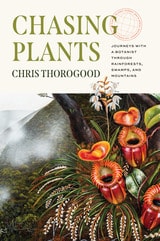
Chasing Plants
Journeys with a Botanist through Rainforests, Swamps, and MountainsChris Thorogood
University of Chicago Press, 2022
From an acclaimed botanist and artist, a thrilling and beautifully illustrated expedition around the globe in search of the world’s most extraordinary plants.
After making a strange discovery on a childhood trip to Ikea—a stand of sap-sucking, leafless broomrapes, stealing nutrients from their neighbors’ roots—Chris Thorogood dreamed of becoming a botanist and would stop at nothing to feed his growing addiction to plants. In his hair-raising adventures across Europe, Africa, the Middle East, and Asia, Thorogood treads a death-defying path over cliffs, up erupting volcanoes, through typhoons, and out into the very heart of the world’s vast, green wilderness. Along the way, he encounters pitcher plants, irises, and orchids more heart-piercingly beautiful than could ever be imagined.
But with Thorogood as our guide in Chasing Plants, we not only imagine: we see. An internationally acclaimed botanical illustrator, Thorogood conjures his adventures spent seed-collecting and conserving plants around the world back to life in his electric paintings, which feature throughout the book. They bring plants out of the shadows, challenging us to see their intrigue and their character, and helping us to understand why plant species must be protected. To join Thorogood in his wild adventures is to be cast under his green spell: readers will never think of plants the same way again.
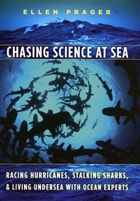
Chasing Science at Sea
Racing Hurricanes, Stalking Sharks, and Living Undersea with Ocean ExpertsEllen Prager
University of Chicago Press, 2008
With passion and wit, well-known marine scientist Ellen Prager shares her stories as well as those of her colleagues, revealing that in the field ingenuity and a good sense of humor are as essential as water, sunblock, and GPS. Serendipity is invaluable, and while collecting data is the goal, sometimes just getting back to shore means success. But despite the physical hardship and emotional duress that come with the work, optimism and adventure prompt a particularly hardy species of scientist to return again and again to the sea.
Filled with firsthand accounts of the challenges and triumphs of dealing with the extreme forces of nature and the unpredictable world of the ocean, Chasing Science at Sea is a unique glimpse below the water line at what it is like and why it is important to study, explore, and spend time in one of our planet’s most fascinating and foreign environments.
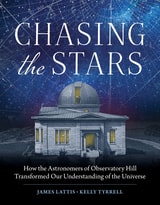
Chasing the Stars
How the Astronomers of Observatory Hill Transformed Our Understanding of the UniverseJames Lattis
Wisconsin Historical Society Press, 2024
Explore the remarkable story of Wisconsin astronomers whose curiosity, persistence, and innovation helped us better understand our universe.
Chasing the Stars traces the history of the University of Wisconsin’s Washburn Observatory, where some of the world’s most cutting-edge astronomical inventions were born. Learn about the earliest Indigenous stargazers, the women who worked as the first human computers, the astronomers who sold time by the stars, the scientists who shrank the Milky Way, and the crucial role Wisconsin astronomers played in the development of modern astrophysics and space astronomy.
This extraordinary book features more than 100 modern and historic photographs that illustrate the people and science behind Wisconsin’s astronomical innovations. Designed for lay readers and astronomers alike, Chasing the Stars inspires all of us to look up at the sky in wonder.
“Filled with fascinating astronomy-related facts, Chasing the Stars covers the first century-plus of the University of Wisconsin’s Washburn Observatory and the science it inspired. . . . [It is] a thorough, enlightening history of an important scientific site and the personalities who brought it to life.”
—Foreword Reviews
“Lattis and Tyrrell give us a masterful tour of Washburn Observatory, its legacy of astronomical discovery, and the key figures who forever changed our understanding of the cosmos. Readers will find delightful insights on these pages that bring this rich history to life and instill a desire to gaze at the stars.”
—Kenneth Sembach, former director of the Space Telescope Science Institute
“Through enchanting photos and compelling tales of astronomers, Lattis and Tyrrell shed light on the impressive innovations Wisconsin has contributed to the field of astrophysics. From the novel ways of collecting light from space to the new technologies sent to space on early satellites, readers will be fascinated to learn how Wisconsin astronomers have influenced our understanding of the universe.”
—Dr. Amanda Bauer, deputy director and head of science and education, Yerkes Observatory
“This fascinating and detailed account of the history of astronomy in Wisconsin highlights a diverse set of connections, from the construction of the University of Wisconsin’s first observatory in the late 1880s, to General Mills, Oscar Meyer, railroads, and the creation of the American Astronomical Society. Chasing the Stars recounts for us how Wisconsin’s astronomers came to be leaders in this field for more than a century and reminds us of why astronomy is a deeply human endeavor that appeals to professionals and nonprofessionals alike.”
—Dr. Andrea Ghez, UCLA astrophysicist and Nobel laureate
Cheatgrass
Fire and Forage on the RangeJames A. Young
University of Nevada Press, 2009
Cheatgrass (Bromus tectorum) is an exotic species that appeared in North America in the late nineteenth century and has since become a dominant plant in the arid and semiarid rangelands between the Sierra Nevadas, Cascades, and Rocky Mountains. It is the first grass to appear after the region's long, cold winters and thus has become an important forage plant for livestock and wildlife. Cheatgrass is also a major environmental hazard in the sagebrush plant communities where it has established itself, providing highly combustible fuel for the wildfires that have ravaged so much of the Great Basin since the mid-twentieth century. Cheatgrass is the first comprehensive study of this highly invasive plant that has changed the ecology of millions of acres of western rangeland. Authors Young and Clements have researched the biology and impact of cheatgrass for four decades. Their book addresses the subject from several perspectives: the history of the invasion; the origins and biology of cheatgrass; its genetic variations, breeding systems, and patterns of distribution; its impact on grazing management; and the role it plays, both positive and negative, in the lives of high desert wildlife.
Checklist of the British & Irish Basidiomycota
M. Legon, A. Henrici, T. J. Roberts, and V. N. Spooner
Royal Botanic Gardens, Kew, 2005
An essential companion for amateur and professional mycologists, and a valuable reference tool for all wildlife recorders, ecologists and conservationists.
Chemical Consequences
Environmental Mutagens, Scientist Activism, and the Rise of Genetic ToxicologyFrickel, Scott
Rutgers University Press, 2004
Hereis the first historical and sociological account of the formation of an interdisciplinary science known as genetic toxicology, and of the scientists’ social movement that created it.
After research geneticists discovered that synthetic chemicals were capable of changing the genetic structure of living organisms, scientists began to explore how these chemicals affected gene structure and function. In the late 1960s, a small group of biologists became concerned that chemical mutagens represented a serious and possibly global environmental threat.
Genetic toxicology is nurtured as much by public culture as by professional practices, reflecting the interplay of genetics research and environmental politics. Drawing on a wealth of resources, Scott Frickel examines the creation of this field through the lens of social movement theory. He reveals how a committed group of scientist-activists transformed chemical mutagens into environmental problems, mobilized existing research networks, recruited scientists and politicians, secured financial resources, and developed new ways of acquiring knowledge. The result is a book that vividly illustrates how science and activism were interwoven to create a discipline that remains a defining feature of environmental health science.
Chemical Crimes
Science and Poison in Victorian Crime FictionCheryl Blake Price
The Ohio State University Press, 2019
From the Newgate and Silver Fork novels of the 1830s to the emergent genres of science and detective fiction of the 1890s, Price advocates for the classification of a new type of poisoner, one who combined crime with methodical scientific know-how: the chemical criminal. Chemical Crimes shows how authors used the subversiveness of chemical crimes to challenge the supposed disciplinary force of forensic detection and suggests that generic developments were inspired as much by criminal scientific innovation as they were by the rise of the detective–scientist. By focusing on chemical crime’s appearance at significant moments, this book traces how reactions to Victorian science inspired change in nineteenth-century crime fiction.

Chemical Demonstrations, Volume 1
A Handbook for Teachers of ChemistryBassam Z. Shakhashiri
University of Wisconsin Press, 1983
The demonstrations capture interest, teach, inform, fascinate, amaze, and perhaps, most importantly, involve students in chemistry. Nowhere else will you find books that answer, "How come it happens? . . . Is it safe? . . . What do I do with all the stuff when the demo is over?"
Shakhashiri and his collaborators offer 282 chemical demonstrations arranged in 11 chapters. Each demonstration includes seven sections: a brief summary, a materials list, a step-by-step account of procedures to be used, an explanation of the hazards involved, information on how to store or dispose of the chemicals used, a discussion of the phenomena displayed and principles illustrated by the demonstration, and a list of references.

Chemical Demonstrations, Volume 2
A Handbook for Teachers of ChemistryBassam Z. Shakhashiri
University of Wisconsin Press, 1985
The demonstrations capture interest, teach, inform, fascinate, amaze, and perhaps, most importantly, involve students in chemistry. Nowhere else will you find books that answer, "How come it happens? . . . Is it safe? . . . What do I do with all the stuff when the demo is over?"
Shakhashiri and his collaborators offer 282 chemical demonstrations arranged in 11 chapters. Each demonstration includes seven sections: a brief summary, a materials list, a step-by-step account of procedures to be used, an explanation of the hazards involved, information on how to store or dispose of the chemicals used, a discussion of the phenomena displayed and principles illustrated by the demonstration, and a list of references.

Chemical Demonstrations, Volume 3
A Handbook for Teachers of ChemistryBassam Z. Shakhashiri
University of Wisconsin Press, 1989
The demonstrations capture interest, teach, inform, fascinate, amaze, and perhaps, most importantly, involve students in chemistry. Nowhere else will you find books that answer, "How come it happens? . . . Is it safe? . . . What do I do with all the stuff when the demo is over?"
Shakhashiri and his collaborators offer 282 chemical demonstrations arranged in 11 chapters. Each demonstration includes seven sections: a brief summary, a materials list, a step-by-step account of procedures to be used, an explanation of the hazards involved, information on how to store or dispose of the chemicals used, a discussion of the phenomena displayed and principles illustrated by the demonstration, and a list of references. You'll find safety emphasized throughout the book in each demonstration.

Chemical Demonstrations, Volume 4
A Handbook for Teachers of ChemistryBassam Z. Shakhashiri
University of Wisconsin Press, 1992
The demonstrations capture interest, teach, inform, fascinate, amaze, and perhaps, most importantly, involve students in chemistry. Nowhere else will you find books that answer, "How come it happens? . . . Is it safe? . . . What do I do with all the stuff when the demo is over?"
Shakhashiri and his collaborators offer 282 chemical demonstrations arranged in 11 chapters. Each demonstration includes seven sections: a brief summary, a materials list, a step-by-step account of procedures to be used, an explanation of the hazards involved, information on how to store or dispose of the chemicals used, a discussion of the phenomena displayed and principles illustrated by the demonstration, and a list of references. You'll find safety emphasized throughout the book in each demonstration.
Chemical Demonstrations, Volume 5
A Handbook for Teachers of ChemistryBassam Z. Shakhashiri
University of Wisconsin Press, 2011
Color and light are the focus of this long-awaited fifth volume in the Chemical Demonstrations series, which describes demonstrations that effectively communicate science to both students and general audiences. Using full color illustrations, the book provides meticulous instructions for safely demonstrating colorful phenomena and illustrating scientific principles. A rich introductory section explores the science of color and light, outlines the chemical processes of vision, and explains what happens when visual information enters the human eye and is perceived by the brain. With more than fifty demonstrations and multiple procedures included, this volume offers abundant opportunities to arouse and sustain interest in science for both classroom and public presentations.
Each demonstration includes:
• a brief description of the demonstration
• a materials list
• a step-by-step account of procedures to be used
• an explanation of the potential hazards involved
• information on safely storing and disposing the chemicals used
• a full discussion of the phenomena displayed and principles illustrated
• a list of references.
Created by acclaimed chemists and science educators Bassam Shakhashiri and his collaborators Rodney Schreiner and Jerry Bell, these demonstrations make an impressive addition to the earlier volumes, which have been lauded for guiding teachers and scientists in effectively communicating science. Like all volumes in the series, Volume 5 communicates chemistry using pedagogical knowledge to enhance the effectiveness of demonstrations to all audiences.
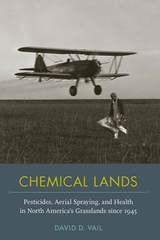
Chemical Lands
Pesticides, Aerial Spraying, and Health in North America’s Grasslands since 1945David D. Vail
University of Alabama Press, 2018
An exploration of the elaborate relationship between farmers, aerial sprayers, agriculturalists, crop pests, chemicals, and the environment.
The controversies in the 1960s and 1970s that swirled around indiscriminate use of agricultural chemicals—their long-term ecological harm versus food production benefits—were sparked and clarified by biologist Rachel Carson’s Silent Spring (1962). This seminal publication challenged long-held assumptions concerning the industrial might of American agriculture while sounding an alarm for the damaging persistence of pesticides, especially chlorinated hydrocarbons such as DDT, in the larger environment.
In Chemical Lands: Pesticides, Aerial Spraying, and Health in North America’s Grasslands since 1945 David D. Vail shows, however, that a distinctly regional view of agricultural health evolved. His analysis reveals a particularly strong ethic in the North American grasslands where practitioners sought to understand and deploy insecticides and herbicides by designing local scientific experiments, engineering more precise aircraft sprayers, developing more narrowly specific chemicals, and planting targeted test crops. Their efforts to link the science of toxicology with environmental health reveal how the practitioners of pesticides evaluated potential hazards in the agricultural landscape while recognizing the production benefits of controlled spraying.
Chemical Lands adds to a growing list of books on toxins in the American landscape. This study provides a unique Grasslands perspective of the Ag pilots, weed scientists, and farmers who struggled to navigate novel technologies for spray planes and in the development of new herbicides/insecticides while striving to manage and mitigate threats to human health and the environment.
Chemically Imbalanced
Everyday Suffering, Medication, and Our Troubled Quest for Self-MasteryJoseph E. Davis
University of Chicago Press, 2020
Chemically Imbalanced is a field report on how ordinary people dealing with common problems explain their suffering, how they’re increasingly turning to the thin and mechanistic language of the “body/brain,” and what these encounters might tell us. Drawing on interviews with people dealing with struggles such as underperformance in school or work, grief after the end of a relationship, or disappointment with how their life is unfolding, Joseph E. Davis reveals the profound revolution in consciousness that is underway. We now see suffering as an imbalance in the brain that needs to be fixed, usually through chemical means. This has rippled into our social and cultural conversations, and it has affected how we, as a society, imagine ourselves and envision what constitutes a good life. Davis warns that what we envision as a neurological revolution, in which suffering is a mechanistic problem, has troubling and entrapping consequences. And he makes the case that by turning away from an interpretive, meaning-making view of ourselves, we thwart our chances to enrich our souls and learn important truths about ourselves and the social conditions under which we live.
Chemically Imbalanced
Everyday Suffering, Medication, and Our Troubled Quest for Self-MasteryJoseph E. Davis
University of Chicago Press, 2020
Everyday suffering—those conditions or feelings brought on by trying circumstances that arise in everyone’s lives—is something that humans have grappled with for millennia. But the last decades have seen a drastic change in the way we approach it. In the past, a person going through a time of difficulty might keep a journal or see a therapist, but now the psychological has been replaced by the biological: instead of treating the heart, soul, and mind, we take a pill to treat the brain.
Chemically Imbalanced is a field report on how ordinary people dealing with common problems explain their suffering, how they’re increasingly turning to the thin and mechanistic language of the “body/brain,” and what these encounters might tell us. Drawing on interviews with people dealing with struggles such as underperformance in school or work, grief after the end of a relationship, or disappointment with how their life is unfolding, Joseph E. Davis reveals the profound revolution in consciousness that is underway. We now see suffering as an imbalance in the brain that needs to be fixed, usually through chemical means. This has rippled into our social and cultural conversations, and it has affected how we, as a society, imagine ourselves and envision what constitutes a good life. Davis warns that what we envision as a neurological revolution, in which suffering is a mechanistic problem, has troubling and entrapping consequences. And he makes the case that by turning away from an interpretive, meaning-making view of ourselves, we thwart our chances to enrich our souls and learn important truths about ourselves and the social conditions under which we live.
Cherokees in Transition
A Study of Changing Culture and Environment Prior to 1775Gary C. Goodwin
University of Chicago Press, 1977
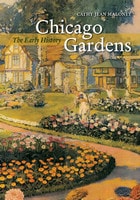
Chicago Gardens
The Early HistoryCathy Jean Maloney
University of Chicago Press, 2008
Cathy Jean Maloney has spent decades researching the city’s horticultural heritage, and here she reveals the unusual history of Chicago’s first gardens. Challenged by the region’s clay soil, harsh winters, and fierce winds, Chicago’s pioneering horticulturalists, Maloney demonstrates, found imaginative uses for hardy prairie plants. This same creative spirit thrived in the city’s local fruit and vegetable markets, encouraging the growth of what would become the nation’s produce hub. The vast plains that surrounded Chicago, meanwhile, inspired early landscape architects, such as Frederick Law Olmsted, Jens Jensen, and O.C. Simonds, to new heights of grandeur.
Maloney does not forget the backyard gardeners: immigrants who cultivated treasured seeds and pioneers who planted native wildflowers. Maloney’s vibrant depictions of Chicagoans like “Bouquet Mary,” a flower peddler who built a greenhouse empire, add charming anecdotal evidence to her argument–that Chicago’s garden history rivals that of New York or London and ensures its status as a world-class capital of horticultural innovation.
With exquisite archival photographs, prints, and postcards, as well as field guide descriptions of living legacy gardens for today’s visitors, Chicago Gardens will delight green-thumbs from all parts of the world.
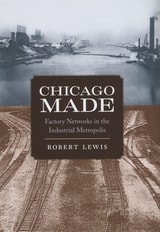
Chicago Made
Factory Networks in the Industrial MetropolisRobert Lewis
University of Chicago Press, 2008
Robert Lewis documents how manufacturers, attracted to greenfield sites on the city’s outskirts, began to build factory districts there with the help of an intricate network of railroad owners, real estate developers, financiers, and wholesalers. These immense networks of social ties, organizational memberships, and financial relationships were ultimately more consequential, Lewis demonstrates, than any individual achievement. Beyond simply giving Chicago businesses competitive advantages, they transformed the economic geography of the region. Tracing these transformations across seventy-five years, Chicago Made establishes a broad new foundation for our understanding of urban industrial America.

Chicago's War on Syphilis, 1937-40
The Times, the "Trib," and the Clap DoctorSuzanne Poirier
University of Illinois Press, 1995
the importance of her subject." -- Thomas N. Bonner, author of To
the Ends of the Earth: Women's Search for Education in Medicine
Those struggling to deal with the AIDS epidemic might learn valuable
lessons from the earlier struggle of the U.S. to deal with syphilis. Here,
Suzanne Poirier tells the story of the Chicago Syphilis Control Program
launched in 1937 by the Chicago Board of Health and the U.S. Public Health
Service and severely limited from the start because of the refusal of
government, the press, and the public to confront directly the issues
underlying the problem.
Poirier's narrative is memorable for its vivid scenes, colorful characters
that include Chicago's "clap doctor," Dr. Ben Reitman, and its
account of the heated debate that surrounded the effort. In an epilogue,
the author discusses similarities between current efforts against AIDS
and the handling and politics of the syphilis problem in the late 1930s.

Chicago
A Geography of the City and Its RegionJohn C. Hudson
University of Chicago Press, 2006
Renowned geographer John C. Hudson leaves no aspect unexplored in this ambitious and peerless book. Beginning with an overview of metropolitan Chicago, Hudson describes how the city has served as a model to social scientists and examines its unique neighborhoods and communities from the perspectives of Chicagoans themselves. A thorough description of the physical geography of the region introduces a series of studies in historical geography that consider the origins of the city and its early development through to its present state, paying particular attention to race, ethnicity, and suburbanization, as well as commuting patterns, neighborhood change, and patterns of income distribution. Chicago concludes with a comparison of the balanced geography that prevailed in the early twentieth century with the skewed pattern of sectoral imbalances that exists today.
Supplemented with more than one hundred maps that illustrate the evolution of Chicago over time and sixty-four black-and-white and color photographs that capture iconic images of the city’s landscapes and its people, Chicago beautifully synthesizes the city’s social and economic strata with geographical features to provide an authoritative guide to modern Chicagoland.
Chicago
Growth of a MetropolisHarold M. Mayer and Richard C. Wade
University of Chicago Press, 1969
This volume, however, which comprises over 1,000 pictures and 50 maps, tries to do more than show physical development—it attempts to suggest how the city expanded and why it looks the way it does. Because it asks different questions, this book differs markedly from other "pictorial histories" of American cities. Instead of emphasizing society and customs, this volume deals with the physical conditions of life. In place of the conventional interest in "founding fathers" and leading families, it is more concerned with street scenes and ordinary people. Without neglecting downtown, it also reaches into the residential areas and neighborhood shopping centers. Moreover, this volume is concerned with suburbs and "satellite" towns as well as the historic city.
"Chicago: Growth of a Metropolis is an incredible book. Like its subject it is excessive, and nothing succeeds like excess. It is handsomely designed, with a thousand photographs that document the physical growth and the spatial patterns of the city. . . . A dimensionalism comes through that no other city has. Carl Sandburg sang it in his poetry, and the book does more to grasp it . . . than any other book I have seen."—Hugh Newell Jacobson, New Republic
Children of Ezekiel
Aliens, UFOs, the Crisis of Race, and the Advent of End TimeMichael Lieb
Duke University Press, 1998
Beginning with the merkabah chariot literature of Hebrew and Gnostic mysticism, Lieb shows how religiously inspired people concerned with annihilating their heretical enemies seized on Ezekiel’s vision as revealing the technologically superior instrument of God’s righteous anger. He describes how many who seek to know the unknowable that is the power of God conceive it in technological terms—and how that power is associated with political aims and a heralding of the end of time. For Milton, Ezekiel’s chariot becomes the vehicle in which the Son of God does battle with the rebellious angels. In the modern age, it may take the form of a locomotive, tank, airplane, missile, or UFO. Technology itself is seen as a divine gift and an embodiment of God in the temporal world. As Lieb demonstrates, the impetus to produce modern technology arises not merely from the desire for profit or military might but also from religious-spiritual motives.
Including discussions of conservative evangelical Christian movements, Reagan’s ballistic shooting gallery in the sky, and the Nation of Islam’s vision of the “mother plane” as the vehicle of retribution in the war against racial oppression, Children of Ezekiel will enthrall readers who have been captivated, either through religious belief or intellectual interests, by a common thread uniting millennial religious beliefs, racial conflict, and political and militaristic aspirations.
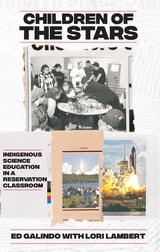
Children of the Stars
Indigenous Science Education in a Reservation ClassroomEd Galindo
Oregon State University Press, 2022
In Children of the Stars, Galindo relates his experience with this first team and with successive student teams, who continued to participate in NASA programs over the course of a decade. He discusses the challenges of teaching American Indian students, from the practical limits of a rural reservation school to the importance of respecting and incorporating Indigenous knowledge systems. In describing how he had to earn the trust of his students to truly be successful as their teacher, Galindo also touches on the complexities of community belonging and understanding; although Indigenous himself, Galindo is not a member of the Shoshone-Bannock tribes and was still an outsider who had as much to learn as the students.
Children of the Stars is the story of students and a teacher, courage and hope. Written in a conversational style, it’s an accessible story about students who were supported and educated in culturally relevant ways and so overcame the limitations of an underfunded reservation school to reach great heights.
Chimpanzees in Context
A Comparative Perspective on Chimpanzee Behavior, Cognition, Conservation, and WelfareEdited by Lydia M. Hopper and Stephen R. Ross
University of Chicago Press, 2020
After a foreword by Jane Goodall, the book features sections that examine chimpanzee life histories and developmental milestones, behavior, methods of study, animal communication, cooperation, communication, and tool use. The book ends with chapters that consider how we can apply contemporary knowledge of chimpanzees to enhance their care and conservation. Collectively, these chapters remind us of the importance of considering the social, ecological, and cognitive context of chimpanzee behavior, and how these contexts shape our comprehension of chimpanzees. Only by leveraging these powerful perspectives do we stand a chance at improving how we understand, care for, and protect this species.
Chinese Medicinal Plants, Herbal Drugs and Substitutes
An Identification GuideChristine Leon and Lin Yu-Lin
Royal Botanic Gardens, Kew, 2017
Chinese Surplus
Biopolitical Aesthetics and the Medically Commodified BodyAri Larissa Heinrich
Duke University Press, 2018
Choked
Life and Breath in the Age of Air PollutionBeth Gardiner
University of Chicago Press, 2019
Air pollution prematurely kills seven million people every year, including more than one hundred thousand Americans. It is strongly linked to strokes, heart attacks, many kinds of cancer, dementia, and premature birth, among other ailments. In Choked, Beth Gardiner travels the world to tell the story of this modern-day plague, taking readers from the halls of power in Washington and the diesel-fogged London streets she walks with her daughter to Poland’s coal heartland and India’s gasping capital. In a gripping narrative that’s alive with powerful voices and personalities, she exposes the political decisions and economic forces that have kept so many of us breathing dirty air. This is a moving, up-close look at the human toll, where we meet the scientists who have transformed our understanding of pollution’s effects on the body and the ordinary people fighting for a cleaner future.
In the United States, air is far cleaner than it once was. But progress has failed to keep up with the science, which tells us that even today’s lower pollution levels are doing real damage. And as the Trump administration rips up the regulations that have brought us where we are, decades of gains are now at risk. Elsewhere, the problem is far worse, and choking nations like China are scrambling to replicate the achievements of an American agency—the EPA—that until recently was the envy of the world.
Clean air feels like a birthright. But it can disappear in a puff of smoke if the rules that protect it are unraveled. At home and around the world, it’s never been more important to understand how progress happened and what dangers might still be in store. Choked shows us that we hold the power to build a cleaner, healthier future: one in which breathing, life’s most basic function, no longer carries a hidden danger.
Christianity, Wilderness, and Wildlife
Susan Bratton
University of Scranton Press, 2009
Christmas Trees for Pleasure and Profit
Wray, Robert D
Rutgers University Press, 2008
A perennial bestseller, this illustrated guide covers selecting land, choosing species, planting, harvesting, and managing a plantation. Wray provides guidance for choosing species suitable for the grower's situation, where and how to get planting stock, and how to care for it. The planting process is described in detail, including both hand and machine methods. The book presents useful techniques for protecting the growing trees from weeds, animals, fire, insects, and disease, and offers a full description of shearing or shaping trees to improve their form and densityùkeys to a successful crop.
As the grower's job is not done until the trees are sold, issues of grading, harvesting, advertising, and marketing are examined. A chapter on finances deals with costs, profits, and taxes. From novice to experienced grower, there is something in this book for everyone.
Chromatic Algorithms
Synthetic Color, Computer Art, and Aesthetics after CodeCarolyn L. Kane
University of Chicago Press, 2014
Chromatic Algorithms reveals the fascinating history behind digital color, tracing it from the work of a few brilliant computer scientists and experimentally minded artists in the late 1960s and early ‘70s through to its appearance in commercial software in the early 1990s. Mixing philosophy of technology, aesthetics, and media analysis, Carolyn Kane shows how revolutionary the earliest computer-generated colors were—built with the massive postwar number-crunching machines, these first examples of “computer art” were so fantastic that artists and computer scientists regarded them as psychedelic, even revolutionary, harbingers of a better future for humans and machines. But, Kane shows, the explosive growth of personal computing and its accompanying need for off-the-shelf software led to standardization and the gradual closing of the experimental field in which computer artists had thrived.
Even so, the gap between the bright, bold presence of color onscreen and the increasing abstraction of its underlying code continues to lure artists and designers from a wide range of fields, and Kane draws on their work to pose fascinating questions about the relationships among art, code, science, and media in the twenty-first century.
Circulation and Sleep
Experimental Investigations Accompanied by an AtlasJohn F. Shepard
University of Michigan Press, 1914
Cities in the Urban Age
A DissentRobert A. Beauregard
University of Chicago Press, 2018
For Beauregard, the city is a cauldron for four haunting contradictions. First, cities are equally defined by both their wealth and their poverty. Second, cities are simultaneously environmentally destructive and yet promise sustainability. Third, cities encourage rule by political machines and oligarchies, even as they are essentially democratic and at least nominally open to all. And fourth, city life promotes tolerance among disparate groups, even as the friction among them often erupts into violence. Beauregard offers no simple solutions or proposed remedies for these contradictions; indeed, he doesn’t necessarily hold that they need to be resolved, since they are generative of city life. Without these four tensions, cities wouldn’t be cities. Rather, Beauregard argues that only by recognizing these ambiguities and contradictions can we even begin to understand our moral obligations, as well as the clearest paths toward equality, justice, and peace in urban settings.