Results by title
1297 books match the query 'Women authors' and 73 start with c
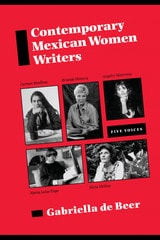
Contemporary Mexican Women Writers
Five VoicesBy Gabriella de Beer
University of Texas Press, 1996
Mexican women writers moved to the forefront of their country's literature in the twentieth century. Among those who began publishing in the 1970s and 1980s are Maria Luisa Puga, Silvia Molina, Brianda Domecq, Carmen Boullosa, and Angeles Mastretta. Sharing a range of affinities while maintaining distinctive voices and outlooks, these are the women whom Gabriella de Beer has chosen to profile in Contemporary Mexican Women Writers.
De Beer takes a three-part approach to each writer. She opens with an essay that explores the writer's apprenticeship and discusses her major works. Next, she interviews each writer to learn about her background, writing, and view of herself and others. Finally, de Beer offers selections from the writer's work that have not been previously published in English translation. Each section concludes with a complete bibliographic listing of the writer's works and their English translations.
These essays, interviews, and selections vividly recreate the experience of being with the writer and sharing her work, hearing her tell about and evaluate herself, and reading the words she has written. The book will be rewarding reading for everyone who enjoys fine writing.
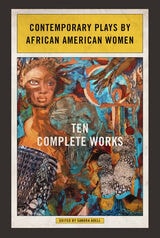
Contemporary Plays by African American Women
Ten Complete WorksEdited by Sandra Adell
University of Illinois Press, 2015
Selections: Blue Door, by Tanya Barfield; Levee James, by S. M. Shephard-Massat; Hoodoo Love, by Katori Hall; Carnaval, by Nikkole Salter; Single Black Female, by Lisa B. Thompson; Fabulation, or The Re-Education of Undine, by Lynn Nottage; BlackTop Sky, by Christina Anderson; Voyeurs de Venus, by Lydia Diamond; Fedra, by J. Nicole Brooks; and Uppa Creek: A Modern Anachronistic Parody in the Minstrel Tradition, by Keli Garrett.
Contraband of Hoopoe
Ewa Chrusciel
Omnidawn, 2014
Controlling the Silver
Lorna Goodison
University of Illinois Press, 2004
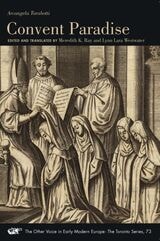
Convent Paradise
Arcangela Tarabotti
Iter Press, 2020
The Other Voice in Early Modern Europe - The Toronto Series volume 73

Conversations with Isabel Allende
Revised EditionEdited by John Rodden
University of Texas Press, 2004
This revised edition has been updated to cover Allende's three newest books—City of the Beasts, Portrait in Sepia: A Novel, and Daughter of Fortune. It includes four new interviews in which Allende discusses completing her trilogy of novels that began with House of the Spirits, as well as her ongoing spiritual adventure and political interests.

Coriolis
A.D. Lauren-Abunassar
University of Arkansas Press, 2023
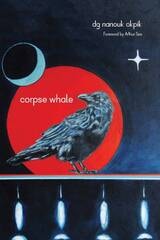
Corpse Whale
dg nanouk okpik; Foreword by Arthur Sze
University of Arizona Press, 2012
A self-proclaimed “vessel in which stories are told from time immemorial,” poet dg nanouk okpik seamlessly melds both traditional and contemporary narrative, setting her apart from her peers. The result is a collection of poems that are steeped in the perspective of an Inuit of the twenty-first century—a perspective that is fresh, vibrant, and rarely seen in contemporary poetics.
Fearless in her craft, okpik brings an experimental, yet poignant, hybrid aesthetic to her first book, making it truly one of a kind. “It takes all of us seeing, hearing, touching, tasting, and smelling to be one,” she says, embodying these words in her work. Every sense is amplified as the poems, carefully arranged, pull the reader into their worlds. While each poem stands on its own, they flow together throughout the collection into a single cohesive body.
The book quickly sets up its own rhythms, moving the reader through interior and exterior landscapes, dark and light, and other spaces both ecological and spiritual. These narrative, and often visionary, poems let the lives of animal species and the power of natural processes weave into the human psyche, and vice versa.
Okpik’s descriptive rhythms ground the reader in movement and music that transcend everyday logic and open up our hearts to the richness of meaning available in the interior and exterior worlds.

Cosmic Tantrum
PoemsSarah Lyn Rogers
Northwestern University Press, 2025
A debut full-length poetry collection from Sarah Lyn Rogers rewriting girlhood and summoning mischief
Sarah Lyn Rogers’s debut full-length collection is a tragicomic exploration of codependent and transactional relationships: economies of shame, gifts as debts, businesses run like families, and families run like businesses. What transgressions and abuses do we believe are acceptable fees for safety or love, and who upholds these myths? The poems in Cosmic Tantrum examine how our most intimate relationships shape the way we move through the wider world—and what happens when we reject the stories we’ve inherited about our worth.
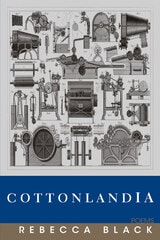
Cottonlandia
Rebecca Black
University of Massachusetts Press, 2005
The poems in Rebecca Black's first volume, Cottonlandia, move through myth and landscape, beginning in the deep South's “shimmer and tar” and ending in the “soot and orange dolor” of the California desert. Cottonlandia conjures a proto-continent where fashionable golems pose for antique photographs and nineteenth-century naturalists wander into the melee of the civil rights struggle in the South.
By turns haunting and comic, Black's poems describe the archaeology of the apocalypse. Countesses leave behind poisonous snapshots, lovers examine their shapes in the mirror, and Seminoles return for skeletons arranged illegally in exhibits, even as floods force antebellum coffins to rise.
In the title poem, reproduced on this page, the lines of a spiritual splinter and circle through a loose narrative, evoking the delirium of class and race in the author's Georgia hometown. Throughout the volume, poems quarrel with primal forces, threading the needle of historical oblivion with a dark, intelligent, and incantatory voice.
Count Me In
Young, Darlene
Signature Books, 2024
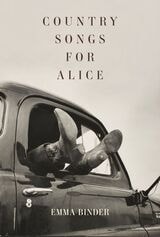
Country Songs for Alice
Emma Binder
Tupelo Press, 2024
In Country Songs for Alice, a nonbinary, queer narrator passes through the crucible of love, romance, and heartbreak against the backdrop of rural America—a landscape which offers luminous belonging, even as the hazards of homophobia, loneliness, and isolation loom large. Part roadtrip, part mixtape, these poems are explorations of love, music, romance, pageantry, loneliness, and belonging in the rural places and small towns that seem to preclude queer culture. Country Songs for Alice not only tells the story of a relationship and its dissolution but reclaims country western imagery and aesthetics for a queer audience, dousing the narrator’s experience in the language of cowboys, horses, rodeos, trucks, and desert skies.
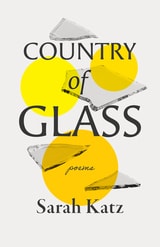
Country of Glass
PoemsSarah Katz
Gallaudet University Press, 2022
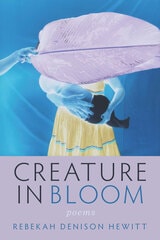
Creature in Bloom
Rebekah Denison Hewitt
University of Wisconsin Press, 2026
It is rare to find a collection so grounded in the manifold meanings of motherhood—in all its anxiety, ambivalence, and joy. From the aches and fears of pregnancy, through the pain and relief of childbirth, to the perplexing questions and worries of parenting, Rebekah Denison Hewitt grapples with what it is to make a human (and to sometimes lose one), “the baby a creature / in bloom / the mother / a lotus eater.”
Closing with the counsel “Do not be afraid. / Rinse your heart out. Proceed,” these poems give readers many reasons to fear—health issues, genetic deformities, postpartum depression, gun violence, and car accidents. Yet always lurking underneath are light, optimism, and a stubborn willingness to soldier on. Exploring the stories, myths, and personal histories that shape the experience of modern motherhood, Creature in Bloom expands the conversation around what it means to be a mother.
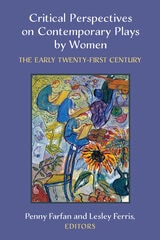
Critical Perspectives on Contemporary Plays by Women
The Early Twenty-First CenturyPenny Farfan and Lesley Ferris, Editors
University of Michigan Press, 2021
This book foregrounds some of the ways in which women playwrights from across a range of contexts and working in a variety of forms and styles are illuminating the contemporary world while also contributing to its reshaping as they reflect, rethink, and reimagine it through their work for the stage. The book is framed by a substantial introduction that sets forth the critical vision and structure of the book as a whole, and an afterword that points toward emerging currents in and expansions of the contemporary field of playwriting by women on the cusp of the third decade of the twenty-first century. Within this frame, the twenty-eight chapters that form the main body of the book, each focusing on a single play of critical significance, together constitute a multi-faceted, inevitably partial, yet nonetheless integral picture of the work of women playwrights since 2000 as they engage with some of the most pressing issues of our time. Some of these issues include the continuing oppression of and violence against women, people of color, LGBTQ+ people, and ethnic minorities; the ongoing processes of decolonization; the consequences of neoliberal capitalism; the devastation and enduring trauma of war; global migration and the refugee crisis; the turn to right-wing populism; and the impact of climate change, including environmental disaster and species extinction.
The book is structured into seven sections: Replaying the Canon; Representing Histories; Staging Lives; Re-imagining Family; Navigating Communities; Articulating Intersections; and New World Order(s). These sections group clusters of plays according to the broad critical actions they perform or, in the case of the final section, the new world orders that they capture through their stagings of the seeming impasse of the politically and environmentally catastrophic global present moment. There are many other points of resonance among and across the plays, but this seven-part structure foregrounds the broader actions that drive the plays, both in the Aristotelian dramaturgical sense and in the larger sense of the critical interventions that the plays creatively enact. In this way, the seven-part structure establishes correspondences across the great diversity of dramatic material represented in the book while at the same time identifying key methods of critical approach and areas of focus that align the book’s contributors across this diversity. The structure of the book thus parallels what the playwrights themselves are doing, but also how the contributors are approaching their work. Plays featured in the book are from Canada, Australia, South Africa, the US, the UK, France, Argentina, New Zealand, Syria, Brazil, Italy, and Austria; the playwrights include Margaret Atwood, Leah Purcell, Yaël Farber, Paula Vogel, Adrienne Kennedy, Suzan-Lori Parks, debbie tucker green, Lisa Loomer, Hélène Cixous. Anna Deavere Smith, Lola Arias, Lisa Kron and Jeanine Tesori, Marie Clements, Quiara Alegría Hudes, Alia Bano, Holly Hughes, Whiti Hereaka, Julia Cho, Liwaa Yazji, Grace Passô, Dominique Morisseau, Emma Dante, Frances Ya-Chu Cowhig, Lynn Nottage, Elfriede Jelinek, Caryl Churchill, Colleen Murphy, and Lucy Kirkwood.
Encompassing several generations of playwrights and scholars, ranging from the most senior to mid-career to emerging voices, the book will be essential reading for established researchers, a valuable learning resource for students at all levels, and a useful and accessible guide for theatre practitioners and interested theatre-goers.
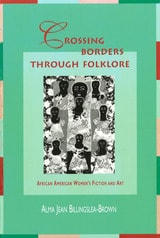
Crossing Borders through Folklore
African American Women's Fiction and ArtAlma Jean Billingslea-Brown
University of Missouri Press, 1999
Examining works by Toni Morrison, Paule Marshall, Faith Ringgold, and Betye Saar, this innovative book frames black women's aesthetic sensibilities across art forms. Investigating the relationship between vernacular folk culture and formal expression, this study establishes how each of the four artists engaged the identity issues of the 1960s and used folklore as a strategy for crossing borders in the works they created during the following two decades.
As a dynamic, open-ended process, folklore historically has enabled African-descended people to establish differential identity, resist dominance, and affirm group solidarity. This book documents the use of expressive forms of folklore in the fiction of Morrison and Marshall and the use of material forms of folklore in the visual representations of Ringgold and Saar. Offering a conceptual paradigm of a folk aesthetic to designate the practices these women use to revise and reverse meanings—especially meanings imposed on images such as Aunt Jemima and Sambo—Crossing Borders through Folklore explains how these artists locate sites of intervention and reconnection. From these sites, in keeping with the descriptive and prescriptive formulations for art during the sixties, Morrison, Marshall, Ringgold, and Saar articulate new dimensions of consciousness and creatively theorize identity.
Crossing Borders through Folklore is a significant and creative contribution to scholarship in both established and still- emerging fields. This volume also demonstrates how recent theorizing across scholarly disciplines has created elastic metaphors that can be used to clarify a number of issues. Because of its interdisciplinary approach, this study will appeal to students and scholars in many fields, including African American literature, art history, women's studies, diaspora studies, and cultural studies.
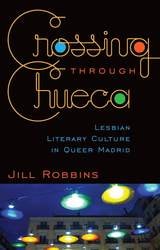
Crossing through Chueca
Lesbian Literary Culture in Queer MadridJill Robbins
University of Minnesota Press, 2010
Jill Robbins traverses the various literary spaces of the city associated with queer culture, in particular the gay barrio of Chueca, revealing how it is a product of interrelations—a site crisscrossed by a multiplicity of subjects who constitute it as a queer space through the negotiation of their sexual, racial, gender, and class identities. Robbins recognizes Chueca as a political space as well, a refuge from homophobia. She also shows how the spatial and literary practices of Chueca relate to economic issues.
In examining how women’s sexual identities have become visible in and through the Chueca phenomenon, this work is a revealing example of transnational queer studies within the broader Western discussion on gender and sexuality.

Cry Sower
Whitney Koo
University of Utah Press, 2027
Cuir Dissidence
Tracing Restorative Criticism and Breaking Bonds with the Mexican CanonFrancesca Dennstedt
Vanderbilt University Press, 2025
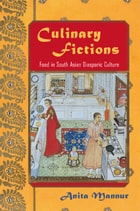
Culinary Fictions
Food in South Asian Diasporic CultureAnita Mannur
Temple University Press, 2009
For South Asians, food regularly plays a role in how issues of race, class, gender, ethnicity, and national identity are imagined as well as how notions of belonging are affirmed or resisted. Culinary Fictions provides food for thought as it considers the metaphors literature, film, and TV shows use to describe Indians abroad. When an immigrant mother in Jhumpa Lahiri’s The Namesake combines Rice Krispies, Planters peanuts, onions, salt, lemon juice, and green chili peppers to create a dish similar to one found on Calcutta sidewalks, it evokes not only the character’s Americanization, but also her nostalgia for India.
Food, Anita Mannur writes, is a central part of the cultural imagination of diasporic populations, and Culinary Fictions maps how it figures in various expressive forms. Mannur examines the cultural production from the Anglo-American reaches of the South Asian diaspora. Using texts from novels—Chitra Divakaruni’s Mistress of Spices and Shani Mootoo’s Cereus Blooms at Night—and cookbooks such as Madhur Jaffrey’s Invitation to Indian Cooking and Padma Lakshmi’s Easy Exotic, she illustrates how national identities are consolidated in culinary terms.
Cultures of Modernism
Marianne Moore, Mina Loy, and Else Lasker-SchulerCristanne Miller
University of Michigan Press, 2005
Cultures of Modernism explores how the structure and location of literary communities significantly influence who writes, what they write about, and their openness to formal experimentation. These influences particularly affect women writers. Author Cristanne Miller notes striking patterns of similarity in the concerns and lives of women living in geographically distant centers of modernist production. She looks at three significant poets---the American Marianne Moore, the British expatriate Mina Loy, and the German Else Lasker-Schüler---in the context of cultural, national, and local elements to argue that location significantly affected their performances of subjectivity, gender, race, and religion. The first book of its kind, Cultures of Modernism breaks new ground while it contributes to the ongoing reconception of the modernist period.
"A fascinating, provocative, and genuinely original study of a 'different' modernism in poetry---namely, the Modernism of women poets."
---Marjorie Perloff, Stanford University
"An important and ambitious work that makes major contributions to the fields of gender studies and modernist studies, and to the study of modernist poetry."
---Robin Schulze, Pennsylvania State University
"Offers a welcome corrective to the unreflective critical tendency . . . to make broad claims about the historical experiences and cultural conundrums of 'women,' and particularly 'women writers.' Miller offers tour-de-force comparative readings . . . threading together the world-historical with the personal, poetics with the political, and wielding the instruments of scansion as deftly as a surgeon."
---Modernism/modernity, The Official Journal of the Modernist Studies Association
Cristanne Miller is Edward H. Butler Professor of English and Chair of the English Department at the University of Buffalo, State University of New York.
Curtain Calls
British and American Women and the Theater, 1660–1820Mary A. Schofield
Ohio University Press, 1991
“I here and there o’heard a Coxcomb cry,
Ah, rot—’tis a Woman’s Comedy.”
Thus Aphra Behn ushers in a new era for women in the British Theatre (Sir Patient Fancy, 1678). In the hundred years that were to follow—and exactly those years that Curtain Calls examines—women truly took the theater world by storm.
For each woman who chose a career in the theater world of the eighteenth century, there is a unique tale of struggle, insult, success, good or bad fortune, disaster, seduction, or fame. Whether acting, writing, reviewing, or stage managing, women played a major, if frequently unacknowledged, role in the history of the theater from the late seventeenth through the early nineteenth centuries. From Alpha Behn’s earliest plays through the glorious celebrity of Sara Siddons, women molded the taste of the age and carved out in the theater one of the few available opportunities for independence and renown.
Not all the women who tried succeeded, of course, and even the best faced opposition as they challenged the male stronghold of playwriting and theater managing. Curtain Calls maps the new territory as these pioneering women staked it for their own; it chronicles their lives, their triumphs, and their losses.
We begin with Aphra Behn, whose first play was staged in 1670, and conclude in the early decades of the nineteenth century with Inchbald and Siddons. The one hundred and fifty years encompassed by their lives contain the careers of dozens of lesser–known women, a network, as Dr. Johnson would have it, encompassing both talent and tribulation.
Contributors include: Edward Langhans, Linda R. Payne, Pat Rogers, Maureen e. Mulvihill, Deborah Payne, Betty Rizzo, Ellen Donkin, Frances M. Kavenik, Jessica Munns, nancy Cotton, Edna L. Steevs, Doreen Saar, Jean B. Kern, Katherine M. Rogers, Constance Clark, William J. Burling, Judith Phillips Stanton, Douglas Butler, Rose Zimbardo, and the editors.

collective
Katie Berta
University of Iowa Press, 2027