Results by title
18293 books match the query 'United States' and 1260 start with c
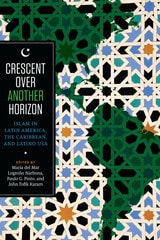
Crescent over Another Horizon
Islam in Latin America, the Caribbean, and Latino USAEdited by Maria del Mar Logroño Narbona, Paulo G. Pinto, and John Tofik Karam
University of Texas Press, 2015
Muslims have been shaping the Americas and the Caribbean for more than five hundred years, yet this interplay is frequently overlooked or misconstrued. Brimming with revelations that synthesize area and ethnic studies, Crescent over Another Horizon presents a portrait of Islam’s unity as it evolved through plural formulations of identity, power, and belonging. Offering a Latino American perspective on a wider Islamic world, the editors overturn the conventional perception of Muslim communities in the New World, arguing that their characterization as “minorities” obscures the interplay of ethnicity and religion that continues to foster transnational ties.
Bringing together studies of Iberian colonists, enslaved Africans, indentured South Asians, migrant Arabs, and Latino and Latin American converts, the volume captures the power-laden processes at work in religious conversion or resistance. Throughout each analysis—spanning times of inquisition, conquest, repressive nationalism, and anti-terror security protocols—the authors offer innovative frameworks to probe the ways in which racialized Islam has facilitated the building of new national identities while fostering a double-edged marginalization. The subjects of the essays transition from imperialism (with studies of morisco converts to Christianity, West African slave uprisings, and Muslim and Hindu South Asian indentured laborers in Dutch Suriname) to the contemporary Muslim presence in Argentina, Brazil, Mexico, and Trinidad, completed by a timely examination of the United States, including Muslim communities in “Hispanicized” South Florida and the agency of Latina conversion. The result is a fresh perspective that opens new horizons for a vibrant range of fields.
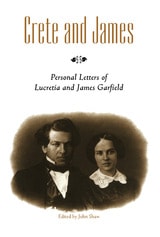
Crete and James
Personal Letters of Lucretia and James GarfieldJohn Shaw
Michigan State University Press, 1994
Crete and James is a collection of letters exchanged by James A. Garfield and Lucretia Randolph Garfield during the mid-nineteenth century. Of the 1,200 or so letters written, the 300 included this work chronicle their courtship and marriage, and also discuss the Civil War, political affairs, and the details of daily life during the years 1853-1881. In them, we watch Crete grow from a shy girl into a self-confident woman who guides her husband in social and political matters. Through James’s flamboyant yet scholarly style, and Lucretia’s detailed, perceptive insights, we come to know them as though they were our close friends. Through their correspondence, the reader also meets the many people involved in their lives. Crete and James will be of great interest to those studying women’s history.
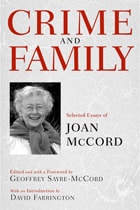
Crime and Family
Selected Essays of Joan McCordJoan McCord, introduction by David Farrington, foreword by Geoffrey Sayre-McCord
Temple University Press, 2007
Crime and Justice, Volume 11
Family ViolenceEdited by Lloyd Ohlin and Michael Tonry
University of Chicago Press Journals, 1990
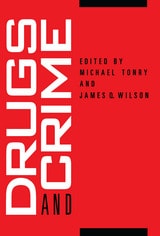
Crime and Justice, Volume 13
Drugs and CrimeEdited by Michael Tonry and James Q. Wilson
University of Chicago Press Journals, 1991

Crime and Justice, Volume 15
Modern PolicingEdited by Michael Tonry and Norval Morris
University of Chicago Press Journals, 1993
Crime and Justice, Volume 18
Beyond the Law: Crime in Complex OrganizationsEdited by Michael Tonry and Albert J. Reiss Jr.
University of Chicago Press Journals, 1993
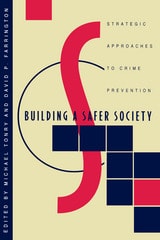
Crime and Justice, Volume 19
Strategic Approaches to Crime PreventionEdited by Michael Tonry and David Farrington
University of Chicago Press Journals, 1995
Crime and Justice, Volume 24
Youth ViolenceEdited by Michael Tonry and Mark H. Moore
University of Chicago Press Journals, 1998
Featuring articles by leading American and European scholars from many fields, Youth Violence provides a reliable, up-to-date, authoritative and comprehensive overview of policy issues and research developments concerning crime and violence among the young.
Crime and Justice, Volume 3
An Annual Review of ResearchEdited by Michael Tonry and Norval Morris
University of Chicago Press Journals, 1982
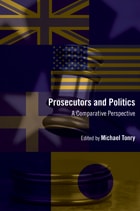
Crime and Justice, Volume 41
Prosecutors and Politics: A Comparative PerspectiveEdited by Michael Tonry
University of Chicago Press Journals, 2012
Prosecutors are powerful figures in any criminal justice system. They decide what crimes to prosecute, whom to pursue, what charges to file, whether to plea bargain, how aggressively to seek a conviction, and what sentence to demand. In the United States, citizens can challenge decisions by police, judges, and corrections officials, but courts keep their hands off the prosecutor. Curiously, in the United States and elsewhere, very little research is available that examines this powerful public role. And there is almost no work that critically compares how prosecutors function in different legal systems, from state to state or across countries. Prosecutors and Politics begins to fill that void.
Police, courts, and prisons are much the same in all developed countries, but prosecutors differ radically. The consequences of these differences are enormous: the United States suffers from low levels of public confidence in the criminal justice system and high levels of incarceration; in much of Western Europe, people report high confidence and support moderate crime control policies; in much of Eastern Europe, people’s perceptions of the law are marked by cynicism and despair. Prosecutors and Politics unpacks these national differences and provides insight into this key area of social control.
Since 1979 the Crime and Justice series has presented a review of the latest international research, providing expertise to enhance the work of sociologists, psychologists, criminal lawyers, justice scholars, and political scientists. The series explores a full range of issues concerning crime, its causes, and its cure.
Crime and Justice, Volume 42
Crime and Justice in America: 1975-2025Edited by Michael Tonry
University of Chicago Press Journals, 2012
For the American criminal justice system, 1975 was a watershed year. Offender rehabilitation and individualized sentencing fell from favor. The partisan politics of “law and order” took over. Among the results four decades later are the world’s harshest punishments and highest imprisonment rate. Policymakers’ interest in what science could tell them plummeted just when scientific work on crime, recidivism, and the justice system began to blossom. Some policy areas—sentencing, gun violence, drugs, youth violence—became evidence-free zones. In others—developmental crime prevention, policing, recidivism studies, evidence mattered. Crime and Justice in America: 1975-2025 tells how policy and knowledge did and did not interact over time and charts prospects for the future. What accounts for the timing of particular issues and research advances? What did science learn or reveal about crime and justice, and how did that knowledge influence policy? Where are we now, and, perhaps even more important, where are we going?
The contributors to this volume, the leading scholars in their fields, bring unsurpassed breadth and depth of knowledge to bear in answering these questions. They include Philip J. Cook, Francis T. Cullen, Jeffrey Fagan, David Farrington, Daniel S. Nagin, Peter Reuter, Lawrence W. Sherman, and Franklin E. Zimring.
For thirty-five years, the Crime and Justice series has provided a platform for the work of sociologists, psychologists, criminal lawyers, justice scholars, and political scientists as it explores the full range of issues concerning crime, its causes, and it remedies.
Crime and Justice, Volume 46
Reinventing American Criminal JusticeEdited by Michael Tonry
University of Chicago Press Journals, 2017
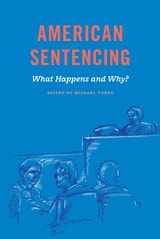
Crime and Justice, Volume 48
American SentencingEdited by Michael Tonry
University of Chicago Press Journals, 2019
This volume covers what students, scholars, practitioners, and policy makers need to know about how sentencing really works, what a half century’s “reforms” have and have not accomplished, how sentencing processes can be made fairer, and how sentencing outcomes can be made more just. Its writers are among America’s leading scholarly specialists—often the leading specialist—in their fields.
Clearly and accessibly written, American Sentencing is ideal for teaching use in seminars and courses on sentencing, courts, and criminal justice. Its authors’ diverse perspectives shed light on these issues, making it likely the single, most authoritative source of information on the state of sentencing in America today.
Crime and Punishment in the Jim Crow South
Edited by Amy Louise Wood and Natalie J. Ring
University of Illinois Press, 2019
In this collection, Amy Louise Wood and Natalie J. Ring present nine groundbreaking essays about the carceral system and its development over time. Topics range from activism against police brutality to the peculiar path of southern prison reform to the fraught introduction of the electric chair. The essays tell nuanced stories of rapidly changing state institutions, political leaders who sought to manage them, and African Americans who appealed to the regulatory state to protect their rights.
Contributors: Pippa Holloway, Tammy Ingram, Brandon T. Jett, Seth Kotch, Talitha L. LeFlouria, Vivien Miller, Silvan Niedermeier, K. Stephen Prince, and Amy Louise Wood
Crime and Social Justice in Indian Country
Edited by Marianne O. Nielsen and Karen Jarratt-Snider
University of Arizona Press, 2018
Crime and Social Justice in Indian Country calls to attention the need for culturally appropriate research protocols and critical discussions of social and criminal justice in Indian Country. The contributors come from the growing wave of Native American as well as non-Indigenous scholars who employ these methods. They reflect on issues in three key areas: crime, social justice, and community responses to crime and justice issues. Topics include stalking, involuntary sterilization of Indigenous women, border-town violence, Indian gaming, child welfare, and juvenile justice. These issues are all rooted in colonization; however, the contributors demonstrate how Indigenous communities are finding their own solutions for social justice, sovereignty, and self-determination.
Thanks to its focus on community responses that exemplify Indigenous resilience, persistence, and innovation, this volume will be valuable to those on the ground working with Indigenous communities in public and legal arenas, as well as scholars and students. Crime and Social Justice in Indian Country shows the way forward for meaningful inclusions of Indigenous peoples in their own justice initiatives.
Contributors
Alisse Ali-Joseph
William G. Archambeault
Cheryl Redhorse Bennett
Danielle V. Hiraldo
Lomayumptewa K. Ishii
Karen Jarratt-Snider
Eileen Luna-Firebaugh
Anne Luna-Gordinier
Marianne O. Nielsen
Linda M. Robyn
Crime in the Public Mind
Kathlyn Taylor Gaubatz
University of Michigan Press, 1995
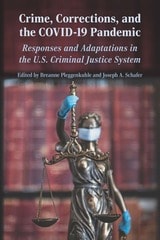
Crime, Corrections, and the COVID-19 Pandemic
Responses and Adaptations in the U.S. Criminal Justice SystemEdited by Breanne Pleggenkuhle and Joseph A. Schafer
Southern Illinois University Press, 2025
Analyses of crime and justice in an unprecedented time
While COVID-19 lockdowns affected nearly everyone worldwide, feelings of anxiety and fear were exacerbated for those already entangled in the criminal justice system. Scholars recognized the unique opportunity to study crime and the justice system’s response during this period, though they soon realized that determining the pandemic’s effects would be a complicated, nuanced process.
Crime, Corrections, and the COVID-19 Pandemic features analyses and findings from more than thirty contributors in eleven essays. The collection examines the multifaceted social, economic, cultural, legislative, and policy responses to COVID-19 and their impacts on crime and justice. It also explores how professionals across the criminal justice system—police officers, campus police officers, attorneys, judges, correctional staff, and community supervision agents—adapted to unprecedented challenges.
The book provides real-world evidence of how unconventional solutions and groundbreaking practices were implemented in response to a global crisis. Contributors analyze how incarcerated individuals, their families, and their supervisors dealt with the fear of transmission, medical care, and death. Their findings, which are necessarily dependent on timing, place, measurement, and operationalization, include both change and stasis, both negative and positive outcomes. For instance, while minor and property-related offenses initially declined, violent crimes like homicide and intimate partner violence increased. Drug usage patterns changed, leading to a rise in opioid overdoses, and despite the rise in digital interactions, there was no significant difference in self-reported cybervictimization. Furthermore, rates of gang-related crimes did not decrease. Policy and public health responses reshaped criminal activities, influencing the methods and motivations behind theft, child and elder abuse, and other offenses. This volume includes in-depth examinations of certain often-overlooked crimes, such as labor trafficking, and provides direct insights into the job challenges faced by criminal justice professionals, from probation personnel to labor rights advocates.
Emerging innovations in health risk management within correctional facilities led to increased awareness and focus on specific types of crime. Responses to the pandemic revealed significant challenges, such as burnout among justice system personnel, difficulties in adapting and innovating, and challenges in providing services to vulnerable populations.
Through diverse perspectives and empirical approaches ranging from advanced statistical analysis to qualitative interviews, Crime, Corrections, and the COVID-19 Pandemic offers a comprehensive exploration of the complexities that affect research results. It showcases the resilience and innovation within the criminal justice field and details the challenges professionals in this area tackled during a universally trying time, presenting valuable lessons for future crises.
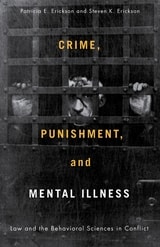
Crime, Punishment, and Mental Illness
Law and the Behavioral Sciences in ConflictErickson, Patricia
Rutgers University Press, 2008
In Crime, Punishment, and Mental Illness, Patricia E. Erickson and Steven K. Erickson explore how societal beliefs about free will and moral responsibility have shaped current policies and they identify the differences among the goals, ethos, and actions of the legal and health care systems. Drawing on high-profile cases, the authors provide a critical analysis of topics, including legal standards for competency, insanity versus mental illness, sex offenders, psychologically disturbed juveniles, the injury and death rates of mentally ill prisoners due to the inappropriate use of force, the high level of suicide, and the release of mentally ill individuals from jails and prisons who have received little or no treatment.
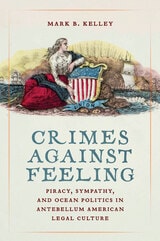
Crimes Against Feeling
Piracy, Sympathy, and Ocean Politics in Antebellum American Legal CultureMark B. Kelley
University of Massachusetts Press, 2026
Demonstrating how emotion became central to the legal and literary meanings of piracy in nineteenth-century America
Pirates have long occupied a central yet unstable place in American law and national identity. In the decades leading up to and including the U.S. Civil War, the charge of piracy was leveled against an unusually wide range of figures: foreign heads of state, imperial filibusters, transoceanic enslavers, enslaved mutineers, radical abolitionists, and others who challenged established forms of authority. Early American literature reflects this instability, portraying pirates who vary dramatically in politics, race, gender, and allegiance. As Mark B. Kelley shows, these characters are united less by ideology than by their challenge to landed social norms and fixed national belonging. The pirate, in both law and literature, emerges as an individual defined by multiplicity rather than political coherence.
Crimes Against Feeling examines how Americans made sense of this ambiguous figure by turning to emotion. Drawing on legal materials including treaties, trial transcripts, congressional debates, and U.S. Supreme Court decisions, as well as popular sentimental fiction (often written by women), Kelley argues that piracy was codified as an offense against moral feeling rather than being a singular political position. Legal thinkers and writers such as John Quincy Adams, Abraham Lincoln, Jefferson Davis, Catharine Maria Sedgwick, Harriet Beecher Stowe, and Maria S. Cummins relied on shared affective frameworks—sympathy, sentiment, and domestic vulnerability—to render piracy legible and punishable. American pirate law, Kelley demonstrates, was shaped by the same emotional logics that structured the era’s popular fiction.
By tracing piracy across debates over domestic sovereignty, global enslavement and abolition, imperial expansion, postbellum reparations, and international copyright, Crimes Against Feeling reveals the pirate as a key figure for understanding gender, home, family, and nation in early America. Reading law and literature together, the book shows how emotional judgment—not political consensus—became a foundational tool for managing oceanic violence and transnational disorder in the nineteenth-century United States.
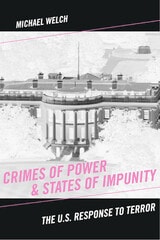
Crimes of Power & States of Impunity
The U.S. Response to TerrorWelch, Michael
Rutgers University Press, 2009
Welch continues the work he began in Scapegoats of September 11th and argues that current U.S. policies, many enacted after the attacks, undermine basic human rights and violate domestic and international law. He recounts these offenses and analyzes the system that sanctions them, offering fresh insight into the complex relationship between power and state crime. Welch critically examines the unlawful enemy combatant designation, Guantanamo Bay, recent torture cases, and collateral damage relating to the war in Iraq. This book transcends important legal arguments as Welch strives for a broader sociological interpretation of what transpired early this century, analyzing the abuses of power that jeopardize our safety and security.
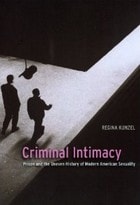
Criminal Intimacy
Prison and the Uneven History of Modern American SexualityRegina Kunzel
University of Chicago Press, 2008
Criminal Justice in Native America
Edited by Marianne O. Nielsen and Robert A. Silverman
University of Arizona Press, 2009
Each of the fourteen chapters of Criminal Justice in Native America was commissioned specifically for this volume. Contributors—many of whom are Native Americans—rank among the top scholars in their fields. Some of the chapters treat broad subjects, including crime, police, courts, victimization, corrections, and jurisdiction. Others delve into more specific topics, including hate crimes against Native Americans, state-corporate crimes against Native Americans, tribal peacemaking, and cultural stresses of police officers. Separate chapters are devoted to women and juveniles.
The well-known scholar Marianne Nielsen provides a context-setting introduction, in which she addresses the history of the legal treatment of Native Americans in the United States as well as a provocative conclusion that details important issues for current and future research in Native American criminal justice studies. Intended to introduce students to the substantive concerns of a range of disciplines that contribute to Native American Studies—among them, criminal justice and criminology, law, sociology, and anthropology—Criminal Justice in Native America will interest all readers who are concerned about relationships between Native peoples and prevailing criminal justice systems.
Criminalization/Assimilation
Chinese/Americans and Chinatowns in Classical Hollywood FilmPhilippa Gates
Rutgers University Press, 2019
Crip Spacetime
Access, Failure, and Accountability in Academic LifeMargaret Price
Duke University Press, 2024

Cripping Girlhood
Anastasia Todd
University of Michigan Press, 2024
By closely examining the ways that disabled girls represent themselves, Anastasia Todd goes beyond a critique of the figure of the privileged, disabled girl subject in the national imagination to explore how disabled girls circulate their own capacious re-envisioning of what it means to be a disabled girl. In analyzing a range of cultural sites, including YouTube, TikTok, documentaries, and GoFundMe campaigns, Todd shows how disabled girls actively upend what we think we know about them and their experience, recasting the meanings ascribed to their bodyminds in their own terms. By analyzing disabled girls’ self-representational practices and cultural productions, Todd shows how disabled girls deftly theorize their experiences of ableism, sexism, racism, and ageism, and cultivate communities online, creating archives of disability knowledge and politicizing other disabled people in the process.
Crippled Justice
The History of Modern Disability Policy in the WorkplaceRuth O'Brien
University of Chicago Press, 2001
O'Brien shows how the remnants of postwar cultural values bogged down the rights-oriented policy in the 1970s and how they continue to permeate judicial interpretations of provisions under the Americans with Disabilities Act. In effect, O'Brien argues, these decisions have created a lose/lose situation for the very people the act was meant to protect. Covering developments up to the present, Crippled Justice is an eye-opening story of government officials and influential experts, and how our legislative and judicial institutions have responded to them.
Crisis Leadership in Higher Education
Theory and PracticeRalph A. Gigliotti
Rutgers University Press, 2020

Crisis in Employment
Jane Jerrard
American Library Association, 2008
Crisis in Higher Education
A Plan to Save Small Liberal Arts Colleges in AmericaJeffrey R. Docking
Michigan State University Press, 2014

Crisis in Korea
America, China and the Risk of WarTim Beal
Pluto Press, 2011
The South Korean warship Cheonan was sunk in mysterious circumstances on 26 March 2010. The remarkable events that followed are analysed by Tim Beal and woven into a larger study of the increasingly volatile relations between North and South Korea and US concern about the rise of China.
South Korea's stance towards the North has hardened significantly since the new conservative government came to power. Beal argues that the South moved quickly to use the sinking of the Cheonan to put international pressure on the North, even before the cause of the sinking had been established. The US followed suit by attempting to pressurise China into condemning North Korea. The media reports at the time presented an open and shut case of unprovoked North Korean aggression, but the evidence points towards the accidental triggering of a South Korean mine as the cause and South Korean fabrication to incriminate the North.
With the South bent on forcing the fall of the North's regime with US help and China unlikely to stand idly by, this book offers an essential guide to the key factors behind the crisis and possible solutions.
Crisis of the House Divided
An Interpretation of the Issues in the Lincoln-Douglas Debates, 50th Anniversary EditionHarry V. Jaffa
University of Chicago Press, 2009
The definitive account of the Lincoln-Douglas debates and their importance to American history
A lasting classic, Crisis of the House Divided offers an unparalleled account of the Lincoln-Douglas debates. Harry Jaffa provides the definitive analysis of the political principles that guided Lincoln from his reentry into politics in 1854 through his Senate campaign against Douglas in 1858.
Crisis of the Wasteful Nation
Empire and Conservation in Theodore Roosevelt's AmericaIan Tyrrell
University of Chicago Press, 2014
In Crisis of the Wasteful Nation, Ian Tyrrell gives us a cohesive picture of Roosevelt’s engagement with the natural world along with a compelling portrait of how Americans used, wasted, and worried about natural resources in a time of burgeoning empire. Countering traditional narratives that cast conservation as a purely domestic issue, Tyrrell shows that the movement had global significance, playing a key role in domestic security and in defining American interests around the world. Tyrrell goes beyond Roosevelt to encompass other conservation advocates and policy makers, particularly those engaged with shaping the nation’s economic and social policies—policies built on an understanding of the importance of crucial natural resources. Crisis of the Wasteful Nation is a sweeping transnational work that blends environmental, economic, and imperial history into a cohesive tale of America’s fraught relationships with raw materials, other countries, and the animal kingdom.

Critical Approaches to Credit-Bearing Information Literacy Courses
Angela Pashia
Assoc of College & Research Libraries, 2019
Critical Geographies of Youth
Law, Policy, and PowerGloria Howerton
West Virginia University Press, 2023
Young people will bear the brunt of the impacts of present and emerging crises occurring at all scales, from the national to the global. This volume brings together scholars and activists from various backgrounds to analyze youth interactions with law and politics, focusing specifically on the US legal landscape. It uses the lens of youth geographies to consider how legal and political systems shape our spaces, and provides leading-edge perspectives through case studies of child labor, compulsory education, asylum claims, criminalization of youth, youth activism, and more.
Of special interest in this volume is the tension between young people as both objects of law and policy and creative agents of change. Despite being directly affected by law and policy, young people are denied access to many legally sanctioned paths to shape them. Yet youth find ways to work within and mold the social, political, and legal spheres and set the stage for alternative futures.
Critical Latin American And Latino Studies
Juan Poblete
University of Minnesota Press, 2003
Situates these dynamic disciplines within debates around globalization
This book brings together some of the most prominent scholars working across the spectrum of Latin American and Latino studies to explore their changing intellectual undertaking in relation to global processes of change. Critical Latin American and Latino Studies identifies the challenges and possibilities of more politically engaged and theoretically critical modes of scholarly practice.
One objective is to provide a brief critical history of the study of various Latin American cultures—Latino, Chicano, Puerto Rican, among others. But these essays also serve to assess the roles of ethnic and area studies in light of changing scholarly trends, from emphases on gender and sexuality to a focus on postcoloniality and globalization. The result is an important contribution to current debates on the conditions of contemporary knowledge production. Contributors: Tomás Almaguer, San Francisco State U; Frances R. Aparicio, U of Illinois, Chicago; John Beverley, U of Pittsburgh; Angie Chabram-Dernersesian, U of California, Davis; Román de la Campa, SUNY, Stony Brook; Juan Flores, Hunter College and CUNY; Walter D. Mignolo, Duke U; Giorgio Perissinotto, U of California, Santa Barbara; Kirsten Silva Gruesz, U of California, Santa Cruz; Stefano Varese, U of California, Davis; George Yúdice, NYU; Juan Zevallos Aguilar, Villanova U.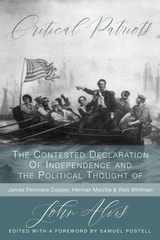
Critical Patriots
The Contested Declaration of Independence and the Political Thought of James Fennimore Cooper, Herman Melville, and Walt WhitmanJohn Alvis
St. Augustine's Press, 2026
Critical Perspectives on Latino Education in Massachusetts
Lorna Rivera and Melissa Colón, editors
University of Massachusetts Press, 2025
In Massachusetts, the Latino population increased by 475 percent between 1980 and 2017, marking a dramatic growth. This diverse ethnic community of Puerto Ricans, Dominicans, Salvadoreans, Colombians, Brazilians, and more also contains a wide range of cultures, immigration and migration experiences, languages, and socio-political backgrounds. However, there are numerous commonalities involving education. Recent research at the Mauricio Gastón Institute for Latino Community Development and Policy reveals that Latino students in Massachusetts are more likely to attend public schools, in communities with significant academic achievement and opportunity gaps as well as other challenges, from food scarcity to higher rates of unemployment. At the same time, the state-wide shift to standards-based education has had a disproportionately negative impact on Latino students, who already feel the effects of politically motivated anti-immigrant policies and laws that limit bilingual education.
This collection of essays, from those working inside the classroom as well as researchers taking a broader look at policy, addresses the array of issues facing Latino students in Massachusetts. These perspectives paint a complex picture of the educational experience for Latinos, and offer expert suggestions for improving classrooms, school environments, and ultimate educational outcomes for an important growing demographic in the Commonwealth.
In addition to editors Lorna Rivera and Melissa Colón, this volume’s contributors include Almudena G. Abeyta, Nasteho Ali, Cristina Araujo Brinkerhoff, Michael Berardino, Alex Briesacher, Thomas Conroy, Judenie Dabel, Liya Escalera, Luis Enrique Esquivel, Deyja Enriquez, Isahiah Erilus, Nyal Fuentes, Jazmin Rubi Flete Gomez, Manuel Frau-Ramos, Kimberly A. S. Howard, Patricia Krueger-Henney, Steven Lue, Mary Jo Marion, Timothy E. Murphy, Cecilia Nardi, Laurie Occhipinti, Alexandra Oliver-Davila, Chong Myung Park, Angelica Rodriquez, Marta T. Rosa, Diana Santiago, Melissa Sargent, Ester Shapiro, V. Scott H. Solberg, Fabián Torres-Ardila, Ashley Torres Carrasquillo, Paul Trunfio, Carmen N. Veloria, and Heilam Xie.
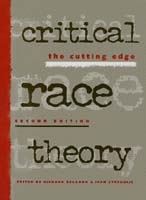
Critical Race Theory 2Nd Ed
Richard Delgado
Temple University Press, 1999
This edition contains treatment of all the topics covered in the first edition, along with provocative and probing questions for discussion and detailed suggestions for additional reading, all of which set this fine volume apart from the field. In addition, this edition contains five new substantive units -- crime, critical race practice, intergroup tensions and alliances, gay/lesbian issues, and transcending the black-white binary paradigm of race. In each of these areas, groundbreaking scholarship by the movement's founding figures as well as the brightest new stars provides immediate entre to current trends and developments in critical civil rights thought.
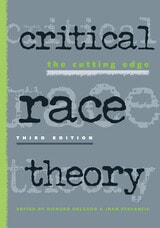
Critical Race Theory
The Cutting EdgeRichard Delgado
Temple University Press, 2013
The contributions, from a stellar roster of established and emerging scholars, address new topics, such as intersectionality and black men on the "down low." Essays also confront much-discussed issues of discrimination, workplace dynamics, affirmative action, and sexual politics. Also new to this volume are updated section introductions, author notes, questions for discussion, and reading lists for each unit. The volume also covers the spread of the movement to other disciplines such as education.
Offering a comprehensive and stimulating snapshot of current race jurisprudence and thought, this new edition of Critical Race Theory is essential for those interested in law, the multiculturalism movement, political science, education, and critical thought.
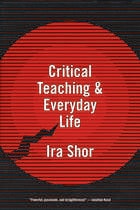
Critical Teaching and Everyday Life
Ira Shor
University of Chicago Press, 1987
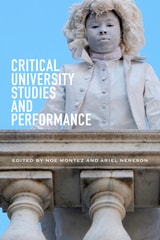
Critical University Studies and Performance
Edited by Noe Montez and Ariel Nereson
Vanderbilt University Press, 2026
Critical University Studies and Performance explores how we contend with issues of power, race, class, and gender in higher education, specifically as they relate to the complexities of theater and performance studies programs. In what ways might the fields of theater, performance, and dance studies, as they operate in institutions of higher education, support hegemonic logics as well as model reparative practices, given their perhaps unique disciplinary relationships to staging representation and their shared emphasis on embodiment as a practical and theoretical area of engagement?
Montez and Nereson bring together scholars with a diverse range of career experiences and embodied positions inside of higher learning in order to deepen the field’s theoretical inquiry using an ethnic studies framework. By participating in the interdisciplinary discourse of critical university studies, the volume aims to explore how to conduct ethical research that critiques the university while remaining mindful of our always contingent place within it. The contributors examine the ways the university commodifies minoritarian knowledge, tokenizes the arts, and reproduces inequality. This book offers strategic ways to build liberatory communities and revolutionary networks among students and faculty alike in order to envision futures within and beyond the academy.
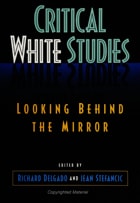
Critical White Studies
Richard Delgado
Temple University Press, 1997
*How was whiteness invented, and why?
*How has the category whiteness changed over time?
*Why did some immigrant groups, such as the Irish and Jews, start out as nonwhite and later became white?
*Can some individual people be both white and nonwhite at different times, and what does it mean to "pass for white"?
*At what point does pride in being white cross the line into white power or white supremacy?
*What can whites concerned over racial inequity or white privilege do about it?
Science and pseudoscience are presented side by side to demonstrate how our views on whiteness often reflect preconception, not fact. For example, most scientists hold that race is not a valid scientific category -- genetic differences between races are insignificant compared to those within them. Yet, the "one drop" rule, whereby those with any nonwhite heritage are classified as nonwhite, persists even today. As the bell curve controversy shows, race concepts die hard, especially when power and prestige lie behind them.
A sweeping portrait of the emerging field of whiteness studies, Critical White Studies presents, for the first time, the best work from sociology, law, history, cultural studies, and literature. Delgado and Stefancic expressly offer critical white studies as the next step in critical race theory. In focusing on whiteness, not only do they ask nonwhites to investigate more closely for what it means for others to be white, but also they invite whites to examine themselves more searchingly and to "look behind the mirror."
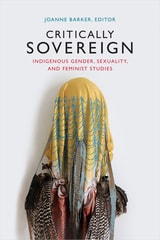
Critically Sovereign
Indigenous Gender, Sexuality, and Feminist StudiesJoanne Barker, editor
Duke University Press, 2017
Contributors. Jodi A. Byrd, Joanne Barker, Jennifer Nez Denetdale, Mishuana Goeman, J. Kēhaulani Kauanui, Melissa K. Nelson, Jessica Bissett Perea, Mark Rifkin
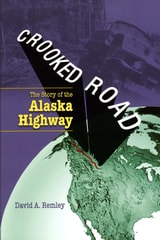
Crooked Road
The Story of the Alaska HighwayDavid A. Remley
University of Alaska Press, 2008
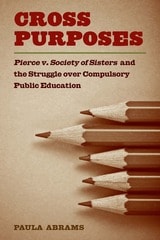
Cross Purposes
Pierce v. Society of Sisters and the Struggle over Compulsory Public EducationPaula Abrams
University of Michigan Press, 2009
"A definitive study of an extremely important, though curiously neglected, Supreme Court decision, Pierce v. Society of Sisters."
---Robert O'Neil, Professor of Law Emeritus, University of Virginia School of Law
---Richard W. Garnett, Professor of Law and Associate Dean, Notre Dame Law School
"A well-written, well-researched blend of law, politics, and history."
---Joan DelFattore, Professor of English and Legal Studies, University of Delaware
In 1922, the people of Oregon passed legislation requiring all children to attend public schools. For the nativists and progressives who had campaigned for the Oregon School Bill, it marked the first victory in a national campaign to homogenize education---and ultimately the populace. Private schools, both secular and religious, vowed to challenge the law. The Catholic Church, the largest provider of private education in the country and the primary target of the Ku Klux Klan campaign, stepped forward to lead the fight all the way to the U.S. Supreme Court.
In Pierce v. Society of Sisters (1925), the court declared the Oregon School Bill unconstitutional and ruled that parents have the right to determine how their children should be educated. Since then, Pierce has provided a precedent in many cases pitting parents against the state.
Paula Abrams is Professor of Constitutional Law at Lewis & Clark Law School.
Cross-Border Commemorations
Celebrating Swedish Settlement in AmericaAdam Hjorthén
University of Massachusetts Press, 2018
Focusing on two celebrations of Swedish settlement in America—the 1938 New Sweden Tercentenary and the 1948 Swedish Pioneer Centennial—Hjorthén examines a wide variety of sources to demonstrate how cultural leaders, politicians, and businessmen used these events to promote international relations between the United States and Sweden during times of great geopolitical transformation. Cross-Border Commemorations argues that scholarship on public commemoration should expand beyond national borders and engage the shared and contested meanings of history across local, national, and transnational contexts.
Crossing Borders through Folklore
African American Women's Fiction and ArtAlma Jean Billingslea-Brown
University of Missouri Press, 1999
Examining works by Toni Morrison, Paule Marshall, Faith Ringgold, and Betye Saar, this innovative book frames black women's aesthetic sensibilities across art forms. Investigating the relationship between vernacular folk culture and formal expression, this study establishes how each of the four artists engaged the identity issues of the 1960s and used folklore as a strategy for crossing borders in the works they created during the following two decades.
As a dynamic, open-ended process, folklore historically has enabled African-descended people to establish differential identity, resist dominance, and affirm group solidarity. This book documents the use of expressive forms of folklore in the fiction of Morrison and Marshall and the use of material forms of folklore in the visual representations of Ringgold and Saar. Offering a conceptual paradigm of a folk aesthetic to designate the practices these women use to revise and reverse meanings—especially meanings imposed on images such as Aunt Jemima and Sambo—Crossing Borders through Folklore explains how these artists locate sites of intervention and reconnection. From these sites, in keeping with the descriptive and prescriptive formulations for art during the sixties, Morrison, Marshall, Ringgold, and Saar articulate new dimensions of consciousness and creatively theorize identity.
Crossing Borders through Folklore is a significant and creative contribution to scholarship in both established and still- emerging fields. This volume also demonstrates how recent theorizing across scholarly disciplines has created elastic metaphors that can be used to clarify a number of issues. Because of its interdisciplinary approach, this study will appeal to students and scholars in many fields, including African American literature, art history, women's studies, diaspora studies, and cultural studies.
Crossing Borders, Drawing Boundaries
The Rhetoric of Lines across AmericaBarbara Couture
Utah State University Press, 2016
With growing anxiety about American identity fueling debates about the nation’s borders, ethnicities, and languages, Crossing Borders, Drawing Boundaries provides a timely and important rhetorical exploration of divisionary bounds that divide an Us from a Them. The concept of “border” calls for attention, and the authors in this collection respond by describing it, challenging it, confounding it, and, at times, erasing it.
Motivating us to see anew the many lines that unite, divide, and define us, the essays in this volume highlight how discourse at borders and boundaries can create or thwart conditions for establishing identity and admitting difference. Each chapter analyzes how public discourse at the site of physical or metaphorical borders presents or confounds these conditions and, consequently, effective participation—a key criterion for a modern democracy. The settings are various, encompassing vast public spaces such as cities and areas within them; the rhetorical spaces of history books, museum displays, activist events, and media outlets; and the intimate settings of community and classroom conversations.
Crossing Borders, Drawing Boundaries shows how rich communication can be when diverse cultures intersect and create new opportunities for human connection, even while different populations, cultures, age groups, and political parties adopt irreconcilable positions. It will be of interest to scholars in rhetoric and literacy studies and students in rhetorical analysis and public discourse.
Contributors include Andrea Alden, Cori Brewster, Robert Brooke, Randolph Cauthen, Jennifer Clifton, Barbara Couture, Vanessa Cozza, Anita C. Hernández, Roberta J. Herter, Judy Holiday, Elenore Long, José A. Montelongo, Karen P. Peirce, Jonathan P. Rossing, Susan A. Schiller, Christopher Schroeder, Tricia C. Serviss, Mónica Torres, Kathryn Valentine, Victor Villanueva, and Patti Wojahn.
Crossing Borders
Changing Social Identities in Southern MexicoKimberly M. Grimes
University of Arizona Press, 1998