Results by title
18284 books match the query 'United States' and 1260 start with c
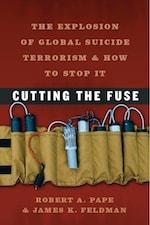
Cutting the Fuse
The Explosion of Global Suicide Terrorism and How to Stop ItRobert A. Pape and James K. Feldman
University of Chicago Press, 2012
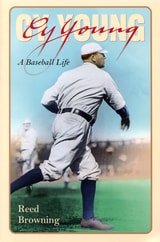
Cy Young
A Baseball LifeReed Browning
University of Massachusetts Press, 2000
He was the winner of 511 major league baseball games, nearly a hundred more than any other pitcher. He threw three no-hitters, including the first perfect game in the new American League. He was among the original twelve players inducted into baseball's Hall of Fame, and his name is now attached to the game's most prestigious pitching award. Yet for all his accomplishments, Cy Young remains to most baseball fans a legendary but little known figure.
In this book, Reed Browning re-creates the life of Denton True “Cyclone” Young and places his story in the context of a rapidly changing turn-of-the-century America. Born in rural Ohio, the son of a Civil War veteran, Young learned his trade at a time when only underhand pitching was permitted. When he began his professional career in 1890, pitchers wore no gloves and stood five feet closer to the batter than they do today. By the time he retired in 1911, the game of baseball had evolved into its modern form and claimed unquestioned status as America's “national pastime.”
As Browning shows, Young's extraordinary mastery of his craft owed much to his ability to adapt to the changing nature of the game. Endowed with an exceptional fastball, he gradually developed a wide array of deliveries and pitches—all of which he could throw with astonishing control. Yet his success can also be attributed, at least in part, to the rustic values of loyalty, hard work, and fair play that he embraced and embodied, and for which he became renowned among baseball fans of his day.
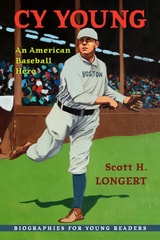
Cy Young
An American Baseball HeroScott H. Longert
Ohio University Press, 2020
Cy Young was one of the hardest-throwing pitchers of all time. He recorded three no-hitters—including a perfect game—and accumulated more than 2,800 strikeouts on his way to the National Baseball Hall of Fame. Scott H. Longert uses Young’s life story to introduce middle-grade readers to the game, explaining balls, strikes, and outs in an easy-to-understand way. Longert narrates each season and each milestone game with an enthusiastic play-by-play that is sure to draw readers into the excitement on the field and in the crowd, fostering a better understanding of and a passion for baseball.
Baseball fans today know Cy Young’s name chiefly through the award given in his honor each year to the best pitcher in the National and the American Leagues. Denton True “Cyclone” Young won more than five hundred games over a career that spanned four decades, a record that no other major league pitcher has come close to matching. In addition to being the winningest pitcher in baseball history, he was also a kind, self-effacing, and generous man. Born into a farm family in rural Ohio, he never lost touch with the small-town values he grew up with.
Cyberlibertarianism
The Right-Wing Politics of Digital TechnologyDavid Golumbia
University of Minnesota Press, 2024
An urgent reckoning with digital technology’s fundamentally right-wing legal and economic underpinnings
In a timely challenge to the potent political role of digital technology, Cyberlibertarianism argues that right-wing ideology was built into both the technical and social construction of the digital world from the start. Leveraging more than a decade of research, David Golumbia traces how digital evangelism has driven the worldwide shift toward the political right, concealing inequality, xenophobia, dishonesty, and massive corporate concentrations of wealth and power beneath the utopian presumption of digital technology as an inherent social good.
Providing an incisive critique of the push for open access and open-source software and the legal battles over online censorship and net neutrality, Cyberlibertarianism details how the purportedly democratic internet has been employed as an organizing tool for terror and hate groups and political disinformation campaigns. As he unpacks our naively utopian conception of the digital world, Golumbia highlights technology’s role in the advancement of hyperindividualist and antigovernment agendas, demonstrating how Silicon Valley corporations and right-wing economists; antiestablishment figures such as Julian Assange, Elon Musk, Peter Thiel, Edward Snowden, and Mark Zuckerberg; and seemingly positive voices such as John Perry Barlow, Cory Doctorow, the Electronic Freedom Foundation, and Wikipedia all have worked to hamper regulation and weaken legal safeguards against exploitation.
Drawing from a wide range of thought in digital theory, economics, law, and political philosophy as well as detailed research and Golumbia’s own experience as a software developer, Cyberlibertarianism serves as a clarion call to reevaluate the fraught politics of the internet. In the hope of providing a way of working toward a more genuinely democratic and egalitarian future for digital technology, this magisterial work insists that we must first understand the veiled dogmas from which it has been constructed.
Retail e-book files for this title are screen-reader friendly.

Cybersonic Arts
Adventures in American New MusicGodon Mumma, Edited by Michelle Fillion
University of Illinois Press, 2015
Musicologist Michelle Fillion curates a collection of Mumma's writings, presenting revised versions of his classic pieces as well as many unpublished works from every stage of his storied career. Here, through words and astonishing photos, is Mumma's chronicle of seminal events in the musical world of the twentieth century: his cofounding the Cooperative Studio for Electronic Music; his role in organizing the historic ONCE Festivals of Contemporary Music; performances with the Sonic Arts Union; and working alongside John Cage and David Tudor as a composer-musician with the Merce Cunningham Dance Company. In addition, Mumma describes his collaborations with composers, performers, dancers, and visual artists ranging from Robert Ashley and Pauline Oliveros to Marcel Duchamp and Robert Rauschenberg.
Candid and insightful, Cybersonic Arts is the eye-opening account of a broad artistic community by an active participant and observer.
Cycle of Segregation
Social Processes and Residential StratificationMaria Krysan
Russell Sage Foundation, 2017
Through original analyses of national-level surveys and in-depth interviews with residents of Chicago, Krysan and Crowder find that residential stratification is reinforced through the biases and blind spots that individuals exhibit in their searches for housing. People rely heavily on information from friends, family, and coworkers when choosing where to live. Because these social networks tend to be racially homogenous, people are likely to receive information primarily from members of their own racial group and move to neighborhoods that are also dominated by their group. Similarly, home-seekers who report wanting to stay close to family members can end up in segregated destinations because their relatives live in those neighborhoods. The authors suggest that even absent of family ties, people gravitate toward neighborhoods that are familiar to them through their past experiences, including where they have previously lived, and where they work, shop, and spend time. Because historical segregation has shaped so many of these experiences, even these seemingly race-neutral decisions help reinforce the cycle of residential stratification. As a result, segregation has declined much more slowly than many social scientists have expected.
To overcome this cycle, Krysan and Crowder advocate multi-level policy solutions that pair inclusionary zoning and affordable housing with education and public relations campaigns that emphasize neighborhood diversity and high-opportunity areas. They argue that together, such programs can expand the number of destinations available to low-income residents and help offset the negative images many people hold about certain neighborhoods or help introduce them to places they had never considered. Cycle of Segregation demonstrates why a nuanced understanding of everyday social processes is critical for interrupting entrenched patterns of residential segregation.
Cycles of Conquest
The Impact of Spain, Mexico, and the United States on the Indians of the Southwest, 1533–1960Edward H. Spicer, Foreword by Thomas E. Sheridan
University of Arizona Press, 1962
Cycles, Sequels, Spin-offs, Remakes, and Reboots
Multiplicities in Film and TelevisionEdited by Amanda Ann Klein and R. Barton Palmer
University of Texas Press, 2016
With sequels, prequels, remakes, spin-offs, or copies of successful films or franchises dominating film and television production, it sometimes seems as if Hollywood is incapable of making an original film or TV show. These textual pluralities or multiplicities—while loved by fans who flock to them in droves—tend to be dismissed by critics and scholars as markers of the death of high culture. Cycles, Sequels, Spin-offs, Remakes, and Reboots takes the opposite view, surveying a wide range of international media multiplicities for the first time to elucidate their importance for audiences, industrial practices, and popular culture.
The essays in this volume offer a broad picture of the ways in which cinema and television have used multiplicities to streamline the production process, and to capitalize on and exploit viewer interest in previously successful and/or sensational story properties. An impressive lineup of established and emerging scholars talk seriously about forms of multiplicity that are rarely discussed as such, including direct-to-DVD films made in Nigeria, cross-cultural Japanese horror remakes, YouTube fan-generated trailer mash-ups, and 1970s animal revenge films. They show how considering the particular bonds that tie texts to one another allows us to understand more about the audiences for these texts and why they crave a version of the same story (or character or subject) over and over again. These findings demonstrate that, far from being lowbrow art, multiplicities are actually doing important cultural work that is very worthy of serious study.
Czars in the White House
The Rise of Policy Czars as Presidential Management ToolsJustin S. Vaughn and José D. Villalobos
University of Michigan Press, 2015
César Chávez, the Catholic Bishops, and the Farmworkers’ Struggle for Social Justice
Marco G. Prouty
University of Arizona Press, 2006