Results by title
1415 books match the query 'Medical' and 114 start with c
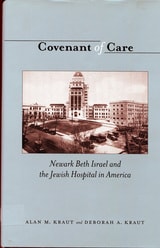
Covenant of Care
Newark Beth Israel and the Jewish Hospital in AmericaKraut, Alan M
Rutgers University Press, 2006
Where were you born? Were you born at the Beth? Many thousands of Americans-Jewish and non-Jewish-were born at a hospital bearing the Star of David and named Beth Israel, Mount Sinai, or Montefiore. In the United States, health care has been bound closely to the religious impulse. Newark Beth Israel Hospital is a distinguished modern medical institution in New Jersey whose history opens a window on American health care, the immigrant experience, and urban life. Alan M. and Deborah A. Kraut tell the story of this important institution, illuminating the broader history of voluntary nonprofit hospitals created under religious auspices initially to serve poor immigrant communities. Like so many Jewish hospitals in the early half of the twentieth century, "the Beth" cared not only for its own community's poor and underprivileged, a responsibility grounded in the Jewish traditions of tzedakah ("justice") and tikkun olam ("to heal the world"), but for all Newarkers.
Since it first opened its doors in 1902, the Beth has been an engine of social change. Jewish women activists and immigrant physicians founded an institution with a nonsectarian admissions policy and a welcome mat for physicians and nurses seeking opportunity denied them by anti-Semitism elsewhere. Research, too, flourished at the Beth. Here dedicated medical detectives did path-breaking research on the Rh blood factor and pacemaker development. When economic shortfalls and the Great Depression threatened the Beth's existence, philanthropic contributions from prominent Newark Jews such as Louis Bamberger and Felix Fuld, the efforts of women volunteers, and, later, income from well-insured patients saved the institution that had become the pride of the Jewish community.
The Krauts tell the Beth Israel story against the backdrop of twentieth-century medical progress, Newark's tumultuous history, and the broader social and demographic changes altering the landscape of American cities. Today, the United States, in the midst of another great wave of immigration, once again faces the question of how to provide newcomers with culturally sensitive and economically accessible medical care. Covenant of Care will inform and inspire all those working to meet these demands, offering a compelling look at the creative ways that voluntary hospitals navigated similar challenges throughout the twentieth century.
Covid’s Chronicities
From Urgency to Stasis in a Pandemic EraEdited by Lenore Manderson and Nancy J. Burke
University College London, 2025
While the initial urgency of the COVID-19 pandemic fades, its long-term disruptions continue to reshape societies and individual lives. Covid’s Chronicities captures the global experience of a crisis that has evolved into a persistent state of uncertainty. Based on research from Europe, the Americas, Asia, and Africa, this volume examines how governments and communities have navigated everything from shifting policies to the social and economic aftershocks of the pandemic.
This volume reveals how COVID-19 has exacerbated existing inequalities and exposed deep structural neglect while also highlighting the resilience of communities, such as Indigenous knowledge systems and grassroots mutual aid networks. Tracing the pandemic’s transition from emergency to enduring crisis, the authors offer a sobering yet hopeful analysis of how people continue to remake their worlds in the face of ongoing instability.
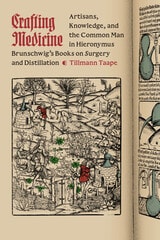
Crafting Medicine
Artisans, Knowledge, and the Common Man in Hieronymus Brunschwig's Books on Surgery and DistillationTillmann Taape
University of Chicago Press, 2025
Between 1497 and 1512, Hieronymus Brunschwig (ca. 1450–ca. 1530), an obscure craftsman from Strasbourg, wrote books on surgery and pharmacy that transformed medical expertise, how it was codified in print, and how it was communicated to new audiences. Brunschwig was an unlikely author. He apprenticed as a surgeon in the local guild and dispensed medicines from his own shop. But he was remarkably well-read in surgery, alchemy, and medical theory, even if he lacked a university education. His unique authorial voice spoke to the healing practices of craftsmen and common people in a down-to-earth German dialect.
Crafting Medicine, by Tillmann Taape, is the first in-depth study of Brunschwig and his works. In it, Taape argues that Brunschwig’s writings shaped a nascent tradition of vernacular medicine. Brunschwig’s books represent a key moment in the history of medical print, for they conveyed medical expertise to a new readership of nonacademic practitioners, who became a key audience for a flood of vernacular medical publications during the sixteenth century. Using Brunschwig’s books as a unique window into the past, Crafting Medicine beautifully reconstructs the world of science inhabited by Brunschwig, his fellow craftsmen, his translators, and his readers.
Creating Culture through Health Leadership
Edited by Lina Svedin
University of Minnesota Press, 2020
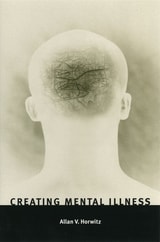
Creating Mental Illness
Allan V. Horwitz
University of Chicago Press, 2001
"Thought-provoking and important. . .Drawing on and consolidating the ideas of a range of authors, Horwitz challenges the existing use of the term mental illness and the psychiatric ideas and practices on which this usage is based. . . . Horwitz enters this controversial territory with confidence, conviction, and clarity."—Joan Busfield, American Journal of Sociology
"Horwitz properly identifies the financial incentives that urge therapists and drug companies to proliferate psychiatric diagnostic categories. He correctly identifies the stranglehold that psychiatric diagnosis has on research funding in mental health. Above all, he provides a sorely needed counterpoint to the most strident advocates of disease-model psychiatry."—Mark Sullivan, Journal of the American Medical Association
"Horwitz makes at least two major contributions to our understanding of mental disorders. First, he eloquently draws on evidence from the biological and social sciences to create a balanced, integrative approach to the study of mental disorders. Second, in accomplishing the first contribution, he provides a fascinating history of the study and treatment of mental disorders. . . from early asylum work to the rise of modern biological psychiatry."—Debra Umberson, Quarterly Review of Biology

Crime, Corrections, and the COVID-19 Pandemic
Responses and Adaptations in the U.S. Criminal Justice SystemEdited by Breanne Pleggenkuhle and Joseph A. Schafer
Southern Illinois University Press, 2025
Analyses of crime and justice in an unprecedented time
While COVID-19 lockdowns affected nearly everyone worldwide, feelings of anxiety and fear were exacerbated for those already entangled in the criminal justice system. Scholars recognized the unique opportunity to study crime and the justice system’s response during this period, though they soon realized that determining the pandemic’s effects would be a complicated, nuanced process.
Crime, Corrections, and the COVID-19 Pandemic features analyses and findings from more than thirty contributors in eleven essays. The collection examines the multifaceted social, economic, cultural, legislative, and policy responses to COVID-19 and their impacts on crime and justice. It also explores how professionals across the criminal justice system—police officers, campus police officers, attorneys, judges, correctional staff, and community supervision agents—adapted to unprecedented challenges.
The book provides real-world evidence of how unconventional solutions and groundbreaking practices were implemented in response to a global crisis. Contributors analyze how incarcerated individuals, their families, and their supervisors dealt with the fear of transmission, medical care, and death. Their findings, which are necessarily dependent on timing, place, measurement, and operationalization, include both change and stasis, both negative and positive outcomes. For instance, while minor and property-related offenses initially declined, violent crimes like homicide and intimate partner violence increased. Drug usage patterns changed, leading to a rise in opioid overdoses, and despite the rise in digital interactions, there was no significant difference in self-reported cybervictimization. Furthermore, rates of gang-related crimes did not decrease. Policy and public health responses reshaped criminal activities, influencing the methods and motivations behind theft, child and elder abuse, and other offenses. This volume includes in-depth examinations of certain often-overlooked crimes, such as labor trafficking, and provides direct insights into the job challenges faced by criminal justice professionals, from probation personnel to labor rights advocates.
Emerging innovations in health risk management within correctional facilities led to increased awareness and focus on specific types of crime. Responses to the pandemic revealed significant challenges, such as burnout among justice system personnel, difficulties in adapting and innovating, and challenges in providing services to vulnerable populations.
Through diverse perspectives and empirical approaches ranging from advanced statistical analysis to qualitative interviews, Crime, Corrections, and the COVID-19 Pandemic offers a comprehensive exploration of the complexities that affect research results. It showcases the resilience and innovation within the criminal justice field and details the challenges professionals in this area tackled during a universally trying time, presenting valuable lessons for future crises.
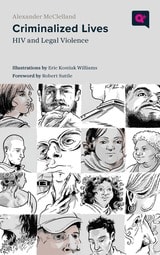
Criminalized Lives
HIV and Legal ViolenceAlexander McClelland
Rutgers University Press, 2024
Canada has been known as a hot spot for HIV criminalization where the act of not disclosing one’s HIV-positive status to sex partners has historically been regarded as a serious criminal offence. Criminalized Lives describes how this approach has disproportionately harmed the poor, Black and Indigenous people, gay men, and women in Canada. In this book, people who have been criminally accused of not disclosing their HIV-positive status, detail the many complexities of disclosure, and the violence that results from being criminalized.
Accompanied by portraits from artist Eric Kostiuk Williams, the profiles examine whether the criminal legal system is really prepared to handle the nuances and ethical dilemmas faced everyday by people living with HIV. By offering personal stories of people who have faced criminalization first-hand, Alexander McClelland questions common assumptions about HIV, the role of punishment, and the violence that results from the criminal legal system’s legacy of categorizing people as either victims or perpetrators.
Note: A regrettable error appears on page 22. The number 240 should be 206 when referring to the number of people prosecuted in relation to allegations of HIV nondisclosure. This will be fixed in future reprints.

Crip Screens
Countering Psychiatric Media TechnologiesOlivia Banner
Duke University Press, 2025
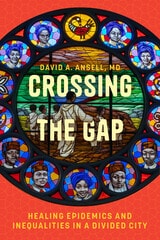
Crossing the Gap
Healing Epidemics and Inequalities in a Divided CityDavid A. Ansell, MD
University of Chicago Press, 2026
A doctor, a disinvested neighborhood, and a radical experiment to close America’s death gap.
Two girls are born in the same Chicago hospital. Their neighborhoods—just seven train stops apart—will shape their futures and help determine how long they live. One will celebrate her eighty-fifth birthday. The other will die before sixty-five.
This is the death gap: lives lost too soon. Crossing the Gap asks how a city with world-class hospitals can tolerate an epidemic of premature death—and tells the story of the people fighting to end it.
In his landmark book The Death Gap, physician and health equity leader David A. Ansell exposed how structural racism and poverty shorten lives. He moves beyond diagnosis in Crossing the Gap to explore what happens when a major medical center joins forces with pastors, community organizers, residents, and young leaders on Chicago’s West Side to redefine what a hospital owes its neighbors. Part medical memoir and part urban chronicle, Crossing the Gap follows groundbreaking initiatives such as West Side United and the Sankofa Wellness Village as they confront decades of disinvestment and work to build healthier communities.
Through stories of collaboration, courage, conflict, and community leadership, Ansell shows how neighborhood voices, rigorous data, and moral imagination can transform health systems from bystanders into partners for change—not just in one city but throughout the nation.
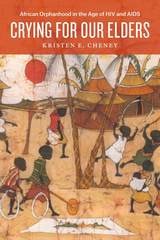
Crying for Our Elders
African Orphanhood in the Age of HIV and AIDSKristen E. Cheney
University of Chicago Press, 2017
Through ethnographic fieldwork and collaborative research with children in Uganda, Cheney traces how the “best interest” principle that governs children’s’ rights can stigmatize orphans and leave children in the post-antiretroviral era even more vulnerable to exploitation. She details the dramatic effects this has on traditional family support and child protection and stresses child empowerment over pity. Crying for Our Elders advances current discussions on humanitarianism, children’s studies, orphanhood, and kinship. By exploring the unique experience of AIDS orphanhood through the eyes of children, caregivers, and policymakers, Cheney shows that despite the extreme challenges of growing up in the era of HIV/AIDS, the post-ARV generation still holds out hope for the future.
Cultivating Health
Los Angeles Women and Public Health ReformKoslow, Jennifer
Rutgers University Press, 2009
Cultivating Health, an interdisciplinary chronicle, details women's impact on remaking health policy, despite the absence of government support. Combining primary source and municipal archival research with comfortable prose, Jennifer Lisa Koslow explores community nursing, housing reform, milk sanitation, childbirth, and the campaign against venereal disease in late nineteenth and early twentieth century Los Angeles. She demonstrates how women implemented health care reform and civic programs while laying the groundwork for a successful transition of responsibility back to government.
Koslow highlights women's home health care and urban policy-changing accomplishments and pays tribute to what would become the model for similar service-based systems in other American centers.
Cultural Anxieties
Managing Migrant Suffering in FranceStéphanie Larchanche
Rutgers University Press, 2020

Curating Conception
Race and Reproduction in South AfricaTessa Moll
Rutgers University Press, 2026
South Africa’s private fertility clinics promise hope: expert care, measurable success rates, and the possibility of long-desired children. While seemingly insulated from the legacies of apartheid and the stark inequalities of the present, these clinics operate within a society still shaped by racial stratification and uneven access to care. But what happens once patients step through the clinic doors? Based on fieldwork conducted over a decade, Curating Conception offers the first book-length study of IVF in sub-Saharan Africa. Tessa Moll turns to the polished, private clinics of Cape Town and Johannesburg to show how racial hierarchies are quietly sustained through everyday decisions—about donor selection, embryo grading, success statistics, and patient eligibility—that shape ideas of legitimate parenthood and belonging in the post-apartheid era. Introducing the concept of curating, Moll shows how medical authority, patient desire, and enduring social orders work together to shape which reproductive futures are seen as natural and desirable. In doing so, Curating Conception demonstrates how racial imaginaries—and the normalization of whiteness as the default family form—are woven into the intimate and technological processes of IVF. Blending vivid storytelling with careful analysis, it invites readers to rethink fertility care not simply as a technology of hope, but as a powerful site where history, inequality, and aspiration converge.
Curing the Colonizers
Hydrotherapy, Climatology, and French Colonial SpasEric T. Jennings
Duke University Press, 2006
Combining the histories of empire, leisure, tourism, culture, and medicine, Eric T. Jennings sheds new light on the workings of empire by examining the rationale and practice of French colonial hydrotherapy between 1830 and 1962. He traces colonial acclimatization theory and the development of a “science” of hydrotherapy appropriate to colonial spaces, and he chronicles and compares the histories of spas in several French colonies—Guadeloupe, Madagascar, Tunisia, and Réunion—and in France itself. Throughout Curing the Colonizers, Jennings illuminates the relationship between indigenous and French colonial therapeutic knowledge as well as the ultimate failure of the spas to make colonialism physically or morally safe for the French.