1441 books match the query 'World' and 107 start with c
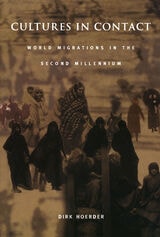
cover of Cultures in Contact: World Migrations in the Second Millennium

Cultures in Contact

World Migrations in the Second Millennium

Dirk Hoerder

Duke University Press, 2011

A landmark work on human migration around the globe, Cultures in Contact provides a history of the world told through the movements of its people. It is a broad, pioneering interpretation of the scope, patterns, and consequences of human migrations over the past ten centuries. In this magnum opus thirty years in the making, Dirk Hoerder reconceptualizes the history of migration and immigration, establishing that societal transformation cannot be understood without taking into account the impact of migrations and, indeed, that mobility is more characteristic of human behavior than is stasis.

Signaling a major paradigm shift, Cultures in Contact creates an English-language map of human movement that is not Atlantic Ocean-based. Hoerder describes the origins, causes, and extent of migrations around the globe and analyzes the cultural interactions they have triggered. He pays particular attention to the consequences of immigration within the receiving countries. His work sweeps from the eleventh century forward through the end of the twentieth, when migration patterns shifted to include transpacific migration, return migrations from former colonies, refugee migrations, and distinct regional labor migrations in the developing world. Hoerder demonstrates that as we enter the third millennium, regional and intercontinental migration patterns no longer resemble those of previous centuries. They have been transformed by new communications systems and other forces of globalization and transnationalism.
[more]
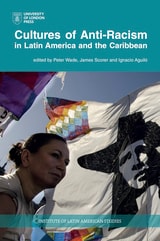
cover of Cultures of Anti-Racism in Latin America and the Caribbean

Cultures of Anti-Racism in Latin America and the Caribbean

Edited by Peter Wade, James Scorer, and Ignacio Aguiló

University of London Press, 2019
Latin America’s long history of showing how racism can co-exist with racial mixture and conviviality offers useful ammunition for strengthening anti-racist stances. This volume asks whether cultural production has a particular role to play within discourses and practices of anti-racism in Latin America and the Caribbean. The contributors analyse music, performance, education, language, film and art in diverse national contexts across the region. The book also places Latin American and Caribbean racial formations within a broader global context and sets out the premise that the region provides valuable opportunities for thinking about anti-racism when recent political events have made ever more fragile the claims that, at least in Europe and the United States, we exist in a ‘post-racial’ world.
[more]
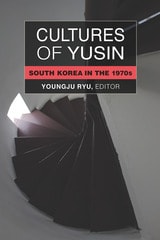
cover of Cultures of Yusin: South Korea in the 1970s

Cultures of Yusin

South Korea in the 1970s

Youngju Ryu, Editor

University of Michigan Press, 2018
Cultures of Yusin examines the turbulent and yet deeply formative years of Park Chung Hee’s rule in South Korea, focusing on the so-called Yusin era (1972–79). Beginning with the constitutional change that granted dictatorial powers to the president and ending with his assassination, Yusin was a period of extreme political repression coupled with widespread mobilization of the citizenry towards the statist gospel of modernization and development. While much has been written about the political and economic contours of this period, the rich complexity of its cultural production remains obscure. This edited volume brings together a wide range of scholars to explore literature, film, television, performance, music, and architecture, as well as practices of urban and financial planning, consumption, and homeownership. Examining the plural forms of culture’s relationship to state power, the authors illuminate the decade of the 1970s in South Korea and offer an essential framework for understanding contemporary Korean society. 
[more]
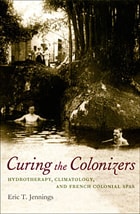
cover of Curing the Colonizers: Hydrotherapy, Climatology, and French Colonial Spas

Curing the Colonizers

Hydrotherapy, Climatology, and French Colonial Spas

Eric T. Jennings

Duke University Press, 2006

“Beware! Against the poison that is Africa, there is but one antidote: Vichy.” So ran a 1924 advertisement for one of France’s main spas. Throughout the French empire, spas featuring water cures, often combined with “climatic” cures, thrived during the nineteenth century and the twentieth. Water cures and high-altitude resorts were widely believed to serve vital therapeutic and even prophylactic functions against tropical disease and the tropics themselves. The Ministry of the Colonies published bulletins accrediting a host of spas thought to be effective against tropical ailments ranging from malaria to yellow fever; specialized guidebooks dispensed advice on the best spas for “colonial ills.” Administrators were granted regular furloughs to “take the waters” back home in France. In the colonies, spas assuaged homesickness by creating oases of France abroad. Colonizers frequented spas to maintain their strength, preserve their French identity, and cultivate their difference from the colonized.

Combining the histories of empire, leisure, tourism, culture, and medicine, Eric T. Jennings sheds new light on the workings of empire by examining the rationale and practice of French colonial hydrotherapy between 1830 and 1962. He traces colonial acclimatization theory and the development of a “science” of hydrotherapy appropriate to colonial spaces, and he chronicles and compares the histories of spas in several French colonies—Guadeloupe, Madagascar, Tunisia, and Réunion—and in France itself. Throughout Curing the Colonizers, Jennings illuminates the relationship between indigenous and French colonial therapeutic knowledge as well as the ultimate failure of the spas to make colonialism physically or morally safe for the French.
[more]
cover of Cyberwars in the Middle East

Cyberwars in the Middle East

Ahmed Al-Rawi

Rutgers University Press, 2021

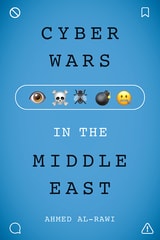
Cyberwars in the Middle East argues that hacking is a form of online political disruption whose influence flows vertically in two directions (top-bottom or bottom-up) or horizontally. These hacking activities are performed along three political dimensions: international, regional, and local. Author Ahmed Al-Rawi argues that political hacking is an aggressive and militant form of public communication employed by tech-savvy individuals, regardless of their affiliations, in order to influence politics and policies. Kenneth Waltz’s structural realism theory is linked to this argument as it provides a relevant framework to explain why nation-states employ cyber tools against each other.

On the one hand, nation-states as well as their affiliated hacking groups like cyber warriors employ hacking as offensive and defensive tools in connection to the cyber activity or inactivity of other nation-states, such as the role of Russian Trolls disseminating disinformation on social media during the US 2016 presidential election. This is regarded as a horizontal flow of political disruption. Sometimes, nation-states, like the UAE, Saudi Arabia, and Bahrain, use hacking and surveillance tactics as a vertical flow (top-bottom) form of online political disruption by targeting their own citizens due to their oppositional or activists’ political views. On the other hand, regular hackers who are often politically independent practice a form of bottom-top political disruption to address issues related to the internal politics of their respective nation-states such as the case of a number of Iraqi, Saudi, and Algerian hackers. In some cases, other hackers target ordinary citizens to express opposition to their political or ideological views which is regarded as a horizontal form of online political disruption. This book is the first of its kind to shine a light on many ways that governments and hackers are perpetrating cyber attacks in the Middle East and beyond, and to show the ripple effect of these attacks.
 
[more]
cover of Cyprus: The Post-Imperial Constitution

Cyprus

The Post-Imperial Constitution

Vassilis K. Fouskas and Alex O. Tackie

Pluto Press, 2009
[more]
cover of Czecho/Slovakia: Ethnic Conflict, Constitutional Fissure, Negotiated Breakup

Czecho/Slovakia

Ethnic Conflict, Constitutional Fissure, Negotiated Breakup

Eric Stein

University of Michigan Press, 2000

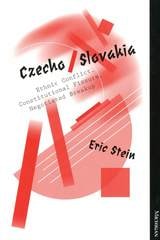
As the clock struck midnight on December 31, 1992, Czechoslovakia, the only genuine democracy in post-World War I Central-Eastern Europe, broke up into two independent successor states. This book explores the failed search for a postcommunist constitution and it records in a lively style a singular instance of the peaceful settlement of an ethnic dispute.
For more than three years after the implosion of the Communist regime in 1989, the Czechs and Slovaks negotiated the terms of a new relationship to succeed the centralized federation created under communism. After failing to agree to the terms of a new union, the parties agreed on an orderly breakup.
In the background of the narrative loom general issues such as: What are the sources of ethnic conflict and what is the impact of nationalism? Why do ethnic groups choose secession and what makes for peaceful rather than violent separation? What factors influence the course of postcommunist constitutional negotiations, which are inevitably conducted in the context of institutional and societal transformation? The author explores these issues and the reasons for the breakup.
Eric Stein, a well-known scholar of comparative law and a native of Czechoslovakia, was invited by the Czechoslovak government to assist in the drafting of a new constitution. This book is based on his experiences during years of work on these negotiations as well as extensive interviews with political figures, journalists, and academics and extensive research in the primary documents. It will appeal to historians, lawyers, and social scientists interested in the process of transformation in Eastern Europe and the study of ethnic conflict, as well as the general reader interested in modern European history.
Eric Stein is Hessel E. Yntema Professor Emeritus, University of Michigan Law School. He previously served with the United States Department of State in the Legal Advisor's Office. He is the author of many books and articles on comparative law and the law of the European Community.
[more]