Results by title
28250 books match the query 'history' and 1917 start with c
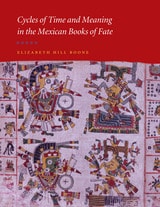
Cycles of Time and Meaning in the Mexican Books of Fate
By Elizabeth Hill Boone
University of Texas Press, 2007
In communities throughout precontact Mesoamerica, calendar priests and diviners relied on pictographic almanacs to predict the fate of newborns, to guide people in choosing marriage partners and auspicious wedding dates, to know when to plant and harvest crops, and to be successful in many of life's activities. As the Spanish colonized Mesoamerica in the sixteenth century, they made a determined effort to destroy these books, in which the Aztec and neighboring peoples recorded their understanding of the invisible world of the sacred calendar and the cosmic forces and supernaturals that adhered to time. Today, only a few of these divinatory codices survive. Visually complex, esoteric, and strikingly beautiful, painted books such as the famous Codex Borgia and Codex Borbonicus still serve as portals into the ancient Mexican calendrical systems and the cycles of time and meaning they encode.
In this comprehensive study, Elizabeth Hill Boone analyzes the entire extant corpus of Mexican divinatory codices and offers a masterful explanation of the genre as a whole. She introduces the sacred, divinatory calendar and the calendar priests and diviners who owned and used the books. Boone then explains the graphic vocabulary of the calendar and its prophetic forces and describes the organizing principles that structure the codices. She shows how they form almanacs that either offer general purpose guidance or focus topically on specific aspects of life, such as birth, marriage, agriculture and rain, travel, and the forces of the planet Venus. Boone also tackles two major areas of controversy—the great narrative passage in the Codex Borgia, which she freshly interprets as a cosmic narrative of creation, and the disputed origins of the codices, which, she argues, grew out of a single religious and divinatory system.
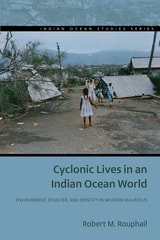
Cyclonic Lives in an Indian Ocean World
Environment, Disaster, and Identity in Modern MauritiusRobert M. Rouphail
Ohio University Press, 0
Disasters as historical processes shaping identity, governance, and diasporic memory in colonial and postcolonial Mauritius
In a world marked by increasingly destructive ecological and meteorological upheavals, Cyclonic Lives in an Indian Ocean World offers a historical analysis of how these catastrophes shape people’s understanding of themselves, their collective history, and their relationship to the institutions that govern them. An examination of cyclonic disasters in the multiethnic Indian Ocean island of Mauritius throws into stark relief how deep histories of diasporic identity formation, of imperial governance, and of the informal practices of racial difference making graft onto how everyday people interpret these moments of loss and the futures that emerge in their wake.
Cyclonic Lives shows that disasters are not only events; they are also processes through which people evaluate and rethink the most elemental social and cultural categories that give meaning to their lives. Beginning in the late nineteenth century and continuing until the early postcolonial era, this book tracks, for example, how Mauritians of African descent integrated these disasters into broader collective histories and memories of the Indian Ocean slave trade, how Hindu Indo-Mauritians understood cyclones’ ecological effects as material elements to be accounted for in a broader Hindu diasporic space, and how the late colonial and early postcolonial state built infrastructures—material, conceptual, and financial—to mitigate the threats posed by these storms and ensure their own long-term durability.
The increasing political, social, and economic instability that climate change has already triggered demands that humanists develop analytical geographies and methodologies that shed light on how power can modulate in asymmetrical ways at moments of crisis. If there is one central takeaway from this historical study of this small island in a big ocean, it is that catastrophic events are not things that merely happen to people; they are processes that remake them.
Cymbeline
William Shakespeare
Arizona Center for Medieval and Renaissance Studies, 2023
In her modern translation of Cymbeline, Andrea Thome takes up one of Shakespeare’s most complex plays. Thome’s update brings the play’s language into the present, highlighting new resonances and providing a more accessible version of Shakespeare’s play for today’s audiences. One of Shakespeare’s final plays, Cymbeline tells the story of the British king Cymbeline and his daughter, Imogen. It is a tale of deceit and jealousy, with accusations of infidelity that often draw comparisons to Othello and The Winter’s Tale.
This translation of Cymbeline was written as part of the Oregon Shakespeare Festival’s Play On! project, which commissioned new translations of thirty-nine Shakespeare plays. These translations present the work of “The Bard” in language accessible to modern audiences while never losing the beauty of Shakespeare’s verse. Enlisting the talents of a diverse group of contemporary playwrights, screenwriters, and dramaturges from diverse backgrounds, this project reenvisions Shakespeare for the twenty-first century. These volumes make these works available for the first time in print—a new First Folio for a new era.

Cyprus
The Post-Imperial ConstitutionVassilis K. Fouskas and Alex O. Tackie
Pluto Press, 2009
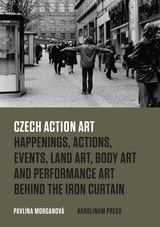
Czech Action Art
Happenings, Actions, Events, Land Art, Body Art and Performance Art Behind the Iron CurtainPavlína Morganová
Karolinum Press, 2014
Morganová explains the various forms of action art, from the “actions” and “happenings” of the 1960s; to the actions of land art that encompass stones, trees, water, or fire; to recent displays of body art; to the actions of the latest generation of artists, who are using the principles of action art in contemporary postconceptual and participative art. Along the way, she introduces the most prominent Czech artists of each specific niche, including Milan Knížák, Zorka Ságlová, Ivan Kafka, Petr Štembera, Karel Miler, Jirí Kovanda, and Katerina Šedá, and demonstrates not only the changes in the art forms themselves but also the shifting roles of artists and spectators after World War II.
With over one hundred illustrations, Czech Action Art introduces this heretofore overlooked but fascinating art form to a global readership.
Czech Law in Historical Contexts
Jan Kuklík
Karolinum Press, 2015

Czech Refugees in Cold War Canada
Jan Raska
University of Manitoba Press, 2018
Czech Theatre Design in the Twentieth Century
Metaphor and Irony RevisitedJoe Brandesky
University of Iowa Press, 2007
Essays by Vera Ptacková, Dennis Christilles, Delbert Unruh, and, Marie Zdenková their full texts restored and reedited for this volume since their initial publication in exhibit catalogs, provide historical and linguistic insights into contemporary Czech scenography as well as comparisons to the major art movements affecting the designers. Brandesky’s informative introductory essay contextualizes the shifting tenets of Czech theatre design. Also included are biographies of the designers, a bibliography, and thirty black-and-white photographs.
The accompanying CD provides access to the vibrant and sophisticated images of the Czech theatrical world: 138 richly colorful paintings and drawings of costumes, models, and set designs and in situ photos of exhibited designs plus 27 color and black-and-white photos of the designers. The CD also includes the full text of the book with links to all the art and to the designers’ biographies. Book and CD together showcase the Czech Republic as a center of international stage design.
Czecho/Slovakia
Ethnic Conflict, Constitutional Fissure, Negotiated BreakupEric Stein
University of Michigan Press, 2000
Czechoslovak Diplomacy and the Gulag
Deportation of Czechoslovak Citizens to the USSR and the Negotiation for their Repatriation, 1945-1953Milada Polisenská
Central European University Press, 2016
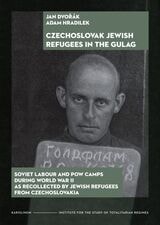
Czechoslovak Jewish Refugees in the Gulag
Soviet Labour and POW Camps during World War II as Recollected by Jewish Refugees from CzechoslovakiaJan Dvorák and Adam Hradilek
Karolinum Press, 2025
While millions of Soviet slaves awaited liberation from the Nazi troops, millions of German concentration camp victims put their last bit of hope in the Red Army.
An in-depth look into the Soviet persecution of Jewish refugees, this book offers twenty-one different interviews with Czechoslovak Jewish refugees who found themselves in Soviet labor and prison camps between 1939 and 1941. They represent around two thousand Czechoslovak Jews who escaped persecution from German and Hungarian occupational forces and Slovak fascists by fleeing to the East. The Soviets sentenced most of them to long stints of forced labor in the Gulags for illegal immigration, espionage, and other arbitrary accusations. A specific group was formed by the Jews from the Hungarian labor service who either defected to or were captured by the Soviets.
Dvořák and Hradilek chronicle four waves of escape—those from the Protectorate of Bohemia and Moravia, the Nisko concentration camp, Carpathian Ruthenia, and the aforementioned labor service. Thorough and clear, every interview coincides with supplementary documents and photographs found in the NKVD archives, sourced from Ukraine.

Czechoslovakia at the World’s Fairs
Behind the FaçadeMarta Filipová
Central European University Press, 2024
Established in 1918, as a new state the First Czechoslovak Republic was keen to project a distinct image. Participation in World Fairs offered the perfect opportunity-. In this comprehensive account of Czechoslovak participation in international exhibitions of the interwar period Marta Filipová looks beyond the sleek façade of the modernist pavilions to examine the intersections of architecture, art and design with commercial interests, state agendas, individual action and the public, offering a complex insight into the production and reception of national displays.
The rich collection of images – mainly photographs – provides a close look at the Czechoslovak pavilions. The design, content and context of the displays convey an idealized narrative that was created for the fairs and the myths on which the Czechoslovak nation and state were built. Heavy machinery, modern art, tourist destinations, and food and drink were presented as Czechoslovak, while many aspects of social life – particularly women or ethnic minorities – were strikingly underrepresented or absent. The book argues that the objects and ideas that the pavilion organizers put on display legitimized and validated the existence of the new state through the inclusion and exclusion of exhibits, people, and ideas.
While Marta Filipová primarily focuses on Czechoslovakia, she also offers insights into how other emerging nations projected and sustained their image during this historical period and how interwar world’s fairs accommodated them.
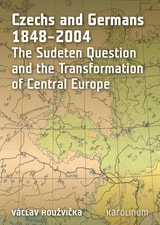
Czechs and Germans 1848-2004
The Sudeten Question and the Transformation of Central EuropeVáclav Houzvicka
Karolinum Press, 2013
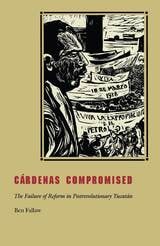
Cárdenas Compromised
The Failure of Reform in Postrevolutionary YucatánBen Fallaw
Duke University Press, 2001
For historical, geographical, and ethnic reasons, Yucatán was the center of large-scale land reform after the Mexican Revolution. A long-standing revolutionary tradition, combined with a harsh division between a powerful white minority and a poor, Maya-speaking majority, made the region the perfect site for Cárdenas to experiment by launching an ambitious top-down project to mobilize the rural poor along ethnic and class lines. The regime encouraged rural peasants to form collectives, hacienda workers to unionize, and urban laborers to strike. It also attempted to mobilize young people and women, to challenge Yucatán’s traditional, patriarchal social structure, to reach out to Mayan communities, and to democratize the political process. Although the project ultimately failed, political dialogue over Cárdenas’s efforts continues. Rejecting both revisionist (anti-Cárdenas) and neopopulist (pro-Cárdenas) interpretations, Fallaw overturns the notion that the state allowed no room for the agency of local actors. By focusing on historical connections across class, political, and regional lines, Fallaw transforms ideas on Cardenismo that have long been accepted not only in Yucatán but throughout Mexico.
This book will appeal to scholars of Mexican history and of Latin American state formation, as well as to sociologists and political scientists interested in modern Mexico.
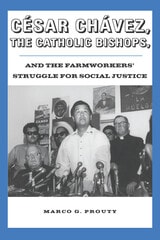
César Chávez, the Catholic Bishops, and the Farmworkers’ Struggle for Social Justice
Marco G. Prouty
University of Arizona Press, 2006
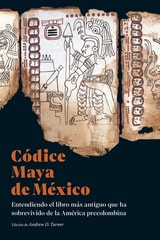
Códice Maya de México
Entendiendo el libro más antiguo que ha sobrevivido de la América precolombinaAndrew D. Turner
J. Paul Getty Trust, The, 0
Los antiguos escribas mayas registraban profecías y observaciones astronómicas en las páginas de libros pintados. Aunque la mayoría se perdieron por el desgaste del paso del tiempo o porque fueron destruidos, se sabía que tres códices mayas prehispánicos habían sobrevivido. Sin embargo, en la década de 1960 apareció en México, en circunstancias misteriosas, un cuarto libro diferente a los demás. Después de cincuenta años de debate sobre su autenticidad, investigaciones recientes con análisis científicos e histórico-artísticos de vanguardia, determinaron que el Códice Maya de México (antes conocido como Códice Grolier) es, de hecho, el libro más antiguo del continente americano: al menos doscientos años más antiguo que los demás.
Este volumen ofrece una introducción multifacética a la creación, el descubrimiento, la interpretación y la autenticación científica del Códice Maya de México. Además, un facsímil a todo color y una guía de la iconografía página por página hacen que un amplio público pueda acceder al códice. Otros temas incluyen los usos y la importancia de los libros sagrados en Mesoamérica, el papel de la astronomía en las antiguas sociedades mayas y la continua relevancia del códice para las comunidades mayas contemporáneas.
La publicación de este volumen acompaña la exposición que se exhibirá en el J. Paul Getty Museum ubicado en el Getty Center del 18 de octubre de 2022 al 15 de enero de 2023.
An in-depth exploration of the history, authentication, and modern relevance of Códice Maya de México, the oldest surviving book of the Americas.
Ancient Maya scribes recorded prophecies and astronomical observations on the pages of painted books. Although most were lost to decay or destruction, three pre-Hispanic Maya codices were known to have survived, when, in the 1960s, a fourth book that differed from the others appeared in Mexico under mysterious circumstances. After fifty years of debate over its authenticity, recent investigations using cutting-edge scientific and art historical analyses determined that Códice Maya de México (formerly known as Grolier Codex) is in fact the oldest surviving book of the Americas, predating all others by at least two hundred years.
This volume provides a multifaceted introduction to the creation, discovery, interpretation, and scientific authentication of Códice Maya de México. In addition, a full-color facsimile and a page-by-page guide to the iconography make the codex accessible to a wide audience. Additional topics include the uses and importance of sacred books in Mesoamerica, the role of astronomy in ancient Maya societies, and the codex's continued relevance to contemporary Maya communities.
This volume is published to accompany an exhibition on view at the J. Paul Getty Museum at the Getty Center from October 18, 2022, to January 15, 2023.
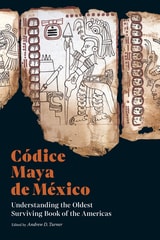
Códice Maya de México
Understanding the Oldest Surviving Book of the AmericasAndrew D. Turner
J. Paul Getty Trust, The, 2022
Ancient Maya scribes recorded prophecies and astronomical observations on the pages of painted books. Although most were lost to decay or destruction, three pre-Hispanic Maya codices were known to have survived, when, in the 1960s, a fourth book that differed from the others appeared in Mexico under mysterious circumstances. After fifty years of debate over its authenticity, recent investigations using cutting-edge scientific and art historical analyses determined that Códice Maya de México (formerly known as Grolier Codex) is in fact the oldest surviving book of the Americas, predating all others by at least two hundred years.
This volume provides a multifaceted introduction to the creation, discovery, interpretation, and scientific authentication of Códice Maya de México. In addition, a full-color facsimile and a page-by-page guide to the iconography make the codex accessible to a wide audience. Additional topics include the uses and importance of sacred books in Mesoamerica, the role of astronomy in ancient Maya societies, and the codex's continued relevance to contemporary Maya communities.
This volume is published to accompany an exhibition on view at the J. Paul Getty Museum at the Getty Center from October 18, 2022, to January 15, 2023.