Results by title
8642 books match the query '20th Century' and 580 start with c
Chicanx Utopias
Pop Culture and the Politics of the PossibleLuis Alvarez
University of Texas Press, 2022
2023 Honorable Mention Best History Book, International Latino Book Awards
Broad and encompassing examination of Chicanx popular culture since World War II and the utopian visions it articulated
Amid the rise of neoliberalism, globalization, and movements for civil rights and global justice in the post–World War II era, Chicanxs in film, music, television, and art weaponized culture to combat often oppressive economic and political conditions. They envisioned utopias that, even if never fully realized, reimagined the world and linked seemingly disparate people and places. In the latter half of the twentieth century, Chicanx popular culture forged a politics of the possible and gave rise to utopian dreams that sprang from everyday experiences.
In Chicanx Utopias, Luis Alvarez offers a broad study of these utopian visions from the 1950s to the 2000s. Probing the film Salt of the Earth, brown-eyed soul music, sitcoms, poster art, and borderlands reggae music, he examines how Chicanx pop culture, capable of both liberation and exploitation, fostered interracial and transnational identities, engaged social movements, and produced varied utopian visions with divergent possibilities and limits. Grounded in the theoretical frameworks of Walter Benjamin, Stuart Hall, and the Zapatista movement, this book reveals how Chicanxs articulated pop cultural utopias to make sense of, challenge, and improve the worlds they inhabited.
Chick Lit 2
No Chick VicsChris Mazza, Jeffrey DeShell, and Elisabeth Sheffield
University of Alabama Press, 1996
Chick-Lit 2: No Chick Vics features new work by Rikki Ducornet, Eurydice, Elizabeth Graver, Ursule Molinaro, and fourteen other witty and deadly serious writers.
Chick-Lit 2 discovers new and alternative voices in women’s fiction whose stories do not involve trauma that comes from the outside. As Mazza writes in her introduction, “Sexual assaults and harassments and injurious poor body images do exist and have waged a war on women (the American Medical Association says so). But for this book, I was interested in seeing what action(s) women characters can incite on their own, whether bad or good, hopeful or dead-end, progressive or destructive.”
Child Survivors of the Holocaust
The Youngest Remnant and the American ExperienceCohen, Beth B
Rutgers University Press, 2018
The majority of European Jewish children alive in 1939 were murdered during the Holocaust. Of 1.5 million children, only an estimated 150,000 survived. In the aftermath of the Shoah, efforts by American Jews brought several thousand of these child survivors to the United States. In Child Survivors of the Holocaust, historian Beth B. Cohen weaves together survivor testimonies and archival documents to bring their story to light. She reveals that even as child survivors were resettled and “saved,” they struggled to adapt to new lives as members of adoptive families, previously unknown American Jewish kin networks, or their own survivor relatives. Nonetheless, the youngsters moved ahead. As Cohen demonstrates, the experiences both during and after the war shadowed their lives and relationships through adulthood, yet an identity as “survivors” eluded them for decades. Now, as the last living link to the Holocaust, the voices of Child Survivors are finally being heard.
Childhood
Nathalie Sarraute
University of Chicago Press, 2013
Childhood Years
A MemoirTanizaki Jun'ichiro; Translated by Paul McCarthy
University of Michigan Press, 2017
Children of Zion
Henryk Grynberg
Northwestern University Press, 1997
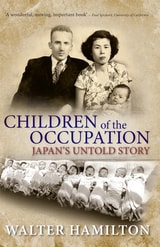
Children of the Occupation
Japan's Untold StoryHamilton, Walter
Rutgers University Press, 2013
Based on interviews with or research on 150 konketsuji—a now-taboo word for "mixed-blood" Japanese—journalist Walter Hamilton presents vivid first-person accounts of these adults as they remember their experiences of childhood loss. Using archival material from organizations dedicated to assisting the children, he combines moving personal tales with historical and political analyses of international race relations and immigration policy, particularly in North America and Australia.
Not only were attitudes and behaviors of the Japanese biased against the mixed-race children, but so were the restrictive and prejudicial immigration policies of the fathers’ native countries. Japan’s racial intolerance was fully matched in the nations it fought against. Hamilton examines how attitudes about race relations have evolved and traces the impact of racial ideology on national policy and cultural identity in Australia, Japan, and the United States.
Children of the Struggle and the Ancestors Who Stayed
The Tuskegee Institute High School Class of 1964Edited by Sonjia Parker Redmond and Beatrice J. Adams, Foreword by Fred D. Gray
University of Alabama Press, 2025
WINNER OF THE ANNE B. AND JAMES B. MCMILLAN PRIZE
A powerful collection of firsthand stories from the Tuskegee Institute High School Class of 1964—students who came of age in the crucible of the Civil Rights Movement. Their stories uncover the bold choices of their ancestors who chose to stay and help shape the South.
Children of the Struggle and the Ancestors Who Stayed, edited by Sonjia Parker Redmond and Beatrice J. Adams, brings together twenty-one deeply personal narratives from members of the Tuskegee Institute High School Class of 1964. These students grew up at the heart of the Civil Rights Movement, coming of age during landmark legal battles, community-led voter registration efforts, and the long shadow of Jim Crow.
Graduating in the year of the Civil Rights Act and Freedom Summer, these young people had already helped desegregate Alabama schools. They marched from Selma to Montgomery, mourned the assassination of classmate Sammy Younge Jr., and witnessed firsthand the violent resistance to change that defined the era.
Rather than join the Great Migration northward, many of them followed the lead of their ancestors and chose to stay—becoming educators, organizers, and civic leaders. Their lives reflect a powerful legacy of resistance and renewal, rooted in a deep sense of place and purpose. This collection preserves their voices and honors the generations of Black families who fought for justice not only through protest, but by staying, building, and believing in the promise of the South.
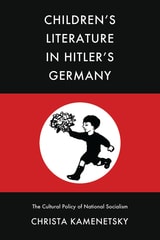
Children’s Literature in Hitler’s Germany
The Cultural Policy of National SocialismChrista Kamenetsky
Ohio University Press, 1984
Between 1933 and 1945, National Socialists enacted a focused effort to propagandize children’s literature by distorting existing German values and traditions with the aim of creating a homogenous “folk community.” A vast censorship committee in Berlin oversaw the publication, revision, and distribution of books and textbooks for young readers, exercising its control over library and bookstore content as well as over new manuscripts, so as to redirect the cultural consumption of the nation’s children. In particular, the Nazis emphasized Nordic myths and legends with a focus on the fighting spirit of the saga heroes, their community loyalty, and a fierce spirit of revenge—elements that were then applied to the concepts of loyalty to and sacrifice for the Führer and the fatherland. They also tolerated select popular series, even though these were meant to be replaced by modern Hitler Youth camping stories.
In this important book, first published in 1984 and now back in print, Christa Kamenetsky demonstrates how Nazis used children’s literature to selectively shape a “Nordic Germanic” worldview that was intended to strengthen the German folk community, the Führer, and the fatherland by imposing a racial perspective on mankind. Their efforts corroded the last remnants of the Weimar Republic’s liberal education, while promoting an enthusiastic following for Hitler.
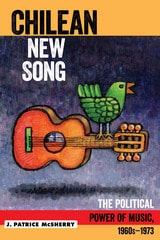
Chilean New Song
The Political Power of Music, 1960s - 1973J Patrice McSherry
Temple University Press, 2015
In Chilean New Song, J. Patrice McSherry deftly combines a political-historical view of Chile with a narrative of its cultural development. She examines the democratizing power of this music and, through interviews with key protagonists, the social roles of politically committed artists who participated in a movement for change. McSherry explores the impact of Chilean New Song and the way this artistic/cultural phenomenon related to contemporary politics to capture the passion, pain, and hope of millions of Chileans.
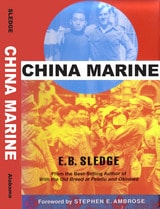
China Marine
E. B. Sledge
University of Alabama Press, 2002
From the respected author of one of the best books on World War II combat, comes an equally captivating saga of battle recovery, healing, and homecoming.
China Marine is the long-awaited sequel to E. B. Sledge’s critically acclaimed memoir, With the Old Breed at Peleliu and Okinawa. Picking up where his previous memoir leaves off, Sledge, a young marine in the First Division, traces his company’s movements and charts his own difficult passage to peace following his horrific experiences in the Pacific. He reflects on his duty in the ancient city of Peiping (now Beijing) and recounts the difficulty of returning to his hometown of Mobile, Alabama, and resuming civilian life haunted by the shadows of close combat.
Distinguished historians have praised Sledge’s first book as the definitive rifleman’s account of World War II, ranking it with the Civil War’s Red Badge of Courage and World War I’s All Quiet on the Western Front. Although With the Old Breed ends with the surrender of Japan, marines in the Pacific were still faced with the mission of disarming the immense Japanese forces on the Asian mainland and reestablishing order. For infantrymen so long engaged in the savage and surreal world of close combat, there remained the personal tasks of regaining normalcy and dealing with suppressed memories, fears, and guilt.
In China Marine, E. B. Sledge completes his story and provides emotional closure to the searing events detailed in his first memoir. He speaks frankly about the real costs of war, emotional and psychological as well as physical, and explains the lifetime loyalties that develop between men who face fear, loss, and horror together. That bond becomes one of the newfound treasures of life after battle.
With his hallmark style of simplicity, directness, and lack of sentimentality, "Sledgehammer" has given us yet another great document of war literature.
China in the World
Culture, Politics, and World VisionBan Wang
Duke University Press, 2022
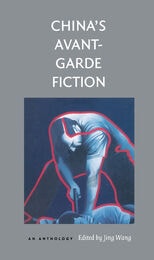
China's Avant-Garde Fiction
An AnthologyJing Wang, ed.
Duke University Press, 1998
Jing Wang has selected provocative examples of this new school of writing, which gained prominence in the late 1980s. Contradicting many long-cherished beliefs about Chinese writers—including the alleged tradition of writing as a political act against authoritarianism—these stories make a dramatic break from conventions of modern Chinese literature by demonstrating an irreverence toward history and culture and by celebrating the artificiality of storytelling. Enriched by the work of a distinguished group of translators, this collection presents an aesthetic experience that may have outraged many revolutionary-minded readers in China, but one that also occupies an important place in the canon of Chinese literature. China’s Avant-Garde Fiction brings together a group of exceptional writers (including Raise the Red Lantern author Su Tong) to the attention of an English-speaking audience.
This book will be enjoyed by those interested in Chinese literature, culture, and society—particularly readers of contemporary fiction.
Contributors. Bei Cun, Can Xue, Gei Fei, Ma Yuan, Su Tong, Sun Ganlu, Yu Hua
Translators. Eva Shan Chou, Michael S. Duke, Howard Goldblatt, Ronald R. Janssen, Andrew F. Jones, Denis C. Mair, Victor H. Mair, Caroline Mason, Beatrice Spade, Kristina M. Torgeson, Jian Zhang, Zhu Hong

China’s Politics in Perspective
Harold S. Quigley
University of Minnesota Press, 1962
China's Politics in Perspective was first published in 1962. Minnesota Archive Editions uses digital technology to make long-unavailable books once again accessible, and are published unaltered from the original University of Minnesota Press editions.
In a concise, readable diagnosis of present-day China, this book provides the perspective which is needed for a realistic view of the Chinese situation today.
Professor Quigley introduces the reader to contemporary political, economic, and social conditions on the mainland and on Nationalist-held Taiwan by briefly reviewing the basic tenets of Confucianism and other classical philosophies, the principal aspects of the imperial system, and the domestic and foreign influences which contributed to the collapse of monarchy in 1911. He recalls the revolutionary doctrine of Sun Yat-sen and surveys the nature and conduct of government under the first and second republics and the forces that operated for and against the transfer of liberal ideals from paper to practice. After showing how the Communist leadership gained its foothold and present control, he discusses the ideologies of Mao Tse-tung and Chiang Kai-shek, the structure and administration of their governments and major parties, their economic, social, and foreign policies, the independence movement on Taiwan, the prospects for democracy and the dilemma in which the United States has been placed by the victory of the Communists over a wartime ally.
In addition to being appropriate for general readers and for study groups interested in contemporary affairs, the book is especially suitable for use as a college text.
Chinese American Literature since the 1850s
Xiao-huang Yin
University of Illinois Press, 2000
The writings of immigrants from China and their descendants in the United States reflect the changes and continuity in the Chinese American experience. Xiao-huang Yin combines literary and historical scholarship to trace the origins and development of this extensive, neglected body of literature.
Chinese American Literature since the 1850s covers representative works from the 1850s to the present. Selections include journalism and autobiography by nineteenth-century Chinese authors; writings on the walls of Angel Island, the main Asian immigrant arrival point on the West Coast; writings of late-nineteenth and early-twentieth-century "cultivated Chinese," students and scholars who came to America to advance their educations; important writing by immigrants such as Chen Ruoxi, Yu Lihua, and Zhang Xiguo; and the works of more recent authors like Sui Sin Far, Jade Snow Wong, Frank Chin, Maxine Hong Kingston, and Amy Tan.
An essential introduction and guide to the field, Chinese American Literature since the 1850s enlarges the available body of literature and provides new insights into the Chinese American immigrant experience and the writing inspired by it.
Chinese Americans in the Heartland
Migration, Work, and CommunityHuping Ling
Rutgers University Press, 2022
Chinese Communist Materials at the Bureau of Investigation Archives, Taiwan
Peter Donovan, Carl E. Dorris, and Lawrence R. Sullivan
University of Michigan Press, 1976
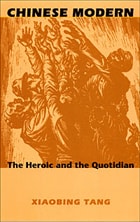
Chinese Modern
The Heroic and the QuotidianXiaobing Tang
Duke University Press, 2000
Tang uncovers crucial clues to modern Chinese literary and cultural practices through readings of Wu Jianren’s 1906 novel The Sea of Regret and works by canonical writers Lu Xun, Ding Ling, and Ba Jin. For the midcentury, he broadens his investigation by considering theatrical, cinematic, and visual materials in addition to literary texts. His reading of the 1963 play The Young Generation reveals the anxiety and terror underlying the exhilarating new socialist life portrayed on the stage. This play, enormously influential when it first appeared, illustrates the utopian vision of China’s lyrical age and its underlying discontents—both of which are critical for understanding late-twentieth-century China. Tang closes with an examination of post–Cultural Revolution nostalgia for the passion of the lyrical age.
Throughout Chinese Modern Tang suggests a historical and imaginative affinity between apparently separate literatures and cultures. He thus illuminates not only Chinese modernity but also the condition of modernity as a whole, particularly in light of the postmodern recognition that the market and commodity culture are both angel and devil.
This elegantly written volume will be invaluable to students of China, Asian studies, literary criticism, and cultural studies, as well as to readers who study modernity.

Chinese Modernism in the Era of Reforms
Cultural Fever, Avant-Garde Fiction, and the New Chinese CinemaXudong Zhang
Duke University Press, 1997
In examining the aesthetic and philosophical formulations of the New Era’s intellectual elites, Zhang first analyzes the intense cultural and intellectual debates, known as the “Great Cultural Discussion” or “Cultural Fever” that took place in Chinese urban centers in the mid- and late 1980s. Chinese literary modernism is then explored, specifically in relation to Deng Xiaoping’s sweeping reforms and with a focus on the changing literary sensibility and avant-garde writers such as Yu Hua, Ge Fei, and Su Tong. Lastly, Zhang looks at the the making of New Chinese Cinema and films such as Yellow Earth, Horse Thief, and King of the Children—films through which Fifth Generation filmmakers first developed a style independent from socialist realism. By tracing the origins and contemporary elaboration of the idea of Chinese modernism, Zhang identifies the discourse of modernism as one of the decisive formal articulations of the social dynamism and cultural possibilities of post-Mao China.
Capturing the historical experience and the cultural vision of China during a crucial decade in its emergence as a world power, Chinese Modernism in the Era of Reforms will interest students and scholars of modernism, Chinese literature and history, film studies, and cultural studies.
Chinese Whispers
Toward a Transpacific PoeticsYunte Huang
University of Chicago Press, 2022
In this new book, the noted critic and best-selling author Yunte Huang explores the dynamics of poetry and poetics in the age of globalization, particularly questions of translatability, universality, and risk in the transpacific context. “Chinese whispers” refers to an American children’s game dating to the years of the Cold War, a period in which everything Chinese, or even Chinese sounding, was suspect. Taking up various manifestations of the phrase in the twentieth and twenty-first centuries, Huang investigates how poetry, always to a significant degree untranslatable, complicates the transpacific production of meanings and values.
The book opens with the efforts of I. A. Richards, arguably the founder of Anglo-American academic literary criticism, to promote Basic English in China in the early twentieth century. It culminates by resituating Ernest Fenollosa’s famous essay “The Chinese Written Character as a Medium for Poetry,” exploring the ways in which Chinese has historically enriched but also entrapped the Western conception of language.
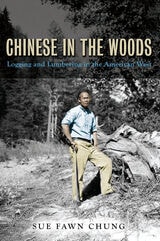
Chinese in the Woods
Logging and Lumbering in the American WestSue Fawn Chung
University of Illinois Press, 2015
Choosing to Lead
Understanding Congressional Foreign Policy EntrepreneursRalph G. Carter and James M. Scott
Duke University Press, 2009
Carter and Scott combine extensive quantitative analysis, interviews with members of Congress and their staff, and case studies of key foreign policy entrepreneurs, including Frank Church, William Fulbright, Jesse Helms, Edward Kennedy, Pat McCarran, and Curt Weldon. Drawing on their empirical data, the authors identify the key variables in foreign policy entrepreneurship, including membership in the Senate or House, seniority and committee assignments, majority or minority party status, choice of foreign policy issues, and the means used to influence policy. By illuminating the roles and impact of individual members of Congress, Carter and Scott contribute to a more nuanced understanding of the broader U.S. foreign policy-making process.
Chosen Capital
The Jewish Encounter with American CapitalismKobrin, Rebecca
Rutgers University Press, 2012
Surveying such diverse topics as Jews’ participation in the real estate industry, the liquor industry, and the scrap metal industry, as well as Jewish political groups and unions bent on reforming American capital, such as the American Labor Party and the International Ladies’ Garment Workers’ Union, contributors to this volume provide a new prism through which to view the Jewish encounter with America. The volume also lays bare how American capitalism reshaped Judaism itself by encouraging the mass manufacturing and distribution of foods like matzah and the transformation of synagogue cantors into recording stars. These essays force us to rethink not only the role Jews played in American economic development but also how capitalism has shaped Jewish life and Judaism over the course of the twentieth century.
Contributors:
Marni Davis, Georgia State University
Phyllis Dillon, independent documentary producer, textile conservator, museum curator
Andrew Dolkart, Columbia University
Andrew Godley, Henley Business School, University of Reading
Jonathan Karp, executive director, American Jewish Historical Society
Daniel Katz, Empire State College, State University of New York
Ira Katznelson, Columbia University
David S. Koffman, New York University
Eli Lederhendler, Hebrew University, Jerusalem
Jonathan Z. S. Pollack, University of Wisconsin—Madison
Jonathan D. Sarma, Brandeis University
Jeffrey Shandler, Rutgers University
Daniel Soyer, Fordham University
Christian Wolff
Michael Hicks and Christian Asplund
University of Illinois Press, 2012
Christianity and Modernity in Eastern Europe
Bruce R. Berglund
Central European University Press, 2010
Christianity, Social Change, and Globalization in the Americas
Peterson, Anna L
Rutgers University Press, 2001
Organized around three central themes-family, youth, and community; democratization, citizenship, and political participation; and immigration and transnationalism-the book argues that, at the local level, religion helps people, especially women and youths, solidify their identities and confront the challenges of the modern world. Religious communities are seen as both peaceful venues for people to articulate their needs, and forums for building participatory democracies in the Americas. Finally, the contributors examine how religion enfranchises poor women, youths, and people displaced by war or economic change and, at the same time, drives social movements that seek to strengthen family and community bonds disrupted by migration and political violence.
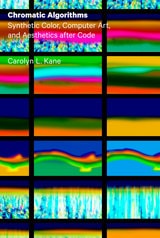
Chromatic Algorithms
Synthetic Color, Computer Art, and Aesthetics after CodeCarolyn L. Kane
University of Chicago Press, 2014
Chromatic Algorithms reveals the fascinating history behind digital color, tracing it from the work of a few brilliant computer scientists and experimentally minded artists in the late 1960s and early ‘70s through to its appearance in commercial software in the early 1990s. Mixing philosophy of technology, aesthetics, and media analysis, Carolyn Kane shows how revolutionary the earliest computer-generated colors were—built with the massive postwar number-crunching machines, these first examples of “computer art” were so fantastic that artists and computer scientists regarded them as psychedelic, even revolutionary, harbingers of a better future for humans and machines. But, Kane shows, the explosive growth of personal computing and its accompanying need for off-the-shelf software led to standardization and the gradual closing of the experimental field in which computer artists had thrived.
Even so, the gap between the bright, bold presence of color onscreen and the increasing abstraction of its underlying code continues to lure artists and designers from a wide range of fields, and Kane draws on their work to pose fascinating questions about the relationships among art, code, science, and media in the twenty-first century.
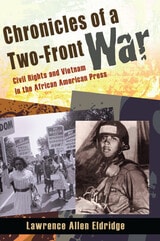
Chronicles of a Two-Front War
Civil Rights and Vietnam in the African American PressLawrence Allen Eldridge
University of Missouri Press, 2011
Eldridge reveals how the black press not only reported the war but also weighed its significance in the context of the civil rights movement.
Eldridge examines not only the role of reporters during the war, but also those of editors, commentators, and cartoonists. Especially enlightening is the research drawn from extensive oral histories by prominent journalist Ethel Payne, the first African American woman to receive the title of war correspondent. She described a widespread practice in black papers of reworking material from major white papers without providing proper credit, as the demand for news swamped the small budgets and limited staffs of African American papers. The author analyzes both the strengths of the black print media and the weaknesses in their coverage.
The black press ultimately viewed the Vietnam War through the lens of African American experience, blaming the war for crippling LBJ’s Great Society and the War on Poverty. Despite its waning hopes for an improved life, the black press soldiered on.
Church History in an Age of Uncertainty
Historiographical Patterns in the United States, 1906 - 1990Henry Warner Bowden
Southern Illinois University Press, 1991
Essential to Catholic, Protestant, and even secular scholars of American religious history this is the first historiographical analysis of the work of Henry K. Rowe, James H. Nichols, Leonard J. Trinterud, H. Shelton Smith, John T. McNeill, Herbert W. Schneider, Robert T. Handy, John T. Ellis, and Jaroslav Pelikan.
Aware that every generation rewrites history, Bowden bases his investigation of major twentieth-century church historians on two questions: Why are young historians dissatisfied with earlier treatments? What leads them to believe their version is better?
Henry Warner Bowden’s extensive bibliography includes A Century of Church History: The Legacy of Philip Schaff.
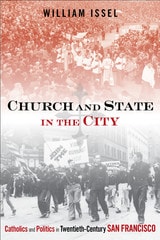
Church and State in the City
Catholics and Politics in Twentieth-Century San FranciscoWilliam Issel
Temple University Press, 2012
Church and State in the City provides the first comprehensive analysis of the city’s long debate about the public interest. Historian William Issel explores the complex ways that the San Francisco Catholic Church—and its lay men and women—developed relationships with the local businesses, unions, other community groups, and city government to shape debates about how to define and implement the common good. Issel’s deeply researched narrative also sheds new light on the city’s socialists, including Communist Party activists—the most important transnational challengers of both capitalism and Catholicism during the twentieth century.
Moreover, Church and State in the City is revisionist in challenging the notion that the history of urban politics and policy can best be understood as the unfolding of a progressive, secular modernization of urban political culture. Issel shows how tussles over the public interest in San Francisco were both distinctive to the city and shaped by its American character.
In the series Urban Life, Landscape, and Policy, edited by Zane L. Miller, David Stradling, and Larry Bennett

Churchill
Sebastian Haffner
Haus Publishing, 2003
Churchill's "Iron Curtain" Speech Fifty Years Later
Edited & Intro by James W. Muller
University of Missouri Press, 1999
Winston Churchill's visit to Fulton, Missouri, on March 5, 1946, marked the first public recognition of the cold war that was to follow World War II. Churchill delivered his most famous speech, "The Sinews of Peace," which became best known by the phrase he used to describe the cold-war division of Europe, the "iron curtain."
In the United States and Britain, wartime alliances had fostered favorable feelings toward the Soviet Union. By 1946 democratic citizens on both sides of the Atlantic had begun to consider communist Russia a friend. In his speech at Fulton, Churchill exhibited breathtaking flexibility and a clear recognition of the main threat as he reminded the public that true friendship must be reserved for countries sharing a common love of liberty. The "Iron Curtain" speech defined postwar relations with the Soviet Union for citizens of Western democracies. Although it initially provoked intense controversy in the United States and Britain, criticism soon gave way to wide public agreement to oppose Soviet imperialism.
Opening with the full text of the address Churchill delivered in Fulton and concluding with Margaret Thatcher's fiftieth-anniversary address surveying the challenges facing Western democracies in this post-cold war climate, the book brings together essays that reflect on the past fifty years, recognizing Churchill's speech as a carefully conceived herald of the cold war for the Western democracies. These powerful essays offer a fresh appreciation of the speech's political, historical, diplomatic, and rhetorical significance.
Churchill's Britain
From the Antrim Coast to the Isle of WightPeter Clark
Haus Publishing, 2023
More than half a century after his death, Winston Churchill, the most significant British statesman of the twentieth century, continues to intrigue us. Peter Clark’s book, however, is not merely another Churchill biography. Churchill’s Britain takes us on a geographical journey through Churchill’s life, leading us in Churchill’s footsteps through locations in Britain and Ireland that are tied to key aspects of his biography. Some are familiar–Blenheim Palace, where he was born; Chartwell, his beloved house in the country; and the Cabinet War Rooms, where he planned the campaigns of World War II. But we also are taken to his schools, his parliamentary constituencies, locations of famous speeches, the place where he started to paint, the tobacco shop where he bought his cigars, and the graves of his family and close friends.
Clark brings us close to the statesman Churchill by visiting sites that were important to the story of his long life, from the site where his father proposed to his American mother on the Isle of Wight to his grave in a country churchyard in Oxfordshire. Designed as a gazetteer with helpful regional maps, Churchill’s Britain can be dipped into, consulted by the traveler on a Churchill tour of Britain, or read straight through—and no matter how it’s read, it will deliver fresh insights into this extraordinary man.
Cinders
Jacques Derrida
University of Minnesota Press, 2014
“More than fifteen years ago,” Jacques Derrida writes in the prologue to this remarkable and uniquely revealing book, “a phrase came to me, as though in spite of me. . . . It imposed itself upon me with the authority, so discreet and simple it was, of a judgment: ‘cinders there are’ (il y a là cendre). . . . I had to explain myself to it, respond to it—or for it.”
In Cinders Derrida ranges across his work from the previous twenty years and discerns a recurrent cluster of arguments and images, all involving in one way or another ashes and cinders. For Derrida, cinders or ashes—at once fragile and resilient—are “the better paradigm for what I call the trace—something that erases itself totally, radically, while presenting itself.”
In a style that is both highly condensed and elliptical, Cinders offers probing reflections on the relation of language to truth, writing, the voice, and the complex connections between the living and the dead. It also contains some of his most essential elaborations of his thinking on the feminine and on the legacy of the Holocaust (both a word—from the Greek hólos, “whole,” and kaustós, “burnt”—and a historical event that invokes ashes) in contemporary poetry and philosophy. In turning from the texts of other philosophers to his own, Cinders enables readers to follow the trajectory from Derrida’s early work on the trace, the gramma, and the voice to his later writings on life, death, time, and the spectral.
Among the most accessible of this renowned philosopher’s many writings, Cinders is an evocative and haunting work of poetic self-analysis that deepens our understanding of Derrida’s critical and philosophical vision.
Cinema '62
The Greatest Year at the MoviesStephen Farber
Rutgers University Press, 2024
Lawrence of Arabia, The Miracle Worker, To Kill a Mockingbird, The Manchurian Candidate, Gypsy, Sweet Bird of Youth, The Longest Day, The Music Man, What Ever Happened to Baby Jane, and more.
Most conventional film histories dismiss the early 1960s as a pallid era, a downtime between the heights of the classic studio system and the rise of New Hollywood directors like Scorsese and Altman in the 1970s. It seemed to be a moment when the movie industry was floundering as the popularity of television caused a downturn in cinema attendance. Cinema ’62 challenges these assumptions by making the bold claim that 1962 was a peak year for film, with a high standard of quality that has not been equaled since.
Stephen Farber and Michael McClellan show how 1962 saw great late-period work by classic Hollywood directors like John Ford, Howard Hawks, and John Huston, as well as stars like Bette Davis, James Stewart, Katharine Hepburn, and Barbara Stanwyck. Yet it was also a seminal year for talented young directors like Sidney Lumet, Sam Peckinpah, and Stanley Kubrick, not to mention rising stars like Warren Beatty, Jane Fonda, Robert Redford, Peter O’Toole, and Omar Sharif. Above all, 1962—the year of To Kill a Mockingbird and The Manchurian Candidate—gave cinema attendees the kinds of adult, artistic, and uncompromising visions they would never see on television, including classics from Fellini, Bergman, and Kurosawa. Culminating in an analysis of the year’s Best Picture winner and top-grossing film, Lawrence of Arabia, and the factors that made that magnificent epic possible, Cinema ’62 makes a strong case that the movies peaked in the Kennedy era.
Cinema Civil Rights
Regulation, Repression, and Race in the Classical Hollywood EraScott, Ellen C
Rutgers University Press, 2015
Cinema between Latin America and Los Angeles
Origins to 1960Horak, Jan-Christopher
Rutgers University Press, 2019
Cinema is the Strongest Weapon
Race-Making and Resistance in Fascist ItalyLorenzo Fabbri
University of Minnesota Press, 2023
A deep dive into Italian cinema under Mussolini’s regime and the filmmakers who used it as a means of antifascist resistance
Looking at Italy’s national film industry under the rule of Benito Mussolini and in the era that followed, Cinema Is the Strongest Weapon examines how cinema was harnessed as a political tool by both the reigning fascist regime and those who sought to resist it. Covering a range of canonical works alongside many of their neglected contemporaries, this book explores film’s mutable relationship to the apparatuses of state power and racial capitalism.
Exploiting realism’s aesthetic, experiential, and affective affordances, Mussolini’s biopolitical project employed cinema to advance an idealized vision of life under fascism and cultivate the basis for a homogenous racial identity. In this book, Lorenzo Fabbri crucially underscores realism’s susceptibility to manipulation from diametrically opposed political perspectives, highlighting the queer, Communist, Jewish, and feminist filmmakers who subverted Mussolini’s notion that “cinema is the regime’s strongest weapon” by developing film narratives and film forms that challenged the prevailing ethno-nationalist ideology.
Focusing on an understudied era of film history and Italian cultural production, Fabbri issues an important recontextualization of Italy’s celebrated neorealist movement and the structural ties it shares with its predecessor. Drawing incisive parallels to contemporary debates around race, whiteness, authoritarianism, and politics, he presents an urgent examination into the broader impact of visual media on culture and society.
Retail e-book files for this title are screen-reader friendly with images accompanied by short alt text and/or extended descriptions.
Cinema of Actuality
Japanese Avant-Garde Filmmaking in the Season of Image PoliticsYuriko Furuhata
Duke University Press, 2013
Cinema under National Reconstruction
State Censorship and South Korea’s Cold War Film CultureHye Seung Chung
Rutgers University Press, 2025
Cinema's Original Sin
D.W. Griffith, American Racism, and the Rise of Film CulturePaul McEwan
University of Texas Press, 2022
For over a century, cinephiles and film scholars have had to grapple with an ugly artifact that sits at the beginnings of film history. D. W. Griffith’s profoundly racist epic, The Birth of a Nation, inspired controversy and protest at its 1915 release and was defended as both a true history of Reconstruction (although it was based on fiction) and a new achievement in cinematic art. Paul McEwan examines the long and shifting history of its reception, revealing how the film became not just a cinematic landmark but also an influential force in American aesthetics and intellectual life.
In every decade since 1915, filmmakers, museums, academics, programmers, and film fans have had to figure out how to deal with this troublesome object, and their choices have profoundly influenced both film culture and the notion that films can be works of art. Some critics tried to set aside the film’s racism and concentrate on the form, while others tried to relegate that racism safely to the past. McEwan argues that from the earliest film retrospectives in the 1920s to the rise of remix culture in the present day, controversies about this film and its meaning have profoundly shaped our understandings of film, race, and art.
Cinemas and Cinema-Going in the United Kingdom
Decades of Decline, 1945–1965Sam Manning
University of London Press, 2020
Cinema attendance fell in all regions, but the speed, nature, and extent of this decline varied widely across the United Kingdom. By presenting detailed case studies of two similarly-sized industrial cities, Belfast and Sheffield, this book adds nuance and detail to the discussion of regional variations in film exhibition and audience habits. Using a wide range of sources, such as oral testimony, box-office data, newspapers, and trade journals, Cinemas and Cinema-Going in the United Kingdom conveys the diverse and ever-changing nature of the cinema industry.
Cinema’s Alchemist
The Films of Péter ForgácsBill Nichols
University of Minnesota Press, 2011
Péter Forgács, based in Budapest, is best known for his award-winning films built on home movies from the 1930s to the 1960s that document ordinary lives soon to intersect with offscreen historical events. Cinema’s Alchemist offers a sustained exploration of the imagination and skill with which Forgács reshapes such film footage, originally intended for private and personal viewing, into extraordinary films dedicated to remembering the past in ways that matter for our future.
Contributors: Whitney Davis, U of California, Berkeley; László F. Földényi, U of Theatre, Film and Television, Budapest; Marsha Kinder, U of Southern California; Tamás Korányi; Scott MacDonald, Hamilton College; Tyrus Miller, U of California, Santa Cruz; Roger Odin, U of Paris III Sorbonne–Nouvelle; Catherine Portuges, U of Massachusetts Amherst; Michael S. Roth, Wesleyan U; Kaja Silverman, U of Pennsylvania; Ernst van Alphen, Leiden U, the Netherlands; Malin Wahlberg, Stockholm U.
Circle of Winners
How the Guggenheim Foundation Composition Awards Shaped American Music CultureDenise Von Glahn
University of Illinois Press, 2023
An essential high culture institution, the John Simon Guggenheim Memorial Foundation has both supported and molded American musical culture. Denise Von Glahn examines the Foundation and its immense influence from the organization’s prehistory and origins through the onset of World War II.
Funded by the Guggenheim mining fortune, the Foundation took early shape from the efforts of Carroll Wilson, Frank Aydelotte, and Henry Allen Moe--three Rhodes Scholars who initially struggled to envision and implement the organization’s ambitious goals. Von Glahn also examines the career of the longtime musical advisor Thomas Whitney Surette while profiling early awardees Aaron Copland, Ruth Crawford Seeger, William Grant Still, Roger Sessions, George Antheil, and Carlos Chàvez. She examines the processes behind their selection, their values and aesthetics, and their relationships with the insiders and others who championed their work.
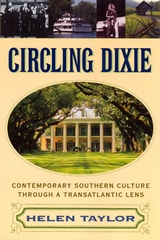
Circling Dixie
Contemporary Southern Culture through a Transatlantic LensHelen Taylor
Rutgers University Press, 2000
Taylor examines some of the South's most significant cultural exports in discussions that range across literature, music, film, television, theater, advertising, and tourism to focus on how and why Southern themes and icons have become so deeply embedded in British cultural life. The enduring legacy of Margaret Mitchell's Gone With the Wind can be seen today in the popularity of sequels, revisions, and reworkings of the novel. The conversation between these cultures is further explored in British responses to Alex Haley's Roots, the British theater's special affection for Tennessee Williams's plays, and the marketing of New Orleans as a preferred destination for European tourists. The transformation of Southern culture--itself a hybrid of the European, African, and American--as it circulates back across the Atlantic suggests not only new views of the history, racial politics, music and art of both Britain and the American South, but also an enhanced understanding of the dynamic flow of culture itself.
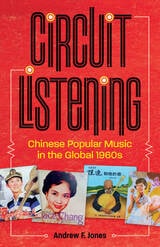
Circuit Listening
Chinese Popular Music in the Global 1960sAndrew F. Jones
University of Minnesota Press, 2020
How the Chinese pop of the 1960s participated in a global musical revolution
What did Mao’s China have to do with the music of youth revolt in the 1960s? And how did the mambo, the Beatles, and Bob Dylan sound on the front lines of the Cold War in Asia? In Circuit Listening, Andrew F. Jones listens in on the 1960s beyond the West, and suggests how transistor technology, decolonization, and the Green Revolution transformed the sound of music around the globe.
Focusing on the introduction of the transistor in revolutionary China and its Cold War counterpart in Taiwan, Circuit Listening reveals the hidden parallels between music as seemingly disparate as rock and roll and Maoist anthems. It offers groundbreaking studies of Mandarin diva Grace Chang and the Taiwanese folk troubadour Chen Da, examines how revolutionary aphorisms from the Little Red Book parallel the Beatles’ “Revolution,” uncovers how U.S. military installations came to serve as a conduit for the dissemination of Anglophone pop music into East Asia, and shows how consumer electronics helped the pop idol Teresa Teng bring the Maoist era to a close, remaking the contemporary Chinese soundscape forever.
Circuit Listening provides a multifaceted history of Chinese-language popular music and media at midcentury. It profiles a number of the most famous and best loved Chinese singers and cinematic icons, and places those figures in a larger geopolitical and technological context. Circuit Listening’s original research and far-reaching ideas make for an unprecedented look at the role Chinese music played in the ’60s pop musical revolution.
Circumcision and Medicine in Modern Turkey
Oyman Basaran
University of Texas Press, 2023
An investigation of how the expansion of modern medicine in Turkey transformed young boys’ experiences of circumcision.
In Turkey, circumcision is viewed as both a religious obligation and a rite of passage for young boys, as communities celebrate the ritual through gatherings, gifts, and special outfits. Yet the procedure is a potentially painful and traumatic ordeal. With the expansion of modern medicine, the social position of sünnetçi (male circumcisers) became subject to the institutional arrangements of Turkey’s evolving health care and welfare system. In the transition from traditional itinerant circumcisers to low-ranking health officers in the 1960s and hospital doctors in the 1990s, the medicalization of male circumcision has become entangled with state formation, market fetishism, and class inequalities.
Based on Oyman Başaran’s extensive ethnographic and historical research, Circumcision and Medicine in Modern Turkey is a close examination of the socioreligious practice of circumcision in twenty-five cities and their outlying towns and villages in Turkey. By analyzing the changing subjectivity of medical actors who seek to alleviate suffering in male circumcision, Başaran offers a psychoanalytically informed alternate approach to the standard sociological arguments surrounding medicalization and male circumcision.
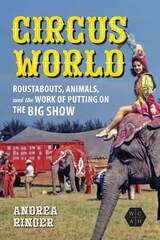
Circus World
Roustabouts, Animals, and the Work of Putting on the Big ShowAndrea Ringer
University of Illinois Press, 2024
Andrea Ringer examines the industry-wide circus world--the collection of shows that traveled by rail, wagon, steamboat, and car--and the traditional and nontraditional laborers who created it. Performers and their onstage labor played an integral part in the popularity of the circus. But behind the scenes, other laborers performed the endless menial tasks that kept the show on the road. Circus operators regulated employee behavior both inside and outside the tent even as the employees themselves blurred the line between leisure and labor until, in all parts of the show, the workers could not escape their work.
Illuminating and vivid, Circus World delves into the gender, class, and even species concerns within an extinct way of life.

Citadel Culture
Otto Karl Werckmeister
University of Chicago Press, 1991

Cities and Nature in the American West
Char Miller
University of Nevada Press, 2010